
 18 minutes ago
4
18 minutes ago
4
Key Highlights
- First quarter results showed a net deficit of $256 million, a sharp reversal from last year’s $469 million profit.
- Liner shipping revenues declined 18%, falling to $4.92 billion compared to $5.32 billion previously.
- Shipping lane closures near the Strait of Hormuz necessitated extended rerouting, inflating operational expenses.
- Cargo volumes decreased by 0.7% while average shipping rates declined 9.5% year-over-year.
- Annual EBITDA projections remain between $1.1 billion and $3.1 billion, though management emphasized significant uncertainty.
The German container shipping giant Hapag-Lloyd delivered disappointing first quarter figures for 2026, recording a net deficit of $256 million—a dramatic shift from the $469 million profit achieved during the corresponding quarter last year. Despite the negative results, shares traded approximately 2.65% higher in morning sessions.
🚨 $HLAG (Hapag-Lloyd) Q1 2026 Earnings
Soft start with EBIT loss…
but confirmed full-year outlook is the real signal 👀
________________________________________
📊 KEY METRICS (Q1 2026)
🔹 Revenue: €4.20B
🔹 EBIT: -€134M (loss) 🔻
🔹 Full-Year EBITDA Guidance:… pic.twitter.com/xPEqcR2fwK
— Emmanuel – Big Tech & AI Investor (@EmmanuelInvest) May 13, 2026
Quarterly revenues reached $4.92 billion, representing a decline from the prior year’s $5.32 billion. However, this figure exceeded Wall Street expectations, which had projected revenues closer to $3.9 billion.
The company’s EBITDA for the period totaled 422 million euros, substantially lower than the 1.05 billion euros recorded twelve months earlier. Market analysts had anticipated approximately 407 million euros, meaning the actual performance slightly surpassed consensus estimates.
Chief Executive Rolf Habben Jansen characterized the quarter as “unsatisfactory,” citing adverse weather conditions that disrupted supply chains alongside downward pressure on shipping rates.
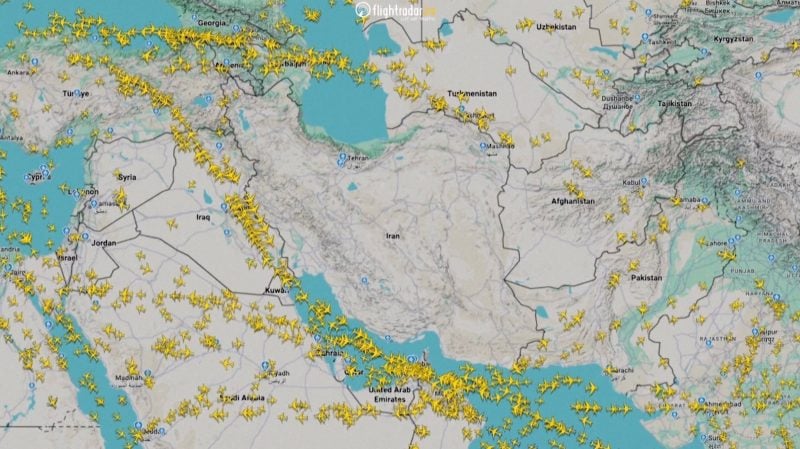
Weather wasn’t the only challenge. Escalating tensions in the Middle East during late February forced Hapag-Lloyd to halt operations through the Strait of Hormuz and Gulf of Oman corridors. Vessels had to navigate significantly longer alternative routes, substantially increasing both transit duration and operational expenditure.
Shipping volumes contracted by 0.7% during the three-month period. Meanwhile, average rates for freight services fell 9.5%, reflecting softer market demand.
Overall transportation expenses decreased 6%, partially benefiting from favorable currency movements as the U.S. dollar weakened relative to the euro. However, excluding foreign exchange impacts, these costs would have actually increased by 4.6%—approximately 147 million euros—primarily attributable to the Middle East routing complications and extended voyage times.
Severe weather across European and North American regions compounded difficulties, generating port congestion and additional supply chain bottlenecks.
Regional Conflicts Squeeze Profitability
The situation surrounding the Strait of Hormuz reached a critical point in March, disrupting commerce during the quarter’s final weeks. This development introduced additional cost pressures that the organization couldn’t immediately mitigate.
Management indicated that anticipated improvements in average freight rates should help counterbalance rising expenses moving forward. However, the company emphasized “considerable uncertainty” regarding both rate trajectories and the evolution of regional conflicts throughout the remainder of the year.
Annual Projections Maintained Amid Uncertainty
Despite the challenging opening quarter, Hapag-Lloyd maintained its full-year EBITDA guidance ranging from $1.1 billion to $3.1 billion, with EBIT projected between a loss of 1.3 billion euros and a gain of 400 million euros.
This represents an unusually broad forecast range—an intentional approach by management. The company acknowledged that ongoing freight rate instability and unresolved Middle East tensions make precise forecasting extremely challenging.
As the fifth-largest container shipping operator globally by capacity, Hapag-Lloyd’s performance mirrors broader industry headwinds affecting the maritime transport sector.
The organization continues active monitoring of Middle East developments, making routing determinations on a fluid basis as circumstances evolve.
✨ Limited Time Offer
Get 3 Free Stock Ebooks
Discover top-performing stocks in AI, Crypto, and Technology with expert analysis.
- Top 10 AI Stocks - Leading AI companies
- Top 10 Crypto Stocks - Blockchain leaders
- Top 10 Tech Stocks - Tech giants









 English (US) ·