
 3 weeks ago
44
3 weeks ago
44
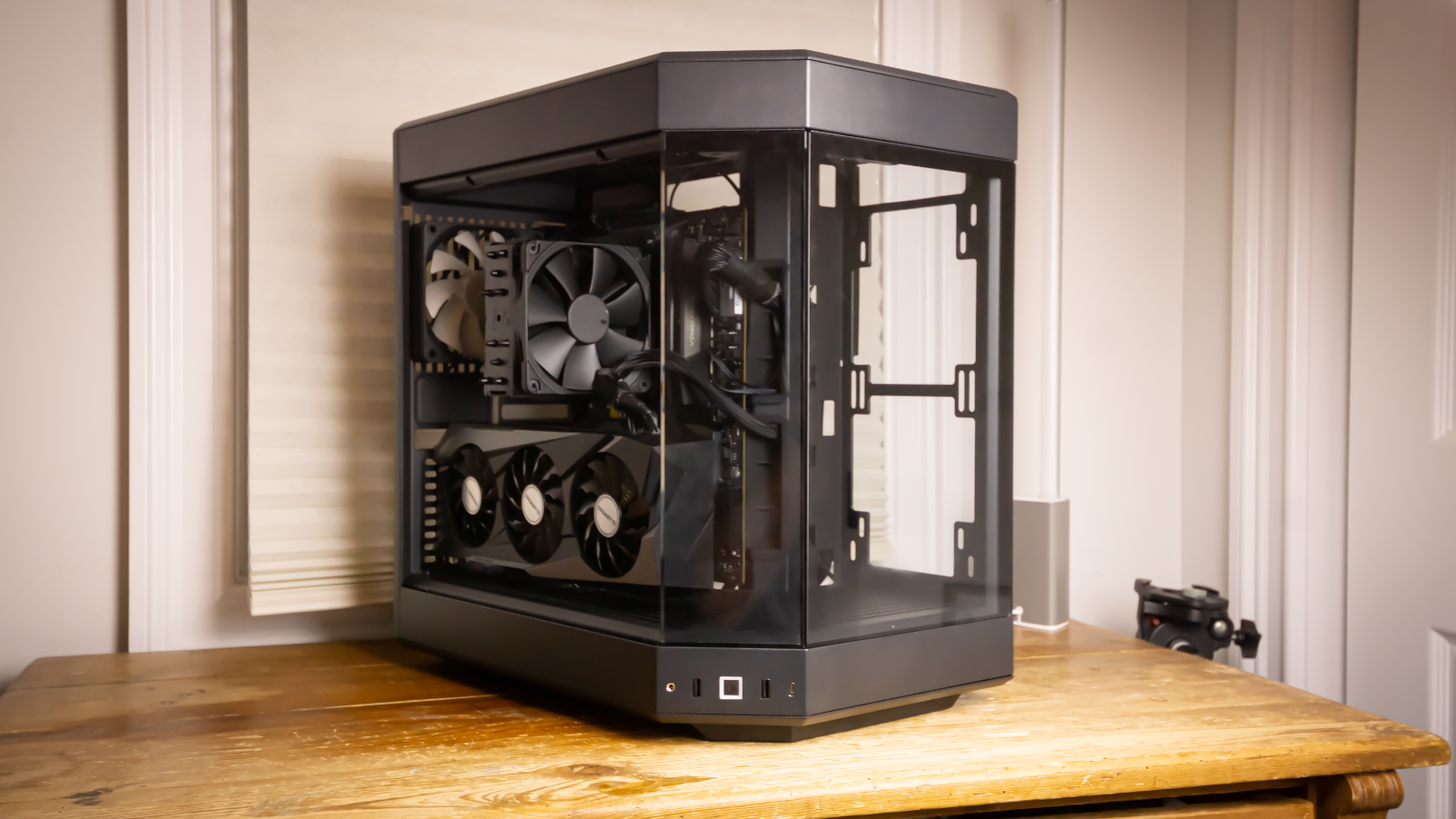
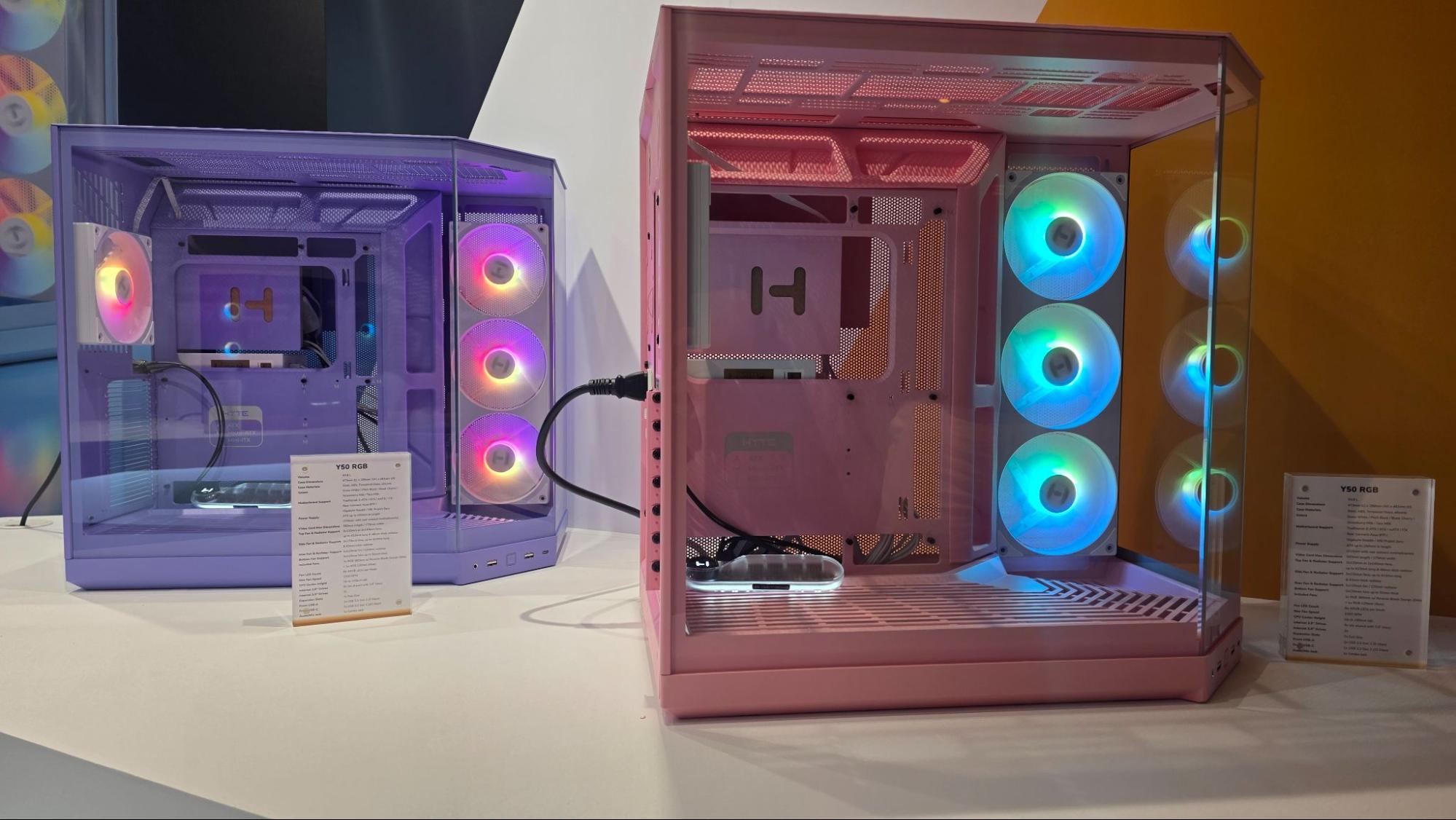
PC case makers are often chasing trends. One moment, it’s all about RGB, then multiple glass side panels, then wood. Today, it’s all about glass and affordability with the new Hyte Y50 RGB, a panoramic iteration of the company’s iconic Y60 that ditches the vertical GPU riser, adds four RGB fans, and sees its MSRP slashed to just $99.99.
Hyte made its first big splash with the Y60, a unique take on the ever-popular O-11 Dynamic from Lian Li, but with a panoramic design, which allows for even more visibility of your components. The following year saw the launch of the Y70, which featured a 4k touch screen display in place of one of the glass side panels. The Y70 is fun, but expensive at $370.
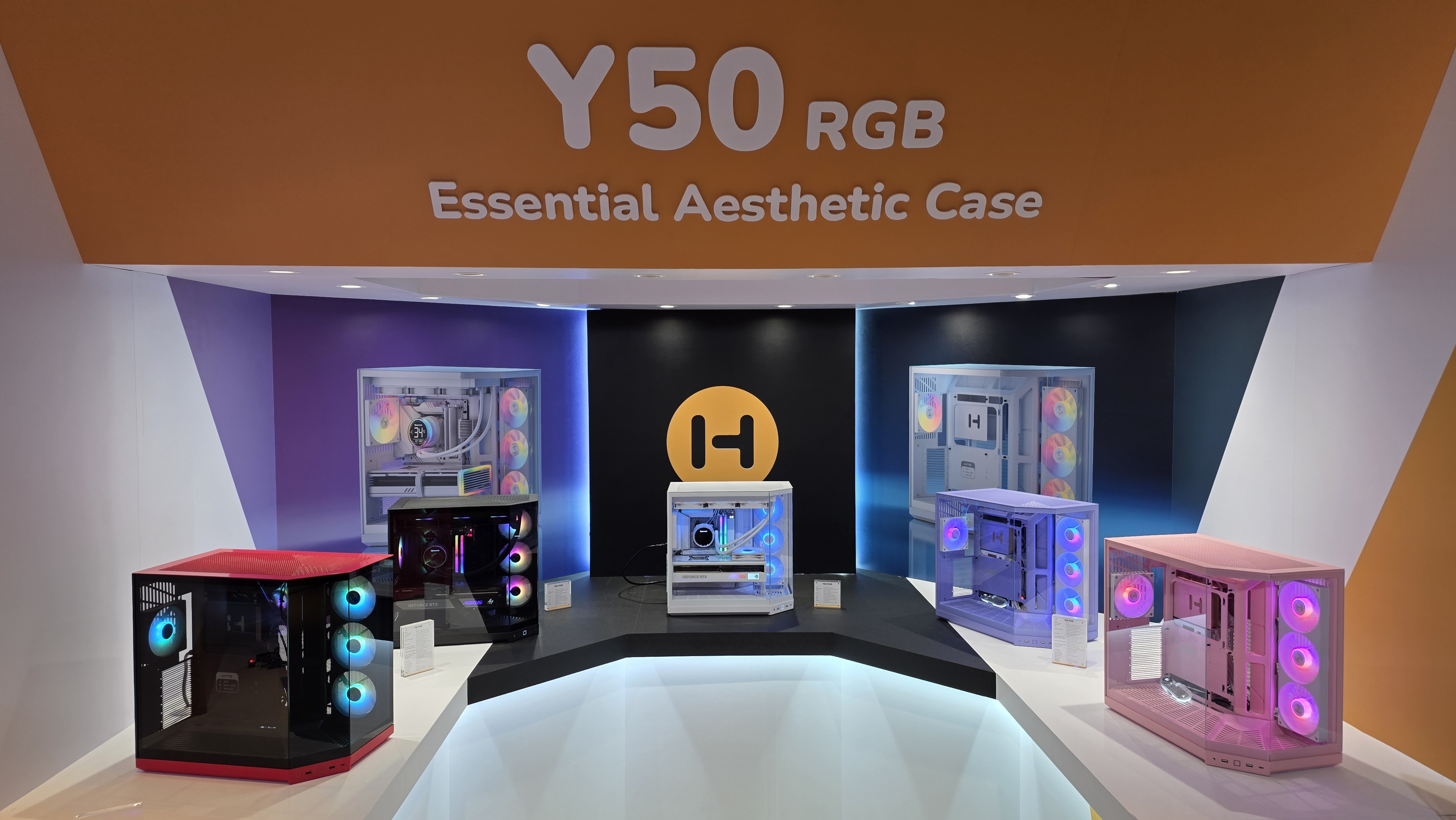
But enough of those cases, because we’re talking about the Y50 RGB, which comes in four colors (snow white, pitch black, black cherry, strawberry milk and taro milk), and is a more budget-friendly solution, priced at $99. In addition to the fun colors, the chassis includes four interesting aRGB fans, which we’ll delve into in detail later on. That’s enough backstory; it’s time to explore the Hyte Y50 RGB and find out if it earns a spot on our Best PC cases list.
Building in the Hyte Y50 RGB
The Hyte Y50 RGB was an absolute pleasure to build in. There was a fair amount of clearance between the motherboard tray and cable cut-outs, so I didn’t have to perform any wizardry to route a specific cable. This is in large part due to the size of the Y50 – it has enough space to accommodate some larger E-ATX motherboards, as well as standard ATX and smaller form factors.
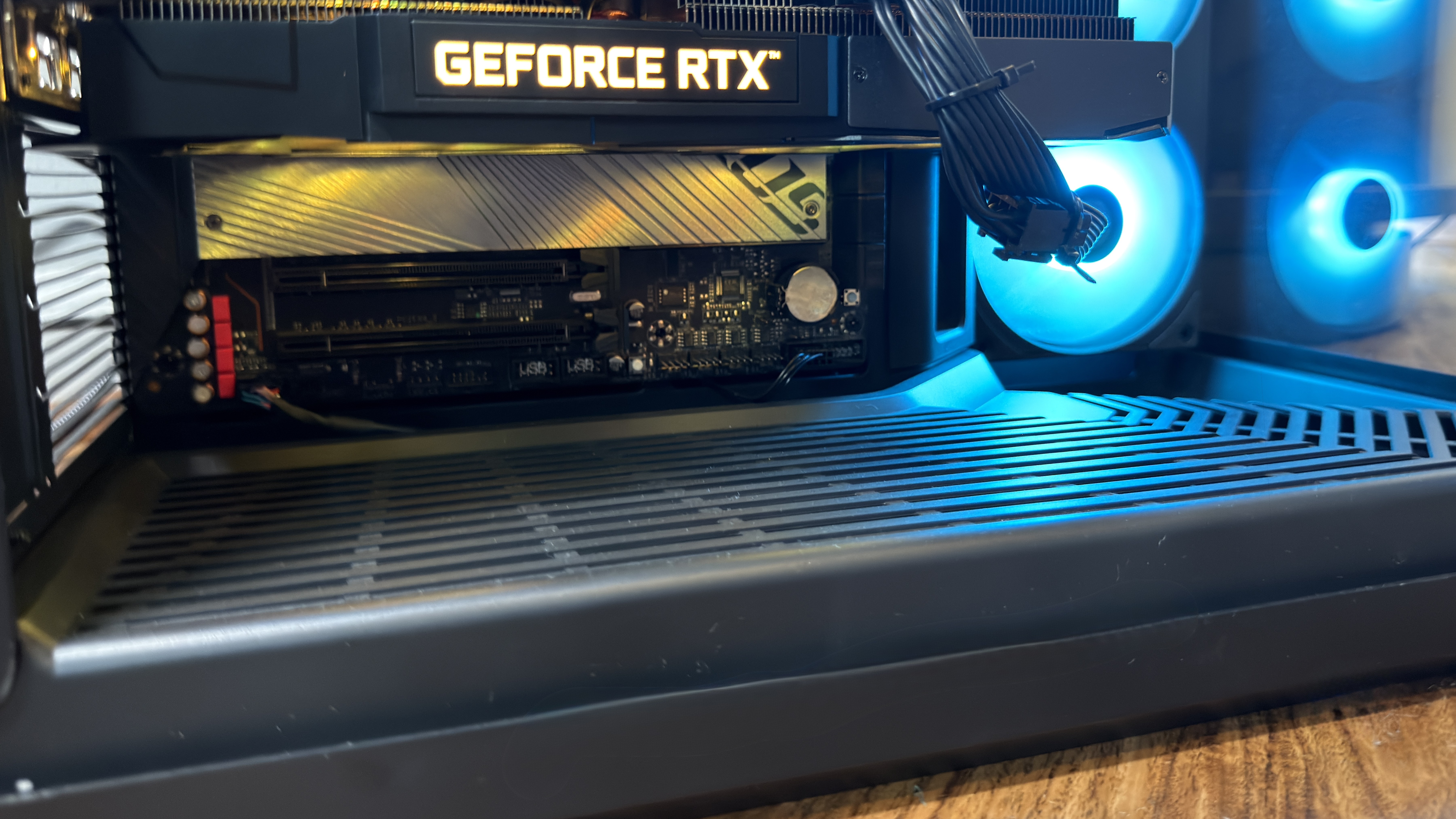
For perspective, the Hyte Y50 RGB can house GPUs up to 14 inches (360 mm), AIOs up to 360 mm, and CPU tower coolers up to 6.2 inches (160 mm). It's also a dual-chamber design, so there’s even more room behind the motherboard tray for the bulky 24-pin ATX cable. So, go ahead and install that MSI RTX 5090 Suprim! I would mention a giant CPU tower cooler here, like the Scythe Magoroku we reviewed, but the best move with a case like this would be to install an AIO liquid cooler such as the ASRock Phantom Gaming or any from our best AIO coolers list.
The rear of the case has plenty of space to install sleeved PSU cable extensions, or an extra string of SATA or even Molex power cables since it’s a dual-chamber design. If you’re unfamiliar with the term “dual-chamber,” it just means that the case is split, which allows for more room behind the motherboard tray (where the PSU lives) for cables. However, this usually results in a boxier/stout silhouette.
My favorite part of building in the Hyte Y50 RGB was when I discovered that the front-panel IO cable was bridged into one block. Ask anyone who’s built a PC, and they’ll tell you that one of the worst parts is connecting the front IO cables, because they’re tiny, and the text on the board that attempts to explain the correct orientation is even smaller. So, Hyte saves a lot of frustration by combining the headers into a single block that only fits one way.
Features
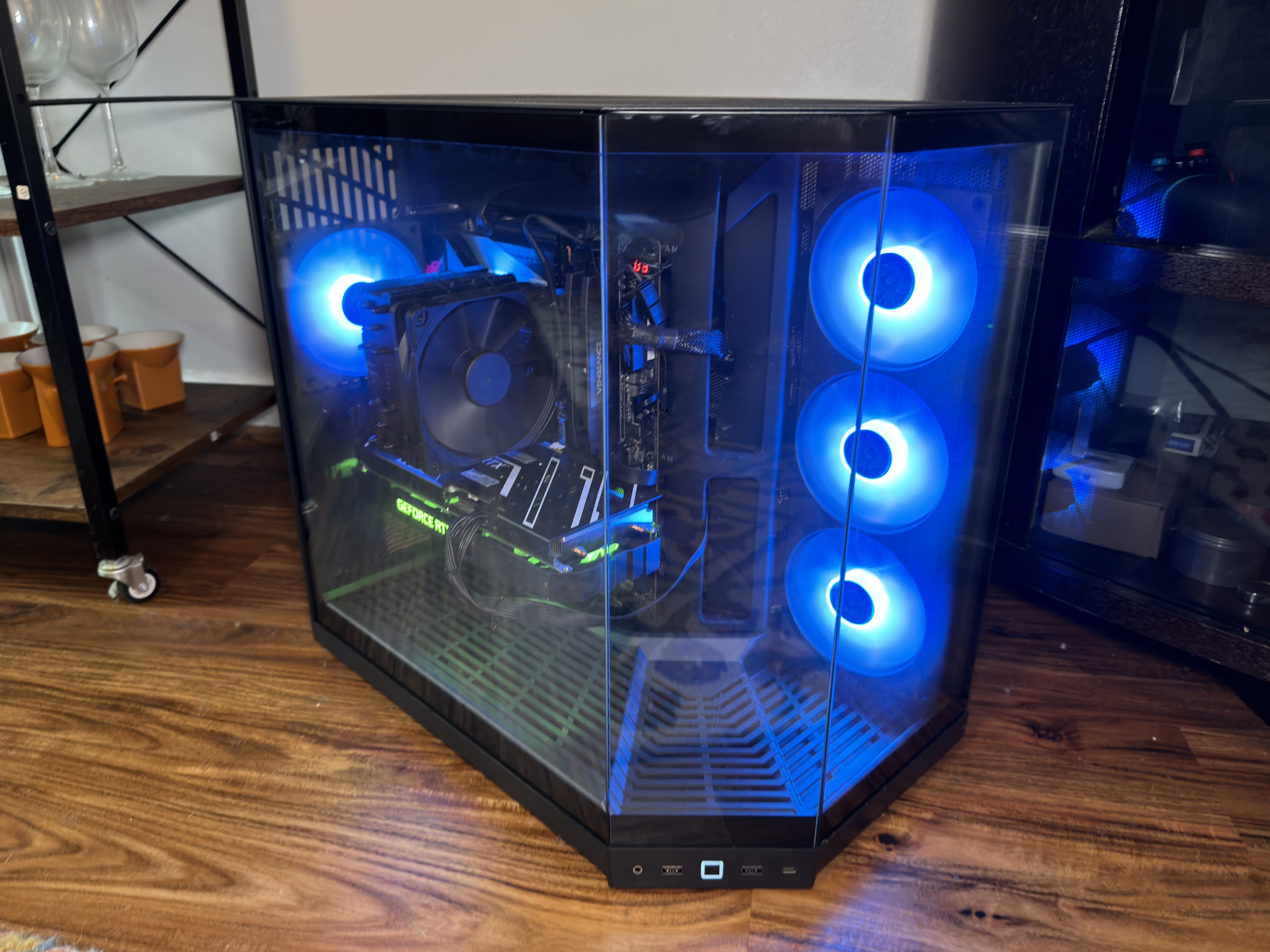
After I finished building, I realized how many quality-of-life changes Hyte made to the existing design of the Y-series. For example, there’s no longer a giant forehead or chin. In other words, the dead space above and below the glass you see in the Y60/Y70 is effectively gone in the smaller Y50.
Image 1 of 2
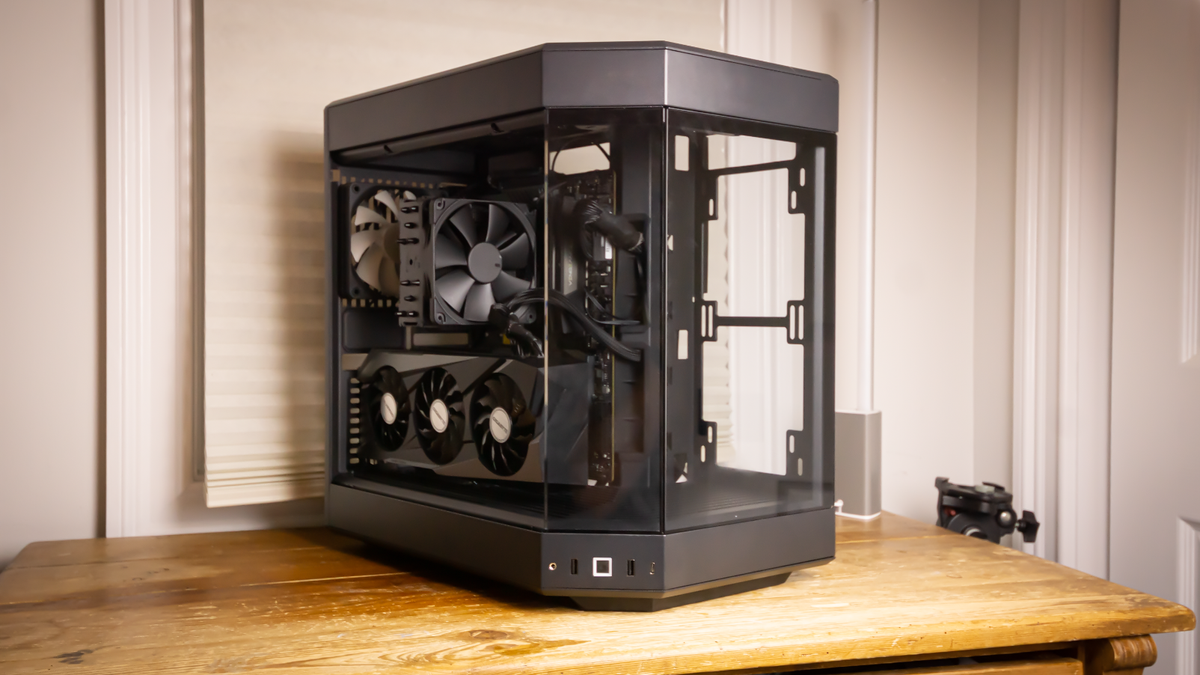
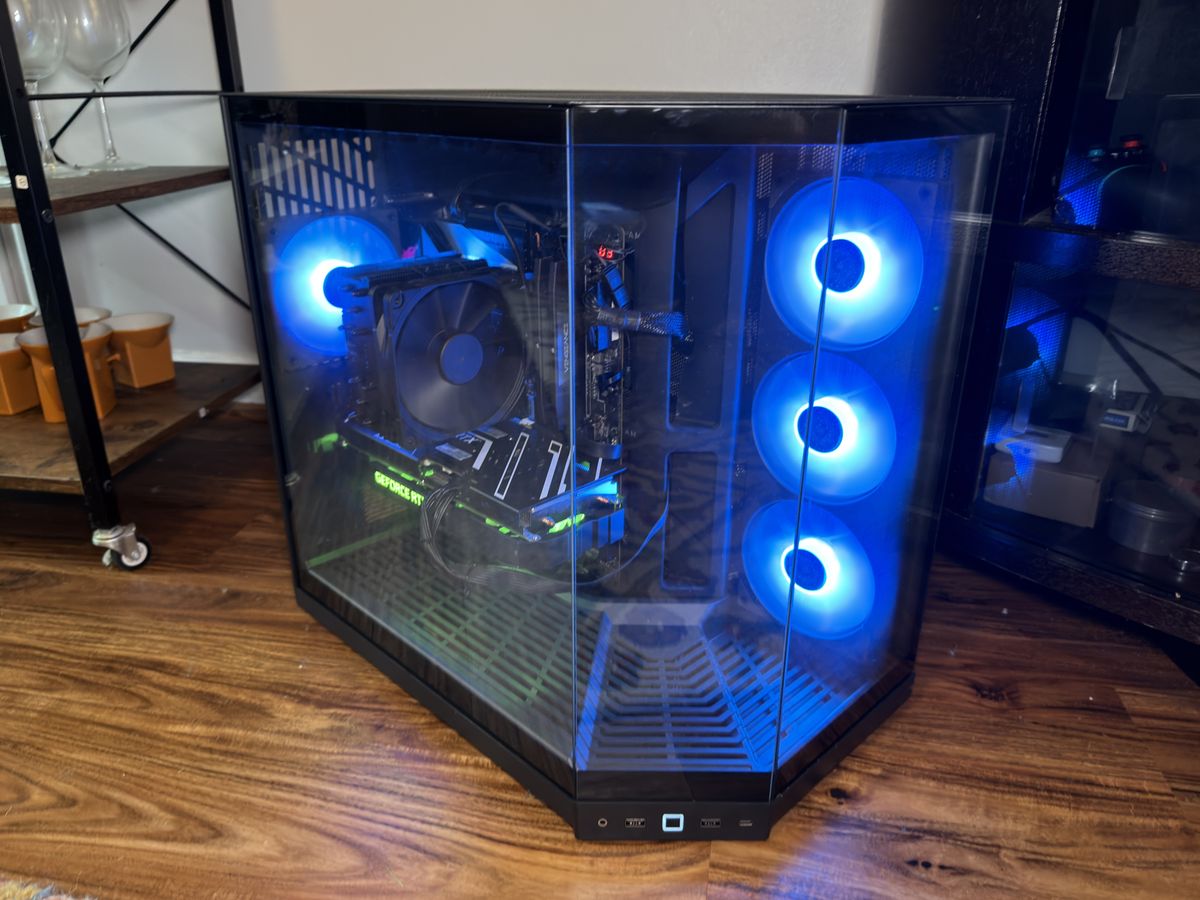
While that’s not a drastic change, it’s cool to see the evolution of a design over years and mullitple iterations.
The fans on the side aren’t individual spinners. Instead, they are one piece, which makes for a much easier install and frees up a couple of your motherboard’s fan connectors. Another neat feature is the reverse fan blade orientation, which lets you intake cool air without flipping the fans around just to see the ugly support brace. Hyte didn’t cheap out on the fans' design either: They can spin up to 1,500 RPM, which is respectable for stock case fans. Would I slap these fans onto a radiator? No, but the company does offer the “THICC FR12 RGB” series, which sports the same unibody body design, brighter RGBs, and far-better static pressure if that’s what you are looking to do..
Quite a few glass cases are heavily tinted, preventing you from getting a clear view of your fancy build. But with the Hyte Y50, the glass is as clear as day. That’s good, but it does mean you’ll want to do as good a job as possible organizing and hiding any cables in your build, as well as opting for attractive components. This design is obviously all about showing off.
Despite M.2 drives having long-since overtaken SATA in popularity, Hyte hasn’t forgotten about SATA; sleds are included that can hold a very respectable 6x 2.5-inch or 2x 3.5-inch drives. So, if you’re looking to add lots of storage, you can use more than your motherboard’s M.2 ports.
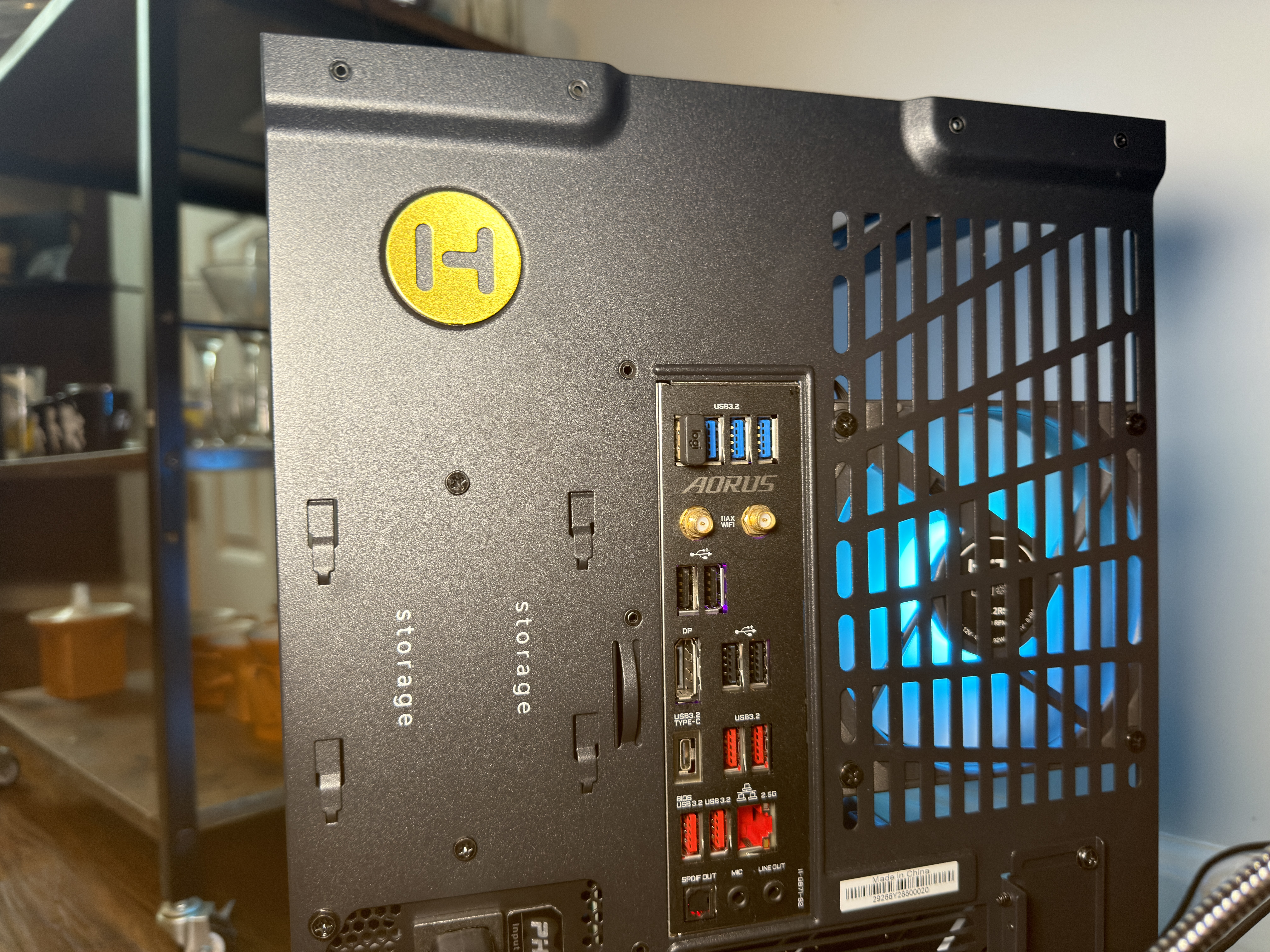
From the back of the case, you can see the mounting holes for adjusting the height of 120 mm exhaust fan, as well as where the SATA storage sleds slot in, above the horizontal power supply mounting location.
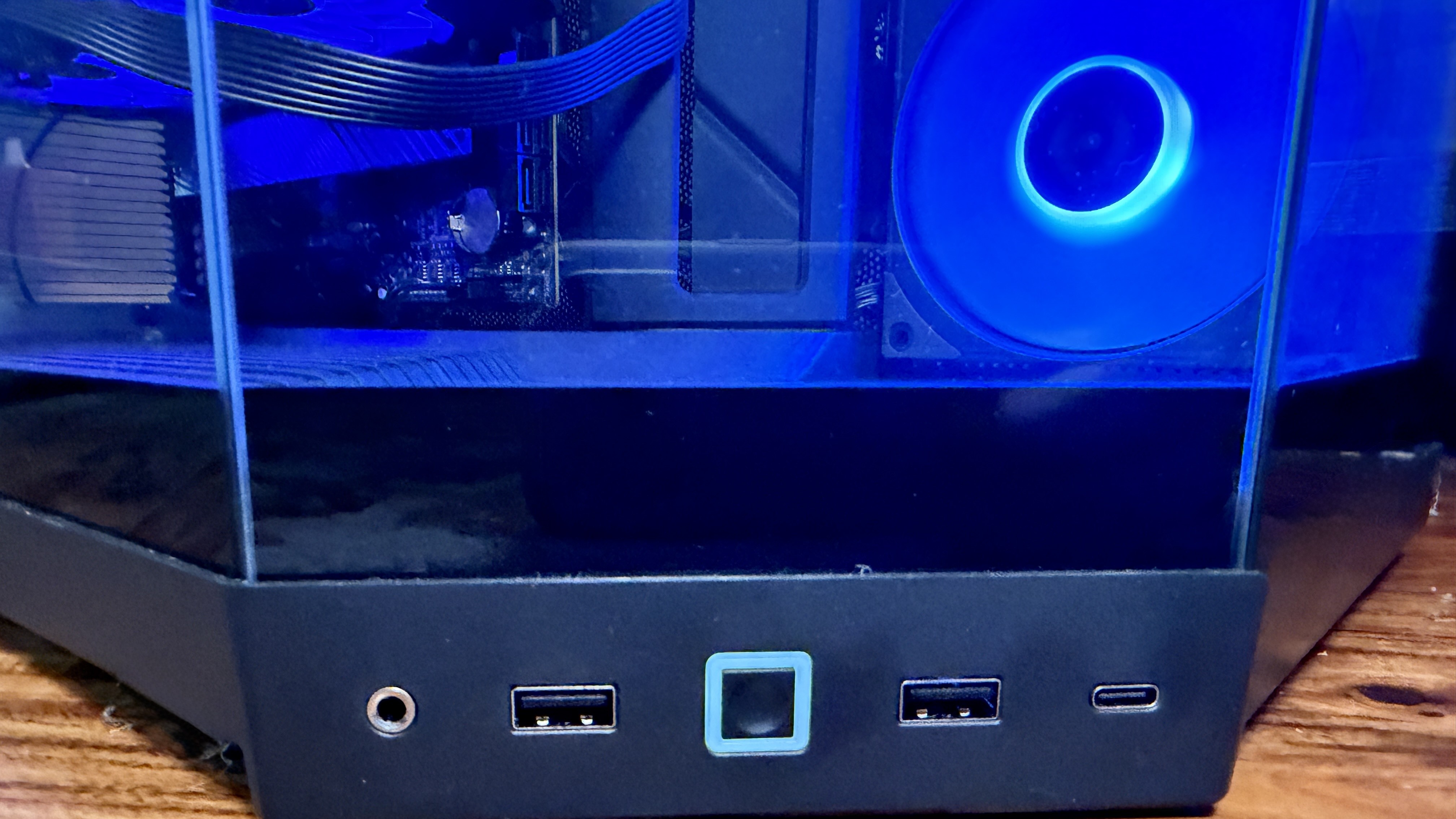
The front IO is the typical pair of USB Type-A (5 Gbps) and a single Type-C (10 Gbps) connector, along with an audio/mic combo jack. I wish Hyte included an RGB control button, but the company, of course, wants you to use its robust Nexus software suite for lighting control.
Obviously, with a case like the Hyte Y50 RGB, support for water cooling has to be abundant, and it is. The top of the case allows for radiators as big as 410 mm long and 46 mm thick. The side can accommodate up to 360 mm, and the rear supports 120 mm, where the included exhaust fan lives.
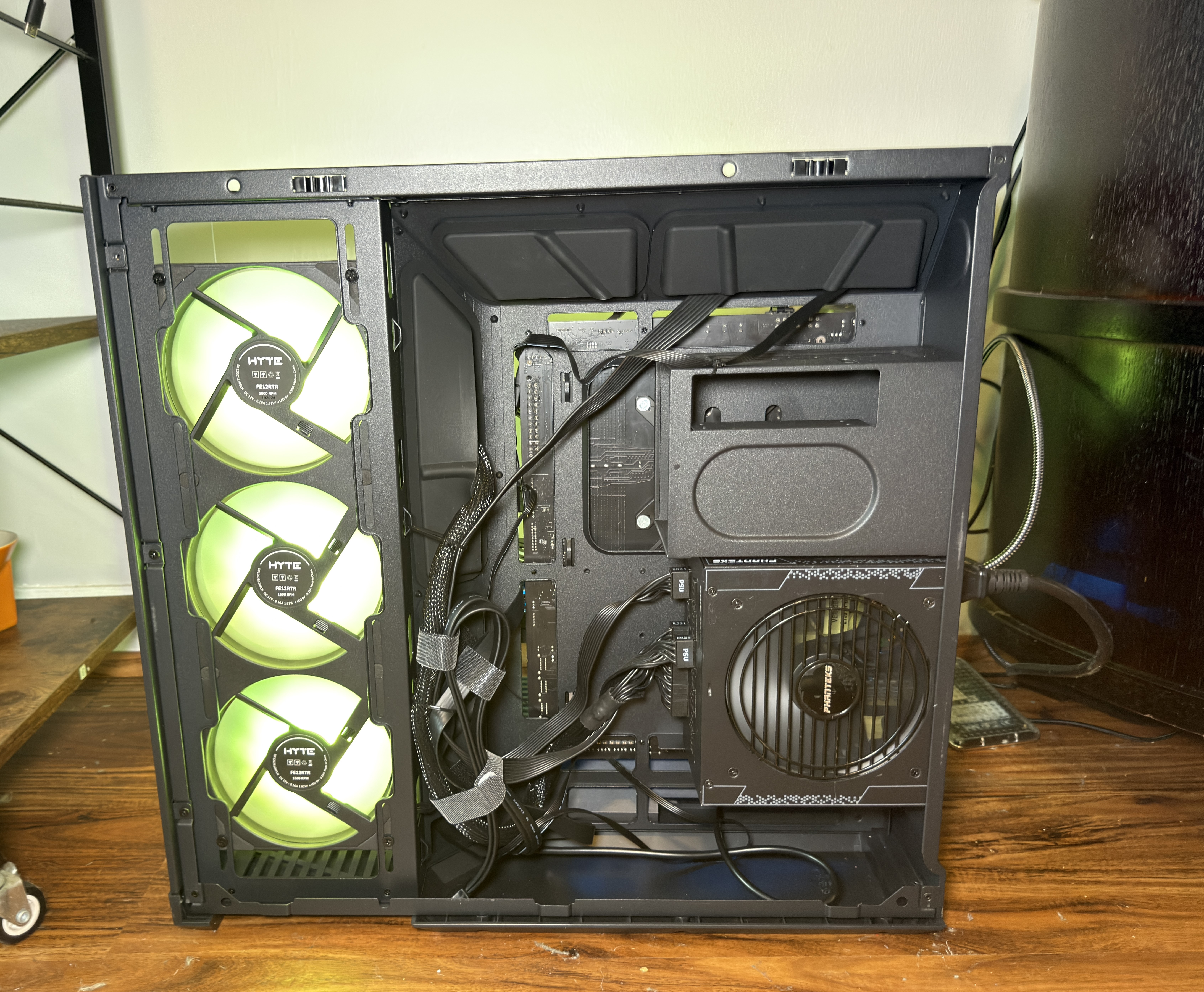
Since this is a dual-chamber case, you get a ton of room for cables around the back, without having to worry about your side panel bulging outward. While I only installed the minimum amount of hardware here, I could have loaded this case up with storage, expansion cards, and more and still closed the side panel with ease.
Bottom Line
Hyte has made a name for itself in the PC building space as a brand that prioritizes aesthetics first – and usually that means most of its products have landed on the more expensive side of the spectrum. But the rising cost of RAM, storage, and GPUs means enthusiasts are looking for a bargain anywhere they can find one. And for $99.99 with three glass panels and four RGB fans, plus space for high-end components, there’s a lot of value here for those who want to show off their increasingly expensive PC parts.





 English (US) ·