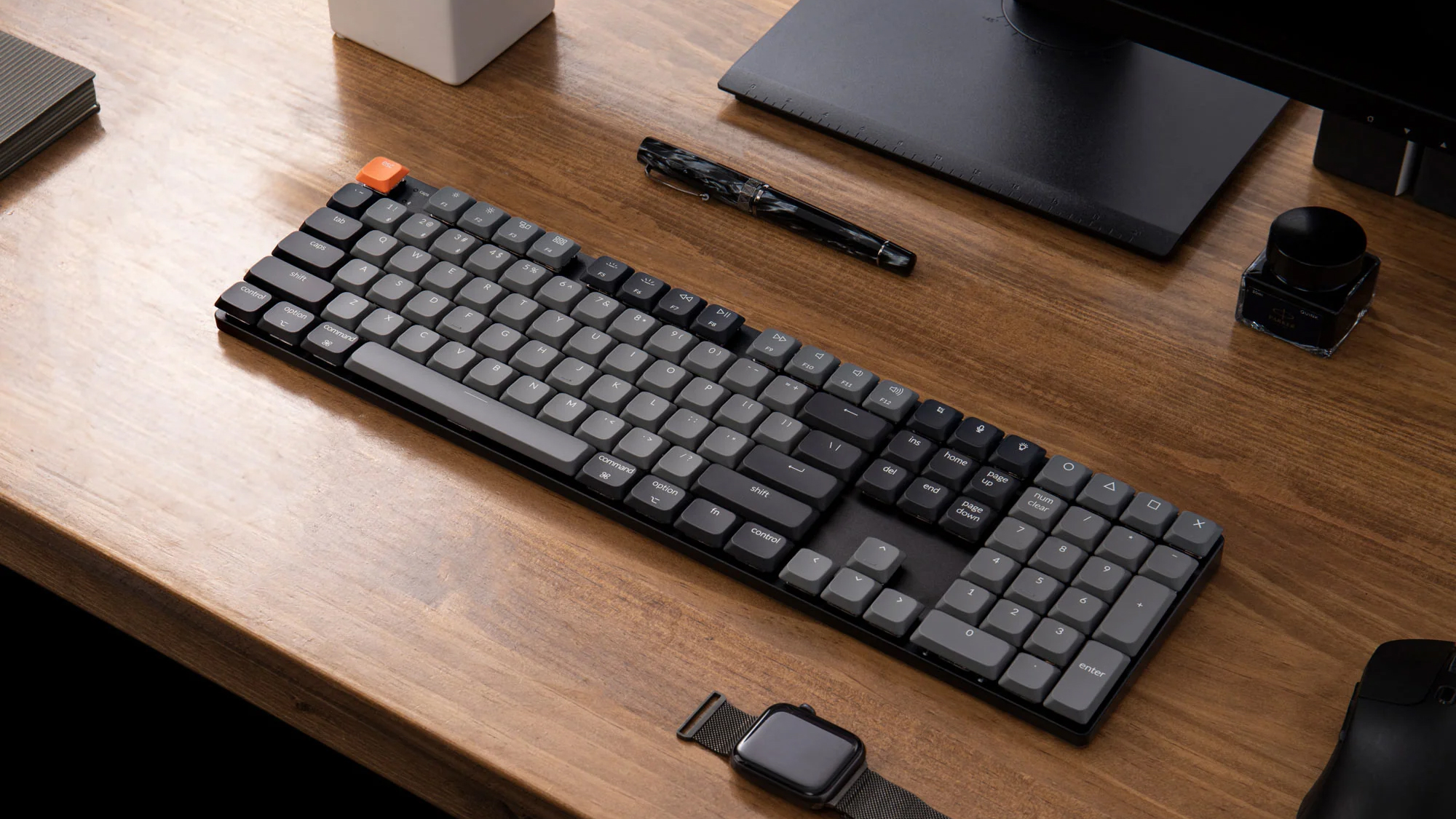
Whether it's primarily for data input, or you just like lots of customizable keys for gaming, plenty of people swear by full-sized keyboards. And at just $55.99, returning to its lowest-ever price not seen since June, the Keychron K5 V2 is one of the best deals we've seen on an 108-key mechanical clacker during this Black Friday deals season. It sports tactile pre-lubed Brown (or Banana) switches at this price, and a white backlight.
Aside from the lack of RGB lighting, of the areas where Keychron cut costs here is that there is no RF connectivity. You'll need to either connect via Bluetooth 5.2 or via USB-C (wired) for serious gaming. But you do get four layers of foam / film for pleasing sound. And you can easily program all those keys via its QMK firmware or the company's web-based Launcher app.
I've reviewed and owned multiple low-profile Keychron models, and currently use the compact K3 HE at my standing desk. The slimmer profile makes these keyboards easier to slip into a bag and travel with, but that's less likely with a full-sized model. The shorter 3.1 mm of travel distance may make a difference in gaming. But mostly the decision whether to opt for a traditional or low-profile keyboard comes down to preference and whether or not you like your keyboards to be slim.
The K5 V2 of course supports Macs or Windows devices, with accessory keys for each and a switch at the back. And with three Bluetooth profiles on the K5 V2, you can even program different key layouts for different operating systems, and easily switch between the two.
Download the Tom's Hardware app for up-to-the-minute updates on iOS and Android.
* The listed previous prices can vary based on retailer, as many use different metrics, like 90-day rolling averages or ‘estimated value’ due to ongoing shortages and price hikes.
Get Tom's Hardware's best news and in-depth reviews, straight to your inbox.
After a rough start with the Mattel Aquarius as a child, Matt built his first PC in the late 1990s and ventured into mild PC modding in the early 2000s. He’s spent the last 15 years covering emerging technology for Smithsonian, Popular Science, and Consumer Reports, while testing components and PCs for Computer Shopper, PCMag and Digital Trends.

 2 hours ago
5




 English (US) ·