
 4 hours ago
4
4 hours ago
4
The year of the Android desktop?
Googlebooks offer premium hardware and deep smartphone integration, but you may not like the price.
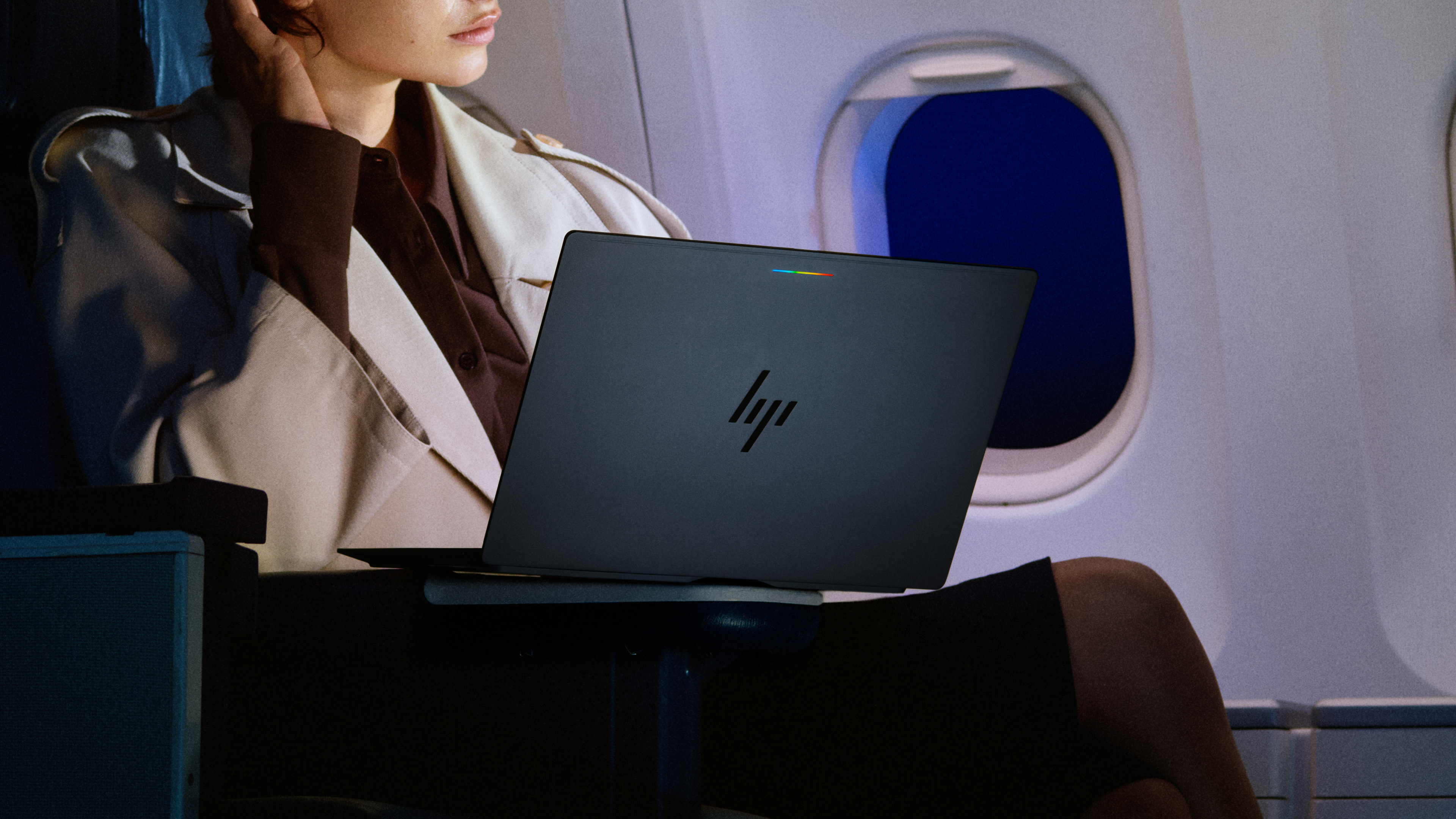
Google isn't making its own hardware, but several big laptop makers are selling Googlebooks. Credit: Google / HP
Google isn't making its own hardware, but several big laptop makers are selling Googlebooks. Credit: Google / HP
Google is ready to take a swing at laptops… again. The company has had a lot of success in phones, but it has struggled to parlay that into an effective strategy for larger screens. Chromebooks have been fine as a budget option, but it seems like Google has accepted they’ll never compete with macOS or Windows. That’s where Googlebooks come in. These new Android-powered laptops are intended to be “real” computers, featuring premium hardware, on-device apps, and powerful development tools.
After the Googlebook reveal at I/O this year, Google’s partners are now ready to sell you one. The first Googlebooks are available from several OEMs that have been making Chromebooks over the years, but don’t expect Chromebook pricing. There’s only one model under a grand, and the rest are well above that.
Familiar hardware
The bulk of Chromebooks have been budget machines, and they looked the part. Googlebooks, however, feature bright OLED screens, metal builds, big haptic trackpads, and the Glowbar. All the machines have this illuminated bar on the lid, but it doesn’t do much for now. It lights up when the device boots and can display battery level, but Google says it’s going to release an API for developers to add more features.
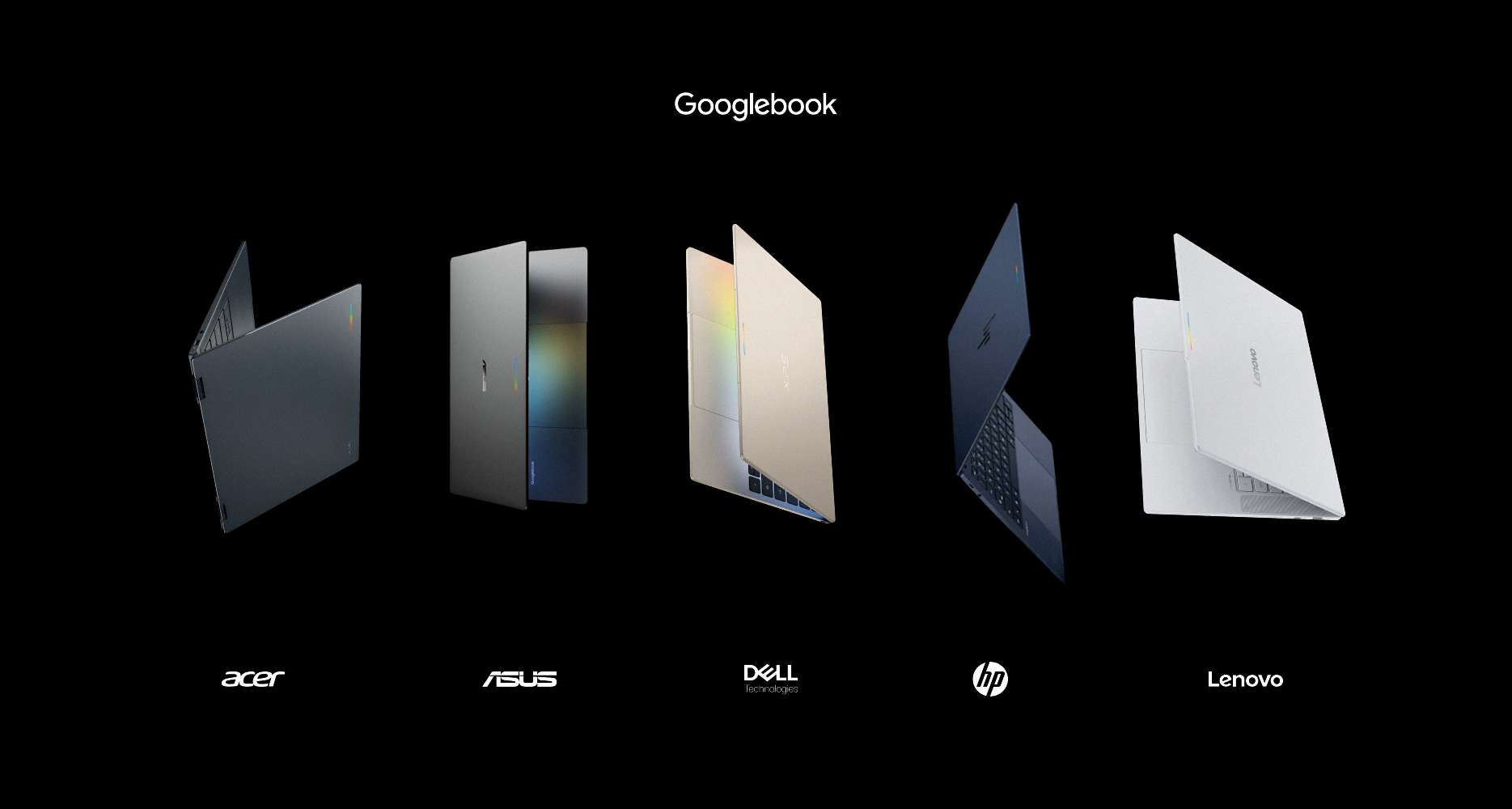
There will be five Googlebooks at launch.
Credit: Google
There will be five Googlebooks at launch. Credit: Google
Across the full lineup, Google says you can expect 16GB of RAM with 32GB upgrades for some models. At launch, the machines will run either a Snapdragon X Elite or an Intel Core Ultra Series 3 (Panther Lake) chip. Both platforms have an NPU capable of 45 TOPS of on-device AI performance, and all the designs are fanless. Regardless of the exact model, Google says you can expect up to 14 hours of video playback and 16 hours of web browsing.
Here are all the launch models and their starting prices.
| CPU | Intel Core Ultra 5/7 (Panther Lake) |
| Memory | 16 GB | 256 GB+ |
| Display | 14-inch 2.8k OLED touch display, 500 nits |
| Measurements | 13.9mm, 2.7 lbs (1.22 kg) |
| Design | Aluminum and Magnesium chassis |
| Biometrics | Fingerprint sensor |
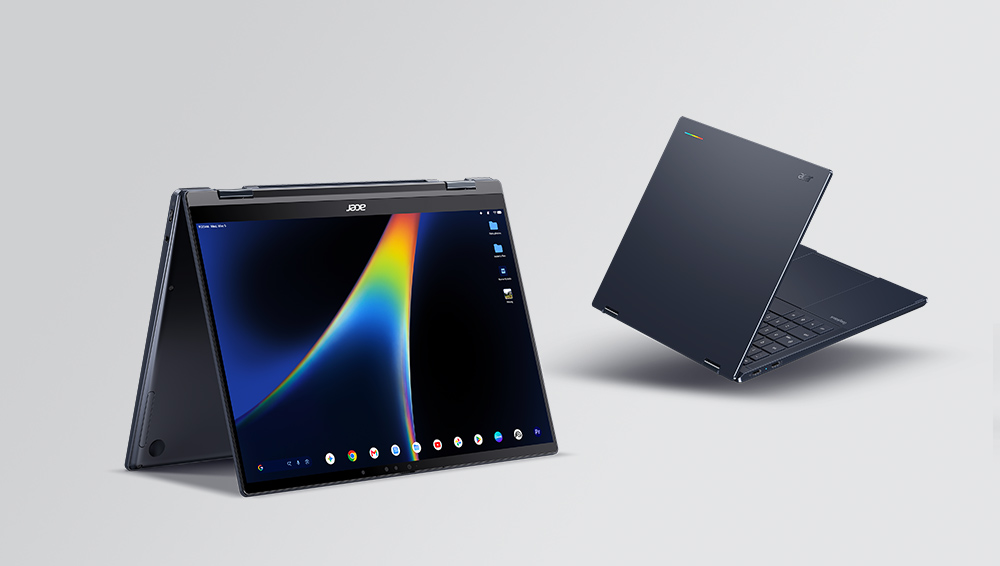
Acer Googlebook 14
Credit: Acer
Acer Googlebook 14 Credit: Acer
| CPU | Qualcomm Snapdragon X Elite |
| Memory | 16-32 GB | 512 GB+ |
| Display | 13.4-inch 2.5k touch display, 500 nits |
| Measurements | 12.5mm, 2.5 lbs (1.13 kg) |
| Design | Machined Aluminum chassis, Haptic touchpad |
| Biometrics | Fingerprint sensor |
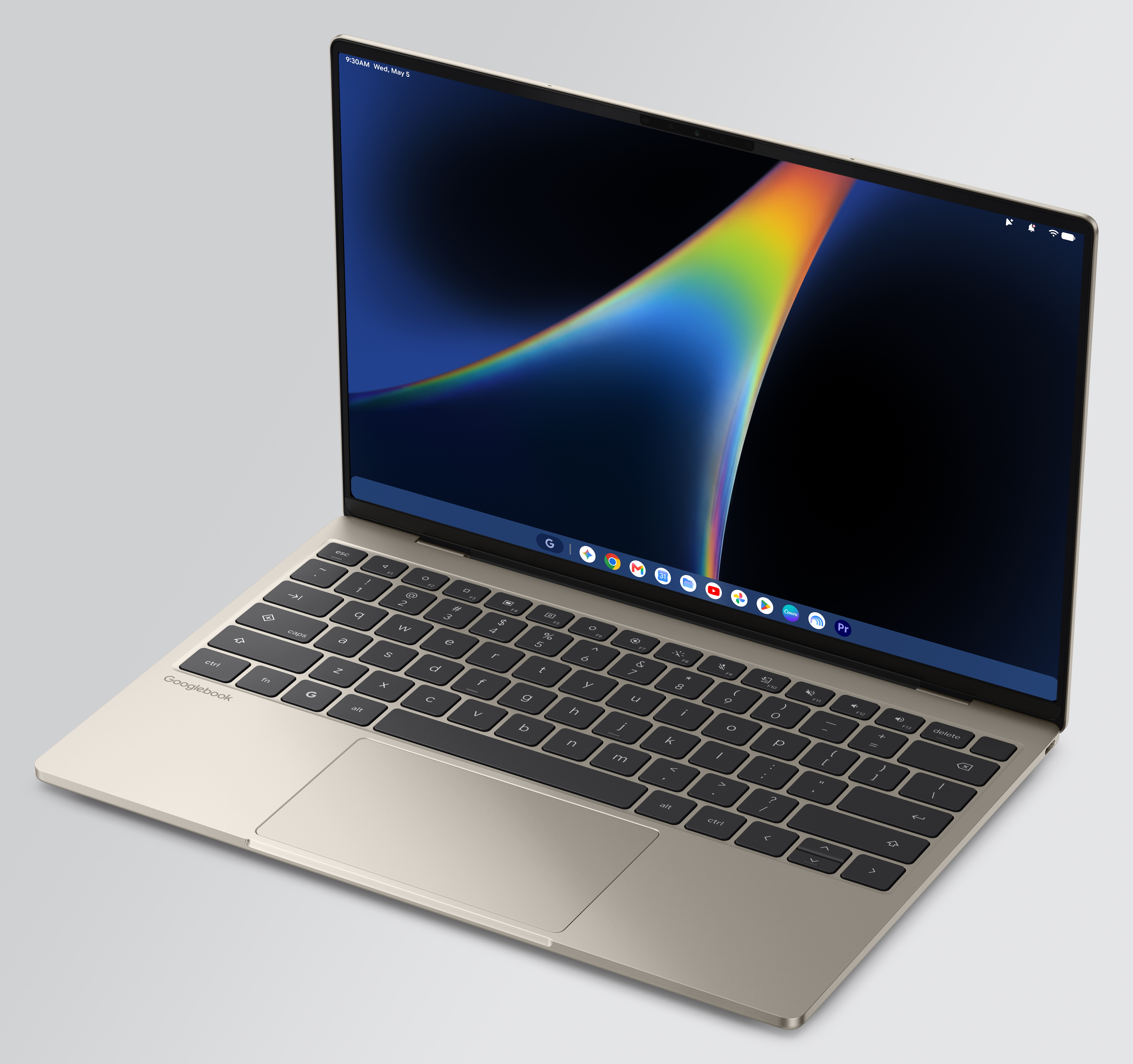
Dell XPS Googlebook
Credit: Dell
Dell XPS Googlebook Credit: Dell
| CPU | Qualcomm Snapdragon X Elite |
| Memory | 16-32 GB | 256 GB+ |
| Display | 14-inch 2.8k OLED touch display, 500 nits |
| Measurements | 14mm, 2.7 lbs (1.22 kg) |
| Design | All-Aluminum build, Haptic touchpad |
| Biometrics | Fingerprint sensor |
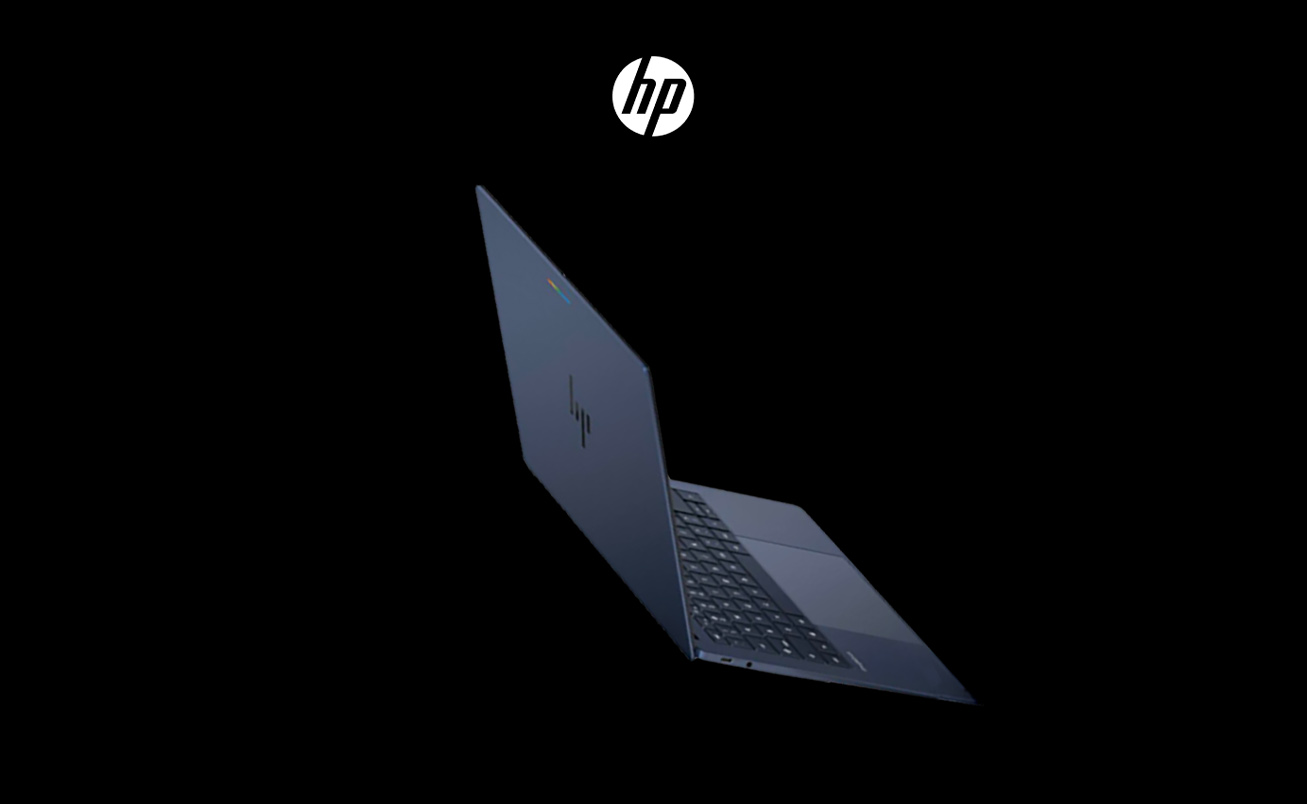
HP Googlebook 14
Credit: HP
HP Googlebook 14 Credit: HP
| CPU | Intel Core Ultra 5 (Panther Lake) |
| Memory | 16 GB | 256 GB+ |
| Display | 15.3-inch 2.8k OLED touch display |
| Measurements | 15.95mm, 2.68 lbs (1.22 kg) |
| Design | Magnesium-alloy and carbon fiber chassis, Haptic touchpad |
| Biometrics | Face auth and fingerprint sensor |
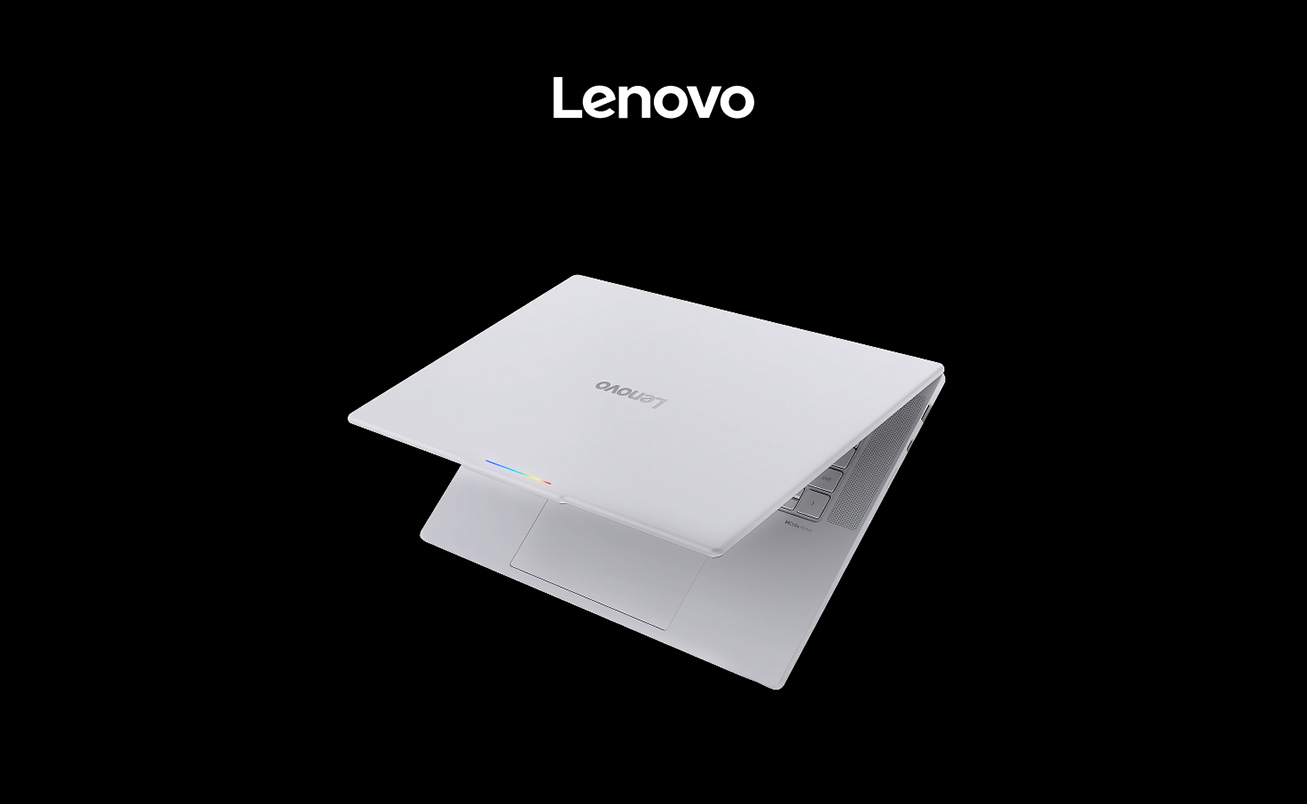
Lenovo Googlebook 15
Credit: Lenovo
Lenovo Googlebook 15 Credit: Lenovo
| CPU | Intel Core Ultra 5/7 (Panther Lake) |
| Memory | 16-32 GB | 256 GB+ |
| Display | 14-inch 3k OLED touch display, 500 nits |
| Measurements | 14.0mm, 2.2 lbs (1.0 kg) |
| Design | Aluminum and Magnesium chassis, Haptic touchpad |
| Biometrics | Fingerprint sensor |
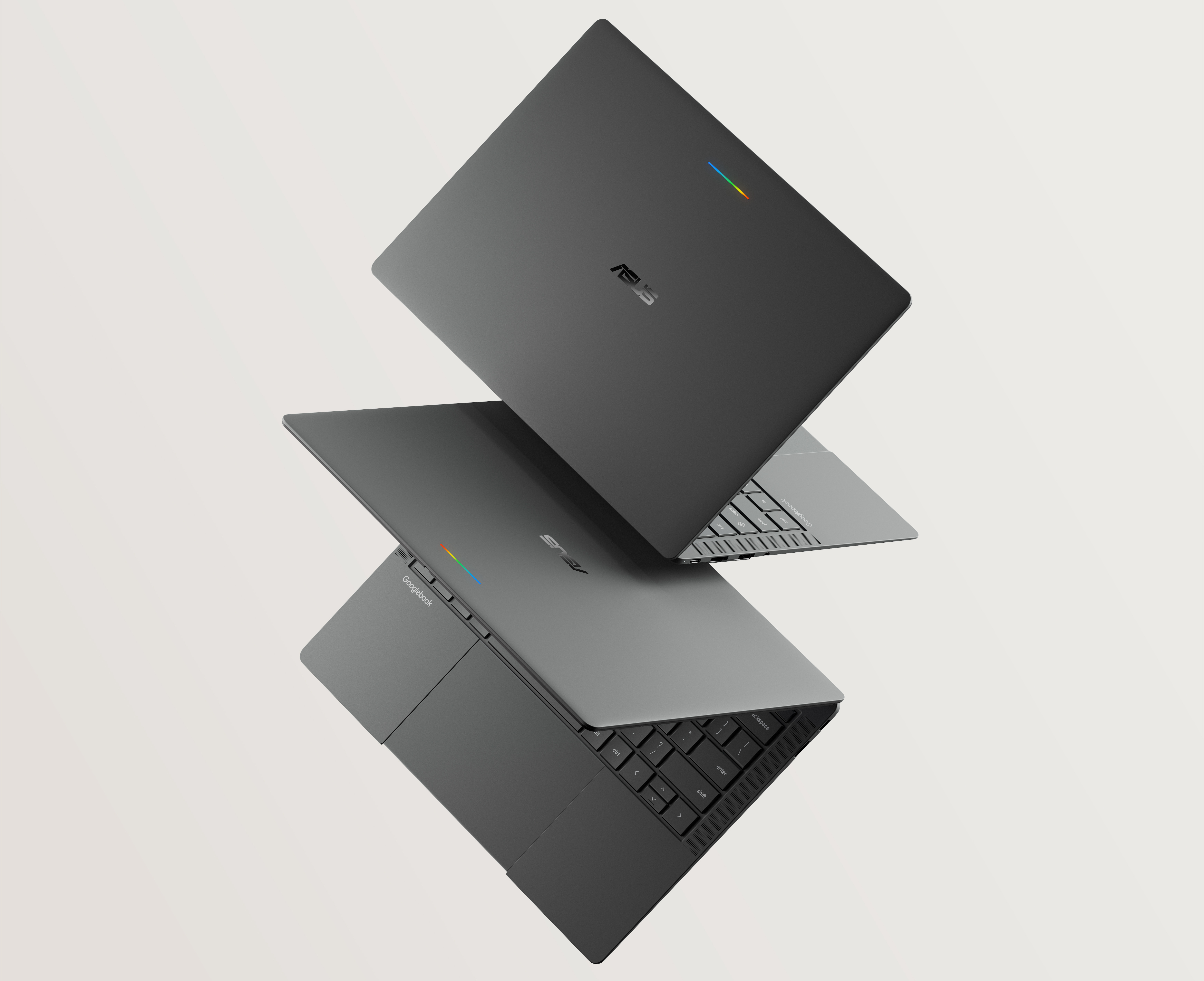
Asus Googlebook 14
Credit: Asus
Asus Googlebook 14 Credit: Asus
The Acer model is the cheapest, and it’s also the only convertible in the lineup. The price jump from that device to the next cheapest (the Dell XPS) is a substantial $300, and the rest of the launch laptops are $100 more than that. Google’s partners launched a few Chromebooks in this price range, but they didn’t see wide adoption.
The apps you know but bigger
A major part of Chrome’s failure to truly compete with macOS and Windows is down to software availability. Google tried multiple ways to shoehorn local apps into its web-first platform, but it never took. The advantage of starting from scratch, according to Google, is that these new laptops share the same software stack as Android phones. That means you can run Android apps natively without all the VM weirdness of ChromeOS, and there are a ton of those.
Google is aware of the sordid history of running phone apps on desktop PCs. It’s often a clunky experience using a phone app designed for touch on a large screen with a keyboard and mouse, but the company claims you may be surprised how many apps in the Play Store are now optimized for laptops. The Play Store client will call out apps and games that have been optimized for bigger displays, and Google says more apps are being updated for laptops all the time. There will also be a “desktop-class” version of the Chrome browser preinstalled on Googlebooks.
Even if optimized, these are still going to be apps designed for, and primarily used on, smartphones. It’s unclear if they’ll offer the kind of power people expect for a $1,300 laptop. On the gaming side, Google notes that its Level Up program is delivering more experiences suitable for a keyboard and mouse, but the selection of desktop-ready games won’t be anything like what you get on Windows or macOS.
There is, of course, nothing stopping you from using phone apps on a Googlebook if you want. They’ll run in a window, and you may not even need to install them. With Cast My Apps, the apps installed on your Android phone are available instantly on a Googlebook. They appear in a dedicated app list on the laptop, allowing you to open and use them without touching the phone. The file manager can also seamlessly access files on your Android phone.
Continue On can let you pick up where you left off on a phone or Googlebook.
Credit: Google
Continue On can let you pick up where you left off on a phone or Googlebook. Credit: Google
Similarly, a feature called Continue On lets you pick up where you were in a phone app on the Googlebook version of the app. This requires developer support, so not all apps will carry over. Still, this level of integration with Android is not something you get on either Windows or macOS, which could make a Googlebook appealing if you’ve got a Pixel or Galaxy riding around in your pocket.
As you would expect, the Play Store is the primary source of apps for Googlebooks, and there will be some limits on sideloading. Google has confirmed to Ars that Googlebooks will enforce developer verification requirements for apps similar to Android phones. Under this system, only apps from developers who have verified their identities with Google will be eligible for installation from a downloaded APK file. This requirement will roll out broadly next year, but it’s being activated in a few markets in the coming weeks.
The AI play
Google is following through on its promise to make AI a core part of the Googlebook experience. Gemini models are going to be deeply integrated with the software, ready to work on your screen context with a cursor wiggle. Google calls this Magic Pointer, and it has a few suggestions about how to use it.
Let’s say you have an email or PDF with dates you need to add to your calendar. You can jiggle the cursor, point Gemini at the email, and get all the dates added in one go. If you get a suspicious email, you can invoke Gemini with your cursor and ask it to figure out if it’s a scam. You can also point Gemini at images and tell it to edit them or generate new versions without downloading anything. Useful? Maybe occasionally, but Google’s enthusiasm for Magic Pointer seems a bit premature.
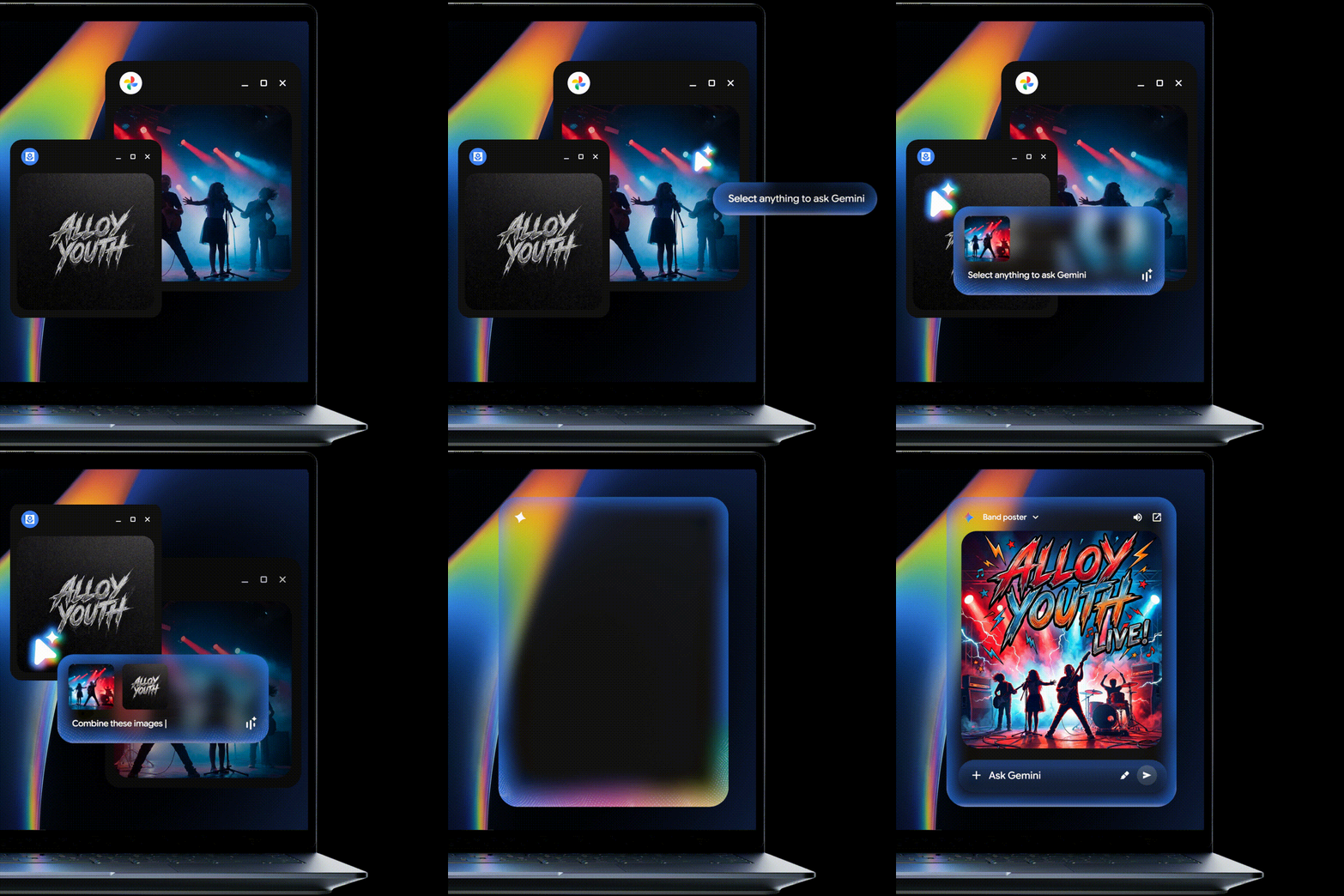
Magic Pointer
Credit: Google
Magic Pointer Credit: Google
Rambler, the AI-powered voice input tool that debuted on Pixel 11 phones a few weeks ago, will also be included on Googlebooks. That means you can start talking to fill text in any field with streamlined instant editing to remove “ums” and corrections. On phones, I’ve found this can make your writing voice sound like a sterile AI output, but if you’re just banging out a quick email, maybe that’s fine for most people.
AI-powered development is also a big part of the Googlebook experience. Devices will come with Antigravity, allowing you to task agents with development work. You can build, test, and even deploy apps right on your Googlebook, which might help fill some of the software gaps. For more serious developers, there will also be a full terminal environment for tools like Claude CLI and Antigravity CLI.
Nth time’s the charm?
The initial OEM Googlebook lineup looks nice enough—you might not be able to tell them apart from a premium Windows laptop at a glance, but this is a completely different animal. You’re relying on Google to follow through on its promise to make Android apps work for a large-screen environment, which has been a problem in the past. If Google can’t get developers to produce powerful desktop-class apps for Googlebooks, it’s going to be hard to justify buying one over Windows or macOS.
Google’s focus on Googlebooks as an Android companion makes sense given the shared software foundation, but it’s also a risky play. These are not cheap devices—by Google’s own admission, it’s going after the premium laptop market. While Android accounts for about half the phones across Googlebook launch markets, Google’s OS has a much smaller share of the premium segment (over $600) compared to Apple. People buying more expensive phones might also consider a high-end laptop like a Googlebook, but there’s little reason for iPhone owners to buy one of these in a world where the MacBook Air is around the same price, and the MacBook Neo is even cheaper.
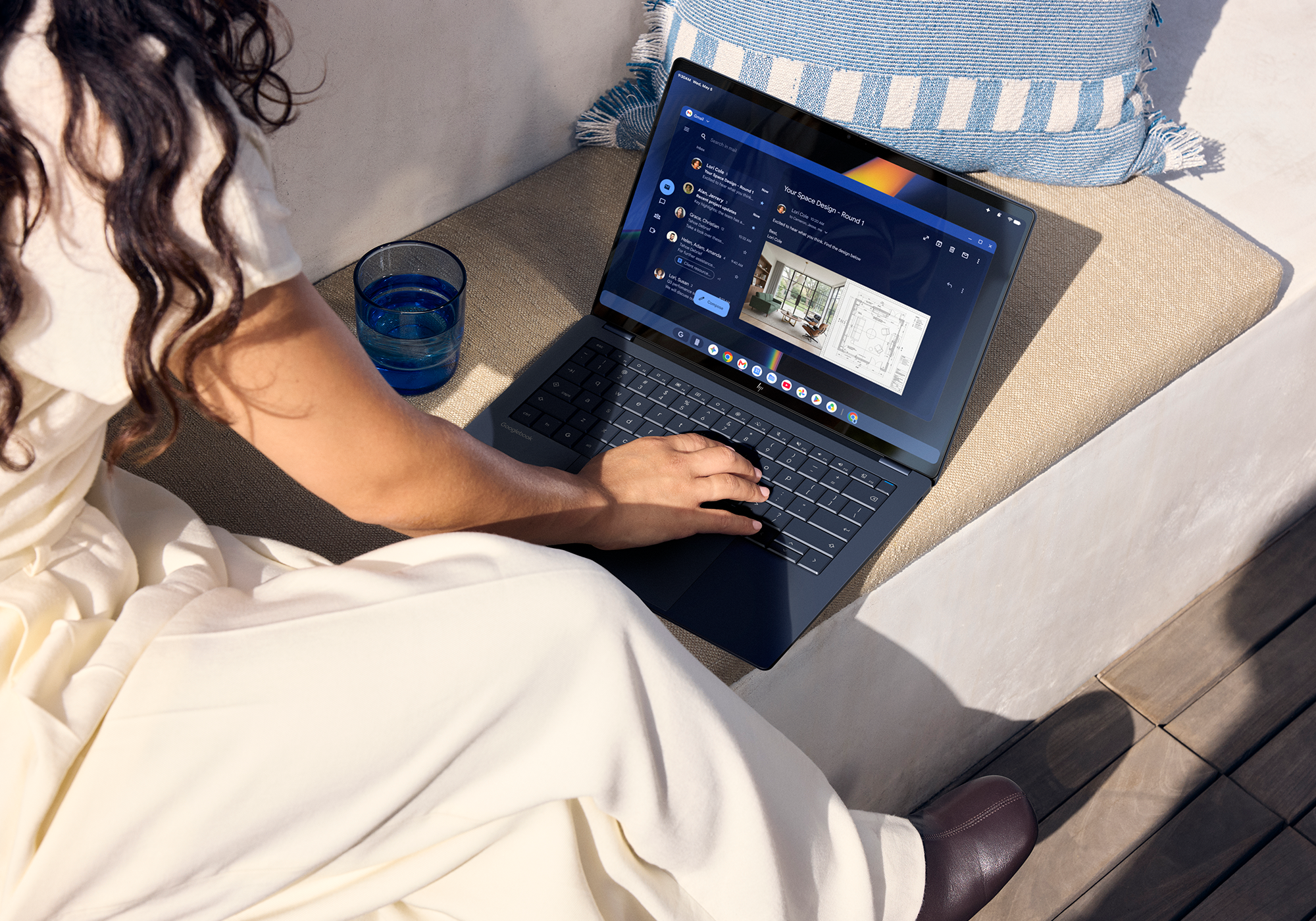
HP Googlebook 14
Credit: HP
HP Googlebook 14 Credit: HP
Preorders for the five launch models are going live today, and they will be on shelves on October 4 in the US. Launch day is October 5 in Canada, the UK, Ireland, France, Germany, and Australia. Devices will be available from the Google Store, Best Buy, and other “select retailers.” All Googlebooks, even the cheapest $899 model, will come with a year of Google AI Pro, offering expanded Gemini usage limits and 5TB of Google Drive storage. All models will also include a year of GeForce Now for game streaming.
If you decide to order one of these laptops, you’ll have to go in somewhat blind. No one outside of Google and its OEM partners has spent considerable time using these devices, and we don’t expect anybody to have one for testing until launch day.

Ryan Whitwam is a senior technology reporter at Ars Technica, covering the ways Google, AI, and mobile technology continue to change the world. Over his 20-year career, he's written for Android Police, ExtremeTech, Wirecutter, NY Times, and more. He has reviewed more phones than most people will ever own. You can follow him on Bluesky, where you will see photos of his dozens of mechanical keyboards.






 English (US) ·