
- AI agents have found what looks like an undiscovered Maya site
- The discovery came from a scan of LiDAR data collected by Mexico
- Experts are now investigating the site that the AI has flagged up
While some of AI's 'talents' — like putting together decent-looking restaurant menus — could legitimately be called into question, there's no doubt that these bots and agents excel at spotting patterns in vast troves of data, and the latest evidence comes from the potential discovery of a hidden Maya archaeological site in Mexico.
Google researcher Pietro Miotti described having a "random thought on vacation" about how AI agents might be used to sift through LiDAR datasets — topographical maps of Earth's terrain, captured from space satellites.
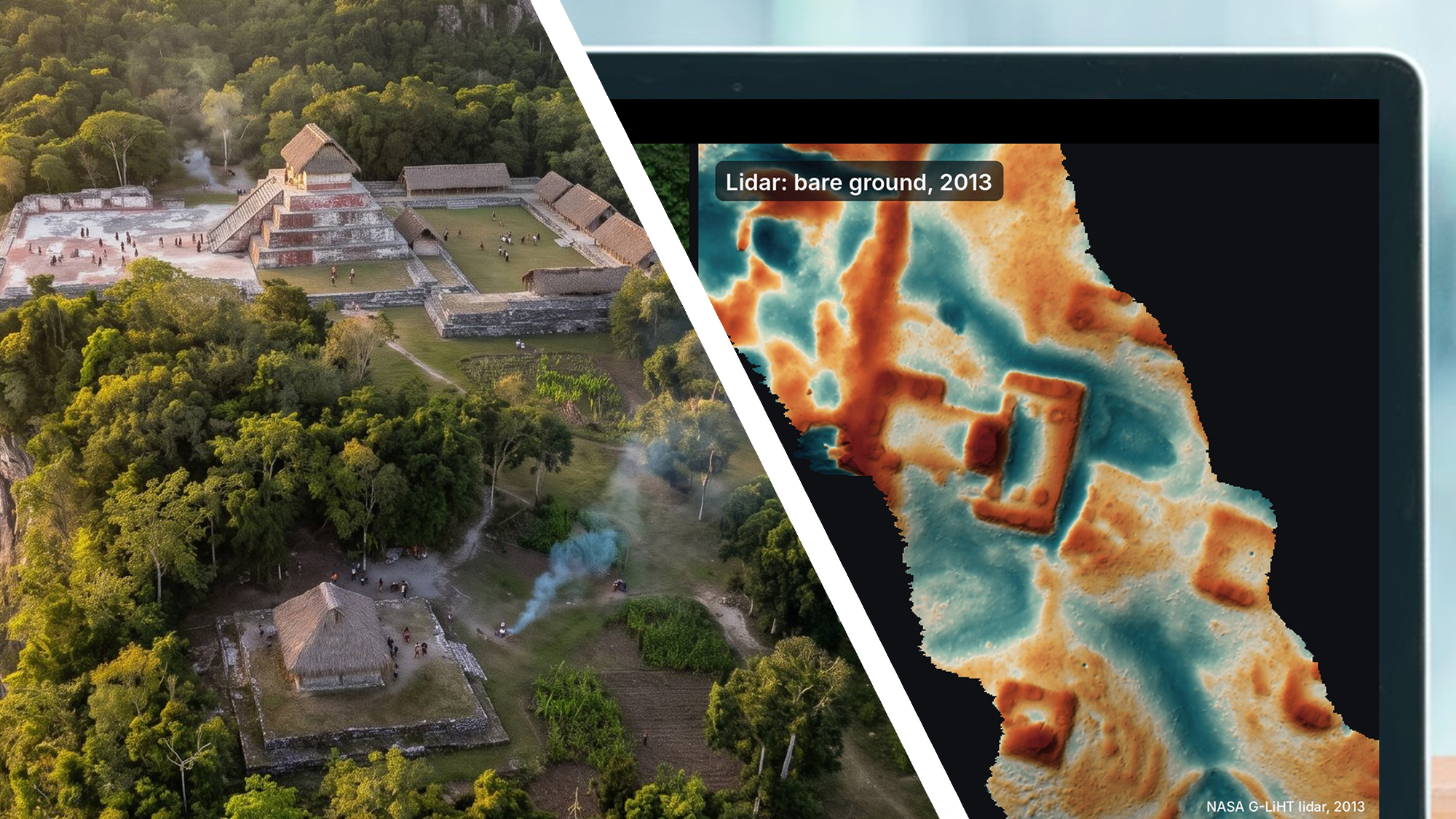
LiDAR (Light Detection and Ranging) lasers can cut through cloud cover and forest canopies, enabling researchers to find shapes in the landscape that aren't visible to the naked eye (or in landscapes that aren't even accessible to archaeologists).
Miotti tasked 48 agents from different AI apps with scouring through a NASA database of LiDAR information collected across Peru, and the AI came back with multiple hits on structures that could be buildings. A second scan by the agents identified one particular site that hasn't yet been mentioned in scientific literature.
'LiDAR the entire planet'
My AI agents found an unmapped Maya site in Mexico, using LiDAR data from a NASA dataset. 72 hours from a random thought on vacation to a reply from Mexico's national archaeology institute. What a time to be alive… https://t.co/3bOMEdUFdFNovember 10, 2026
The AI assistance didn't stop there: Miotti's bot helpers told him who he should get in touch with about the discovery (Mexico's National Institute of Anthropology and History or INAH), and then composed an email (in Spanish) to the relevant agency, including details of the find and where on the map it's located.
Representatives from INAH got in touch, and the experts there are investigating further: a real result, in 72 hours. The site's status as an ancient Maya site hasn't been confirmed yet, but it looks like a promising lead, and one that was made possible by AI.
"I think we're on the brink of a revolution across every science, not just coding, physics and math," says Miotti. "And at this point we should LiDAR the entire planet and let agents help us find the rest."
Miotti still wasn't finished there, and got Gemini to generate an image of how the site may have looked in 700 CE — when the Maya people were actually living there. In the modern era, some serious exploring can be done from a computer through a team of AI bots, as well as out in the field.

Follow TechRadar on Google News and add us as a preferred source to get our expert news, reviews, and opinion in your feeds.









 English (US) ·