
Lucasfilm
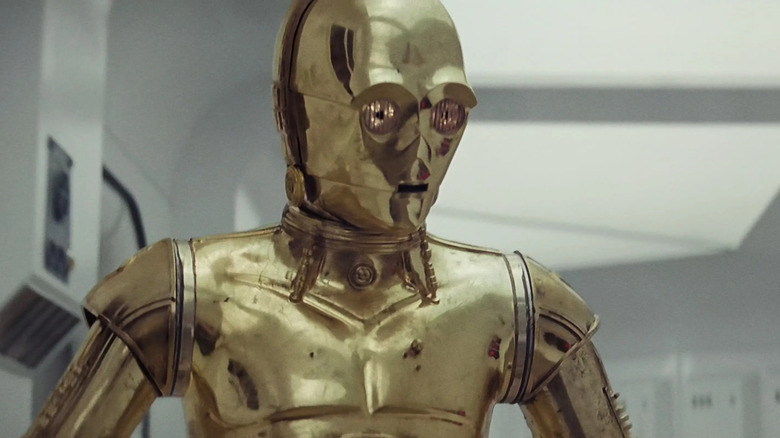
It's kind of astonishing that George Lucas' 1977 film "Star Wars: Episode IV — A New Hope" came together the way it did. Because it was such a success, the movie's development is basically public knowledge, as are the many half-baked ideas that Lucas once kicked around. Indeed, early drafts of the "New Hope" script are nothing like the finished film. Lucas had wanted to make a "Flash Gordon" movie based on the comics-turned-theatrical-serials that he was so fond of as a child, but producer Dino De Laurentiis would sell him the rights. Laurentiis, weirdly enough, had hoped that Federico Fellini — yes, the director of "La Dolce Vita" and "8½" — would call the shots on a "Flash Gordon" film, but he (unsurprisingly) wasn't interested.
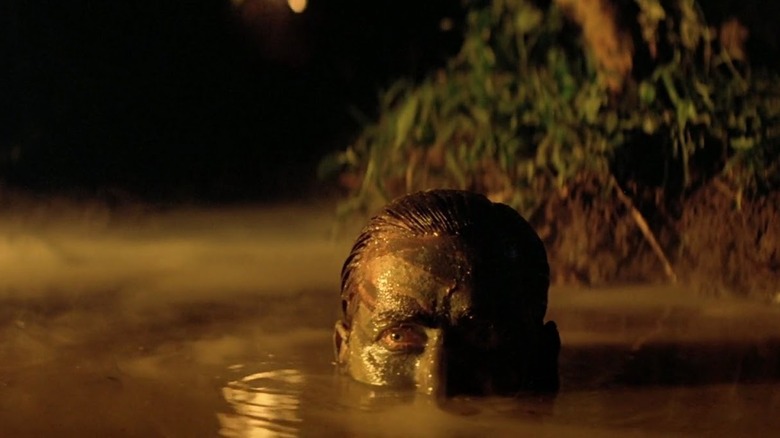
When interviewed by Rolling Stone in 1977, Lucas confirmed that "Flash Gordon" wasn't the only film he had been working on before turning his attention to "Star Wars." Rather, after launching his career with his 1971 feature directing debut "THX 1138," Lucas had originally intended to helm "Apocalypse Now," the heady 1979 Vietnam War epic inspired by Joseph Conrad's 1899 novella "Heart of Darkness." But no one in Hollywood was interested at the time, so the movie remained stuck in development hell until Francis Ford Coppola came aboard to direct.
"Apocalypse Now" is, of course, often regarded by cineastes as one of the best war films ever made. One can only imagine what Lucas' version would have been like. "THX 1138" proved that Lucas could make bleak, cynical movies, although "Star Wars" cemented him as a master of lighter, dazzling genre entertainment.
George Lucas spent years working on his version of Apocalypse Now
United Artists
George Lucas lamented that it took him "four and a half to five years" to get "Apocalypse Now" off the ground, which only happened after Francis Ford Coppola bought the rights back. Lucas added that he did everything he could to get the movie going, "but no one would go for it." He continued:
"[My version] was completely different than the one Francis is doing now. It was really more of man against machine than anything else. Technology against humanity, and then how humanity won. It was to have been quite a positive film. So, what happened was I finally got a deal for very little money to develop 'Star Wars.'"
The "man-against-machine" angle is intriguing and suggests that Lucas' version of "Apocalypse Now" would've been a sci-fi movie. It's worth remembering, though, that Lucas has never directed a movie set in the present day and only helmed one that takes place in the future. The latter, "THX 1138," unfolds in a bleak and dystopian hellscape. Meanwhile, his 1973 film "American Graffiti" is halcyon and sweet (it literally inspired a TV show titled "Happy Days"), while his "Star Wars" movies famously take place "a long time ago" and are exciting and upbeat. To Lucas, it appears, the past is inviting and the future is troubling, so that may have colored his approach to the story in "Apocalypse Now."
In fact, Lucas actually had something to say to that effect in his Rolling Stone interview. He spent years working on his version of "Apocalypse Now" and saw that we were messing up the world. Why not make a more kid-friendly film where things are positive?
George Lucas wanted to make a positive movie
Lucasfilm
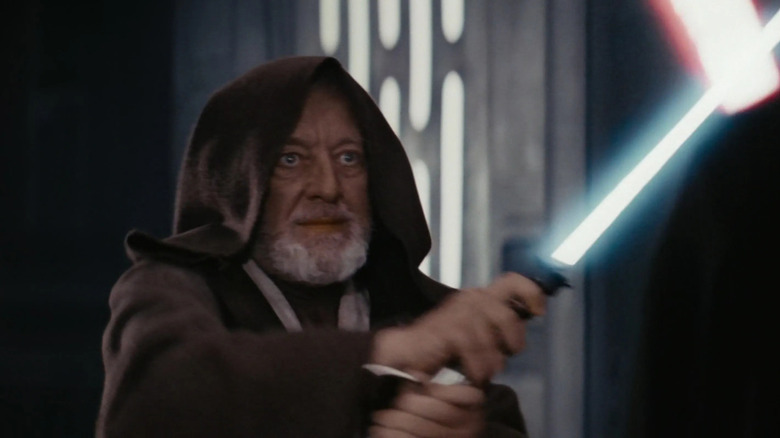
Continuing, George Lucas explained that after he made "American Graffiti," he received a lot of mail "from kids" who responded very positively to the film. So, if he was able to capture the imaginations of kids, then maybe that was his path. "Something inside me said, do a children's film," he recalled. It became "Star Wars." As he put it:
"I had gone around to all the studios with 'Apocalypse Now' for the 10th time and then they said, 'No, no, no.' So, I took this other project, this children's film. I thought: We all know what a terrible mess we have made of the world, we all know how wrong we were in Vietnam. We also know, as every movie made in the last 10 years points out, how terrible we are, how we have ruined the world, and what schmucks we are, and how rotten everything is. And I said, 'What we really need is something more positive.'"
Indeed, what Lucas is describing is perhaps the reason why "Star Wars" was so successful. It came at the end of a decade of film that was marked for its realism, bleakness, and dramatic plunge into the darkness of humanity. Movies like "Taxi Driver," "The Godfather," "A Clockwork Orange," and "Cries & Whispers" marked the period, characterizing the 1970s as a very dour time indeed. "Star Wars" kind of came out of left field, startling everyone with its unvarnished optimism. The good guys will win, the bad guys will lose, and kids can have a good time.
"Star Wars" has been playing that note for almost 50 years.




 English (US) ·