
There’s more anime being made now than at any point in the medium’s history. Each season brings a nonstop flood of new shows vying to stand shoulder-to-shoulder with the canon heavyweights—from the mecha deconstruction of Neon Genesis Evangelion and the old-school cool Cowboy Bebop to the modern blockbuster that was Attack on Titan. But no show has proven to have arms long enough to box with God—and that God, for me, is Fullmetal Alchemist.
Every time a new series crops up, firing on all cylinders, I find myself asking—almost involuntarily—whether it’s better than Hiromu Arakawa’s magnum opus. The answer is always no. Simply put, Fullmetal Alchemist didn’t just raise the bar; it rewired my brain chemistry for what anime can be.
In the decades since its finale, it’s become my standard‑bearer of greatness, the rubric against which every subsequent anime is measured. And to this day, no anime has ever ruled quite as hard or as completely as it did. The chasm between it and other shows only grows more apparent every time I revisit it.
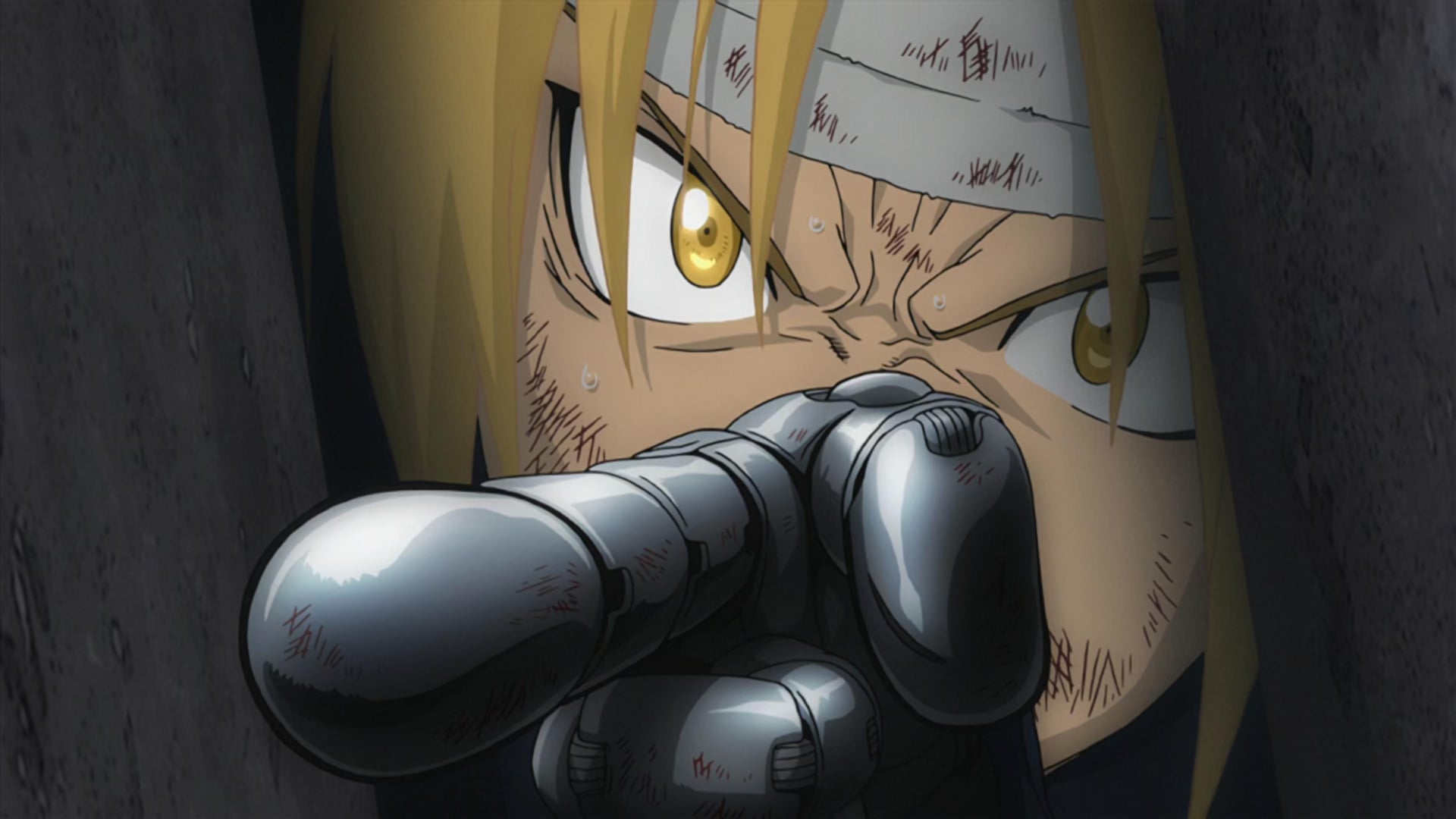
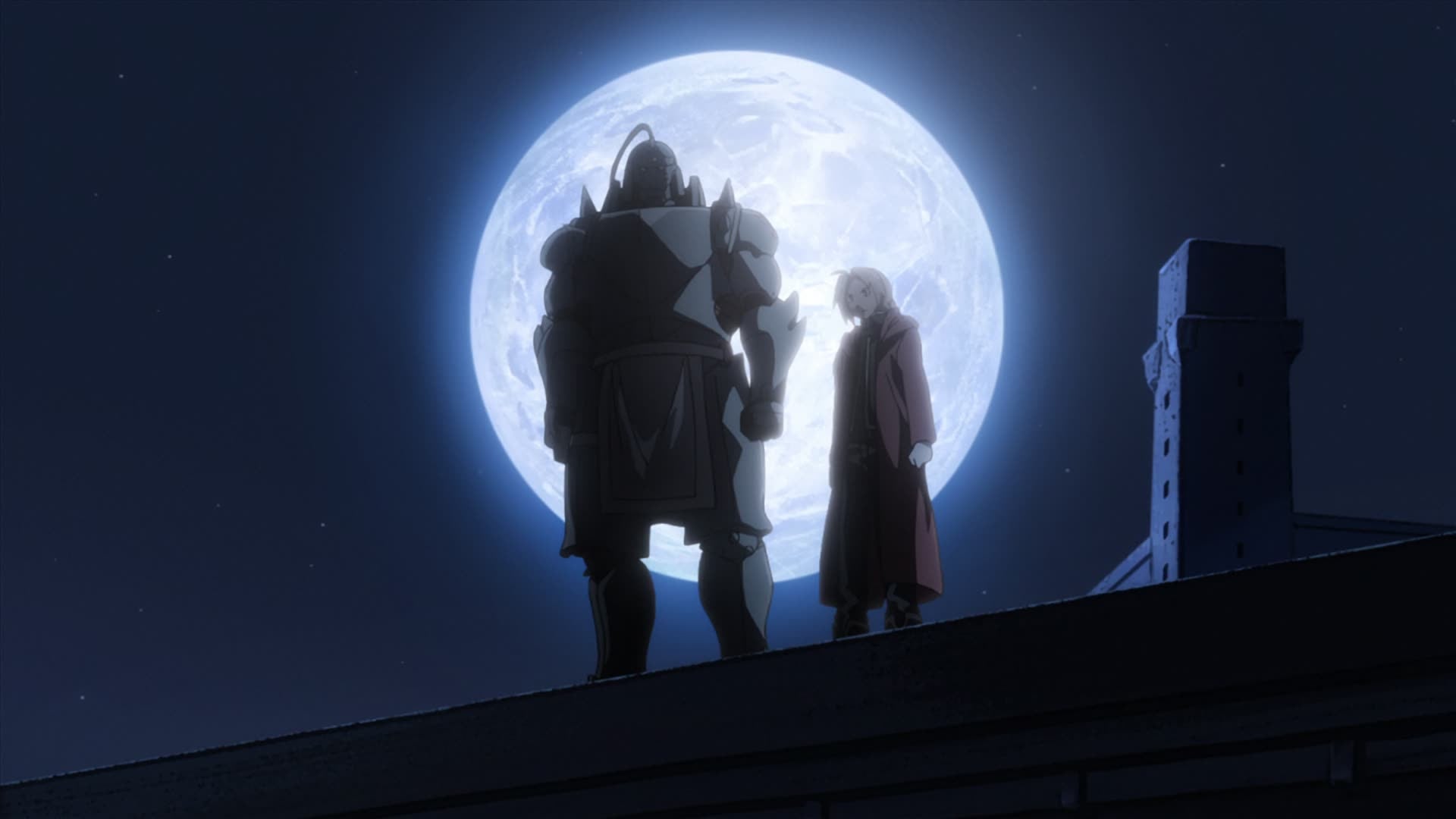
Fullmetal Alchemist tells the tale of Edward and Alphonse Elric—two brothers who, on October 3, 1911, paid the ultimate price for meddling with alchemy, the world’s closest thing to magic, in a desperate attempt to bring their mother back from the dead. The brutal consequences of their naivety are the loss of Ed’s right arm and leg and Alphone’s entire body. Outfitted with automail prosthetics and a full suit of armor, respectively, the brothers rove out in search of the Philosopher’s stone—a long-coveted alchemical artifact rumored to have the power to restore what they’ve lost.
Along the way, the Elrics gain allies among state alchemists, clash with the literal embodiments of the seven deadly sins, and confront moral gray areas against the stark backdrop of a world forever warped by the horrific price of power.
 © Studio Bones
Calling Fullmetal Alchemist the greatest anime of all time is about as cold an arguable take as you can get. Its GOAT status is so widely accepted that a quick scroll through MyAnimeList all but solidifies it as a permanent fixture in the pantheon of the most beloved anime ever made. If not at the apex, it’s at least in the top five in the decades since its premiere. It’s the kind of series that seasoned fans instinctively place on the shortlist of gateway recommendations in the same breath as Death Note because it’s a well-rounded showcase of everything the medium has to offer and then some.
A lot of FMA‘s reputation owes a lot to the superb artistry of Studio Bones and Akira Senju’s divine orchestral score, sure, but the rest of it comes from the story itself. FMA is unflinchingly political, morally tangled, and deeply human in ways that most shonen could never dare to be. What’s more, Arakawa’s absurdly resonant storytelling extends far beyond the Elric brothers, touching every corner of its ensemble, “good or bad,” in ways that blur the lines almost immediately.
 © Studio Bones
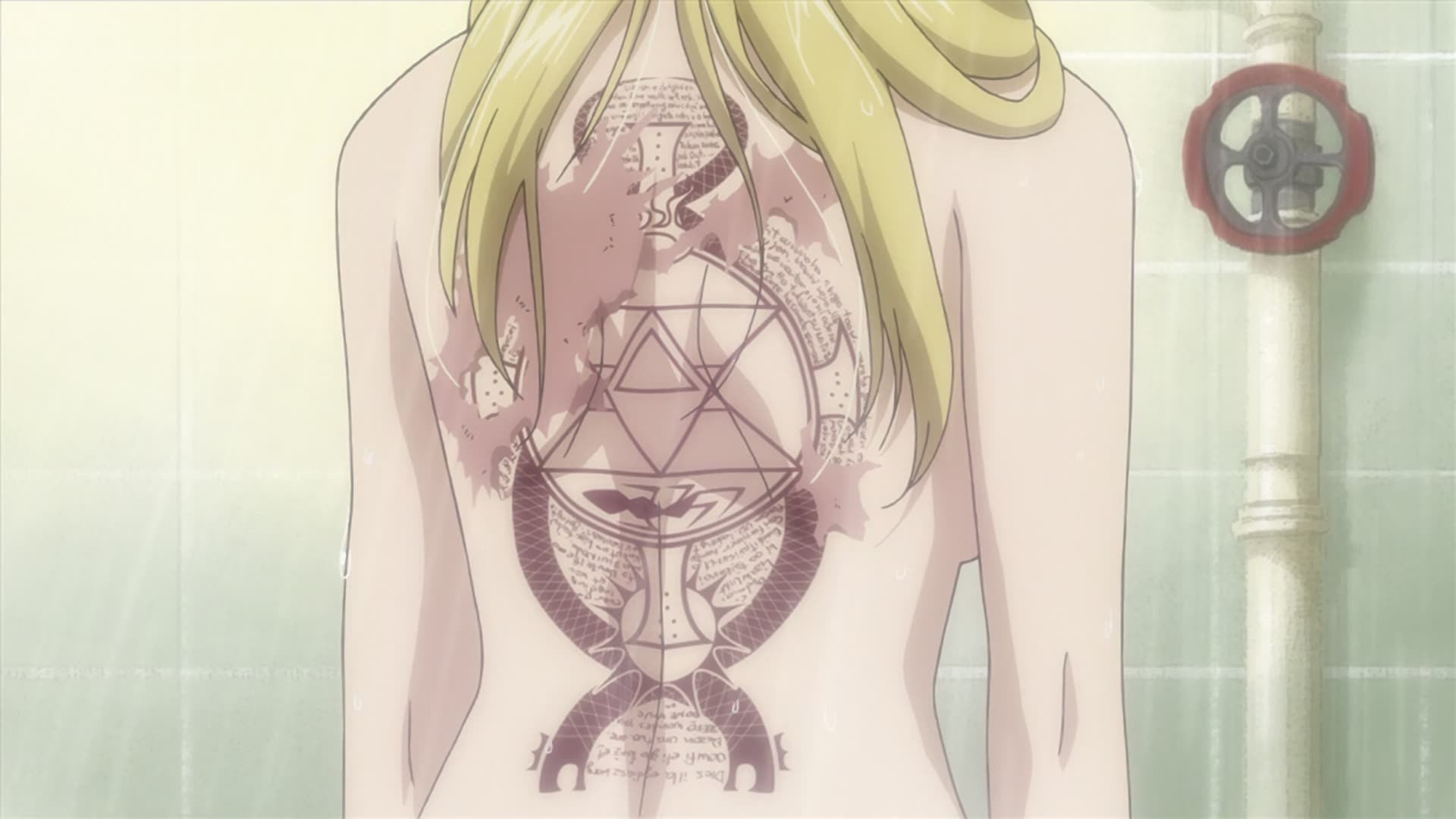
Guilt and absolution might be the biggest concepts in FMA‘s thematic word map. And rightly so, they reverberate through the entire ensemble. Both versions of FMA—but especially its more manga-accurate remake, Brotherhood—serve up that moral complexity without pretension and dense world-building without drowning viewers in lore soup. You can see the bones (quite literally) that set the Elrics on their journey to right the wrongs of their wide-eyed hubris. Their journey, ultimately, is not to seize a new level of power as we’ve become accustomed to in shonen but to surrender it.
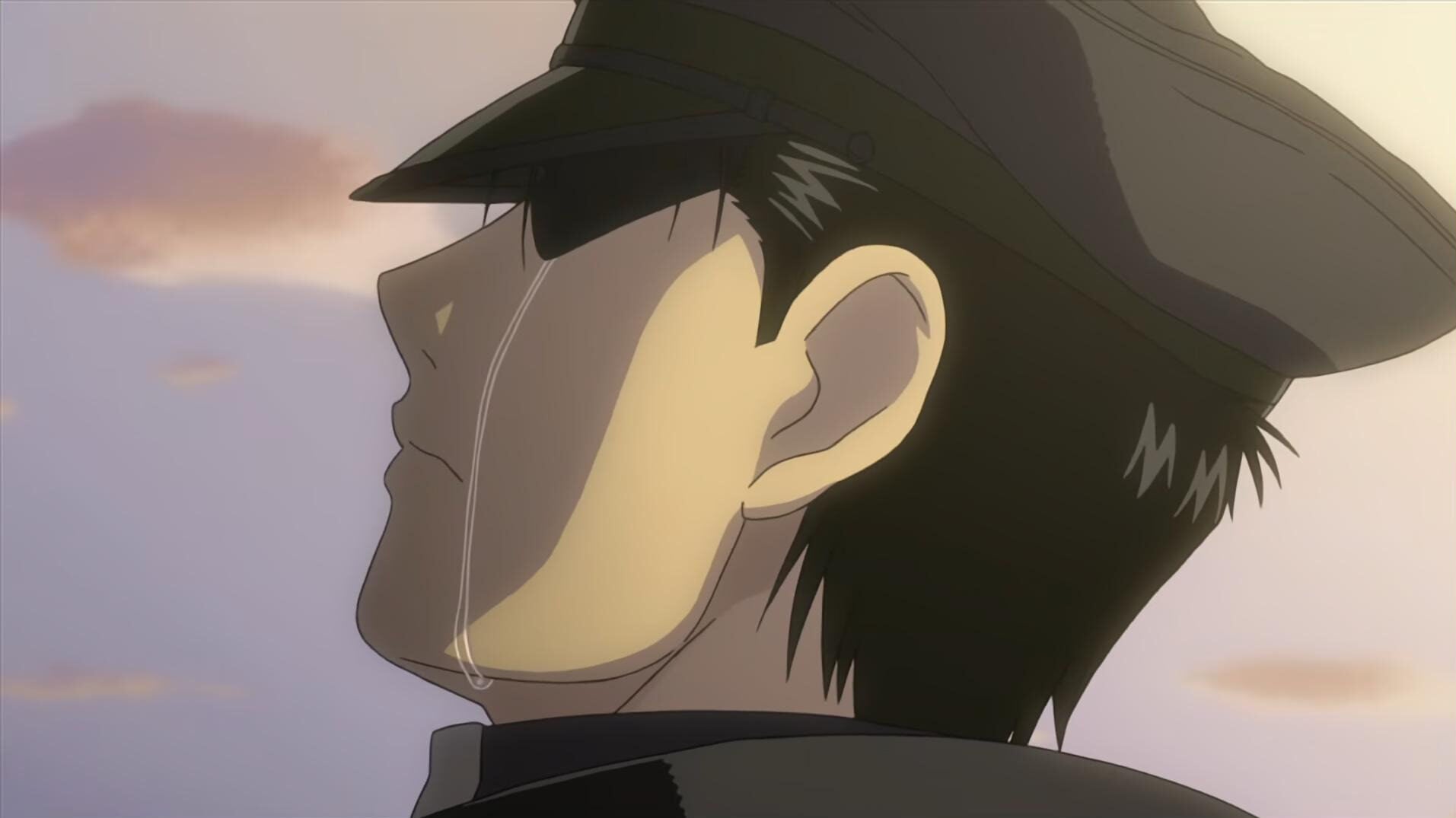
Along the way, FMA builds a narrative scaffolding around the brothers’ odyssey that refuses to flinch from its politics. It presents a cast of so‑called heroes wrestling with the truth that, beneath all the medals and the mythmaking titles, they’re war criminals living every waking moment haunted by the events that made them so. Key among them are Colonel Roy Mustang and General Riza Hawkeye, a duo whose austere obedience enabled genocidal atrocities, giving rise to the “villain” they insist on calling Scar—a survivor of their crimes in the Ishval Civil War.
Deep in their souls, they know that while they’re meant to thwart his terrorist acts, his vengeance is justified because he is the living consequence of their sins. And still, they push forward, trying to safeguard a world they helped break. The show lets that contradiction sit heavily on their shoulders for all 64 episodes, never offering them—or us—an easy way out of the messiness of their road to redemption.
 © Studio Bones
And yet, for all its heaviness and Lovecraftian horror, FMA is also goofy as hell. It’s an anime that’s unafraid to indulge in slice-of-life-tinged wanderlust, found-family softness, and the outright clownery of its world in an equivalent exchange of tonal mastery. It also doesn’t hurt that one of its many contributions to the anime zeitgeist is its female cast. Drawn with Arakawa’s signature “va-va-voom” sensibilities, her heroines are the gold standard: competent, complicated, emotionally layered characters who are allowed to be funny, furious, tender, and terrifying all at once. Most shows are lucky to have one woman written this well; FMA has an entire roster of them.
What makes FMA so outstanding is its trust in you to sit with the weight of it, interrogating heady concepts like grief, sacrifice, state violence, the cost of ambition, and the ethics of power with a clarity sharper than most prestige dramas. What’s more, it stands the test of time as a rare shonen series that grows up with you without ever talking down to you. And unlike so many series that come with the promise of “getting good after X episodes,” Brotherhood is the picturesque horse-on-fire meme—good from the first frame to the last, rivaled only by its original anime series’ opening stretch, which handles its first big WTF moment with far greater poignancy.
 © Studio Bones
FMA‘s touchstones echo everywhere I look: I see its earnest call to action in Witch Hat Atelier; its blend of the grotesque and the divine in Delicious in Dungeon; its unflinching critique of cults of personality in Attack on Titan; its quiet awe for the mundane in Frieren: Beyond Journey’s End; and its brutal road to absolution in Vinland Saga. It’s also why I’m downright giddy watching Studio Bones and Arakawa spin the block with Daemons of the Shadow Realm, which is already showing early glimmers of the hallmarks that made FMA the undisputed GOAT.
Decades later, FMA endures as an anime I can’t help but measure everything else against, because nothing else has ever quite reached its level, because it is the peak.
You can stream the anime on Crunchyroll, Netflix, and Hulu.
Want more io9 news? Check out when to expect the latest Marvel, Star Wars, and Star Trek releases, what’s next for the DC Universe on film and TV, and everything you need to know about the future of Doctor Who.



 English (US) ·