
 5 hours ago
14
5 hours ago
14
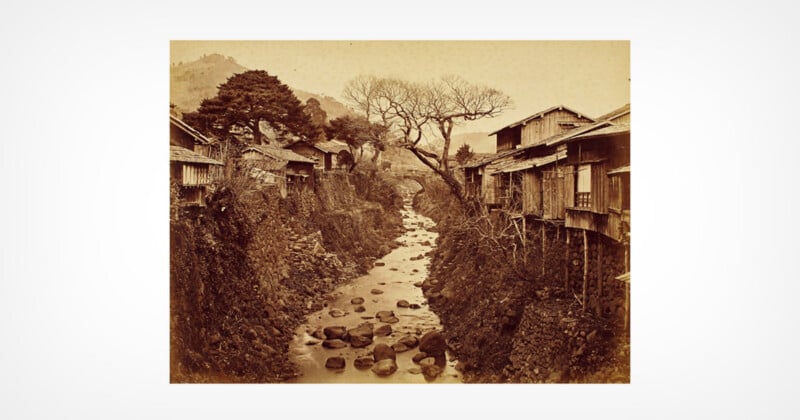 Ueno Hikoma, Nakashima River, Nagasaki, ca. 1872. Albumen print from wet collodion glass negative. | Collection: Fujifilm Corporation
Today, many photographers associate Japan’s connection to imaging through famous camera companies, like Canon, Fujifilm, Nikon, OM System (Olympus), Panasonic, Sony, and many more. However, Japan’s relationship with photography is much older than any of these relatively modern mainstays, going back to the dawn of photography itself in the mid-19th century.
A new exhibition at the Fujifilm Square Photo History Museum in Tokyo celebrates Japan’s long connection to photography and photographic culture. How Japan Became a Photography Powerhouse: The Beginnings includes approximately 30 rare items, including photographs, equipment, and books. The items come from the Fujifilm Photo Collection, which the company assembled to commemorate the Fujifilm Group’s 80th anniversary in 2014.
“The collection consists of historically significant works by 101 of Japan’s most distinguished photographers, spanning from the late Edo and Meiji periods to the present day,” Fujifilm tells PetaPixel “In addition, Fujifilm houses a large number of books, academic papers, and other reference materials that were consulted by the pioneers who worked tirelessly to develop domestically produced photographic film from the company’s founding in 1934.”
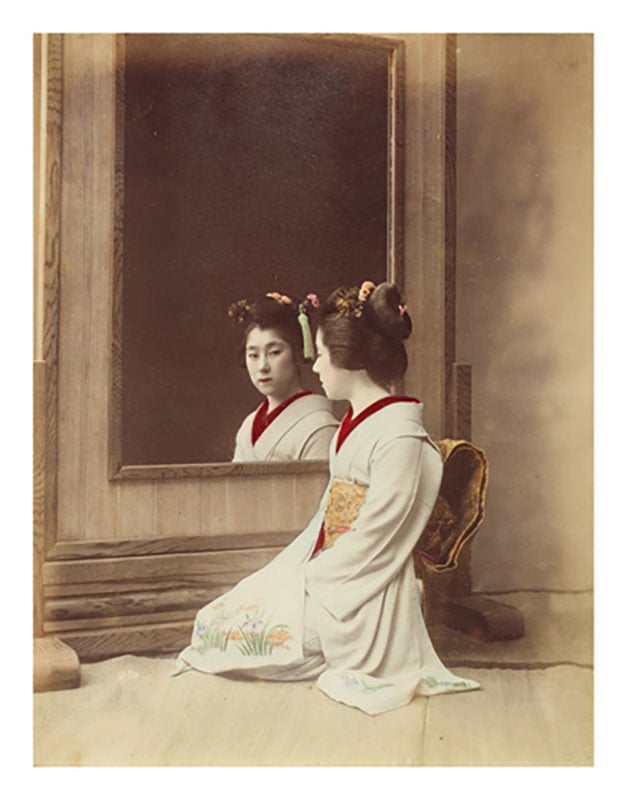 Kajima Seibei, Ponta (a popular geisha in Shimbashi), c. 1895. Hand-colored albumen print from gelatin dry plate negative. | Collection: Fujifilm Corporation
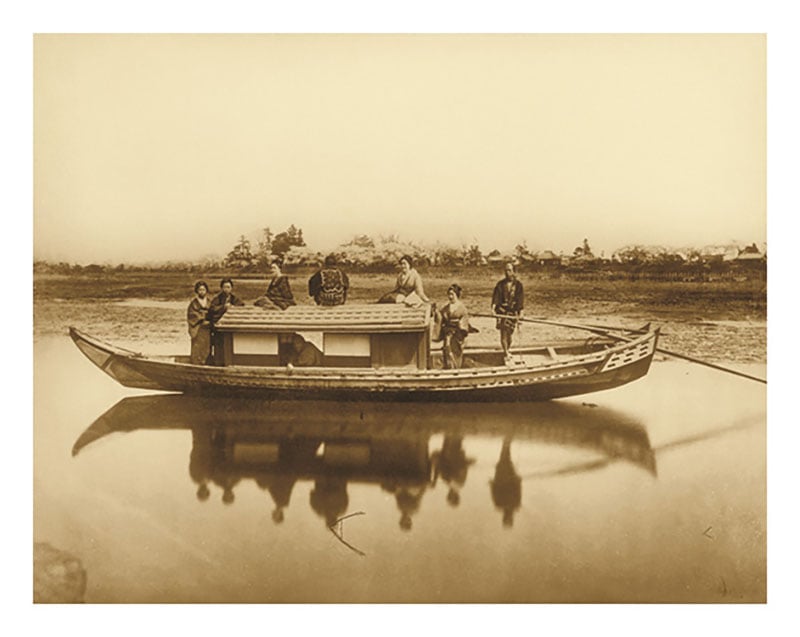 Uchida Kuichi, Pleasure Boat on the Sumida River, 1872 reproduction (chromogenic print). | Collection: Fujifilm Corporation
As Fujifilm explains, photography arrived in Japan about 190 years ago. Less than a decade after Louis Daguerre introduced the daguerreotype in France, photography is believed to have arrived aboard a Dutch ship at Nagasaki.
“The Western science of photography was unknown in Japan at the time, but the Tokugawa shogunate and other interested domains commissioned scholars of Western learning, including Kawamoto Kōmin (1810–71), to carry out research and experiments,” Fujifilm says.
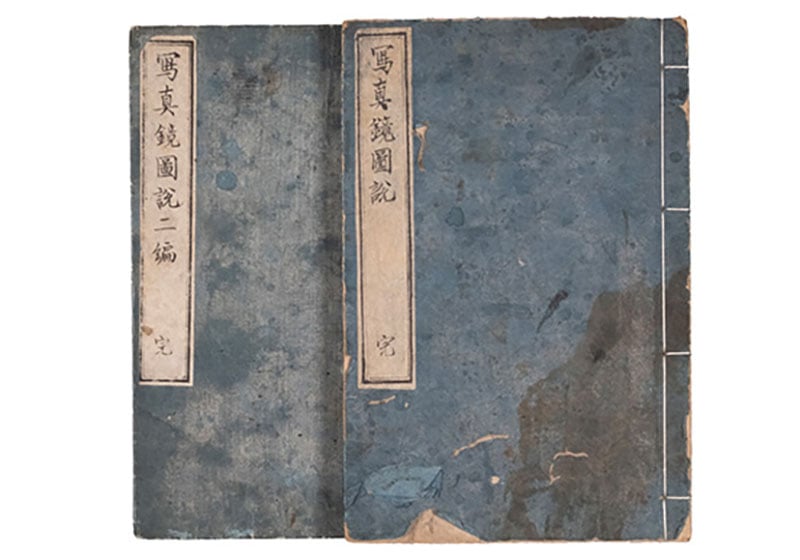 Shashinkyō zusetsu photography technique guide, two volumes (translated by Yanagawa Shunsan, volume one 1867, volume two 1868). | Collection: Fujifilm Corporation
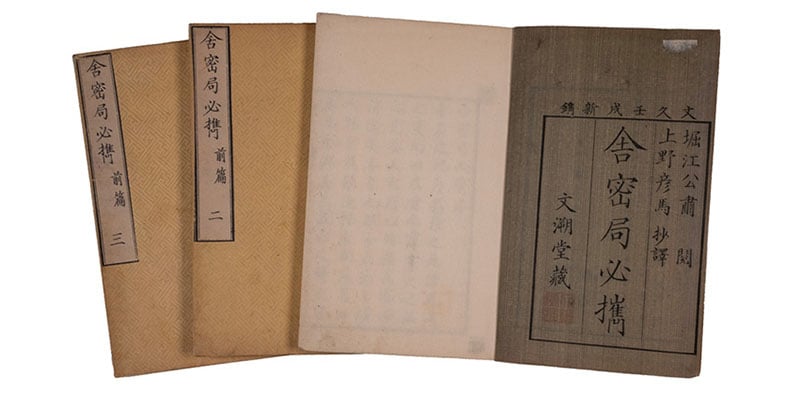 Seimikyoku hikkei chemistry handbook Part 1, three volumes (abridged translation by Ueno Hikoma, 1862). | Collection: Fujifilm Corporation
In the early 1860s, the introduction of the wet collodion process made photography more viable and slightly more accessible. After Japan opened its borders around this same time, foreign photographers flooded the country, bringing with them technical expertise.
“From the end of the 1860s onward, Japanese photography culture flourished, building the foundation for the photography powerhouse of the future,” Fujifilm says.
Fujifilm’s new exhibition includes photos printed around this time, between the 1870s and 1890s, plus historical photographic equipment and books about photography during the late Edo and Meiji periods.
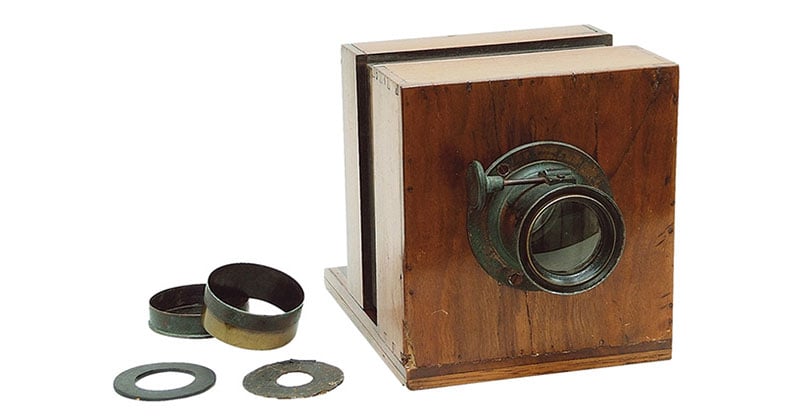 Daguerreotype camera (ca. 1840-50) | Collection: Fujifilm Corporation
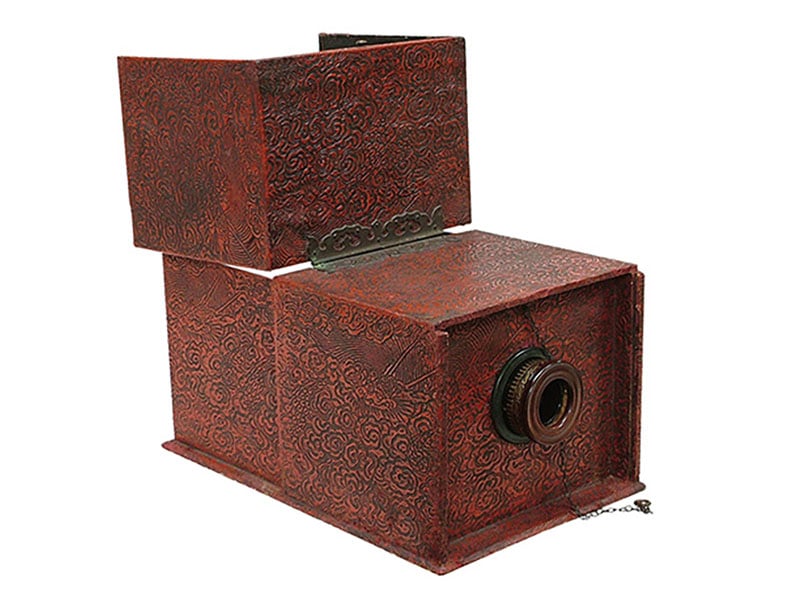 The oldest extant camera obscura in Japan (late 18th to mid-19th century) | Collection: Fujifilm Corporation
“While technologies and environments have changed dramatically, the value that photography provides remains unchanged,” Fujifilm tells PetaPixel. “Many people enjoy looking back through family photo albums or displaying photographs in their homes. When we revisit those images, memories and scenes from the past often come vividly back to life. Looking at photographs from our childhood, school days, or family gatherings can make us feel as though we have been transported back in time.
“In this way, photography is an irreplaceable medium that conveys a wide range of emotions and experiences — joy, sorrow, inspiration, and love. It is perhaps for this reason that photography continues to hold an important place in our lives, regardless of how times change.”
Fujifilm adds that it continues to operate its photography business “with a strong commitment to preserving and nurturing photographic culture.”
Fujifilm’s new exhibition opens today in Tokyo at the Fujifilm Square Photo History Museum and runs until September 17. Additional details are available on Fujifilm’s website.
Image credits: Fujifilm Corporation







 English (US) ·