
 3 weeks ago
38
3 weeks ago
38
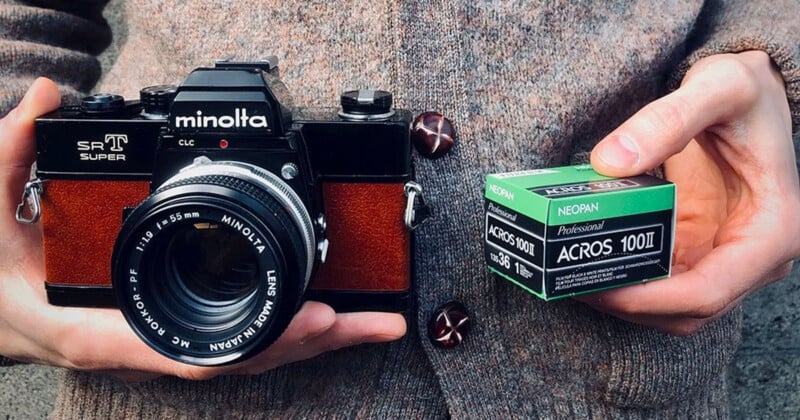
The original Fujifilm Acros film long held a special place in our camera bags here at Blue Moon Camera. We’d say that the whole Neopan line of films was highly favored by us, but we lost Neopan 400 and 1600 some time ago and Acros was the lone survivor.
But Fujifilm Acros did more than just hold on, it got used, and we have stacks of negatives shot on that original Acros film. This is all to say that when the discontinuation of Acros was announced in 2018, we were as heartbroken as the rest of the film community. Apparently Fuji heard our collective outcry and announced it would replace the original Acros with Acros II. Our despair quickly morphed into a near-intolerable impatience to see Acros II reach the market.
Initially, Acros II was released only in Japan, but a North American release finally happened in spring of 2020.
 Captured on a Pentax PC35AF.
There are going to be two categories of film photographers reading this Film Friday review: those who previously used (and loved) the original Fujifilm Acros and those coming into this film without that previous experience. To that first group we’ll cut right to the chase and inform you that Acros II is going to be everything you hoped it would be and carries on all the best qualities of its predecessor. For that second group, we’re happy to go in a bit more detail to bring you up to speed on this wonderful black and white film.
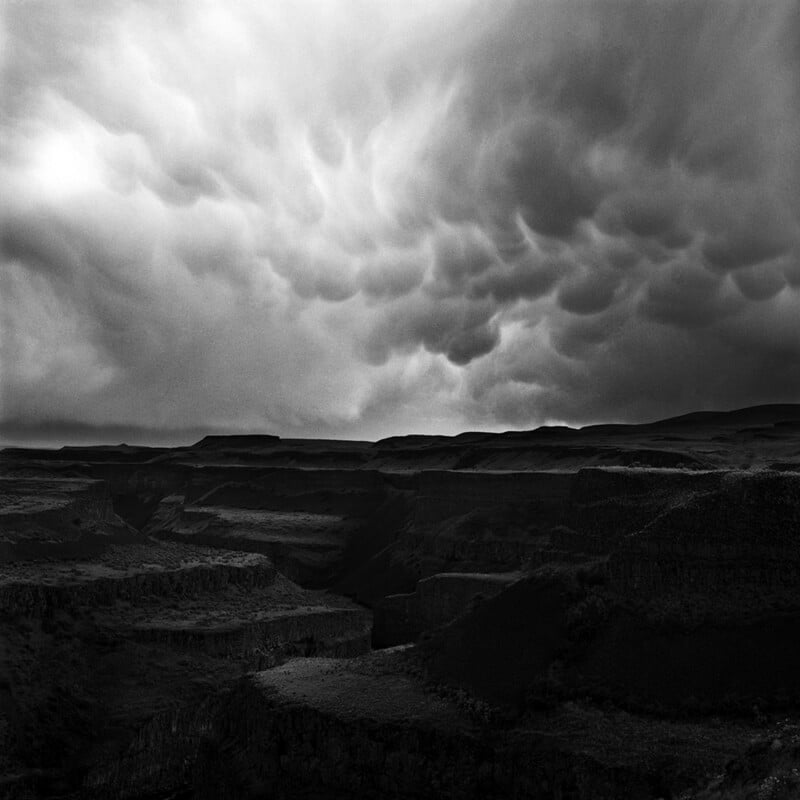 Captured on a Hasselblad 500C.
 Captured on a Hasselblad 500C.
Fujifilm Acros II is known for two big characteristics. The first is its exceptionally fine grain, even for an ISO 100 film that you’d already expect to be fine-grained. Acros II carries an RMS rating of 7, which puts it lower than TMax 100 (RMS 8), a film also known for fine grain and high detail. So yeah, Acros II is even finer than TMax 100. We’ll go out on a limb and say it is almost certainly also finer grained than Ilford Delta 100 (though Ilford does not release granularity measurements for their films so it is difficult to know for sure). Is there a finer grained ISO 100 black and white film on the market? Not likely — Acros II is king.
 Captured on a Hasselblad 500C.
 Captured on a Hasselblad 500C.
The second quality of the film worth mentioning is how well Acros II handles long exposure. The original Acros was long a darling of photographers who favored doing long exposure work as most films slow down under such conditions and require one or more stops of additional exposure compensation once you hit 10 second exposures. Typically, a film requires two stops by the time your exposures hit the one minute mark. Acros II? Fujifilm recommends a measly 1/2 stop of extra exposure for times between two and 16 minutes. That makes Acros II four times as fast as the typical film when doing such long exposures.
 Captured on a Hasselblad 500C.
Put another way, say you had a roll of ISO 400 film loaded in one camera and Acros II at ISO 100 in a second camera and you metered a five minute exposure with the 400 speed film. At that length of time, the ISO 400 film should probably get about three stops of compensation, making the resulting exposure roughly 40 minutes. Meanwhile Acros II, since it is naturally two stops slower, meters the same scene at 20 minutes, requiring a 1/2 to 1 stop compensation, and giving it a final exposure between 30 and 40 minutes. It has basically caught up with the ISO 400 film but with the benefit of significantly finer grain. That is the power of Acros II.
 Captured on a Hasselblad 500C.
But there is more to Acros II than fine grain and a great reciprocity curve. The film is so, so smooth in its tonality.
It has very clean, crisp highlights to go along with rich shadows and a wonderful transition of grays in between. If there are any differences between the original Acros and its second coming, this is where you will find them. Acros II is a bit deeper in its shadows and has a bit more contrast across its midtones than its predecessor but unless you are doing a side by side comparison, you’ll never notice.
 Captured on a Hasselblad 500C.
 Captured on a Hasselblad 500C.
Acros II is also very sharp, and that slight bump in contrast only makes it look even sharper. If you love detail, shoot this film. It is a thing of beauty in a medium format camera with its larger negatives but it will also take 35mm negatives up a level.
Take a step back and recall the story line we have followed to this point: a much loved black and white film is discontinued to the dismay and disappointment of many. It is then announced that a modern replacement will be released, and the hopes and expectations of photographers worldwide go into overdrive.
You can easily imagine how this story ends in disappointment in most cases.
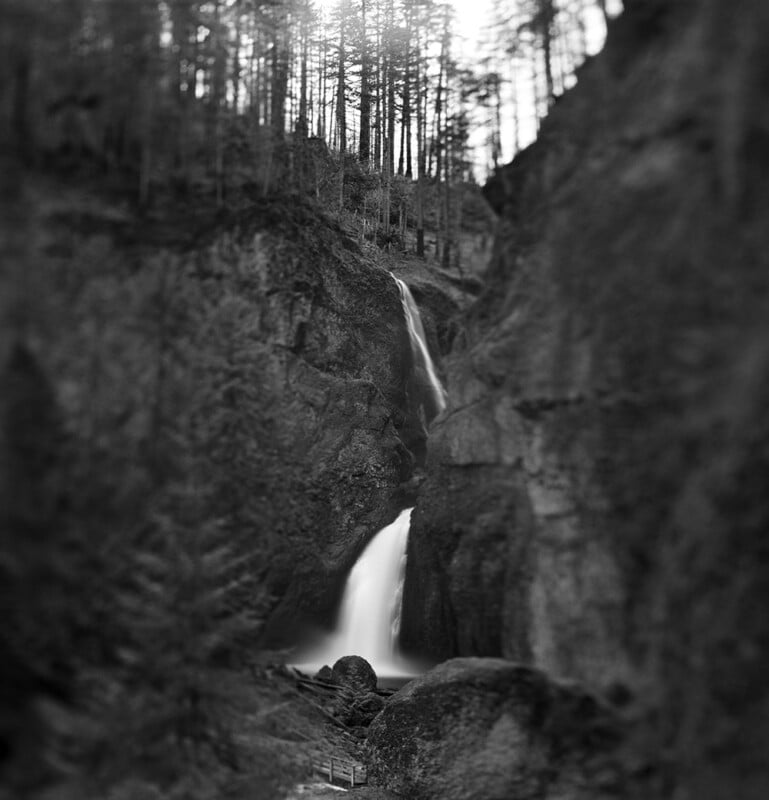 Captured on a Hasselblad Flexbody.
 Captured on a Canon AF35M.
The bar for Acros II was set incredibly high even before the film hit the market. But happy endings aren’t limited to fairy tales, and in this case Acros II has easily met those high expectations. If there was one quibble we had, it would be the lack of a large format option. We’d love to shoot some 4×5 Acros II. Maybe one day that will happen. Our fingers are crossed.
In the meantime you really ought to make a bee line over to our webstore and get a few rolls of this film (discounted today, too!). Whether you plan on shooting long exposures, like fine grain, or just want to work with a beautiful emulsion, Acros II will fit that bill.
This story is brought to you by Blue Moon Camera and Machine in Portland, OR. Blue Moon offers film, development services, printing, and even an ever-rotating line of film cameras and lenses. PetaPixel Members receive 10% off all lab services with Blue Moon: Join today!
Image creditsAll photos by Zeb Andrews and Blue Moon Camera and Machine.







 English (US) ·