
 Image via NBC

Published Feb 11, 2026, 3:41 PM EST
Michael Block is a 14 time GLAM Award nominated writer, producer, and host of the podcast Block Talk. Throughout his time in the entertainment industry, he has worked on and off Broadway as a stage manager, written several produced plays, critiqued hundreds of theatrical performances, drag and cabaret shows, and has produced events randing from drag competitoons to variety concerts!
On Block Talk, he interviews nightlife personalities, covers the wide world of entertainment through features, ranking episodes, and recaps ALL of Drag Race, as well as Dragula and Survivor. He has interviewed hundreds of RuGirls that span the globe at DragCon NYC, DragCon LA, and DragCon UK.
In his free time, he makes one-of-a-kind jewelry and gift baskets with his mom. He is a proud member of the LGBTQ+ community.
Sign in to your Collider account
When it comes to the world of sitcoms, audiences flock to the genre to escape and get a hearty laugh. For the longest time, a classic sitcom was one in which we laughed along with a live studio audience or laugh track. The multi-camera comedies had a certain "je ne sais quoi" about them that was comforting. Then, the format shifted, where the laughter disappeared in favor of single-camera comedies. With the rise of the mockumentary format, the style of sitcoms changed. When did that happen? The 2000s.
The 2000s were a transitional period, blending multi-cam and single-camera comedies that provided audiences with some truly remarkable sitcoms. Though we may not be able to consider it a sitcom heyday, there are certainly some titles that are timeless. For this list, we will be locking in shows that began during the decade and spent a good chunk of their run in the decade. Sorry to those brilliant shows that debuted in 2009, Community and Parks and Recreation! Your impact was made right after. From country superstars becoming everyone's favorite mom to a rip-roaring office comedy that highlighted the mundane, 2000s comedies are among our favorites that live rent-free in our minds.
1 'That's So Raven' (2003–2007)
 Image via Disney Channel
The Disney Channel brought children and teenagers appointment viewing during the early aughts. With the freedom to play in wild situations through relatable characters, the original comedies defined the network. The beginning of the new millennium brought two hit single-comedy successes in Even Stevens and Lizzie McGuire, but right after, Disney Channel tried its hand at a multi-camera sitcom, That's So Raven. Inviting former child star Raven-Symoné to bring her comedy prowess to entertain, That's So Raven set the tone for every series that followed. The fantasy comedy centered on Raven Baxter (Symoné), who has hidden psychic abilities. In each episode, Raven and her best friends, Eddie Thomas (Orlando Brown) and Chelsea Daniels (Anneliese van der Pol), navigate her visions of future events, often misinterpreting them, leading to comic mishaps.
A series that tackled themes of adolescence, friendship, and fantasy through the supernatural, That's So Raven was lighthearted yet brazen. The series' timeless essence was carried on through two spin-offs. First, picking up right after the original series ended, Cory in the House moved the action to the White House, as her brother, Cory (Kyle Massey), lives in DC with their father, Victor (Rondell Sheridan), who becomes the President's chef. A decade after That's So Raven ended, Symonė went full circle and returned to her signature role, this time as a mother in Raven's Home, in which she and Chelsea live together in Chicago, Illinois. The long-lasting impact the series has had proves the House of Mouse knows how to hone in on young talent.
2 'Everybody Hates Chris' (2005–2009)
 Image via UPN
In the late '90s, Everybody Loves Raymond. In the 2000s, Everybody Hates Chris. A single-camera comedy on the underappreciated UPN, Everybody Hates Chris was a semi-autobiographical sitcom loosely based on Chris Rock's experiences as a teenager living in Bedford-Stuyvesant, Brooklyn, during the 80s. A bold comedy about a wholesome, tight-knit Black family, the series uses Chris (Tyler James Williams) as the entry point for his home and school life. His mother, Rochelle (Tichina Arnold), is a temperamental woman who sends her son across town to attend a mostly-white school, "two bus rides away." His father, Julius (Terry Crews), is a hard-working penny-pincher who works two jobs, but remains loyal to his family.
A comedy built around farce, Everybody Hates Chris had a clear focus on adolescence and family life in inner-city poverty. A family eager to pull themselves out of their situation while instilling core values in their children as they try to provide a better life, the Rocks represented many families watching, even if their experience wasn't identical. Like The Wonder Years, Everybody Hates Chris' ability to resonate was through the use of nostalgia. The '80s-tinged comedy was exactly what comedy fans sought as the transition to the new format rose.
3 'Arrested Development' (2003–2019)
 Image via FOX
The Bluths walked, so the Roses could run. Sometimes, schadenfreude is the recipe for comedic success. Especially when bad things happen to bad people. Created by Mitch Hurwitz, Arrested Development follows the Bluths, a formerly wealthy and consistently dysfunctional family that must adapt to their new life with much less wealth. After the family patriarch, George Sr. (Jeffrey Tambor), is imprisoned for embezzlement, it's up to Michael (Jason Bateman) to keep the family business afloat. Presented in serialized form, using voice-over narration from none other than Ron Howard, the character-driven comedy pushed the bounds of satire through fast-paced, self-referential humor. A pointed critique of the American Dream, Arrested Development was unabashedly unafraid to portray its characters at their worst. It was part of the series' charm.
With humor centered around wealth, race, class, and sexuality, we laughed along because nearly every character was willfully unaware of how horrible they truly were. Arrested Development's greatest asset was the brilliant cast, led by Bateman, alongside Jessica Walter, Will Arnett, Michael Cera, Tony Hale, David Cross, and more. The series was a gift to devoted fans as it was running gags galore. And that also included recurring guests, including Henry Winkler, Liza Minnelli, Carl Weathers, and Judy Greer. Though the show was canceled by Fox, it eventually returned to Netflix for two unique additional seasons.
4 'Scrubs' (2001–2010)
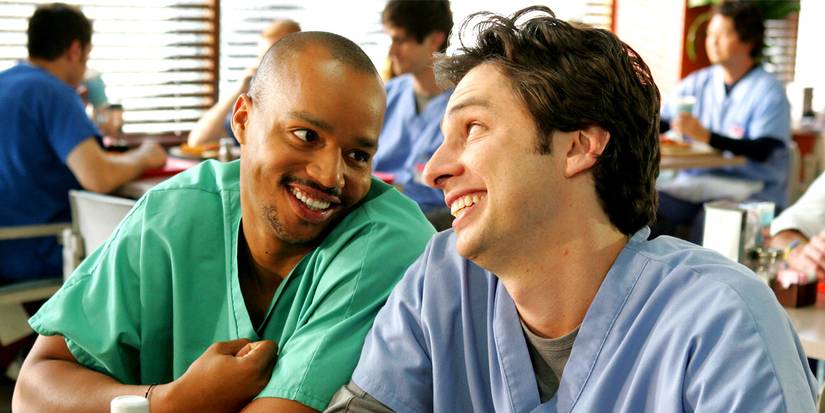 Image via NBC
Television audiences were always quite fond of medical dramas, but what about medical comedies? Perhaps the premiere medical comedy was Scrubs. The series followed the employees of the fictional teaching hospital Sacred Heart. The central focus was on J.D. (Zach Braff) and his best friendship with Turk (Donald Faison), his romance with Elliot (Sarah Chalke), and his mentor, Dr. Perry Cox (John C. McGinley). Balancing humor and absurdist comedy, often through J.D.'s surreal daydreams and internal monologues, Scrubs was slapstick comedy at its finest. Through dark themes that medical series often explored, like mortality, hospital politics, and burnout, Scrubs' mix of comedy and realism was its beating heart.
As a single-camera comedy, Scrubs had more freedom to play and explore the surreal. It led to its charm and over-the-top characters through equally wild situations. Scrubs was daffy and goofy. It was meant for comedic escapism. It wasn't a patient of the week series. Scrubs' focus was on the individuals and how the hospital life affected them. You adored the characters, especially J.D. and Turk, the epitome of friendship goals. After a healthy run, Scrubs said goodbye, but lived in our hearts forever. And when our hearts were bursting for more, ABC opted to bring it back for a new revival, with the full cast returning. If that's not the definition of timeless, I don't know what is!
5 'The Big Bang Theory' (2007–2019)
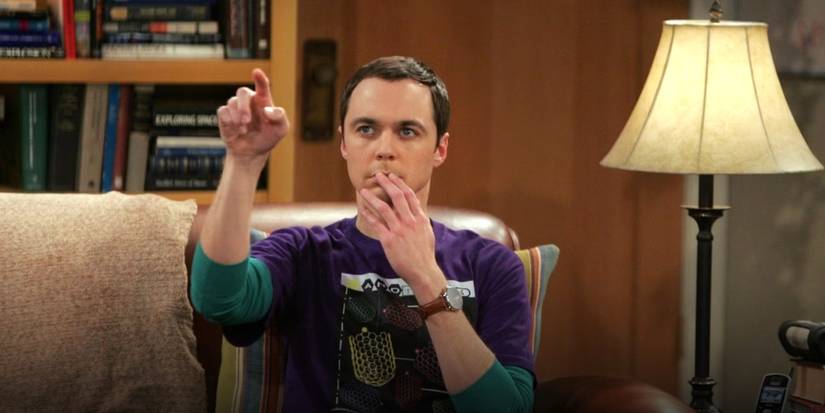 Image via CBS
While the shift to single-camera comedies became a major trend, Chuck Lorre held strongly to maintaining the legacy of the multi-cam series. A tried-and-true love it or hate it series, The Big Bang Theory was a comedy that defied the odds. It began as a humble sitcom without a massive name attached. Instead, it embarked on a 12-season run by elevating the archetypes it celebrated. The Big Bang Theory followed four socially awkward yet brilliant scientists—Sheldon Cooper (Jim Parsons), Leonard Hofstadter (Johnny Galecki), Howard Wolowitz (Simon Helberg), and Raj Koothrappali (Kunal Nayyar)—whose lives are upended when a free-spirited aspiring actress-slash-waitress, Penny (Kaley Cuoco), moves in next door. Peak nerd comedy, The Big Bang Theory utilized high-intelligent humor and wit to set itself apart from any sitcom that came before it.
The Big Bang Theory had its audience and ensured they were the focus. Through recurring bits, relationships, and the ability to discuss topics others couldn't, The Big Bang Theory's devotion mirrored the sitcoms of yore. During a time when streamers began to take over, The Big Bang Theory stood tall. There were only so many stories that The Big Bang Theory could tell, so CBS maintained its legacy through spin-offs. Igniting the backstory of Sheldon through Young Sheldon, The Big Bang Theory universe was officially born. To maintain its timelessness, a sequel series to Young Sheldon was ordered, Georgie & Mandy's First Marriage, focusing on Sheldon's (Iain Armitage) brother, Georgie Cooper (Montana Jordan), and Mandy McAllister (Emily Osment). In modern times, another spin-off is underway, called Stuart Fails to Save the Universe, which focuses on comic book store owner Stuart Bloom (Kevin Sussman). It's safe to say that The Big Bang Theory's legacy is here to stay.
6 'How I Met Your Mother' (2005–2014)
 Image via CBS
While other networks pushed for single-camera comedy sitcoms, CBS doubled down on multi-cams. One of their biggest success stories during the early aughts was the Carter Bays and Craig Thomas-created How I Met Your Mother. The series served as the '00s answer to Friends, which had just ended its run a year prior. The comedy centered on Ted Mosby (Josh Radnor) and his group of friends, living and loving in New York City. The framing device of the story, though, was Ted, in 2030, recounting to his children, narrated by Bob Saget, the events of his life from September 2005 to May 2013 that led to his meeting their mother. Though fans of the show are still a bit miffed about the ultimate ending, How I Met Your Mother was proof that if you stick around until the end, there will be a payoff.
Like many classic sitcoms, the show's typical tropes carried it through its run. With dating as the central focus, How I Met Your Mother was very relationship-driven. From the will-they-won't-they relationships between Robin Scherbatsky (Cobie Smulders) and Ted and Barney Stinson (Neil Patrick Harris) to the development of Marshall (Jason Segel) and Lily's (Alyson Hannigan) relationship, if you love love, you'd love How I Met Your Mother. Once the show moved out of Friends' shadow, the devoted fanbase kept the series afloat. Although a spin-off, How I Met Your Father, wasn't as well-received, the original series lives on through syndication.
7 'Malcolm in the Middle' (2000–2006)
 Image via FOX
Family comedies on network television often center on the parents, with the children as secondary characters. On Malcolm in the Middle, the roles were reversed, and the result was brilliant. The series put a spotlight on the third child, Malcolm (Frankie Muniz), a child genius, in a uniquely dysfunctional family comprising his parents, Lois and Hal (Jane Kaczmarek and Bryan Cranston), and three brothers, Francis (Christopher Kennedy Masterson), Reese (Justin Berfield), and Dewey (Erik Per Sullivan). Known for breaking the fourth wall, Malcolm in the Middle had a distinct look and sound that set it apart from other sitcoms of the time.
Malcolm in the Middle was a relatable series with characters that resonated. The authentic setting and situations provide consistent comedy, but the show's family dynamics stand out. Many sitcoms often depict a perfect life with pristine sets and fashion. Here, in a similar vein to a show like Rosanne, Malcolm in the Middle pushed a run-down house and a paycheck-to-paycheck lifestyle to the forefront. After the series ended, the cast went their separate ways. Cranston starred in Breaking Bad. Muniz led a life as a racecar driver. But nostalgia returned as a revival is due this year under the title Malcolm in the Middle: Life's Still Unfair. The main cast, sans Per Sullivan, will return for the highly anticipated new series.
8 '30 Rock' (2006–2013)
 Image via NBC
As they say, write what you know. After leaving her post at Saturday Night Live, Tina Fey returned to the world of sketch comedy in the sitcom 30 Rock. Named after the place she occupied for much of her career, the comedy followed Liz Lemon (Fey) as she balanced being the head writer of a sketch comedy series with having to maintain eccentric personalities. Often mocking real-time situations through a satirical lens, 30 Rock was pointed, poignant, and perceptive. Thriving on the rise of the single-camera comedy, 30 Rock's success was thanks to its writing, performances, and perception of the behind-the-scenes entertainment world.
There are certainly moments that, on a rewatch, don't hold up as well as you'd think. Whether it's the humor that toes the line or the dated situations, we still love watching 30 Rock. It serves as a means of comfort. It's a show we remember watching, turning to social media to see the memes of its jokes. Being self-referential and unafraid to mock itself, 30 Rock's self-deprecating humor was among the best. The entire cast, which also included Tracy Morgan, Jane Krakowski, Alec Baldwin, and Jack McBrayer, led the series to the top year after year. 30 Rock truly helped define the decade, with its success lingering still today.
9 'The Office' (2005–2013)
Not every television series that is adapted from a British counterpart translates when it crosses the pond. After the extraordinary success of the Ricky Gervais and Stephen Merchant version, The Office had massive shoes to fill. Would the dry humor work for an audience reliant on live studio audiences? Further, how would a mockumentary-style comedy play? After its first season completed the arc of its source material, The Office took off and formed its own identity, becoming one of the greatest television series of all time. Focusing on the mundane lives of the employees at the Dundler Mifflin Scranton Branch, The Office was the epitome of office life. With a large, well-rounded cast that created a perfect ensemble, The Office was a situational, character-driven masterpiece.
Led by Steve Carell as Michael Scott, the regional manager who does not know where the line is, The Office's pulse was built on its interpersonal dynamics. From Jim Halpert (John Krasinski) and Pam Beasley (Jenna Fisher) picture-perfect romance to Dwight Schrute's (Rainn Wilson) lack of social cues and obsession with power, the characters were beyond beloved. Even when new characters filtered in and others left, The Office was still able to carry on. In a way, it was a reflection of reality because someone will always have to punch that time clock. Now, to the humor. It was bold and racy. Dare I even say uncouth? Yet, that's why we tuned in week after week. It's been said that The Office couldn't be made today, and in a way, it's true. But a spin-off, utilizing the same essence, can and did. The Paper honored the original while forging its own path. Thanks to the international obsession with the original series, The Office will live on forever.
10 'Reba' (2001–2007)
 Image via The WB
You might be shocked to see Reba on this list, but the reality is that, as far as a timeless work goes, it's just that. The comedy still hits. The situations are still funny, and it never veered into dangerous territory. Reba was the epitome of wholesome entertainment. If you look at '90s and early 2000s sitcoms, everyone had their own show. Many of which were eponymous. The trouble was, not everyone could lead them. Whether it was the premise of the writing, sitcoms came and went quite quickly. In a sense, the stakes were low for Reba. Would Reba McEntire, the queen of country, be able to lead a sitcom? The answer was a resounding yes. Why? Because the show didn't take itself seriously.
The sitcom followed Reba Hart (McEntire), a middle-aged wisecracking mother whose life is turned upside down when her husband, Brock (Christopher Rich), has an affair with his expecting young dental hygienist, Barbara Jean (Melissa Peterman). Oh, and her teenage daughter, Cheyenne (JoAnna Garcia Swisher), was knocked up by her boyfriend, Van Montgomery (Steve Howey). As Reba navigates this newfound life, comedy ensues as unlikely relationships prosper. McEntire slathered on her thick accent, found exceptional chemistry with Peterman, one that found its way onto their reunion series, Happy's Place, and managed to become mindless entertainment. No matter what episode you watch, you're destined to smile and laugh.

Reba
Release Date 2001 - 2007-00-00





 English (US) ·