
 Image via Disney/Sarah Shatz
Published Sep 10, 2026, 11:36 AM EDT
Jessica is a journalist, editor, TCA critic, and multimedia storyteller with a decade of experience covering pop culture, film, TV, women's sports, lifestyle, and more. She earned her degree in journalism from the University of North Carolina-Wilmington with a focus in creative writing before moving to N.Y.C. and getting her start at The Huffington Post. (She still misses those nap pods.) She's covered multiple film festivals, recapped some of your favorite series, worked too many red carpets to count, and even yapped on a podcast or two. When she’s not interviewing your favorite showrunner or ranking Ryan Gosling's best roles for places like UPROXX, Teen Vogue, Marie Claire, The Daily Beast, and Cosmopolitan, she’s busy being a full-time hype woman to her cat, Finn. You can find her on Bluesky and, sadly, Twitter.
Sign in to your Collider account
Liz Meriwether has spent over a decade proving that she can write anything. She got her start with New Girl, a Fox sitcom about the most aggressively earnest roommate in Los Angeles. And now, she's running a show about a trafficking survivor who murders wealthy men as a form of therapy with Furious. (Hulu renewed that one for a second season before the finale even aired.) In between, she turned the Theranos saga into something that plays like a cringe comedy. So, yeah, the woman has range.
Meriwether's thing, across every series she helms, is characters who are funny and damaged in equal measure. They cope with real trauma by being quirky or weird or both. None of it should work as well as it does, but six shows in, Meriwether keeps pulling it off. Here's every one of her creations, ranked.
6 'Bless This Mess' (2019–2020)
 Image via ABC
Dax Shepard and Lake Bell play Mike and Rio, a married couple who leave New York City for a run-down Nebraska farm they've inherited, only to discover that rural life involves a lot more septic-tank emergencies and nosy neighbors than the Instagram version suggests. The show surrounds them with a lineup of small-town oddballs, including Pam Grier as a no-nonsense local and Ed Begley Jr. as a neighbor with too many power tools.
Meriwether co-created this one with Bell, and their affection for the setting is real, if a little restrained. The fish-out-of-water premise gives the cast plenty to do in any individual episode, but the show never quite figured out what it wanted to be beyond pleasant. It ran two seasons on ABC before getting canceled in 2020, and while it's sweet and easy to watch, it doesn't have the sharpness or the emotional undertow that Meriwether's stronger work tends to find. Call it her warm-up lap for a busier stretch ahead.
5 'Single Parents' (2018–2020)
 Image via ABC
Taran Killam leads here as Will, a recently divorced dad and amateur weatherman who's forgotten that he used to have a personality outside of his kid's school pickup line. His fellow single parents, played by Leighton Meester, Brad Garrett, Kimrie Lewis, and Jake Choi, take it upon themselves to remind him, mostly by dragging him to bars and forcing him to have fun. Meriwether co-created the show with J. J. Philbin, and it leans more into ensemble warmth than anything else.
The kid actors carry a surprising amount of weight here, and the show is at its best when it lets the parent-child dynamics get genuinely uncomfortable. It doesn't reinvent the family sitcom, but the cast has real chemistry, and Garrett in particular plays his role with a kind of deadpan weariness that the show didn't always know what to do with. ABC canceled it after two seasons, though it probably would have benefited from a third.
4 'The Dropout' (2022)
 Image via Hulu
Most shows about the Theranos scandal would play it straight, but Meriwether created and oversaw this eight-episode limited series (based on the ABC News podcast) as something closer to a darkly dry comedy. The whole arc traces Elizabeth Holmes (Amanda Seyfried) from awkward Stanford freshman to a CEO running a fraud so big it would make a Bond villain pause, and the cast Meriwether assembled sells every stage of it. Naveen Andrews as Sunny Balwani, William H. Macy as a family friend turned patent adversary, Sam Waterston as George Shultz, and Stephen Fry as the Theranos scientist who deserved a less corrupt employer.
Seyfried is the reason The Dropout works. Her Holmes does that fake baritone, mirrors the mannerisms of powerful men, and then fumbles small talk with lab technicians. Seyfried makes all of it strangely funny without letting you forget the real consequences. The series proved Meriwether could do something cold and propulsive and still find the mortifying human moments she's always been good at. Before you strap into the insanity that is Nathan Fielder's Holmes documentary, You Can See Everything, you owe it to yourself to revisit Seyfried's performance in a Hulu miniseries that's perfect from start to finish.
Collider Exclusive · TV Medicine Quiz Which Fictional Hospital Would You Work Best In? The Pitt · ER · Grey's Anatomy · House · Scrubs
Five hospitals. Five completely different ways medicine goes sideways on television — brutal, chaotic, romantic, brilliant, and ridiculous. Only one of them is the ward your instincts were built for. Eight questions will figure out exactly where you belong.
🚨The Pitt
🏥ER
💉Grey's
🔬House
🩺Scrubs
FIND YOUR HOSPITAL →
01
A critical patient comes through the door. What's your first instinct? Medicine under pressure reveals who you actually are.
AStay completely present — block everything else out and work through it step by step, right now. BTriage fast and delegate — get the right people on the right problems immediately. CTrust my gut and move — I work best when I stop overthinking and just act. DAsk the question everyone else is ignoring — what's the thing that doesn't fit? ETake a breath, make a joke to cut the tension, and then get to work — panic helps no one.
NEXT QUESTION →
02
Why did you go into medicine in the first place? The honest answer says more about you than the one you'd give in an interview.
ABecause I wanted to be where it matters most — right at the edge, when someone's life is actually on the line. BBecause I wanted to help people — genuinely, one patient at a time, in a system that makes it hard. CBecause I was drawn to the intensity of it — the stakes, the drama, the feeling of being fully alive. DBecause medicine is the most interesting puzzle there is — and I needed a problem worth solving. EBecause I wanted to make a difference — and also, honestly, I didn't know what else to do with my life.
NEXT QUESTION →
03
What do you actually want from the people you work with? Who you want beside you under pressure is who you are.
ACompetence and calm — I need people who don't fall apart when things get bad. BTrust and reliability — I want to know that when I pass something off, it's handled. CConnection — I want colleagues who become family, even if that gets complicated. DIntelligence and the willingness to be challenged — I have no interest in people who just agree with me. EFriendship — people I actually like spending twelve hours a day with, because those hours are going to happen either way.
NEXT QUESTION →
04
You lose a patient you fought hard to save. How do you carry it? Every doctor who's worked a long shift has had to answer this question.
AI carry it. All of it. I don't look for ways to put it down — that weight is part of doing this work honestly. BI process it and move — you have to, or the next patient suffers for the one you just lost. CI feel it deeply and lean on the people around me — I don't think you're supposed to handle that alone. DI go back over every decision — not to punish myself, but because I need to understand what I missed. EI grieve it genuinely, find some way to laugh about something unrelated, and try to be kind to myself — imperfectly.
NEXT QUESTION →
05
How would your colleagues describe the way you work? Your reputation on the floor is usually more accurate than your self-image.
AIntense and completely present — no small talk during a shift, but exactly who you want there. BSteady and dependable — not the flashiest in the room but never the one who drops something. CPassionate and occasionally chaotic — brilliant on the hard cases, prone to drama everywhere else. DBrilliant and difficult — right more often than anyone else, and everyone knows it, including me. EWarm and self-deprecating — not the most intimidating presence, but genuinely good at this and easy to like.
NEXT QUESTION →
06
How do you feel about hospital protocol and procedure? Every institution has rules. What you do with them is a choice.
AProtocol is the floor, not the ceiling — I follow it until the patient needs something it can't provide. BI respect it — the system is broken in places, but the structure is there for a reason and I work within it. CI follow it until my instincts tell me not to — and my instincts are usually right, even when they cause problems. DRules are for people who haven't thought hard enough about when to break them. EI try to follow it and mostly do — with a few memorable exceptions that still come up in meetings.
NEXT QUESTION →
07
What does this job cost you personally? Nobody works in medicine without paying a price. What's yours?
AEverything outside these walls — I've given this job my full attention and the rest of my life has gone around it. BMy idealism, mostly — I came in believing the system could be fixed and I've made a complicated peace with that. CStability — my personal life has been as chaotic as the OR, and that's not entirely a coincidence. DMy relationships — I am not easy to know, and the people who've tried to would probably agree. EMy sense of gravity — I use humour as a coping mechanism, which not everyone appreciates in a hospital.
NEXT QUESTION →
08
At the end of a long shift, what keeps you coming back? The answer to this question is the most honest thing about you.
AThe fact that it's real — that nothing else I could be doing would matter this much, right now, today. BThe patients — individual human beings who needed something and got it because I was there. CThe people I work with — I have walked through impossible things with these people and I'd do it again. DThe next unsolved case — there's always another puzzle, and I'm not done yet. EBecause despite everything — the exhaustion, the loss, the absurdity — I actually love this job.
REVEAL MY HOSPITAL →
Your Assignment Has Been Made You Belong In…
Your answers have pointed to one fictional hospital above all others. This is the ward your instincts, your temperament, and your particular brand of dysfunction were built for.
The Pitt
You are built for the most unsparing version of emergency medicine television has ever shown — one that puts you inside a single fifteen-hour shift and doesn't let you look away.
- You need your work to be real, not romanticised — meaning over drama, honesty over aesthetics.
- You find purpose inside the work itself, not in the chaos surrounding it.
- You've made peace with the fact that this job takes from you constantly, and gives back in ways that are harder to name.
- Pittsburgh Trauma Medical Center demands exactly that kind of person — and you would not want to be anywhere else.
ER
You are the person who keeps the whole floor running — not the most brilliant in the room, but possibly the most essential.
- You show up, do the work, absorb the losses, and come back the next day without needing the job to be anything other than what it is.
- You care about patients as individual human beings, not as cases to solve or dramas to live through.
- You believe in the system even when it fails you — and you understand that emergency medicine is about holding the line just long enough.
- ER is television about endurance. You have it.
Grey's Anatomy
You came to medicine with your whole self — your ambition, your emotions, your relationships, your history — and you have never quite managed to leave any of it at the door.
- You feel things fully and form deep attachments to the people you work with.
- Your personal and professional lives are permanently, chaotically entangled — and that entanglement drives both your greatest disasters and your most remarkable saves.
- You understand that extraordinary medicine often happens at the intersection of clinical skill and profound human connection.
- It's messy at Grey Sloan. You would not have it any other way.
House
You are drawn to the problem above everything else — the symptom that doesn't fit, the diagnosis hiding underneath the obvious one.
- You're not primarily motivated by the patient as a person — though you are capable of caring, even if you'd deny it.
- You work best when the stakes are highest and the standard answer is wrong.
- Princeton-Plainsboro exists to house one extraordinary, impossible mind — and everyone around that mind is there because they're smart enough to keep up.
- The only way forward here is to think harder than everyone else in the room. That is exactly what you do.
Scrubs
You understand that medicine is tragic and absurd in almost equal measure — and that the only sane response is to hold both of those things at the same time.
- You are warm, self-aware, and funnier than most people in your field.
- You use humour to get through terrible moments — and at Sacred Heart, that's not a flaw, it's a survival strategy.
- You lean on the people around you and let them lean back. The laughter and the grief are genuinely inseparable here.
- Scrubs is a show about learning to become someone worthy of the job. You are still very much in the middle of that process — which is exactly right.
↻ RETAKE THE QUIZ
3 'Dying for Sex' (2025)
 Image via FX on Hulu
Michelle Williams and Jenny Slate play Molly and Nikki, lifelong best friends navigating Molly's terminal cancer diagnosis via a method that involves a lot more Tinder dates than most prestige dramas would attempt. Meriwether co-created and ran this one with Kim Rosenstock, adapting the podcast by Molly Kochan about her own experience leaving an unhappy marriage after her diagnosis and embarking on a run of sexual adventures. Sissy Spacek, Rob Delaney, and Jay Duplass round out the cast.
The show's gamble is tonal, and it pays off. Williams plays Molly as reckless and stubbornly alive, even as the clock ticks. Slate matches her beat for beat as the friend trying to hold everything together while also being genuinely jealous of Molly's sudden lack of inhibition. Meriwether and Rosenstock wrote something that doesn't treat terminal illness as a metaphor for anything. It just sits inside the mess of being a person who wants more out of whatever time is left.
2 'Furious' (2026–Present)
Meriwether has said Furious draws from the 1987 film Black Widow, but the show goes somewhere darker and weirder than that comparison suggests. A newly minted FBI agent named Alice Black (Emmy Rossum) is tracking a serial killer who targets men connected to a trafficking ring. The killer, Catherine (Lola Petticrew), is a young woman whose emotional development froze at 15, and the show keeps reminding you of that through pop music playlists and childlike accessories that sit right next to the violence. Scoot McNairy, Quincy Tyler Bernstine, and Jake Lacy round out the cast.
What makes it work is that Meriwether spent time interviewing FBI agents who work on trafficking cases, and that research shows up in the small, grinding details of Alice's job as much as in the plot. The show is the darkest thing Meriwether has made and also wildly funny in stretches. Thank the TV gods that Hulu has already renewed it for Season 2.
1 'New Girl' (2011–2018)
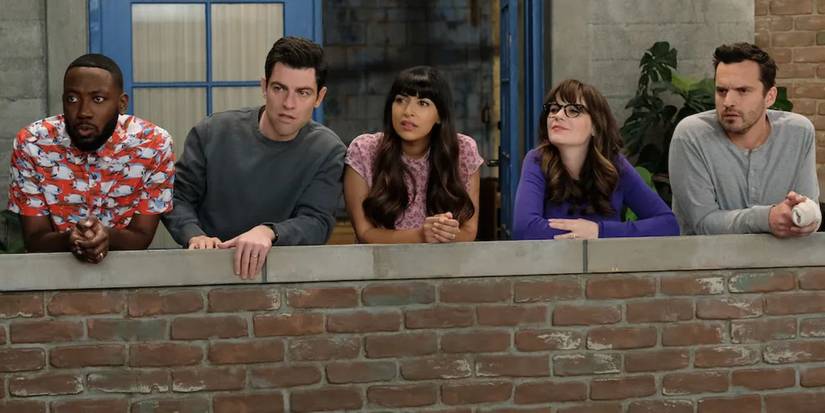 Image via FOX
Zooey Deschanel is Jess Day, a teacher who moves into an L.A. loft with three guys after a breakup and proceeds to upend their very bro-y existence. The guys, Jake Johnson's grumpy bartender Nick, Max Greenfield's preening Schmidt, and Lamorne Morris' increasingly chaotic Winston, start out as her reluctant roommates and eventually become the most codependent friend group on television. Hannah Simone rounds out the core cast as Cece, Jess's model best friend.
Meriwether created the show and ran it through seven seasons, and what still holds up about New Girl is how committed it stayed to being weird. The easy version of this premise is a will-they-won't-they with some quirky garnish, and while Nick and Jess certainly deliver on that front, the show's real engine is the ensemble's willingness to escalate. Schmidt's pronunciation of "chutney" became a running bit that somehow never stopped being funny. Winston's cat, Ferguson, got his own storylines. Even Damon Wayans Jr. was there for a stint of the group's misadventures as Coach. The show trusted that its characters were interesting enough to follow into the strangest territories, and it was right. Nothing Meriwether has made since has run this long or burrowed this deep into the cultural zeitgeist. Yet, at least.

New Girl
Release Date 2011 - 2018-00-00
Network FOX
Showrunner Elizabeth Meriwether






 English (US) ·