
2025 was an unusual year for soundbars. While perennial favorite flagships from Samsung and LG saw only tiny incremental changes, the race was joined by Marshall, and home audio heavyweights KEF and Bluesound reimagined their soundbar strategies. It was also the year that marked the arrival of Dirac’s audiophile-grade room correction to the category, and a new challenger: Dolby Atmos FlexConnect.
2025 was also the year we got a taste of things to come. Marshall’s new Heston soundbars are Bluetooth LE Audio and Auracast-ready, setting up a new kind of expansion in 2026 when the company plans to let customers use its Homeline portables as home theater surrounds. And TCL offered us our first peek at Dolby Atmos FlexConnect, a multi-speaker alternative to the best soundbars.
Here’s a breakdown of everything that happened in 2025.
LG and Samsung: If it ain’t broke …
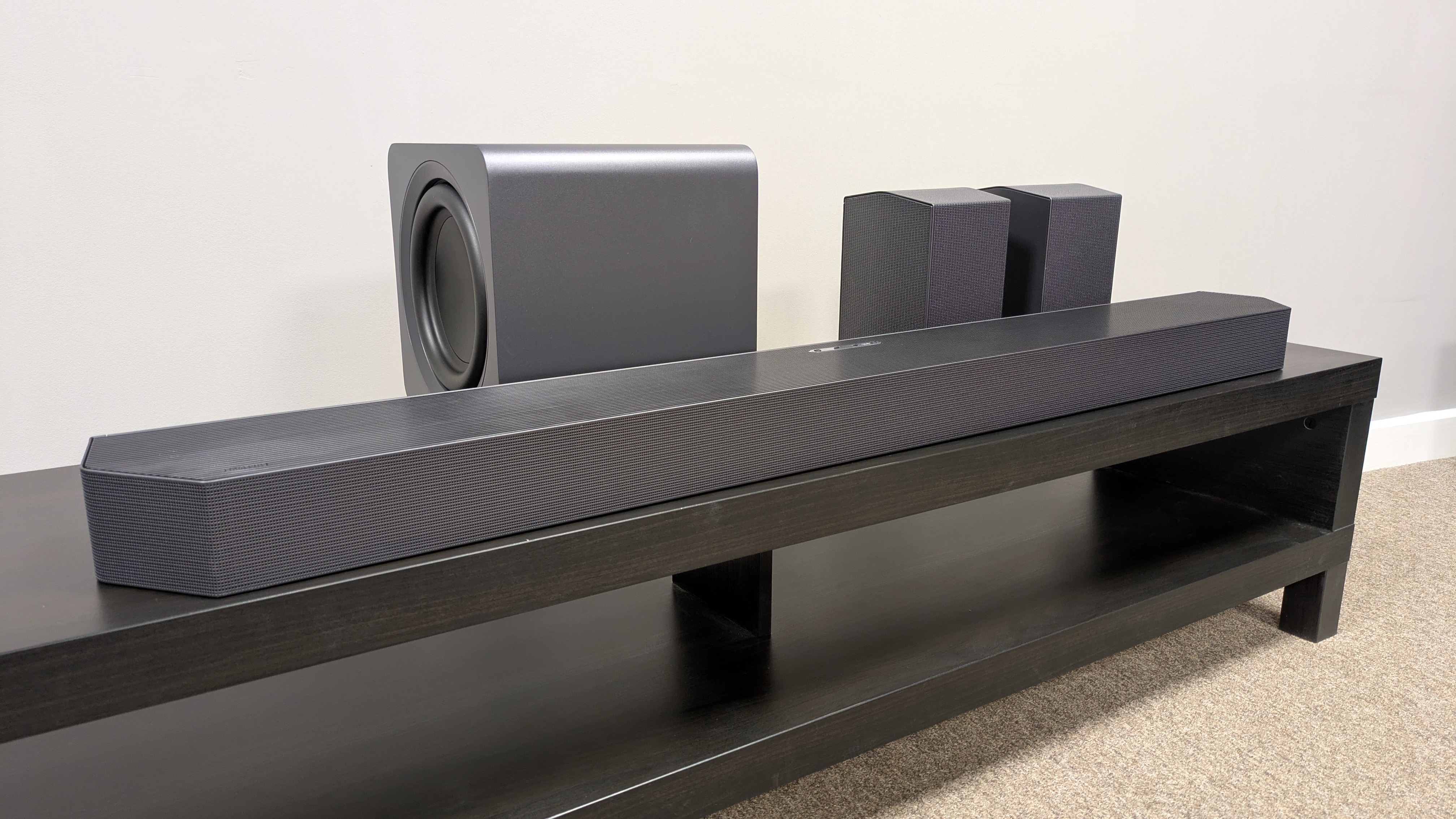
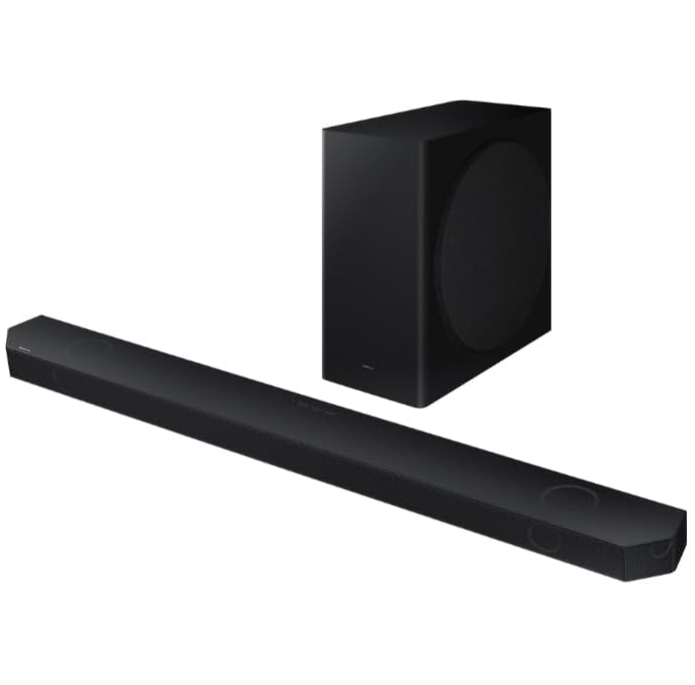
After years of major innovation, improvement, and critical acclaim, Samsung and LG both decided to take a breather on their 2025 flagship soundbars. The Samsung HW-Q990F received a revamped subwoofer that’s both smaller and, thanks to horizontally opposed drivers, more vibration-free when compared to 2024’s Samsung HW-Q990D.
For its part, LG’s S95AR also gets a new subwoofer, though this one looks nearly identical to its predecessor. Other than the addition of Alexa and Google Assistant support, LG made no other changes from 2024’s LG S95TR.
These two new 2025 systems are considered such minor upgrades that most reviewers found themselves suggesting that buyers look for deals on the remaining 2024 inventory before spending more money on the newer models.
How long will these Korean giants be content to rest on their soundbar laurels? Perhaps 2026 will hold the answer.
JBL doubles down on fully wireless speakers
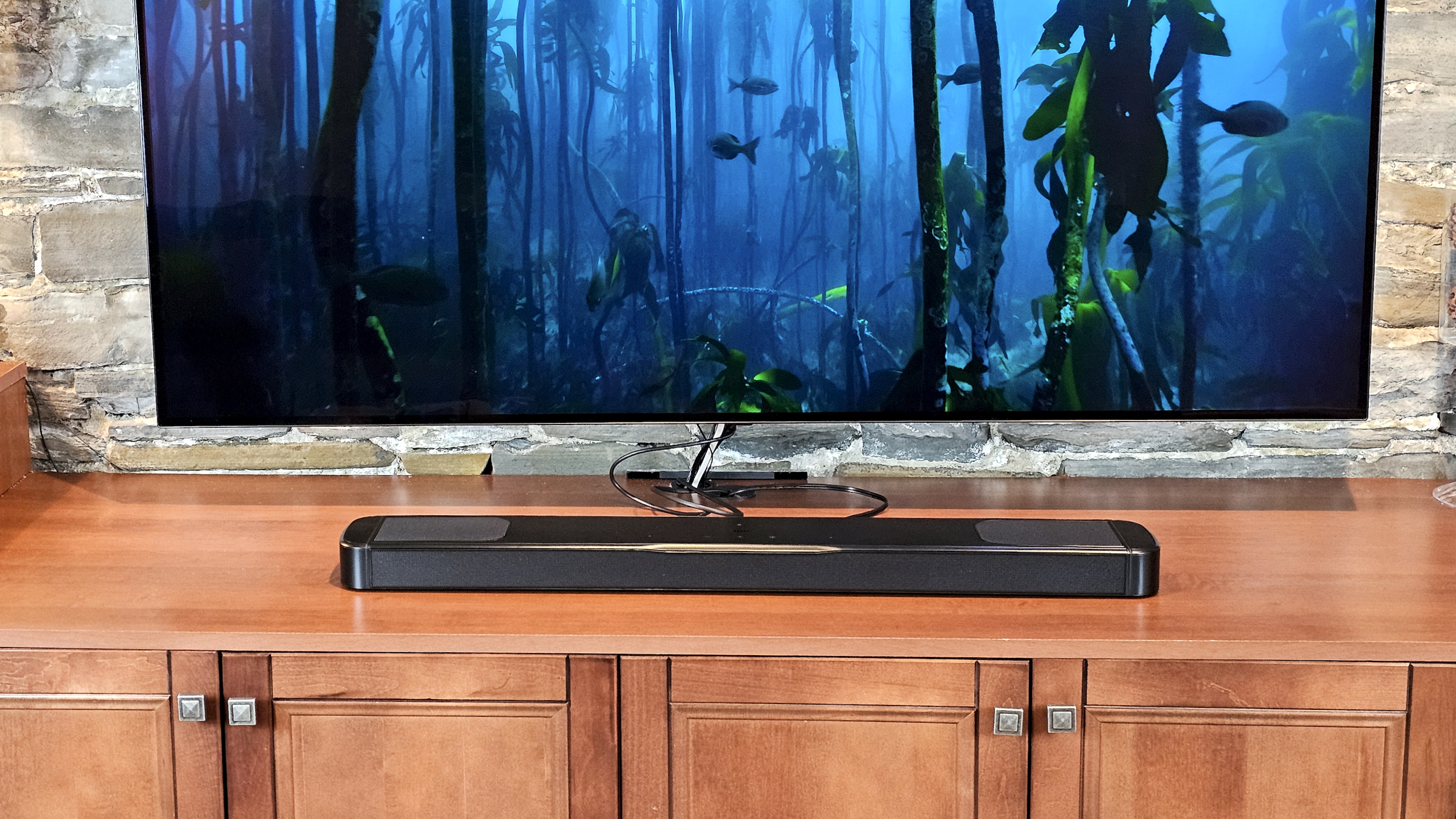
JBL already had a successful formula on its hands with the JBL Bar 1000 soundbar, a Dolby Atmos and DTS:X system with a unique twist: Its included surround speakers are battery powered and wireless, letting you place them almost anywhere.
For 2025, the company decided to take a good thing and make it even better. The JBL Bar 1000MK2’s wireless speakers can now be used in their traditional roles as surrounds, or they can be used in a different room where they’ll reproduce the TV’s audio in either stereo or mono sound – a handy feature for when someone wants to be in the kitchen without missing out on vital dialogue or a news broadcast.
KEF and Marshall enter the chat
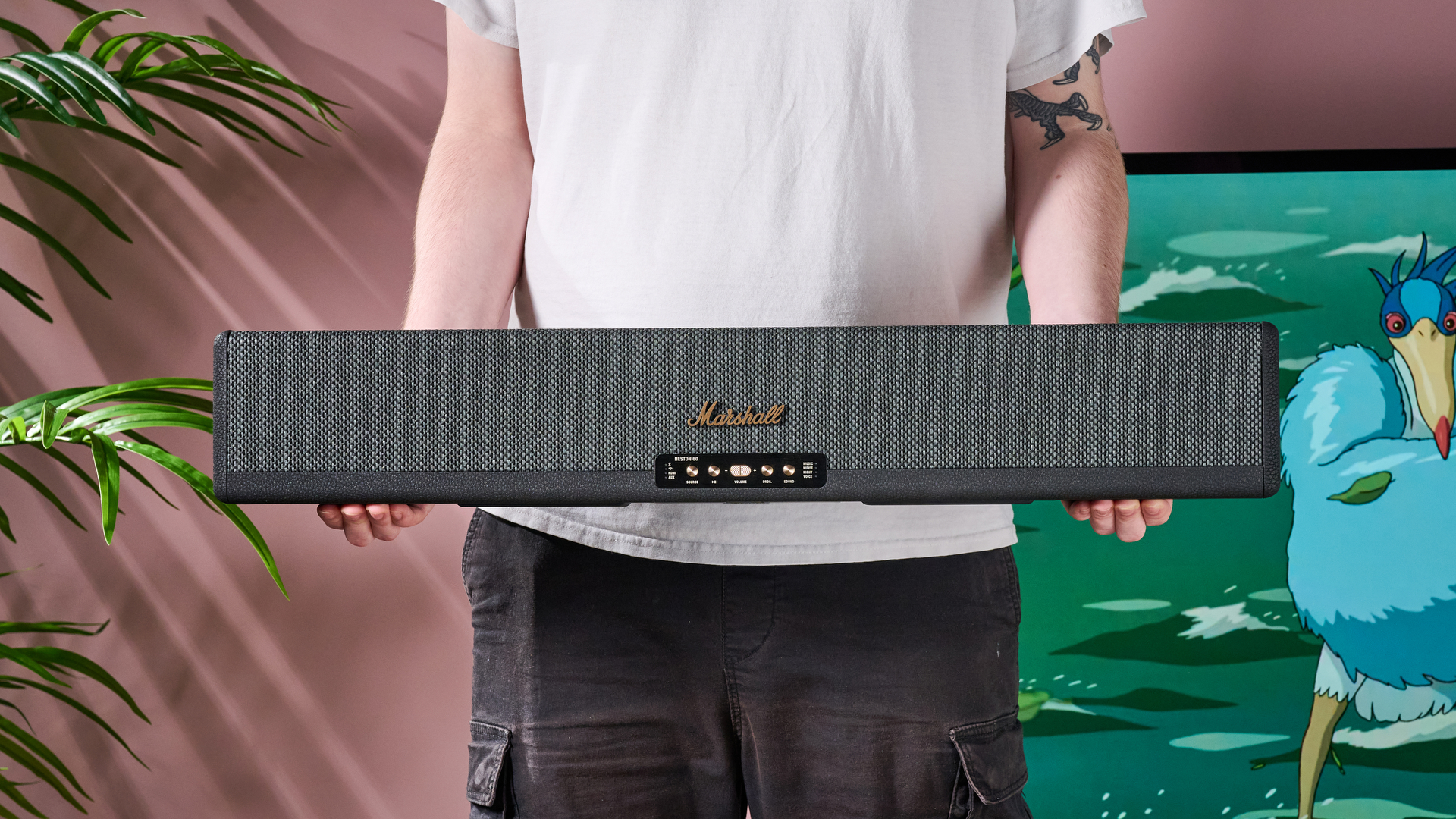
As soundbars continue to be the preferred choice for an easy upgrade to a TV’s built-in sound, more audio companies are seeking to make their mark. In 2025, both KEF and Marshall debuted their first Dolby Atmos systems, each taking a unique approach to the category.
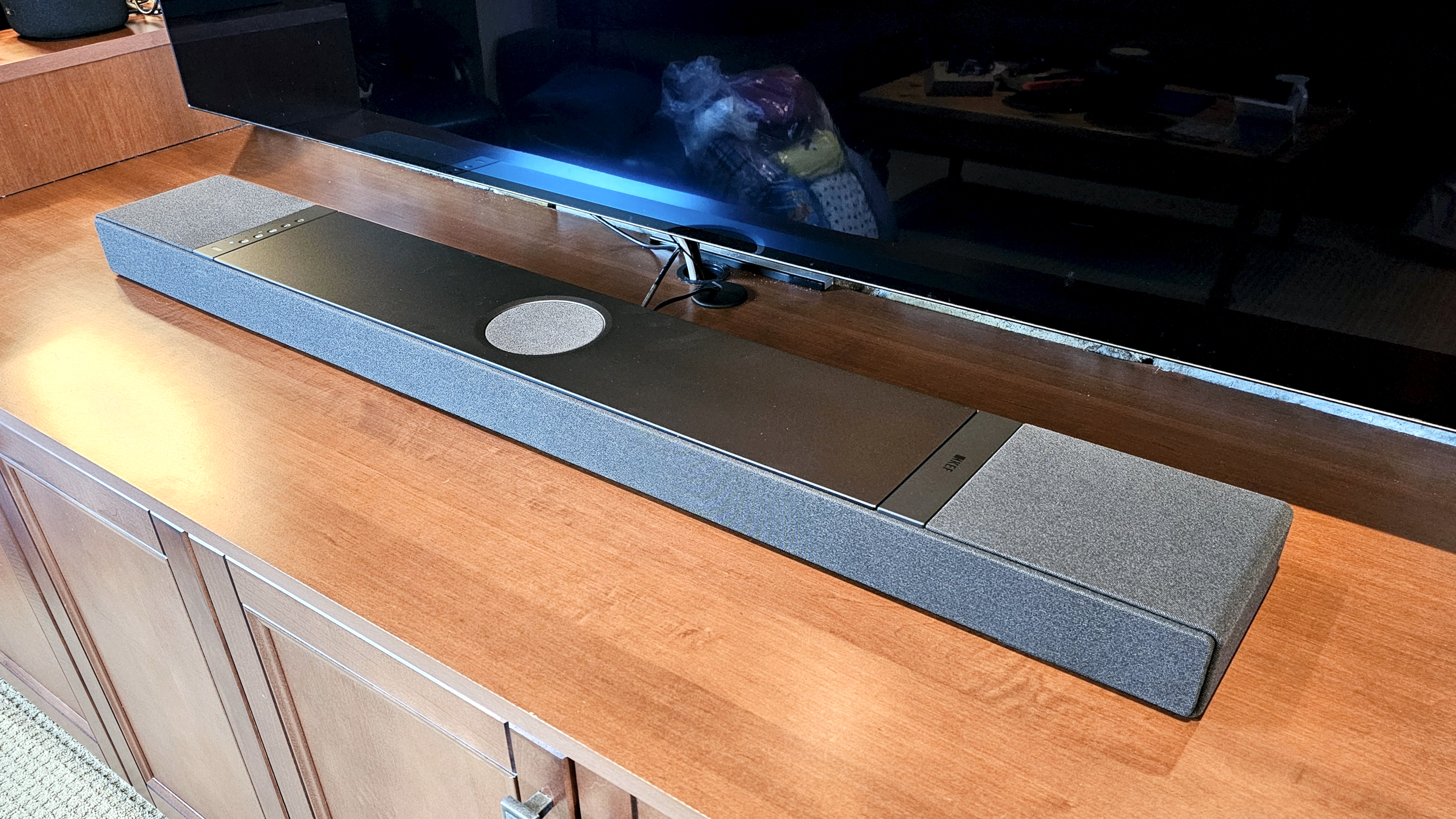
Despite what many publications have claimed, the KEF XIO isn’t the company’s first soundbar. However, it is KEF’s first Dolby Atmos soundbar, and in true KEF fashion, it’s powerful, stunningly clear, and priced at the high end of the market.
The XIO is a behemoth, weighing in at just under 25 pounds, and it’s loaded with KEF’s signature technologies, including a special version of the company’s Uni-Q driver. However, it’s the XIO’s built-in subwoofers that steal the show. There are four of them, arranged in a front/rear-firing layout that helps to cancel out cabinet vibrations. An additional set of sensors provides real-time distortion feedback, which lets those drivers achieve maximum bass output, without any nastiness creeping in.
As we’ve seen with other high-end models from Sennheiser, Bowers & Wilkins, and Bang & Olufsen, the XIO isn’t geared toward expansion. Its 5.1.2-channel system is designed to stand on its own — KEF doesn’t sell optional surround speaker add-ons. However, if its impressive sub-bass performance doesn’t quite rock your world, a wired sub output lets you add any powered sub you may already own, or intend to buy.
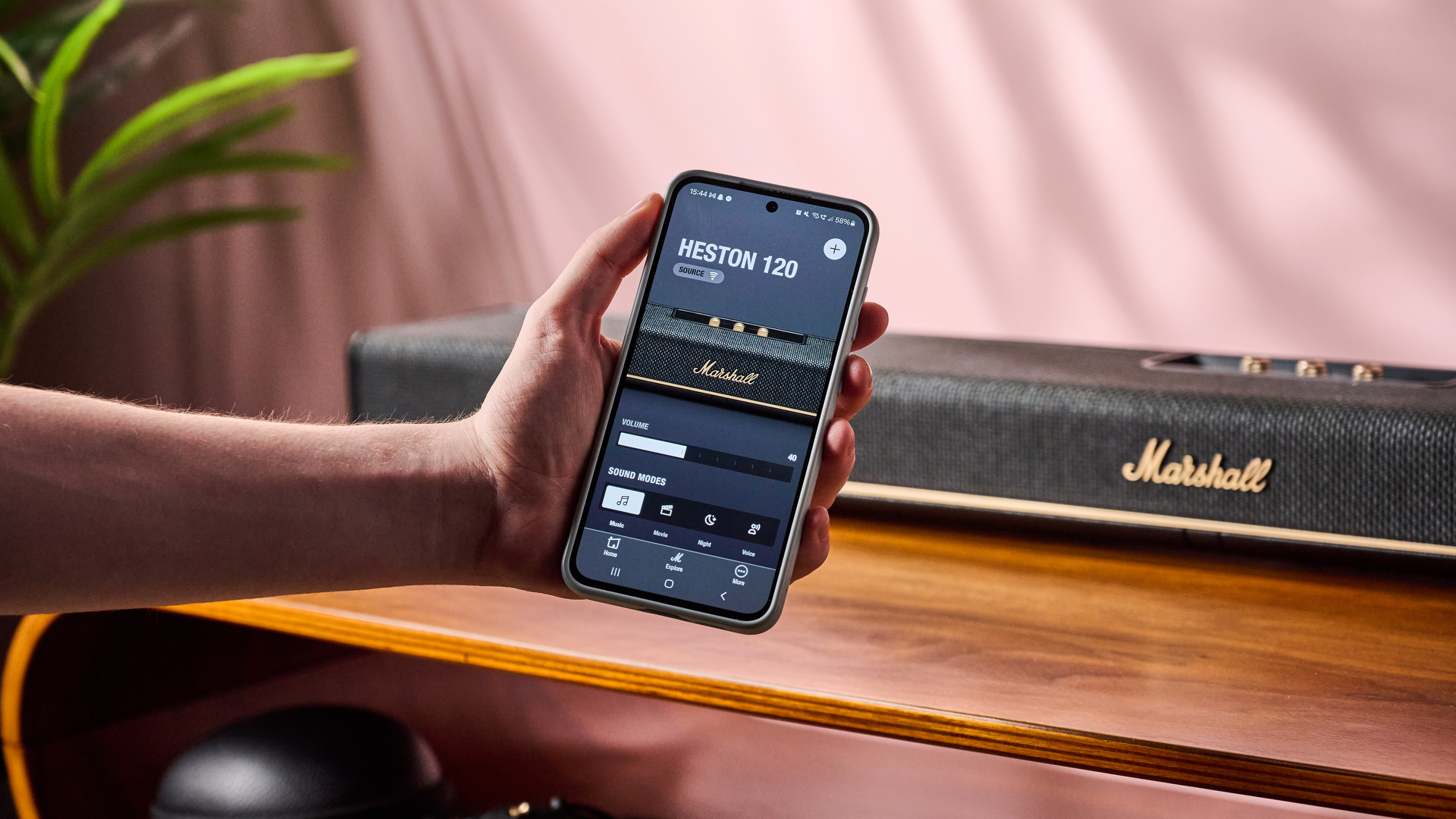
Marshall’s 2025 Heston soundbars, on the other hand, are its first, and the brand that’s best known for its giant, stage-commanding amplifiers/speaker stacks, has gone above and beyond to ensure its iconic design is front and center under your TV.
The Marshall Heston 120 and Marshall Heston 60 are aimed at different room sizes (with different pricing to match), and each speaker evokes Marshall’s unique retro classic looks, with faux-leather cabinets, a salt-and-pepper fabric grille, and distinctive Marshall script brass logos.
Both Heston soundbars deliver very good Dolby Atmos immersion for their size; however, the Heston 120 proved to be especially potent, rivalling the Sonos Arc Ultra in sheer power, and adding to the mix by offering an HDMI input and a wired subwoofer output, making it more versatile than the Arc Ultra from a connection point of view.
Where our curiosity remains unsatisfied is Marshall’s intriguing promise of expandability. Both Heston soundbars are compatible with Bluetooth Auracast, a technology that has a number of uses, including multi-device, wireless sound distribution. The company says you can expand the Heston 60 and 120 with any of its Auracast-ready speakers, which now includes a wide variety of models, but so far, it hasn’t updated the Heston series firmware to enable it. Here’s hoping it happens in 2026, as it could mean a significant change to how we think of home theater sound.
Dolby Atmos FlexConnect and Hisense HT Saturn
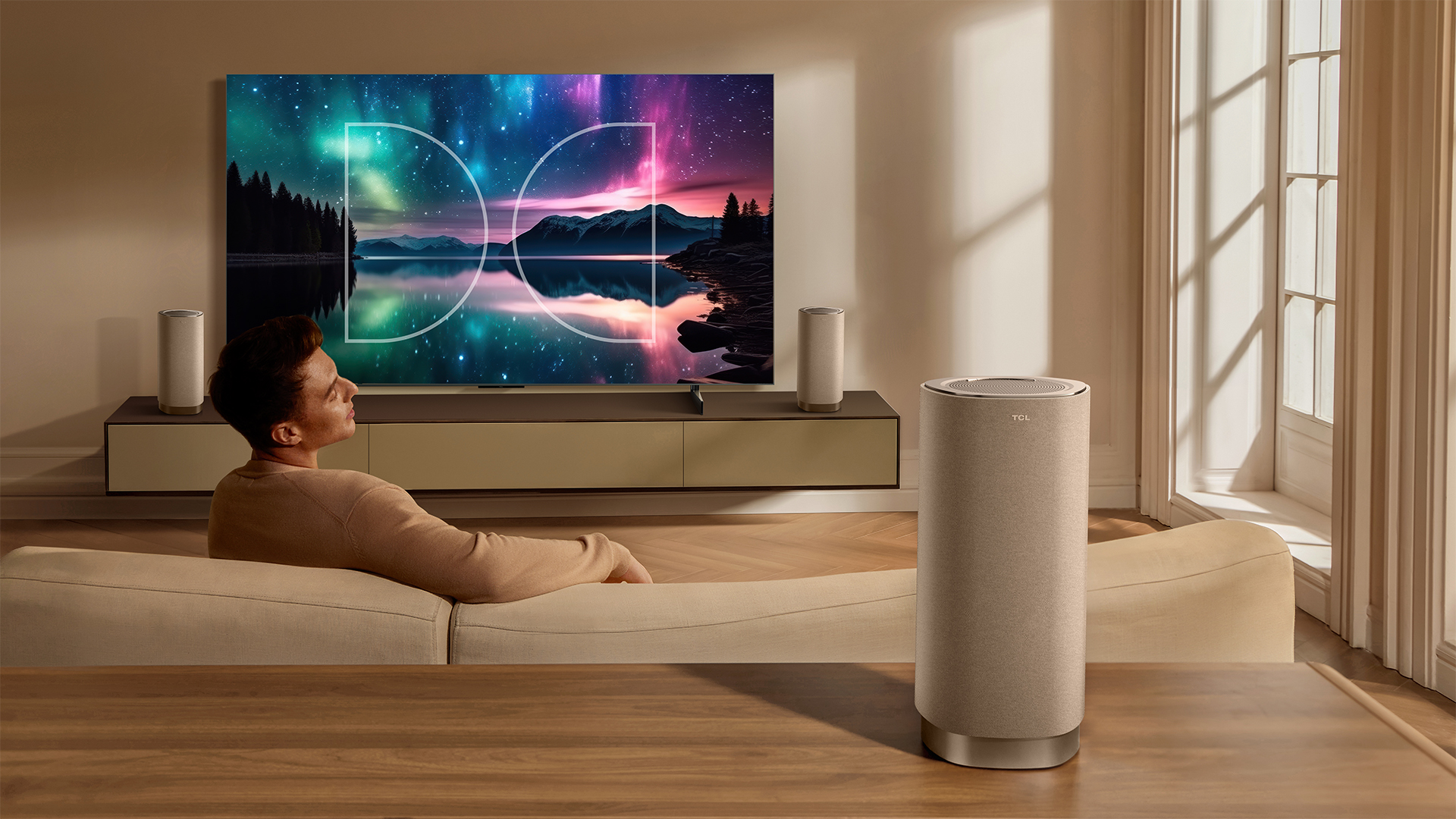
Speaking of changes to home theater sound, 2025 saw the debut of the first Dolby Atmos Flex Connect system. Dolby Atmos Flex Connect is designed to give you all the benefits of immersive Dolby Atmos sound with the convenience of being able to place wireless speakers anywhere in your room. A quick calibration step ensures that the sound is optimized, and this can be repeated any time you move the speakers.
TCL’s 2025 QD-Mini LED TVs are FlexConnect-compatible. They act as a FlexConnect hub, letting you pair up to four wireless TCL Z100 FlexConnect speakers, which TCL sells for $400 each. Want a subwoofer? You can swap one of these Z100 speakers with a wireless TCL Z100-SW subwoofer ($500).
I had a chance to hear the system at a press event in the summer of 2025, and while it wasn’t enough time to develop a full opinion, I was impressed by the potential – a three-speaker-one-subwoofer FlexConnect system definitely created a solid Atmos experience. Hopefully, we’ll see an expansion of Dolby Atmos FlexConnect in 2026 (Hisense has already put its hat in the FlexConnect ring).
On that note, in 2025, Hisense unveiled its own proprietary FlexConnect-esque speaker system called Hisense HT Saturn. Consisting of four Devialet-tuned satellite speakers and a wireless subwoofer controlled by a central AV hub, it mirrors the flexibility of Sony’s 2024 Bravia Home Theater Quad.
Unlike TCL’s Z100 system, you don’t need to own a Hisense TV to use an HT Saturn system, but it helps: the HT Saturn is compatible with Hisense’s Hi-Concerto technology, which uses a Hisense TV’s internal speakers to augment the sound – especially the center channel, which is key for dialogue clarity.
Audiophile-grade room correction
Room correction (or calibration, or room tuning) isn’t a new feature for soundbars. Sonos has been using its TruePlay system for years, Bose flagships have traditionally shipped with dedicated microphones for this purpose, and Sony has been making big gains via its 360 Spatial Sound Mapping tech.
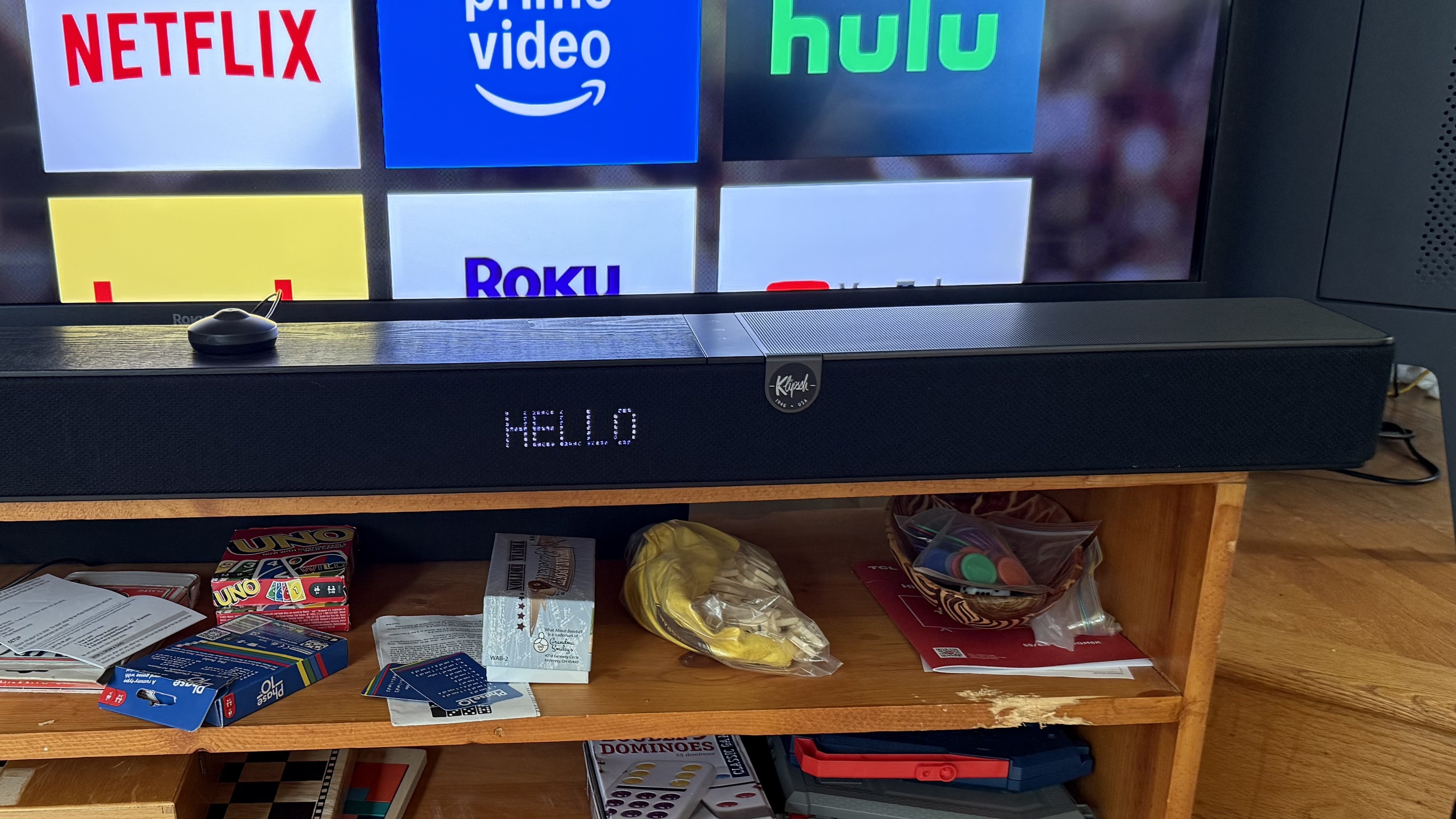
But when it comes to audiophile-grade, component-based, AV systems, there’s one brand you hear repeated more than any other: Dirac Live. In 2025, Dirac Live made its soundbar debut on the new Klipsch Flexus Core 300, a mammoth 5.1.2 Dolby Atmos/DTS:X speaker that can be expanded with surrounds and a sub for 7.1.4-channel sound.
Dirac Live calibration isn’t for the faint of heart. It takes up to 10 minutes and requires absolute silence. And yet, the results appear to be worth it. TechRadar’s reviewer gave the Flexus Core 300 a rare perfect 5/5 score, and found it makes a stark difference versus the uncalibrated sound: “Dirac Live makes this soundbar go from good to amazing, with everything sounding clean, especially in the mid-range.”
Bluesound reborn
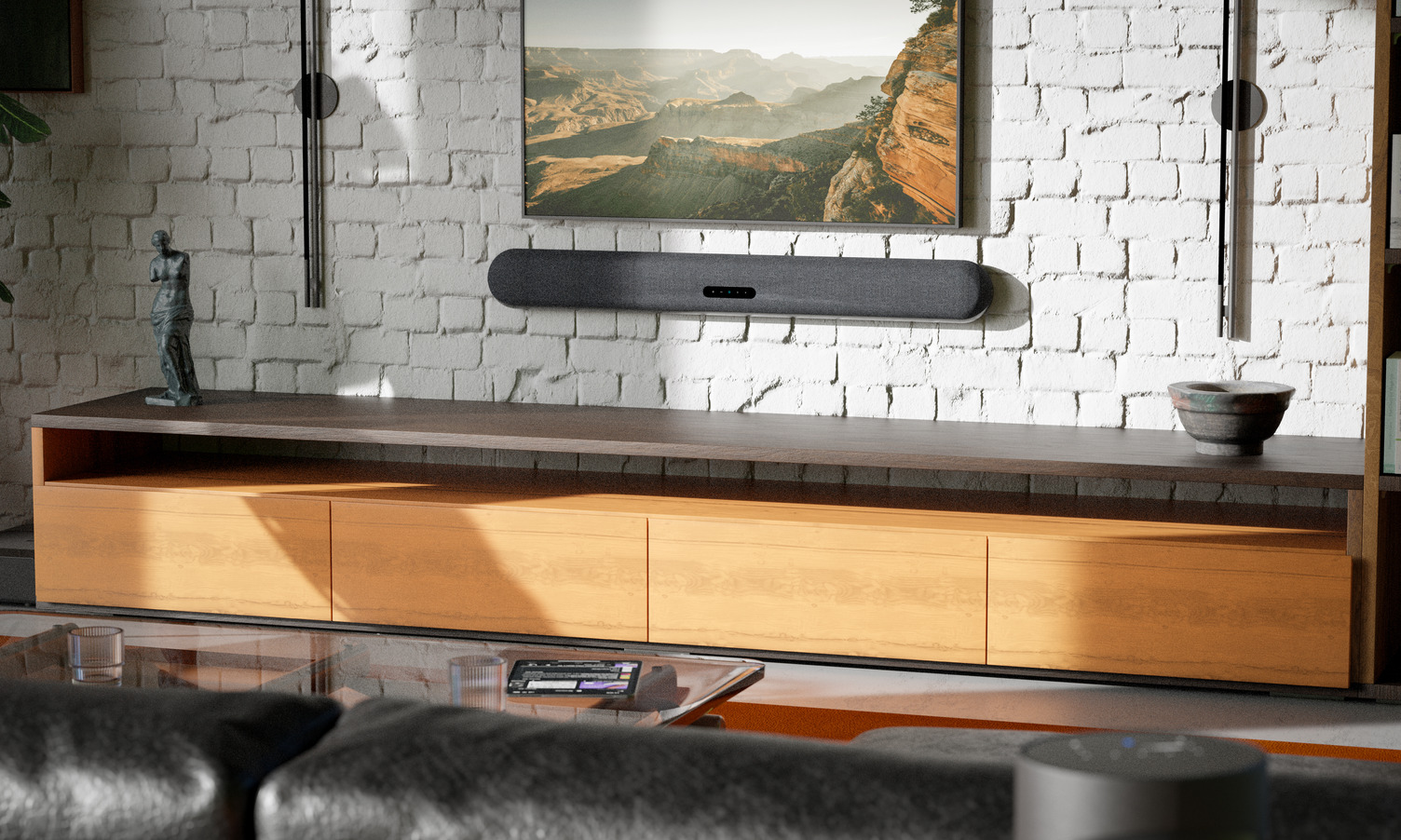
Near the end of 2025, Bluesound released its new Pulse Cinema and Pulse Cinema Mini Dolby Atmos soundbars. These represent a departure from Bluesound’s previous soundbars, both in terms of design and sound.
With a gently rounded shape, a wrap-around fabric grille, and the ability to be used sitting flat or wall-mounted (with an included bracket), these Dolby Atmos speakers look nothing like the company’s first three Pulse soundbars.
Like their predecessors, the Pulse Cinema and Cinema Mini can be expanded with subwoofers (wired or wireless) and surround speakers, and they can join a house full of other BluOS-compatible devices for multiroom sound. Where the Pulse Cinema, in particular, breaks new ground is its 3.2.2-channel sound system. Previous Pulse soundbars (and the Pulse Cinema Mini) use two channels plus digital signal processing to achieve Dolby Atmos immersion, but the Pulse Cinema has a dedicated center channel and two up-firing height drivers, marking the first time Bluesound has gone beyond the limitations of simple left/right channel reproduction.
These new Bluesound speakers aren’t cheap: the small-room, 280-watt Pulse Cinema Mini goes for $999, while its bigger, 500-watt sibling sells for $1,499.






 English (US) ·