
 4 weeks ago
34
4 weeks ago
34
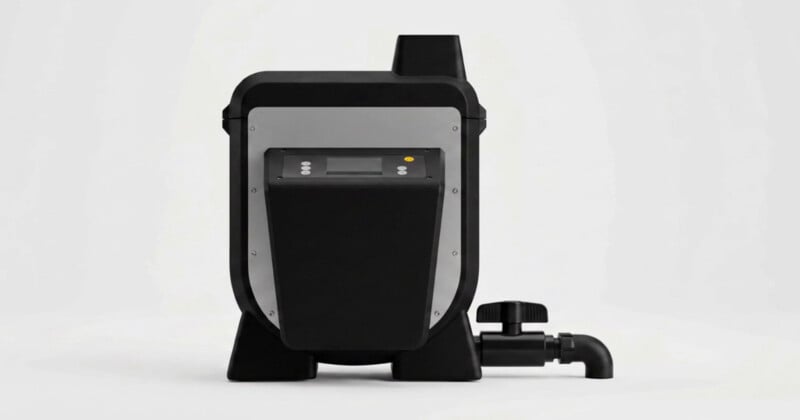
Developing motion picture film at home has long required either manual processing tanks or expensive commercial equipment, particularly for color film stocks that demand precise temperature control. Vintage Visual and Arno Peever are aiming to change that with Frank, a standalone home film processor designed for Super 8, Double 8, and 16mm film.
Designed for home users, educators, and filmmakers, Fränk automates several of the most critical parts of the developing process while leaving film loading and chemical handling manual. The processor supports black-and-white and multiple color film processes, aiming to make home motion picture film development more accessible without requiring a dedicated lab setup.
Fränk launched today on Indiegogo, and at the time of writing, the campaign has raised $37,806, reaching its funding goal just 7 minutes and 13 seconds after going live, even faster than it can process a roll of film.
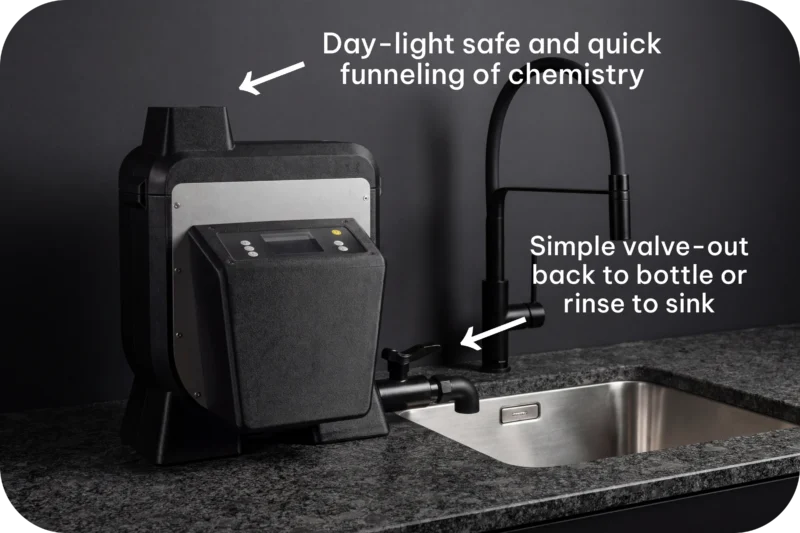
Automating the Most Demanding Parts of Film Development
For filmmakers developing motion picture film at home, consistency has historically been one of the biggest challenges. The most common solution, the Lomo UPB-1A tank, has been out of production for decades and requires users to manually manage agitation, timing, and temperature throughout development. While black-and-white processing can be more forgiving, maintaining reliable results with color film requires much tighter control.
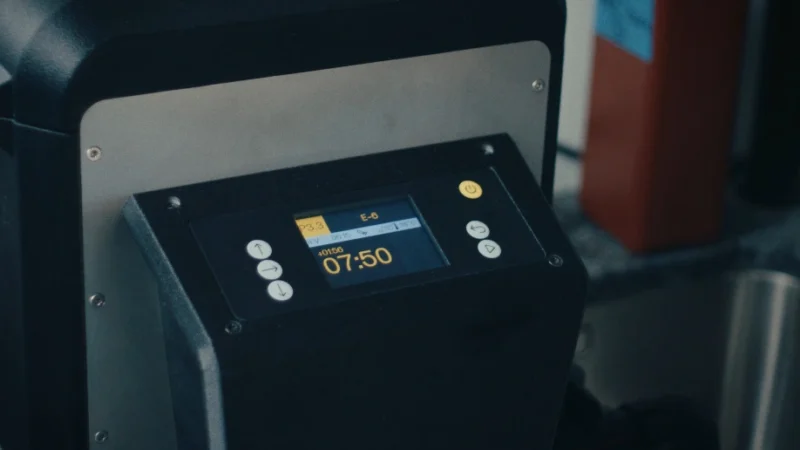
Fränk is designed to automate those variables. The processor uses a motor-driven reel system for continuous agitation while monitoring chemistry temperature with a built-in sensor. According to Vintage Visual, the system adjusts development time automatically as temperatures change, allowing users to avoid constantly correcting chemistry temperature during processing.

The company says the active time compensation system is based on the same technology used in its AGO Film Processor for 35mm and 120 still photography film. Fränk includes dedicated compensation curves for black-and-white, C-41, E-6, ECN-2, and ECP-2E processes, allowing the machine to adjust development times based on the chemistry being used.
“Fränk reads the actual temperature of your chemistry and adjusts development time to match it, so you don’t have to hit an exact number,” the company says.
Users still need to prepare and warm chemistry before beginning the process, but Fränk handles agitation, timing, and temperature compensation once development begins.
A Processor Designed for Motion Picture Film
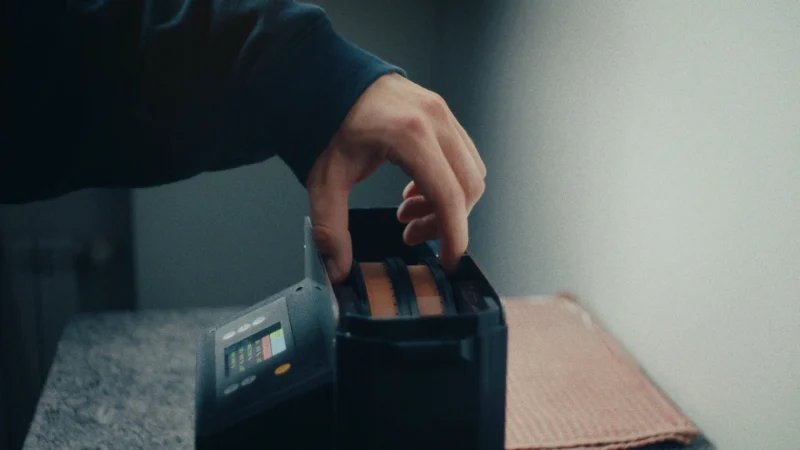
Fränk supports three common home motion picture formats: Super 8, Double 8, and 16mm. The included dual-spiral reel holds up to 100 feet (30 meters) of film by accommodating two 50-foot (15-meter) sections.
Standard 100-foot (30-meter) rolls of 16mm film are split into two sections before loading, sacrificing only a small number of frames at the splice point. Vintage Visual says this approach matches how many labs already handle motion picture film before scanning or transfer.
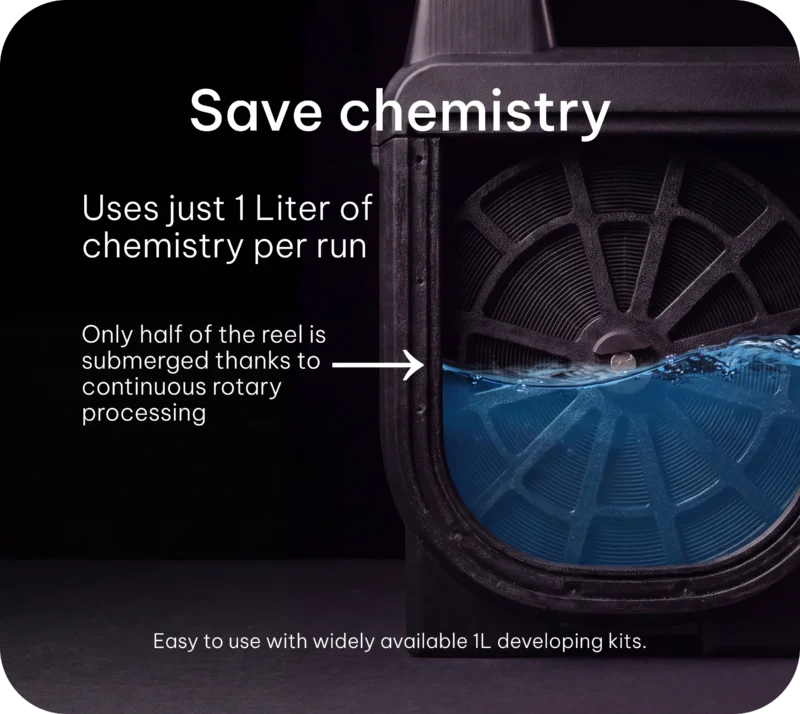
The processor’s reel design is one of the key differences from traditional developing tanks. Instead of fully submerging the film reel, Fränk positions the reel vertically so only part of the film is immersed in chemistry at any given time. As the reel rotates, the film continuously moves through the solution.
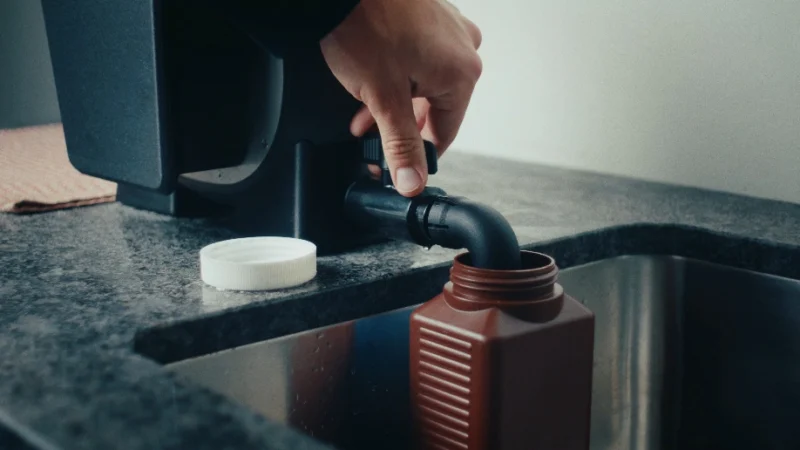
According to Vintage Visual, this approach reduces chemistry requirements to approximately one quart (one liter), matching the size of many commonly available C-41 and ECN-2 processing kits.
Supporting Color and Black-and-White Development
Fränk supports a wide range of film processes, including black-and-white negative and reversal film, C-41 color negative film, E-6 color reversal film, ECN-2 motion picture negative film, and ECP-2E motion picture print film.
The processor ships with preset programs for popular chemistry kits, allowing users to begin developing without manually programming each workflow. For advanced users, Fränk also includes a browser-based interface that allows custom development programs to be created and saved.
Through the web interface, users can adjust processing times, agitation settings, and temperature compensation behavior. This allows filmmakers experimenting with alternative development techniques to customize the process while still benefiting from automated control.
Why Home Cine Processing Matters
The ability to process motion picture film at home could appeal to a wide range of filmmakers and enthusiasts. Independent filmmakers could review footage sooner without sending film to a lab, while educators could demonstrate color film development directly in classrooms.
For experimental filmmakers, automated agitation and temperature monitoring may make it easier to repeat specialized processes or test different film stocks. Wedding filmmakers and event shooters could also benefit from shorter turnaround times when working with clients who want physical film footage quickly.
Vintage Visual says prototype testing showed end-to-end density variation between log 0.01 and 0.02, indicating consistent development across an entire roll.
Fränkie Provides a Manual Alternative
Alongside Fränk, Vintage Visual has introduced Fränkie, a manual daylight developing tank designed around the same reel system. Once film is loaded in complete darkness and the tank is sealed, the remaining development steps can be completed in normal room light using manual rotary agitation.
The company says Fränkie is intended as both an affordable entry point for filmmakers and a potential upgrade path for users who later want to move to the automated Fränk processor.
Fränk supports Super 8, Double 8, and 16mm film, processes up to 100 feet (30 meters) of film using approximately one quart (one liter) of chemistry, measures 6.4 × 14.6 × 13 inches (16.2 × 37 × 33 centimeters), and weighs 10.6 pounds (4.8 kilograms). The processor uses two 18650 lithium-ion batteries, charges via USB-C, carries an IP56 rating, and includes a two-year warranty.
Built From the Technology Behind AGO
Fränk follows Vintage Visual’s earlier AGO Film Processor, which brought automated processing to 35mm and 120 still photography film. The company says the experience gained from AGO helped shape Fränk’s temperature compensation system and automated workflow.
The team behind Fränk says the project began by adapting the concept of a traditional double-spiral reel for motion picture film. By changing the reel orientation and combining it with automated rotation and temperature monitoring, the company developed a system designed specifically around the challenges of home cine processing.
Pricing and Availability
Vintage Visual has launched Fränk through a crowdfunding campaign on Indiegogo with early-bird prices starting at $1,061 for the processor and $294 for the reel and tank. The company says the processor is designed and manufactured in Estonia and includes the custom dual-spiral reel, while chemistry is sold separately.
Image creditsVintage Visual





![[Virtual Event] Building a Secure AI Strategy for the Enterprise](https://eu-images.contentstack.com/v3/assets/blt6d90778a997de1cd/blt11afeac15e7adbb9/6a921187f8aef68330d6ae57/DRIW-AI-Strategy-VE-Oct26.jpg?width=720&quality=80&disable=upscale)
 English (US) ·