
 3 weeks ago
60
3 weeks ago
60
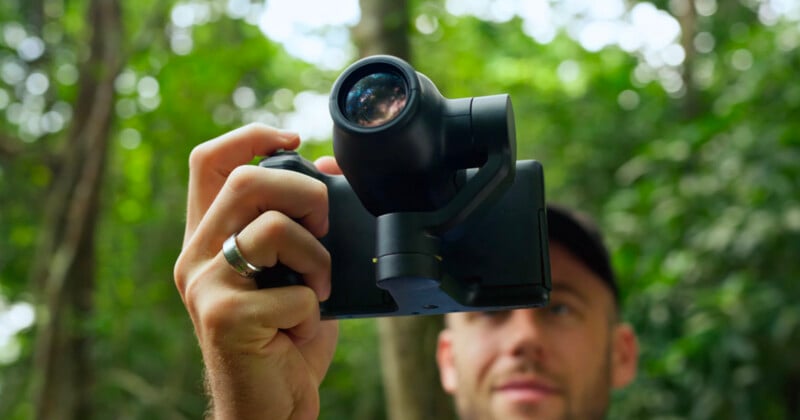
A new camera from FarseerTech aims to simplify photographing distant, moving subjects. RocXZoom combines a 50x hybrid zoom, motorized pan-and-tilt movement, and AI-powered subject recognition in a compact body designed for wildlife, birding, and outdoor observation.
The company, founded by former DJI imaging engineers, describes RocXZoom as the “world’s first robotic extreme zoom camera.” The system is designed to recognize and track subjects automatically while physically moving the camera to keep them in frame, addressing one of the biggest challenges of shooting at extreme focal lengths. The project has already drawn significant interest on Kickstarter, with $247,029 pledged toward its $9,999 goal.
Because the RocXZoom remains a pre-production crowdfunding product, treat its published specifications and pricing accordingly. Final hardware, software, shipping dates, regional availability, and production specifications may change before units reach customers.
For photographers considering the project, the most important milestones will be independent footage from production hardware, real-world testing of the tracking system with wildlife, confirmed payload performance for the RocXZoom Pro, and clearer information about the companion app’s data practices. That being said, initial videos look promising.
A Camera Designed to Move With the Subject

At long focal lengths, even small movements can make it difficult to keep a subject in frame. RocXZoom approaches the problem mechanically, using a motorized gimbal system to move the camera as its subject moves rather than relying entirely on the photographer to follow the action.
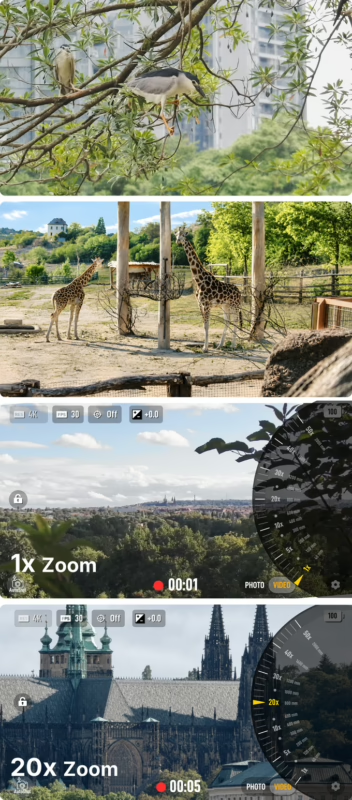
The camera offers a 20x optical zoom and 50x hybrid zoom, with a claimed 40mm to 2,000mm equivalent range. FarseerTech says the system combines optical magnification with digital processing to reach its maximum focal length, allowing distant birds, wildlife, athletes, and other subjects to occupy a much larger portion of the frame.
The company is also building AI directly into the camera. An onboard AI chip can recognize and track more than 300 animal species, according to FarseerTech, with particular emphasis on birds. Users can allow the camera to handle framing automatically or make manual adjustments when they want more control over the composition.
AI Handles Recognition and Tracking
FarseerTech says RocXZoom’s recognition system uses a YOLO-based computer vision model trained on large collections of bird images. A Siamese Network is used for subject tracking, with both systems working from the camera’s live view.
The company describes the process as a combination of recognition, tracking, and physical camera movement. Once a subject has been identified, the motorized pan-and-tilt system moves the camera to follow it, while the zoom can be adjusted as the subject changes distance.
FarseerTech claims the gimbal can respond in as little as 0.01 seconds and track subjects moving between 10 and 20 meters per second, or roughly 22 to 45 mph. Those numbers are manufacturer claims, however, and have not yet been independently tested.
The company has demonstrated the system publicly, including at CES 2026. One demonstration showed the camera following a simulated bird mounted to a remote-controlled vehicle while the operator’s hand remained relatively stationary. That provides evidence that the robotic mechanism works, but it does not establish how well the system will perform with unpredictable wildlife in real outdoor conditions.
The camera’s software also incorporates large language and vision models for video content analysis, according to FarseerTech. The company says those systems can help analyze bird information in recorded video.
The Small Sensor Makes the Extreme Zoom Possible
RocXZoom’s specifications reveal a deliberate tradeoff between reach and image quality. The camera uses a Type 1/2.5 sensor paired with a lens ranging from f/1.8 to f/3.9.
That sensor is considerably smaller than the sensors found in many interchangeable-lens cameras and premium superzoom models. The benefit is size: achieving a 2000mm equivalent field of view with a much larger sensor would require a substantially larger optical system.
The camera’s 2000mm equivalent reach therefore comes with the compromises normally associated with small sensors. Bright daylight should provide the most favorable conditions, while low-light situations are likely to expose limitations in noise, dynamic range, and fine detail.
The 50x designation also needs some context. The camera provides 20x optical zoom, while the remaining magnification is achieved digitally. FarseerTech’s published specifications put the optical range at approximately 40mm to 1000mm equivalent, with digital processing extending the system to 2,000mm equivalent.
How well that final digital extension holds up will depend heavily on the camera’s image-processing algorithms. Until independent production samples are available, the image quality at maximum zoom remains an open question.
Built for Wildlife and Outdoor Observation

The combination of extreme reach and automated tracking puts birders and wildlife observers at the center of RocXZoom’s intended audience.
Rather than carrying a large telephoto lens and tripod, a user could theoretically place the camera in position, select a subject, and allow its motors to handle much of the physical work of keeping that subject in frame. The system could also be useful for sports, aviation observation, and other situations where subjects move unpredictably at a distance.


The camera includes a built-in 5-inch OLED display, meaning an external monitor isn’t required for operation. FarseerTech also provides a dedicated mobile app that gives users remote access to camera controls.
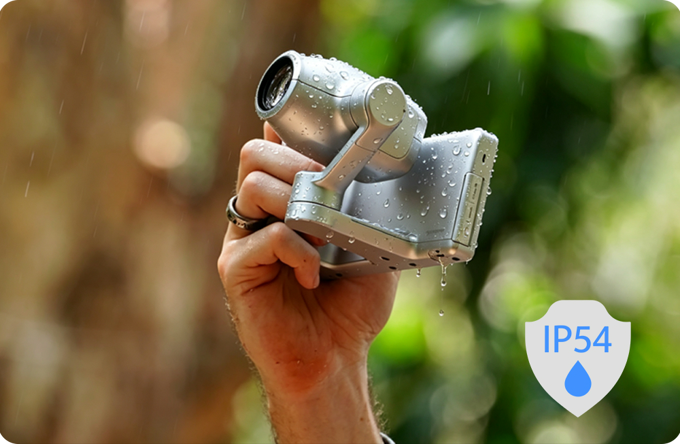
The body is made from machined aluminum and carries an IP54 rating for dust and water resistance. The standalone camera weighs 400 grams, or about 0.88 pounds, and FarseerTech rates its battery for up to four hours of operation.
Video recording is limited to 4K at 30 frames per second, with 1080p recording available at 30 and 60 frames per second. The company has not positioned RocXZoom as a cinema camera, and its specifications instead reflect its focus on observation, tracking, and long-distance capture.
RocXZoom Pro Adds Tracking to Conventional Cameras

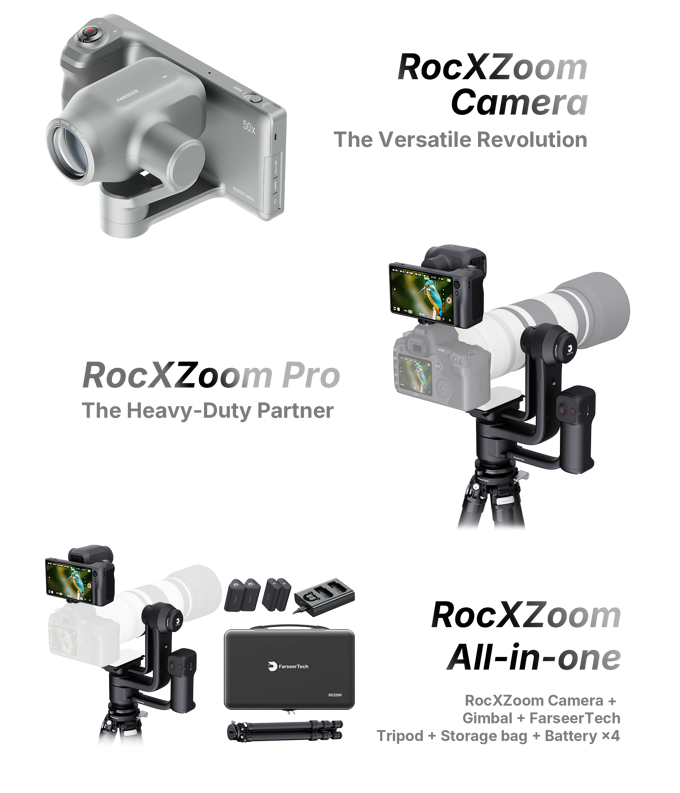
FarseerTech is developing the RocXZoom Pro alongside the standalone camera. Rather than using its own long-range lens, the Pro is designed to move an existing camera and lens combination.
The company also describes a Master Suite configuration that pairs the tracking system with a separate camera used specifically for subject detection. That smaller tracking camera can be mounted above the user’s primary camera and provide positioning information to the motorized head.
The concept effectively turns an existing mirrorless or cinema camera into an automated tracking system. For wildlife photographers who already own long telephoto lenses, that may be more significant than the standalone RocXZoom itself.
FarseerTech says the Pro is designed to support payloads of up to five kilograms. That would accommodate many common professional telephoto combinations, although the system’s actual performance with heavy lenses will require testing.
The company lists the separate tracking camera at $249. It has not yet provided enough independently verified information to establish how reliably the Pro will maintain framing with different cameras and large telephoto lenses.
Connectivity and On-Camera Controls
RocXZoom includes Wi-Fi and Bluetooth connectivity, along with USB-C connectivity for the gimbal system. The companion mobile application provides another way to control the camera, making remote operation part of the product’s intended use.
That functionality could be particularly useful for wildlife photographers setting up a camera at a distance or monitoring a location without standing directly behind the camera.
At the same time, connected cameras introduce questions beyond image quality and tracking performance. The companion app’s data collection and processing practices have not yet been independently audited, and prospective users will want to understand what information the system collects and where that information is processed before relying on it for remote deployments.

There Are Still Significant Questions to Answer
RocXZoom presents an unusual combination of technologies, but much of its appeal currently rests on what FarseerTech says the system can do rather than independent testing.
The claimed 0.01-second tracking response, ability to follow subjects moving up to 45 miles per hour, and performance at a 2000mm equivalent field of view are all specifications that will require testing under real-world conditions.
Image quality is another major unknown. A Type 1/2.5 sensor can produce useful images and video in good light, but the combination of a small sensor and extreme digital reach creates limitations that will become more apparent in difficult lighting.
The Pro system also needs to show it can move heavier cameras and long lenses with enough precision to satisfy photographers accustomed to manually controlling their compositions.
Those questions do not necessarily undermine the concept. Instead, they define what needs to be established once production hardware reaches independent reviewers.
Pricing and Availability
FarseerTech launched the RocXZoom Kickstarter campaign with early-bird pricing starting at $449 for the camera. The campaign lists three early pricing tiers: $449 for Super Early Bird, $499 for Early Bird, and $549 for the Kickstarter Special.
The RocXZoom Pro Kit is also available through the campaign, starting at $849 for Super Early Bird backers. The Early Bird price is $949, while the Kickstarter Special is listed at $1,049.
The separate RocXZoom tracking camera is listed at $249. FarseerTech has also outlined additional bundles and configurations through the Kickstarter campaign, giving backers several ways to purchase the camera or build it into a larger tracking setup.
Image creditsFarseerTech
Affiliate Disclosure PetaPixel articles may include affiliate links; we may earn a commission if you buy through one.





 English (US) ·