
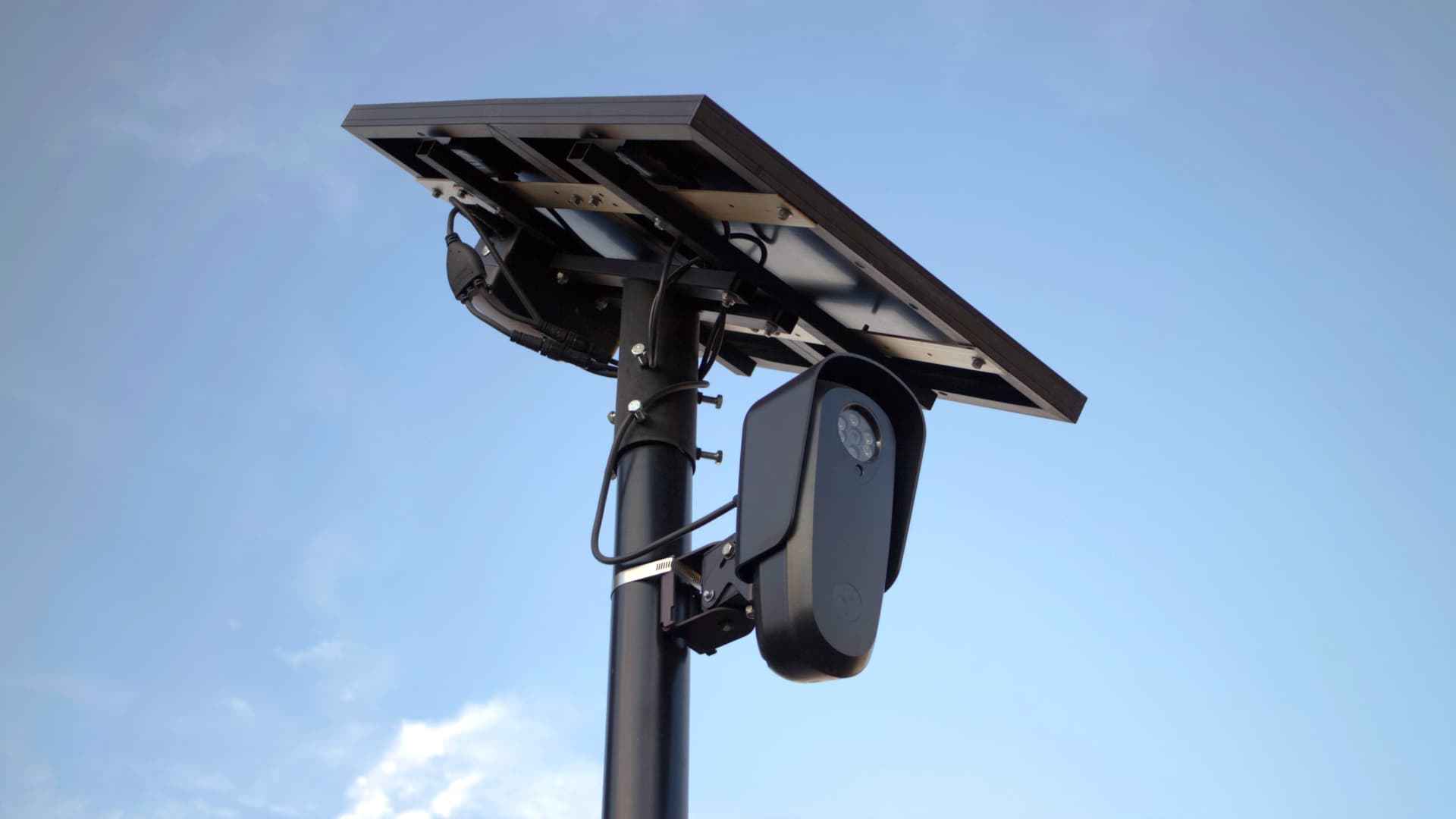
- A judge says Flock’s network is a type of ‘indiscriminate mass surveillance’
- Cops criticized for using Flock to stop a woman without probable cause
- Judge says searches based on Flock breach the Fourth Amendment
Flock cameras represent “indiscriminate mass surveillance” and should be ruled unconstitutional, a federal judge has just declared. It’s yet another blow to the beleaguered automatic license plate recognition (ALPR) camera maker and reflects growing public opposition to the technology.
The declaration was made when Oklahoma judge Sara Hill ruled that a police officer had violated the Fourth Amendment rights of a woman suspected of methamphetamine trafficking by searching for her license plate in Flock’s database.
According to 404 Media, the police officer looked up the license plate simply because it was from California, then used the woman’s travel history as justification for searching her car. In other words, he worked backwards after finding the woman’s vehicle in the Flock database instead of relying on any kind of probable cause.
The Fourth Amendment of the US Constitution protects citizens against “unreasonable searches and seizures.” In this instance, the judge ruled that Flock’s network of cameras was “a type of indiscriminate mass surveillance” that had been harnessed by the officer. The judge’s reasoning was that the license plate search “was not supported by probable cause, and it was done without a warrant in violation of [the defendant’s] Fourth Amendment rights.”
Hill disagreed with previous judicial opinions that Flock’s network did not breach the Fourth Amendment because its footage was taken in public places. They argued that these opinions do not consider that the network is “approaching dragnet-type law enforcement practice” and that courts need to catch up to keep abreast of the technology.
Flock’s ‘sweeping modes of surveillance’

In the case in question, the police officer got lucky when he pulled over the woman: she was in fact carrying 91 pounds of methamphetamine in her vehicle. But his motivation for pulling her over was the problem: she was simply driving in Oklahoma using a car with California license plates. That was not enough of a “probable cause” to justify the traffic stop, the judge ruled, and constituted a violation of the woman’s Fourth Amendment rights against arbitrary searches.
As the judge argued, “The factors that the government relies upon are the same type of circumstances that everyday Americans encounter on long road trips for many legitimate reasons. Many of us drive longer than we want to get to a desired destination, or to no destination at all other than the road and sights ahead.” Using Flock’s catalog of vehicle footage to stop these everyday people would infringe on their Constitutional rights, Hill declared.
404 Media believes there are currently over 100,000 warrantless license plate searches made within Flock’s systems every month. Hill’s decision is not binding, but it comes shortly after a similar decision ruled that traffic stops made by the US Border Patrol using data from ALPR cameras were unconstitutional.
As Michael Soyfer, a lawyer at the Institute for Justice, put it, Hill’s decision recognizes “the sheer breadth of these systems, that they collect so much information about so many people in a way that sets them apart … The way courts have resolved these cases previously has been way too myopic and has ignored the depths of these systems and the sweeping modes of surveillance that allow police to reconstruct the movements of anyone in the country.”
We don’t know whether this ruling and others like it will lead to any significant changes, and as noted, previous cases have decided that Flock cameras do not present a Fourth Amendment risk. But with public opinion solidifying against the cameras and law enforcement’s reliance on the tech increasingly called into question, it’s an issue that will likely continue to face scrutiny going forward.

Follow TechRadar on Google News and add us as a preferred source to get our expert news, reviews, and opinion in your feeds.








 English (US) ·