
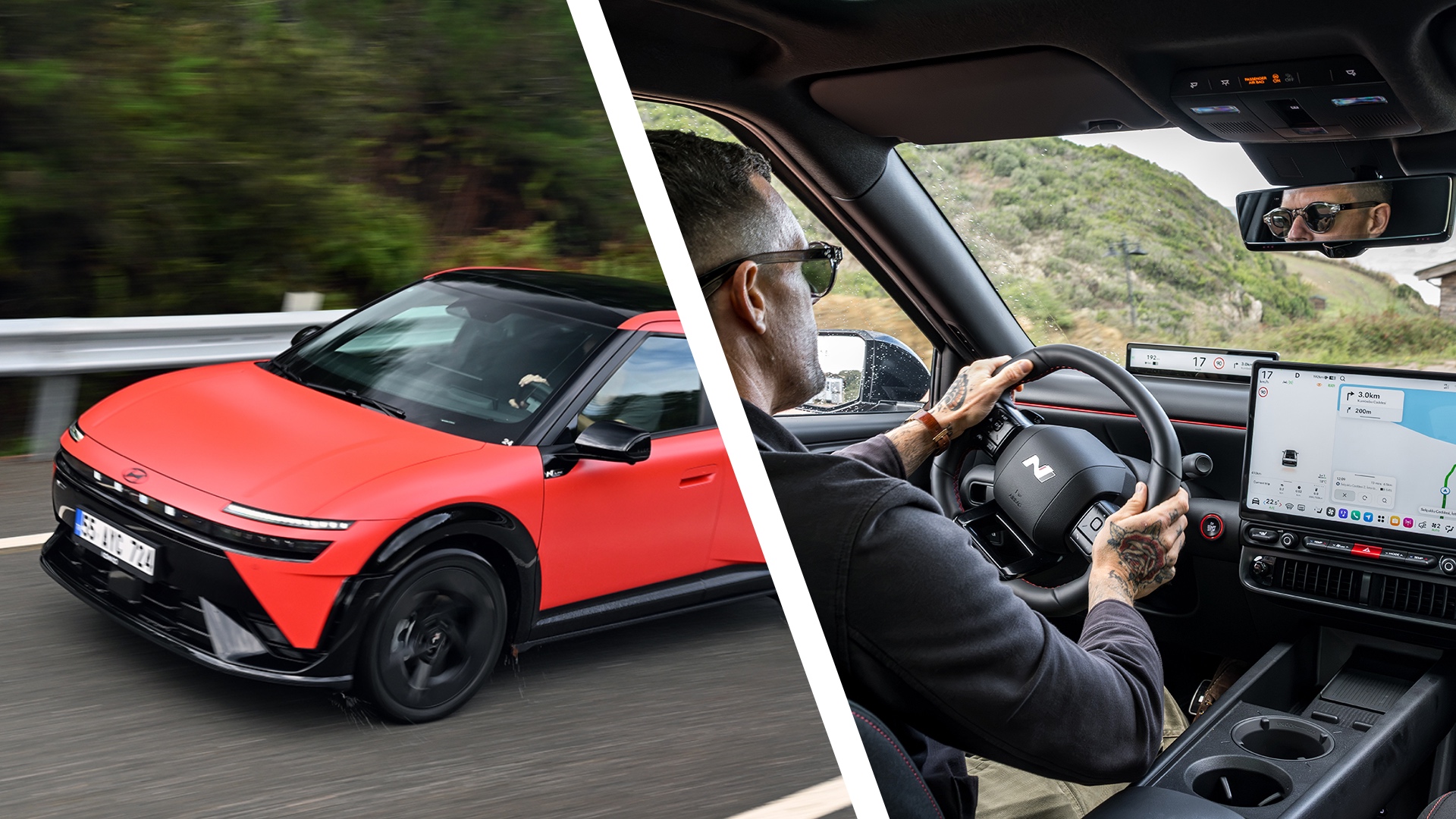
Not so long ago, you could have compared Hyundai (and sister company Kia) to the numerous Chinese newcomers currently wreaking havoc on the new car market.
The pair did to the legacy automakers what the Chinese are doing now, in so much as they undercut prices with exceptional value propositions.
How times have changed, as both Korean marques now offer luxurious electric vehicles that cost upwards of £70,000 / $70,000 / AU$130,000 and are now synonymous with quality, innovation and cutting-edge design.
However, these companies also now find themselves fending off cut-price competition from the Far East.
Not one to back down, Hyundai is ploughing on with its plans to be one of the leading electric vehicle manufacturers in the world, promising to launch or update 100 models by the year 2030.
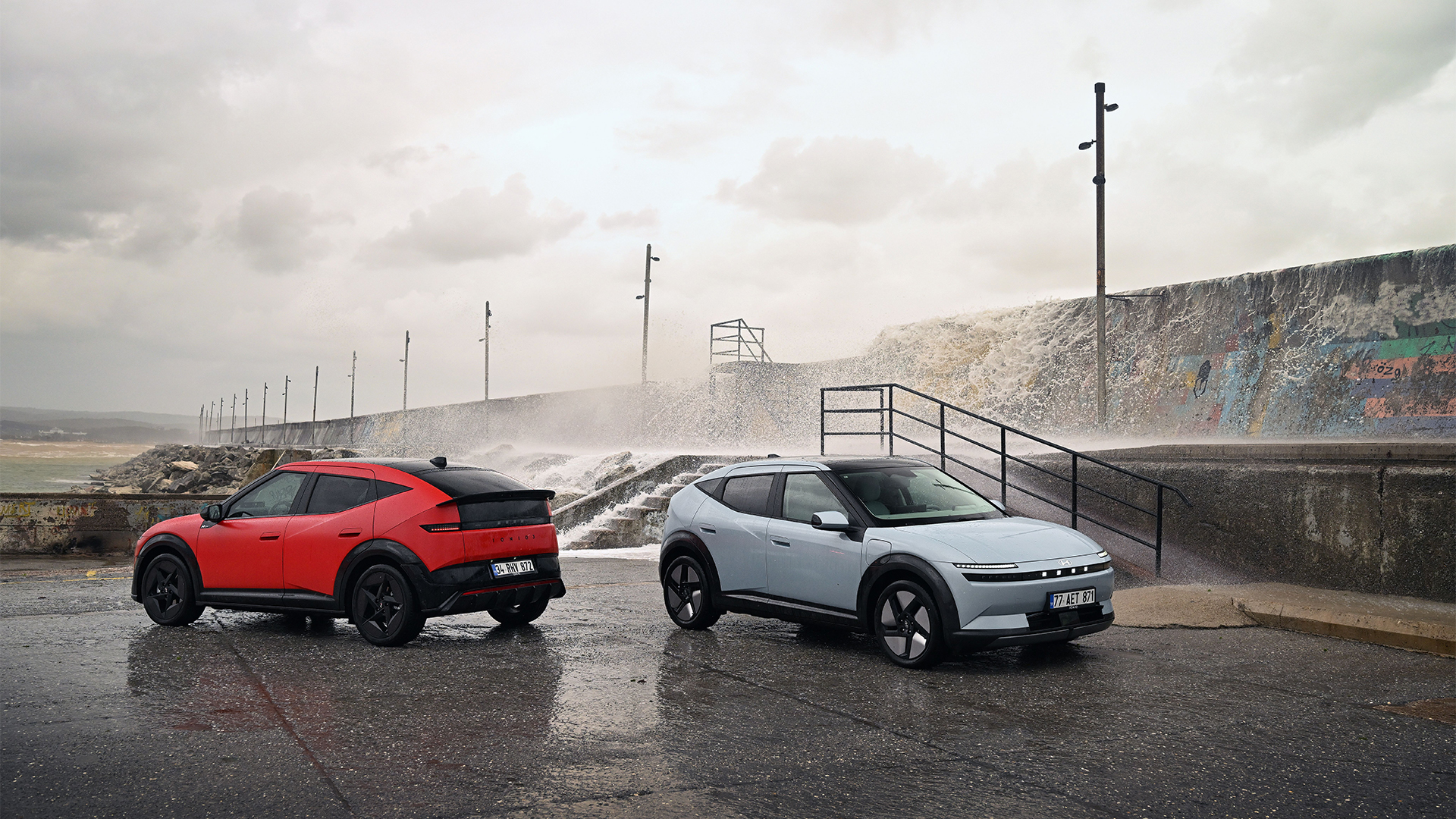
Spearheading that campaign is the new Ioniq 3 — a fully electric compact hatchback that Hyundai says is designed to make electrified mobility intuitive, comfortable and relevant for everyday European needs.
To do this, it is offering highly competitive all-electric range, punchy performance and distinctive looks in a package that can easily be threaded through busy city streets and parked in typically tight urban spaces.
But above all this is the exceptional value proposition. In the UK, the Hyundai Ioniq 3 starts at £18,495 after the full £3,750 Electric Car Grant (that's around $25,000 / AU$35,000), slotting it in among some of the most affordable EVs on the market today, without the tech and space compromises of something like the super cheap Dacia Spring, Honda Super-N or Leapmotor T03.
Tech-cellent value
It might seem odd that one of Hyundai’s cheapest vehicles is also the first to sport Hyundai’s all-new Pleos infotainment system, but the technological update has helped keep costs down.
Gone is the sweeping (and more expensive) multi-screen array found in other models, such as the Ioniq 5, and in its place is either a 12.9-inch or 14.6-inch central touchscreen (depending on the trim level) that is based on the now ubiquitous Android Automotive Operating System.
Zero points for guessing which company Pleos clearly drew a huge amount of inspiration from, as the graphical layout is almost identical to a Tesla, complete with the ability to adjust the on-screen set-up with a few intuitive swipes.
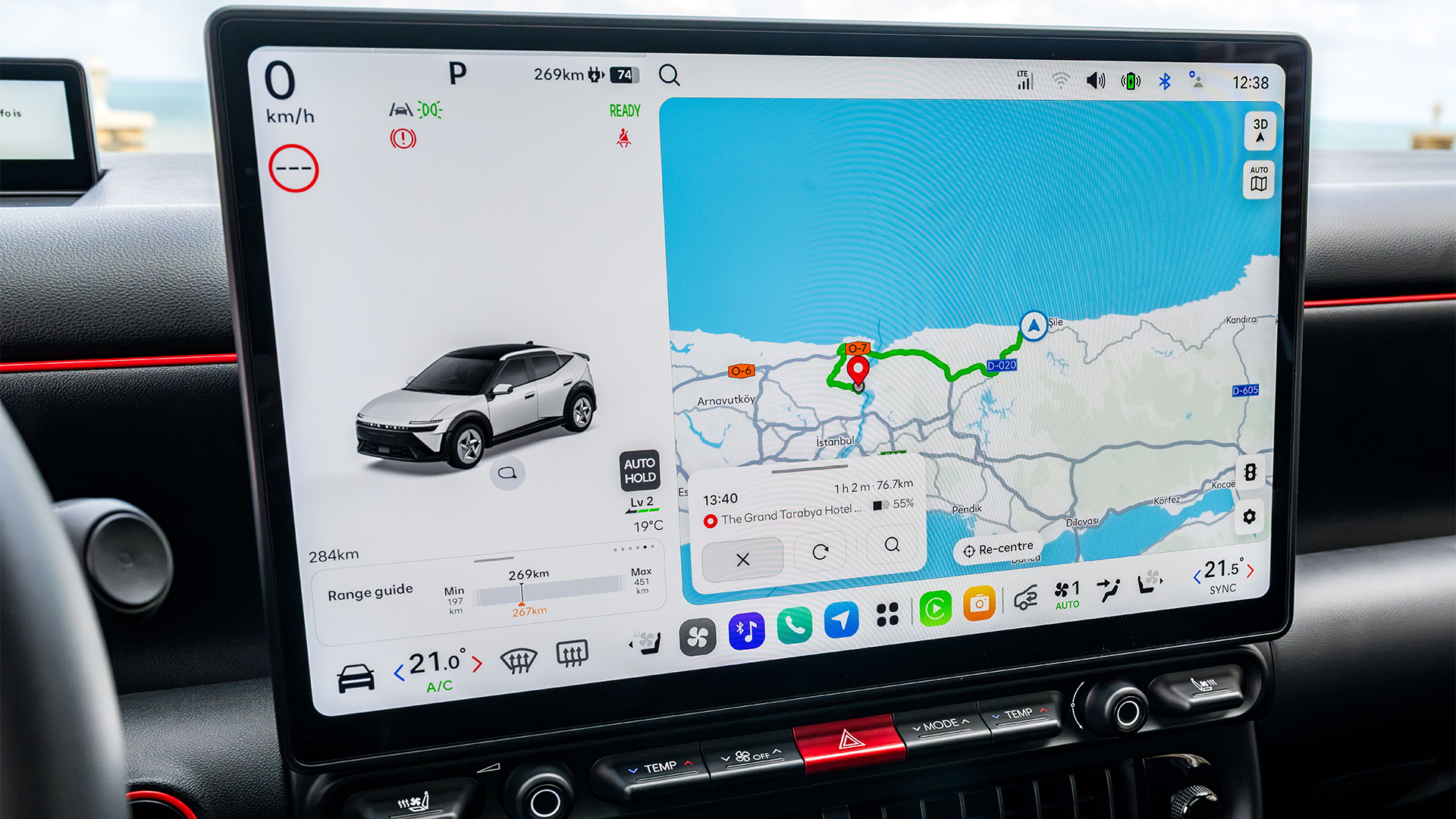
Zero points for guessing which company Pleos clearly drew a huge amount of inspiration from
There’s a graphical representation of the car on the left of the screen that can open the trunk and windows (like Tesla), navigation to the right (like Tesla) and a read-out for current speed in the corner closest to the driver (you guessed it, just like Tesla).
Homework copying aside, Pleos isn’t as handsome as other Hyundai set-ups, as it feels a little ‘bolted on’ to the dash.
But it all works seamlessly, is very fast to respond and is an improvement in so much as it offers much more detailed connected navigation with EV route planning, over-the-air software updates and access to the Pleos App Market, which will grow as the weeks pass.
Weirdly, Hyundai has also opted to offer a second digital driver display, which sits behind the steering wheel, as an optional extra.
Some corners of the internet lost their minds over this, forgetting that Tesla has relied solely on its central infotainment display for years.
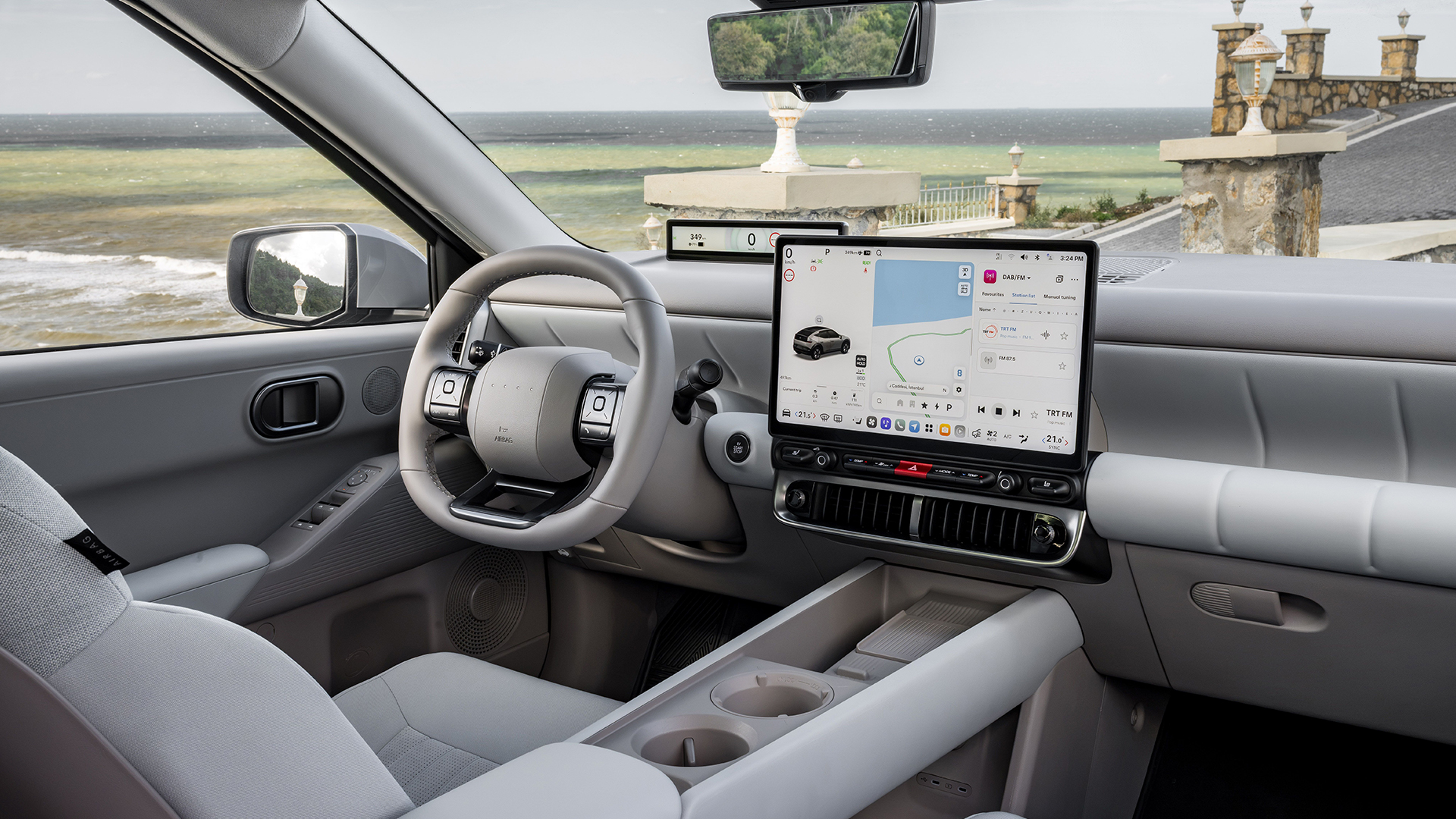
So, if you prefer your speed read-outs in a position where you don’t have to take your eyes off the road, it could be worth ticking that option box.
Hyundai also introduces Gleo AI with the new infotainment system, an AI-powered voice assistant integrated into Pleos Connect.
It uses natural-language commands to control selected vehicle functions, access information and interact with connected services.
During testing, it worked very well, able to make the cabin warmer via chatty conversation and even interact with third-party apps, such as Spotify.
There’s also the option of Hyundai Digital Key 2, which allows compatible smartphones and wearable devices to lock, unlock and start the car without a physical key, while a dedicated app provides remote access to vehicle information and selected functions through a smartphone.
Despite the price, customers aren’t getting short-changed on the technology front and here, it feels like Hyundai has poured hours of dev work into the Ioniq 3 to make sure it’s all intuitive and easy to figure out… which can’t be said for many cut-price Chinese rivals.
Styled to stand out
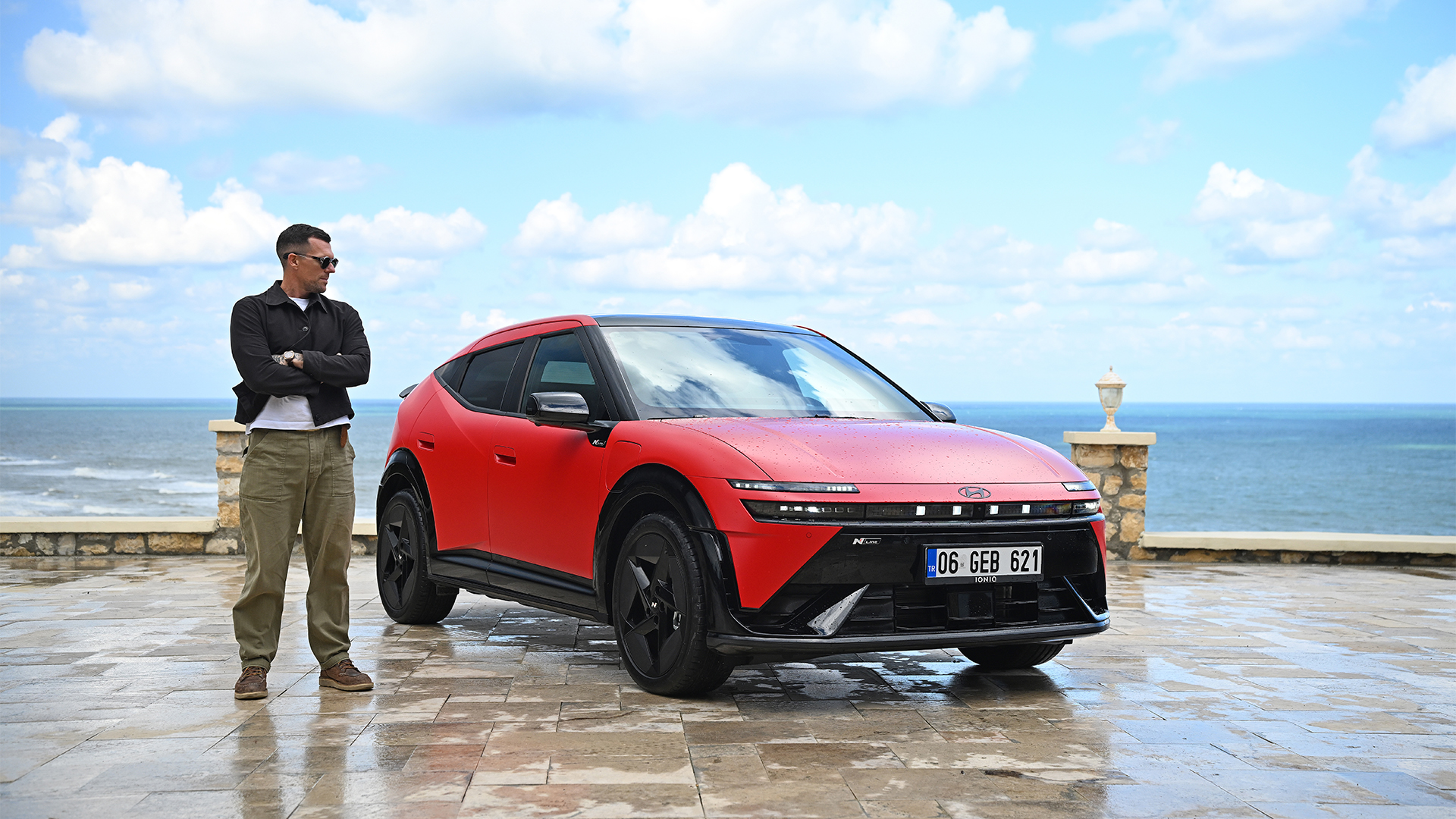
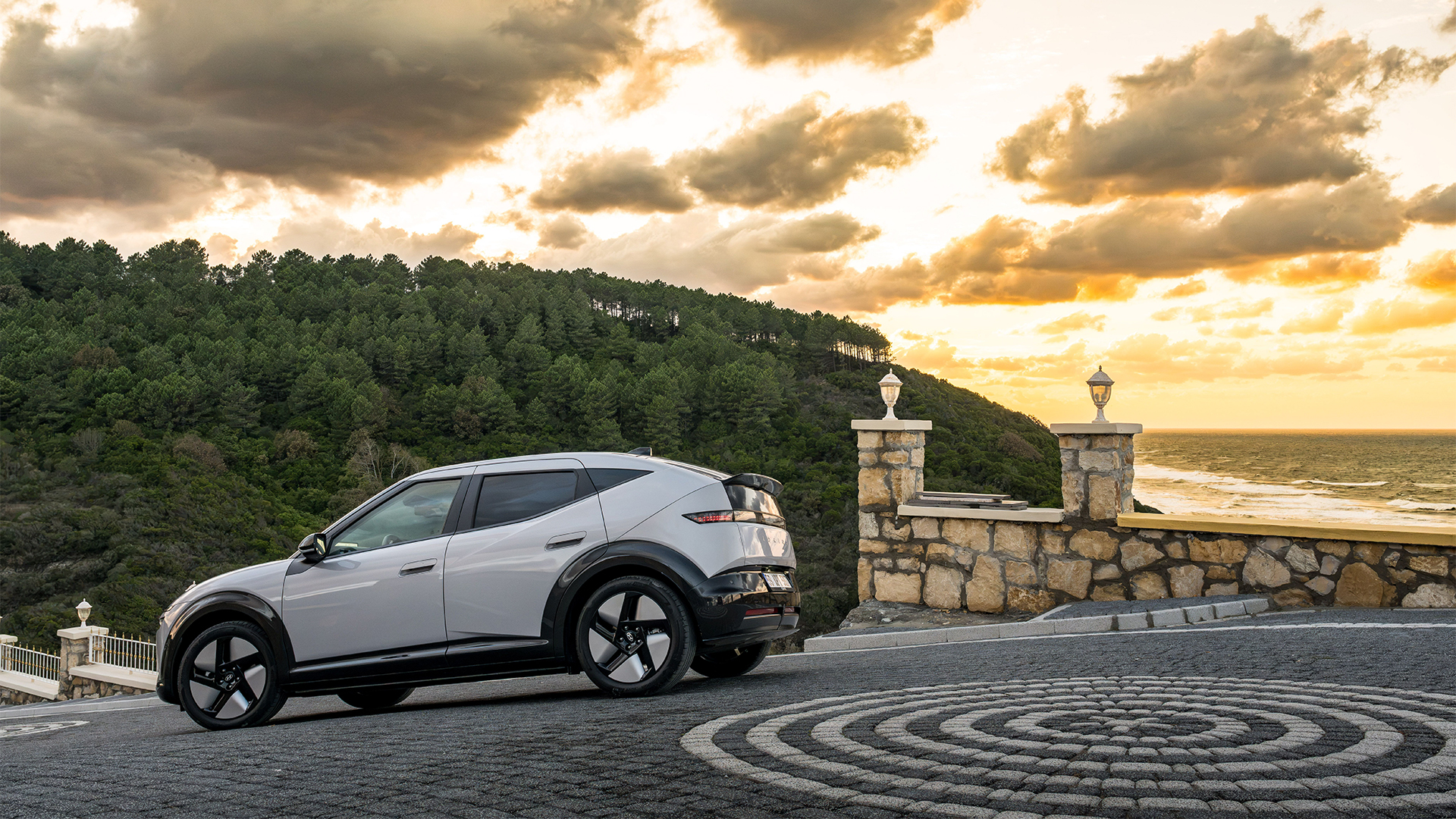
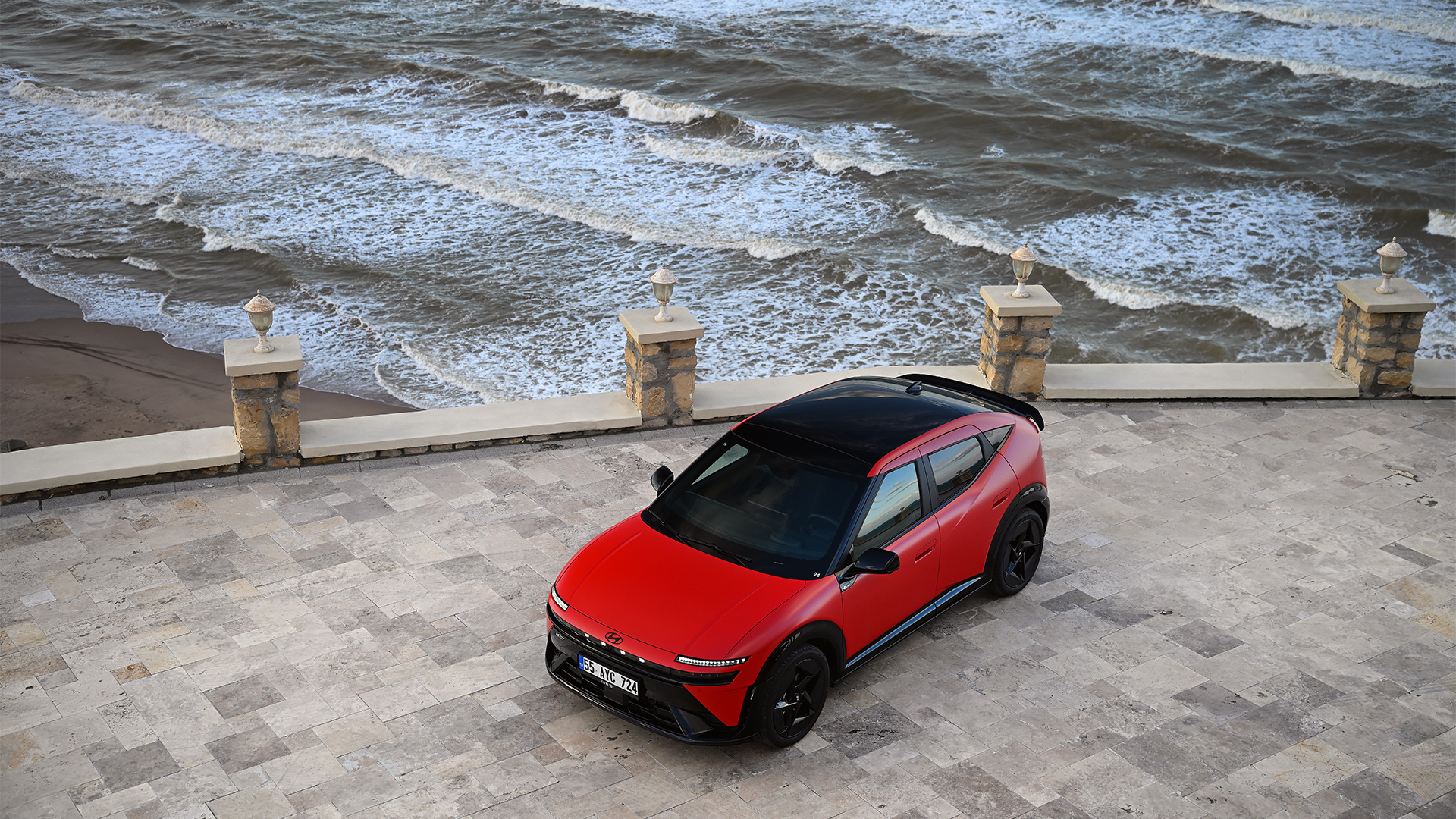
Hyundai’s decision to combine its ‘Art of Steel’ design language with what the company calls an ‘Aero Hatch’ silhouette is likely to raise eyebrows and cause some debate over whether or not it actually works, but this is a car that demands attention whichever side of the argument you sit on.
The shape pairs a low front end with a roofline designed to maximize headroom for front and rear passengers before tapering toward the rear spoiler.
Hyundai said it targeted a drag coefficient of approximately 0.263 in order to boost EV efficiency, while the company’s signature pixel lighting and four central dots referencing the letter ‘H’ in Morse code give the car a distinctive visual identity when it’s dark.
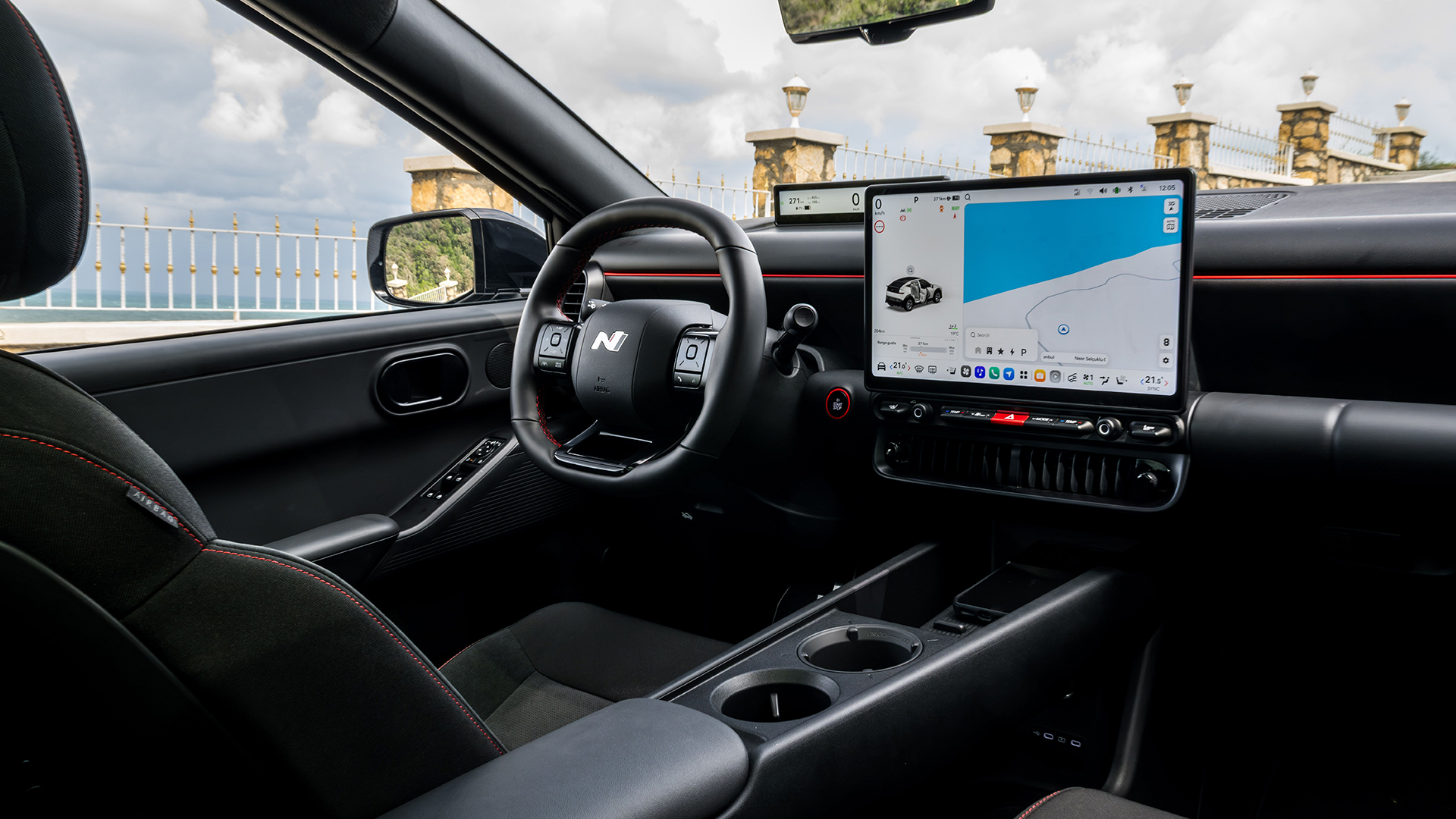
Divisive exterior design aside, there’s plenty of room inside the car. The ‘Furnished Space’ approach of the concept has taken a bit of a backseat, but it’s a very minimalist space with a flat floor that’s intended to maximize passenger roominess, with Hyundai claiming the five-seat cabin can comfortably accommodate three adults in the rear — although it will be a squeeze.
Customers can stash a total of 441 liters of stuff in the back, which is split between a 322-liter trunk and an integrated 119-liter “Megabox”, which is essentially a large space underneath the trunk floor.
Having seen most of the variations Hyundai offers, the N-Line cars, with their larger wheels and more pronounced rear spoiler, certainly look the best. It’s no hot hatch, but ‘Aero Hatch’ wears the rear wing and diffuser with more confidence, making it look less awkward than base cars.
A fine drive
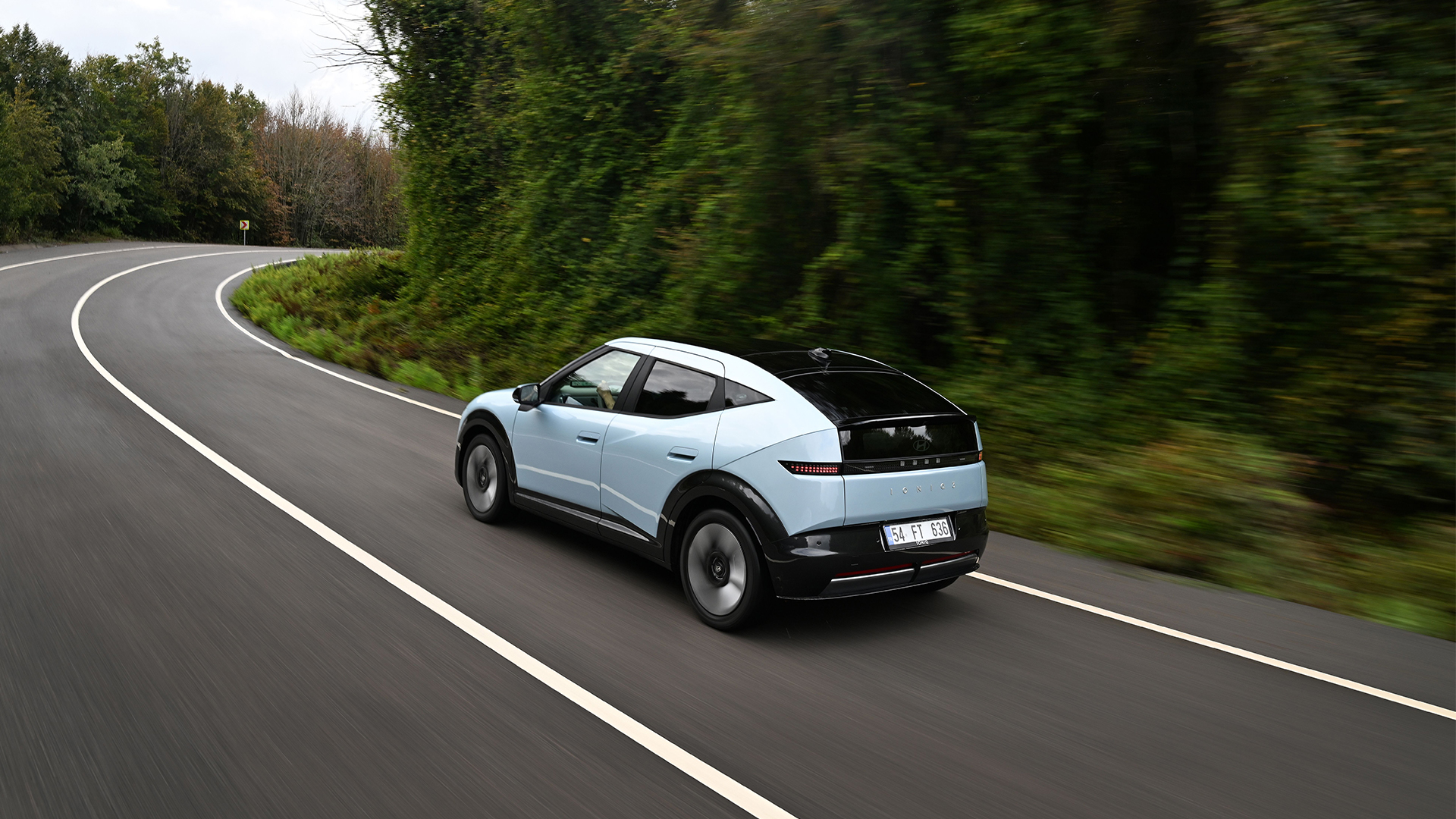
Navigating Hyundai’s various trim levels is a little confusing, especially given that the cheaper, shorter-range versions are actually faster — which you can't specify in the racier N-Line guise.
All cars ride on Hyundai’s latest K3 Platform with a 400-volt electrical architecture, allowing for 10 to 80% top-ups in approximately 29 minutes using a DC fast charger. The Standard Range model uses a 42.2 kWh battery, while the Long Range version gets a 61 kWh unit.
Both feature a front-mounted electric motor and front-wheel drive, with the Standard Range producing 107.8 kW (147 hp) and the Long Range delivering 99.5 kW (135 hp).
It feels like the wrong way around, but it’s very difficult to discern the additional 12 hp from behind the wheel anyway.
The ‘Furnished Space’ approach of the concept has taken a bit of a backseat
Hyundai quotes WLTP ranges of over 344km (around 214 miles) for the Standard Range and over 497km (around 310 miles) for the Long Range, which feels about right given the sort of efficiencies we were experiencing during our test drives.
Across the often broken road surfaces just outside of Istanbul, Turkey, the Ioniq 3 leaned on its smart regenerative braking functionality to top up the batteries on descents and generally make the most out of a charge. I clocked around 4.2 miles per kWh during my test.
With that in mind, expect to return around 250 miles from the longer-range versions and around 200+ miles from the Standard variant under typical driving conditions.
Acceleration is brisk across the board and this is definitely a car that has been tuned for quick city sprints, rather than long motorway stretches.
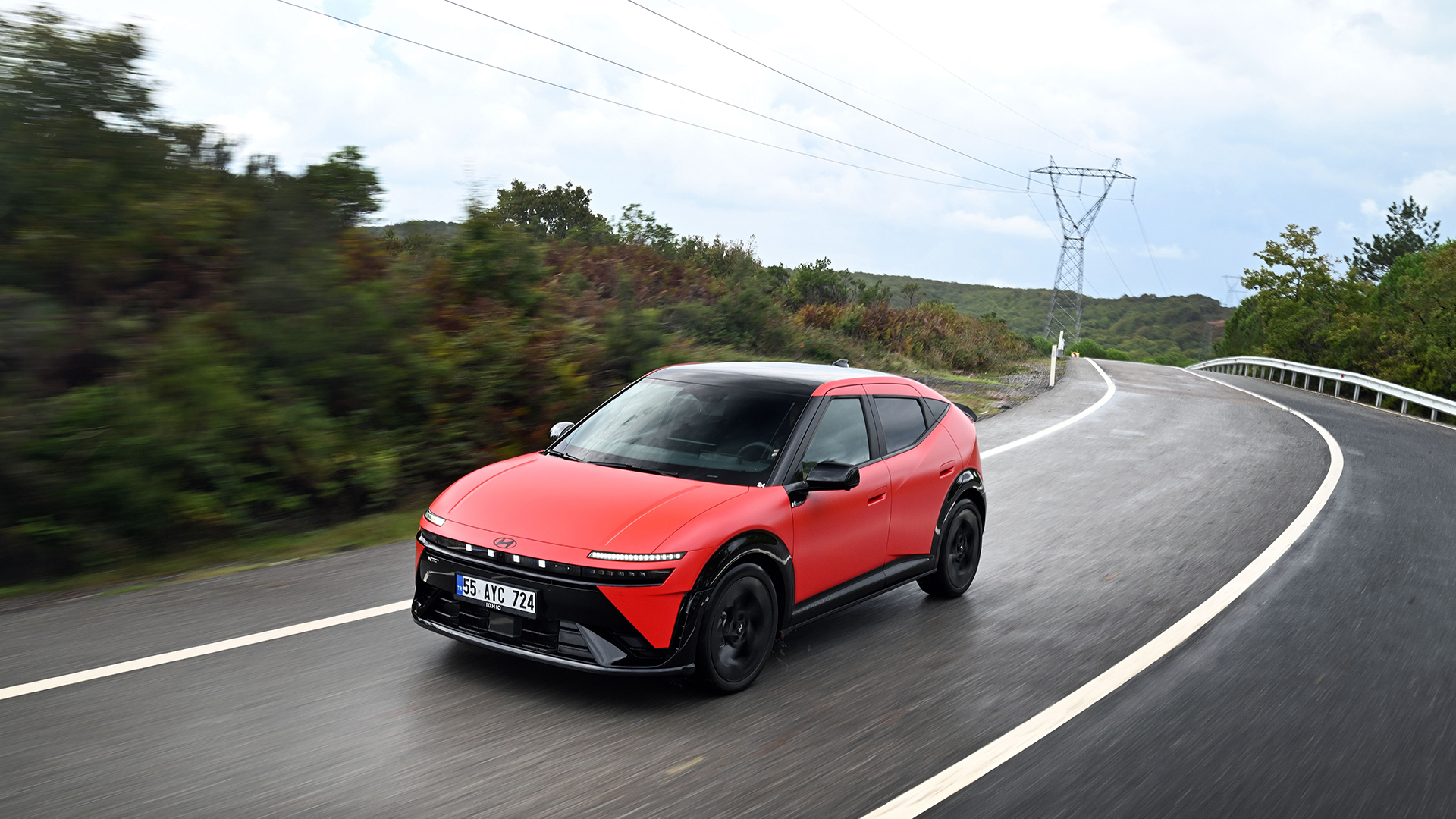
During these, there’s a fair amount of wind noise and the Ioniq 3 felt out of its depth keeping up with Turkey’s circa-90 mph speed limits.
But under normal (read slower) driving conditions, it feels much more mature than its budget price tag would suggest. The cabin is neatly laid out and the soft-touch fabrics adorning most surfaces elevate it to a point that Hyundai could easily charge more.
Above all else, it’s very difficult not to keep returning to the price, because the Ioniq 3 feels like an extremely accomplished EV that will happily rival the likes of the Renault 5 E-Tech and the VW ID 3, while undercutting sister company Kia’s EV2 by a considerable amount.
As a retort to the waves of cheaper Chinese rivals, it’s a formidable proposition with great in-car tech, a sweet drive, excellent range and a premium-felling interior.
In fact, when you consider the price, it has to be one of the most well-rounded affordable EVs currently on sale.

Follow TechRadar on Google News and add us as a preferred source to get our expert news, reviews, and opinion in your feeds.







 English (US) ·