
 4 hours ago
10
4 hours ago
10
Key Takeaways
- Bank of America analysts suggest Federal Reserve could increase interest rates if ongoing Iran conflict pushes crude oil beyond the $80 threshold
- Rate hike probability has surged to 25% by year-end, jumping from virtually zero just five days earlier
- Federal Reserve Chairman Powell indicated rate reductions remain off the table without demonstrable inflation improvements
- Bitcoin faces significant headwinds, battling to maintain the $70,000 support level amid growing macroeconomic uncertainty
- Typically dovish Fed Governor Chris Waller shifted his stance, voting to maintain current rates citing escalating inflation concerns
The Federal Reserve’s policy trajectory has undergone a dramatic reversal. Market expectations have flipped from anticipating rate reductions just days ago to seriously considering the prospect of monetary tightening for the first time in years.
You can’t make this up:
The market now sees a 50% chance of a US Fed rate HIKE by the end of 2026.
Just months ago, markets saw as many as four rate CUTS this year.
As oil prices surge to $100+/barrel, inflation expectations are rapidly rising, with gas prices up nearly +50%…
— The Kobeissi Letter (@KobeissiLetter) March 20, 2026
This remarkable transformation stems from escalating U.S.-Iran tensions that erupted on February 28, driving crude oil prices upward and reigniting inflation anxieties. Bank of America’s analysis identifies three critical catalysts that could trigger a Fed rate increase: continued labor market resilience, Jerome Powell’s extended tenure as Federal Reserve chair beyond current expectations, and persistent oil price elevation driven by Middle East conflict.
According to BofA strategists, the likelihood of tightening intensifies significantly should oil prices sustain levels above $80 per barrel. Recent weeks have seen crude trading consistently near this critical threshold.
Powell’s Recent Commentary
During this week’s FOMC press conference, Federal Reserve Chairman Jerome Powell emphasized that rate reductions will not materialize without concrete evidence of inflation moderation. While he avoided explicitly forecasting a rate increase, Powell acknowledged such action doesn’t represent the consensus baseline among policymakers.
Powell further disclosed he may remain in his current position until his anticipated successor, Kevin Warsh, completes the Senate confirmation process. This timeline remains uncertain. Should Powell continue leading the Fed through the June FOMC meeting while Iran-related oil price pressures persist, the case for tightening could strengthen considerably.
Market pricing reflected zero expectation of rate increases just five days ago. Current CME FedWatch interest rate futures now indicate approximately 25% probability of a hike materializing by December. This represents an extraordinary sentiment shift over an exceptionally brief period.
Polymarket prediction markets show 35% odds that the Federal Reserve implements zero rate cuts throughout 2024. The probability of an outright rate hike has climbed to 19%, nearly doubling from the 8% level recorded when the conflict initially erupted.
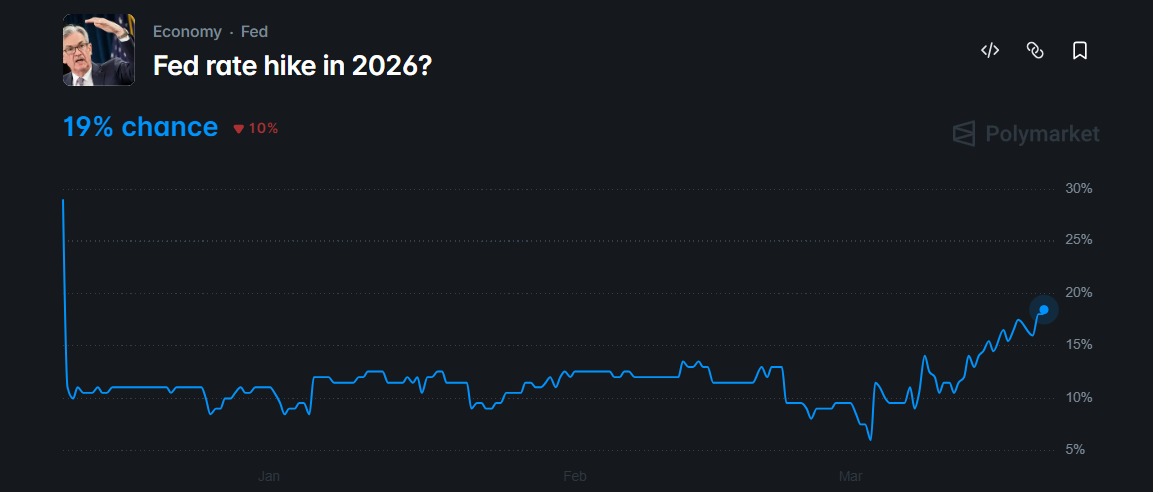 Source: Polymarket
Cryptocurrency Market Response
Bitcoin is experiencing considerable strain. The leading cryptocurrency has encountered difficulty maintaining the $70,000 level as inflation concerns mount and rate cut expectations evaporate. The aggregate cryptocurrency market capitalization declined from an intraday peak of $2.4 trillion to $2.37 trillion within a single trading session.
Crypto assets experienced a temporary relief bounce before resuming their downward trajectory alongside equity markets. Two-year Treasury yields surged to 3.89%, marking the widest spread above the Fed’s policy rate in three years. This development signals bond market participants are incorporating expectations of tighter monetary conditions ahead.
Polymarket data indicates the probability of a U.S.-Iran ceasefire has declined to 42%, suggesting traders anticipate continued conflict.
Fed Governor Chris Waller, who previously advocated for rate cuts following a disappointing February employment report, reversed his position this week. He cited elevated inflation risks connected to the Iran situation as the decisive factor in his vote to maintain current rates. Waller emphasized the prudence of adopting a wait-and-see approach before committing to any policy easing measures.
✨ Limited Time Offer
Get 3 Free Stock Ebooks
Discover top-performing stocks in AI, Crypto, and Technology with expert analysis.
- Top 10 AI Stocks - Leading AI companies
- Top 10 Crypto Stocks - Blockchain leaders
- Top 10 Tech Stocks - Tech giants










 English (US) ·