
 2 weeks ago
12
2 weeks ago
12
Pokémon is 30 years old, which means that it’s old enough to start having random bouts of back pain after bending down too far to pick up a Poké Ball. In that time it’s gone through a lot of phases — or generations, rather. Every time a new installment of the mainline RPG series launches, it kicks off a new era for the series. We get a whole boatload of spinoffs within a four-or-so year period, making good use of all the latest monster designs and experimenting with new ideas.
Rather than ranking the mainline RPGs — an exercise that has been done to OHKO — we wanted to do something a little different for Pokémon’s birthday. How does each generation of games in their totality stack up against each other? We’re talking not just the big new mainline games but also all the spinoffs, remakes, and expansions released in the years associated with those games. Through that exercise, it becomes more clear how not just the RPGs but how the series itself has evolved in three decades.
9 Generation 7: Pokémon Sun and Moon
 Image: The Pokémon Company/Nintendo
Highs: Ultra Sun and Ultra Moon, Let’s Go! Pikachu and Eevee, Magikarp Jump
Lows: Masters EX, Quest
I have a soft spot for Pokémon games that are willing to experiment. Sun and Moon, for instance, gets a lot of points for creativity by ditching the traditional gym structure and creating unique gameplay that matches the RPGs’ Hawaii-inspired setting. But I’d wager that even its staunchest defenders would admit that it was an experimental swing that didn’t fully land its punch. Ultra Sun and Ultra Moon gave that idea a bit of a boost, but not quite enough to fully realize the base games’ good ideas.
Outside of that? Gen 7 was a rough one. It hung in the awkward netherrealm between the Nintendo 3DS’ final days and the Nintendo Switch’s earliest ones. Players just wanted to get to generation 8 already by the time the Switch launched. Instead, we got Pokémon Let’s Go! Pikachu and Eevee have an appetizer. Those Red and Blue remakes were… polarizing, to say the least, but they did find a neat way to bring the design language of the then-gargantuan Pokémon Go to a console RPG. There’s not much else of note to shout out aside from Pokémon Masters EX (which famously got memed to oblivion in a social media kerfuffle) and Pokémon Quest, two microtransaction-heavy games that gave us a clear idea of where the franchise’s priorities were.
I’ll give one small shout out to one of the series’ most underappreciated gems: Magikarp Jump. The idle mobile game had players training up Magikarps in their own virtual fish tank. It was completely ridiculous, but I’ll stand by it as one of the best mobile Pokémon efforts to date.
8 Generation 5: Pokémon Black and White
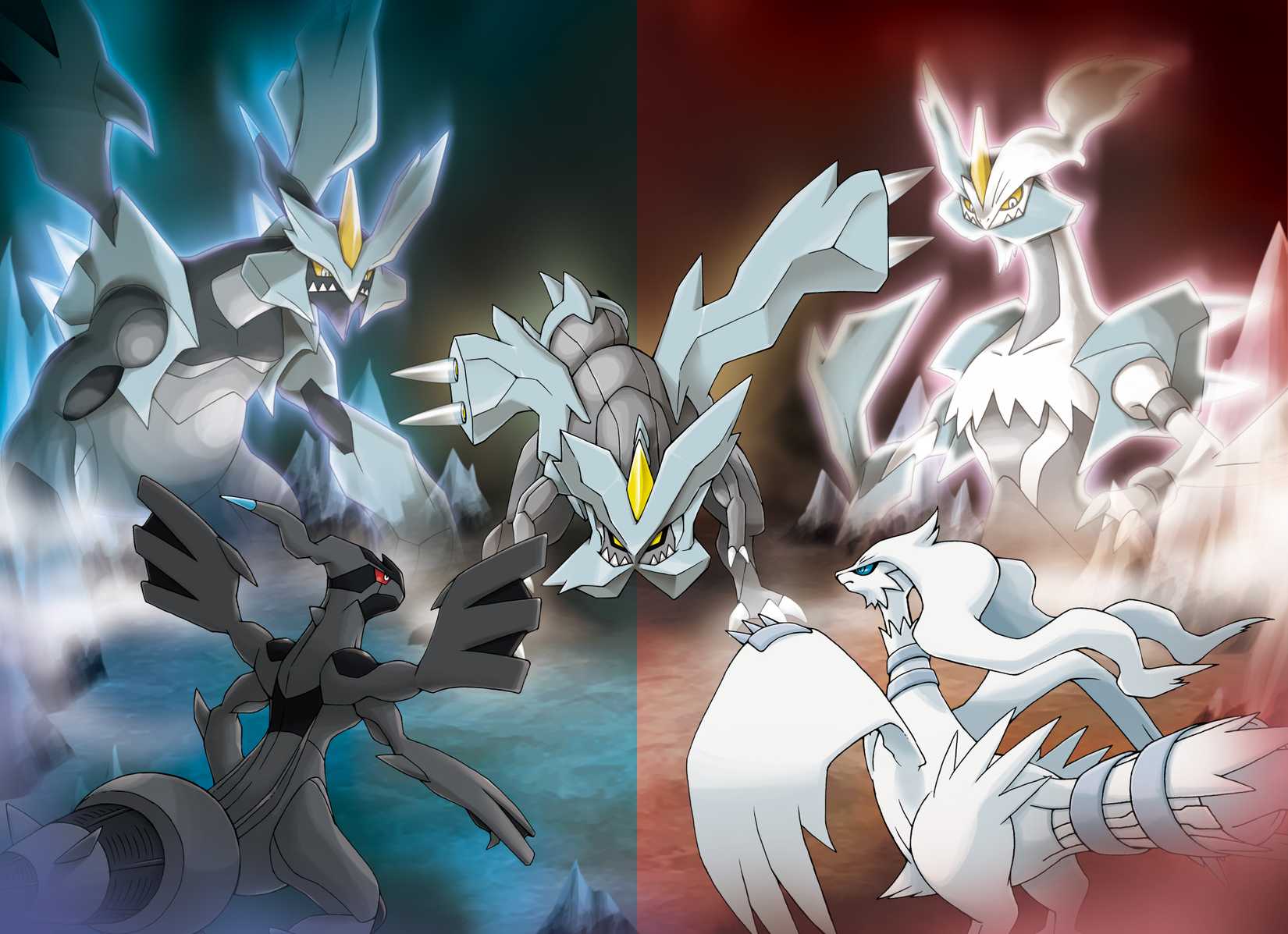 Image: The Pokémon Company
Highs: Conquest, Mystery Dungeon: Gates to Infinity
Lows: Rumble Blast, Rumble U, PokéPark 2
There’s a lot to respect about Black and White themselves. It was a risky but wise move for The Pokémon Company to ditch nostalgia altogether and create a wholly unique roster of monsters, gambling for the first time in series history on launching without Pokémon from previous generations. (You could encounter older Pokémon after finishing the main story.) Some really bad designs came out of that, but fantastic ones like Chandelure did too. The story had heft, the characters were memorable, and the fact that they got genuine sequels too was a refreshing break from the triple-dip format of the series. It didn’t land for every player, especially due to the inconsistent monster designs, but the people who love it really love it.
That holds true for the rest of the games too, for better and worse. The Black and White era was loaded with niche spinoffs that were destined to become cult classics. Pokémon Conquest is an unlikely Nobunaga’s Ambition crossover that was just weird enough to work. Pokémon Mystery Dungeon: Gates to Infinity was critically panned at the time, but has earned cult classic status since. Unfortunately, there’s not much else to celebrate beyond that. Dull games like Pokémon Rumble Blast and PokéPark 2: Wonders Beyond took center stage as the franchise struggled to serve its younger players in the Wii U and 3DS age. A few hidden gems just aren’t enough to get Gen 5 a higher spot, but let’s call it a “real ones know” situation.
7 Generation 9: Pokémon Scarlet and Violet
 Image: Game Freak/The Pokémon Company, Nintendo
Highs: Legends Z-A, TCG Pocket
Lows: Friends, Hidden Treasure of Area Zero DLC
You may have been expecting to see Gen 9 on the very bottom of this list solely due to Pokémon Scarlet and Violet's poor technical quality. That’s part of why it’s in the bottom three, sure, but I’d actually argue that the baseline RPGs have been a bright spot of a rough few years. Even if they ran terribly on the original Switch and were supported by some DLC misfires, Scarlet and Violet are fun open-world experiments that offer the joys of seeing monsters in their natural habitats quite well. The more open-ended structure and some surprising difficulty makes them much better than their reputation would have you think, even if it was hard to tell until they got a Switch 2 upgrade.
It’s actually the world outside of Paldea that earns Gen 9 a lower spot. Microtransaction-filled mobile games seemed to become the primary focus for The Pokémon Company in the past few years, with so many resources dedicated to keeping games like Pokémon Masters EX running. We saw expanded efforts to reach young kids in the form of Pokémon Friends, a dull puzzle game collection, and Pokémon Sleep, a cute gamified sleep tracker that’s burdened by small purchases. Pokémon TCG Pocket is on the better end of the franchise’s mobile efforts, though even that has its own problems.
With Detective Pikachu Returns failing to make much of a splash as a proper console game, Gen 9’s saving grace is ultimately Pokémon Legends: Z-A. The most recent major Pokémon game does a great job at turning standard Pokémon into real-time action, even if the open-world is a bit empty. And ultimately, Gen 9 isn’t done either. Based on early previews, Pokémon Pokopia, out March 5, has all the makings of a generational hit. Consider this list placement a sign of good faith that an uneven (so far!) generation will go out on its feet.
6 Generation 2: Pokémon Gold and Silver
 Image: Game Freak/The Pokémon Company, Nintendo
Highs: Crystal, Stadium 2, Puzzle League
Lows: Pokémon Mini
It’s my first instinct to rank Gen 2 high on the list purely on the strength of Gold, Silver, and Crystal alone. That set of games pulled off the impossible task of following up on a huge success with ease. The adventure packed in some shocking twists and the roster of monsters was just as iconic, if not more so, than Red and Blue’s. I’m sure that many kids who grew up right from the start of the series would confidently argue that these were the better RPGs of the Game Boy era. They wouldn’t be wrong.
But we’re ultimately looking at the big picture here, and the reality is that the Gold and Silver days just didn’t have a lot to offer outside of those mainline games. We only got a few side-games in the form of Pokémon Stadium 2 and Pokémon Puzzle League. The Pokémon Company seemed much more invested in creating games for the Pokémon Mini handheld instead. But hey, at least that means we didn’t get many duds. Games started flowing like water after Gen 2, which meant the misses started stacking up alongside the hits. The Gold and Silver era represents well-made, focused sequels over a larger quantity of experiments, and maybe that’s a lesson The Pokémon Company could learn again.
5 Generation 8: Pokémon Sword and Shield
 Image: Game Freak, The Pokémon Company/Nintendo
Highs: Legends: Arceus, New Pokémon Snap, Unite
Lows: Brilliant Diamond and Shining Pearl
If you had to pinpoint where Pokémon’s reputation really went awry, it’s in Gen 8. The first RPGs of the Switch era didn’t deliver the graphical fidelity fans were expecting from a new console, opening developer Game Freak up to a lot of loud criticism. I get it, but frankly, Sword and Shield are both perfectly good RPGs with rough edges. The Wild Area was a great idea, the U.K. setting was inspired, and DLC like The Isle of Armor were great alternatives to buying the same game a third time at full price (though locking Slowking behind an expansion was irritating). I’ll stand by them, but they aren’t actually the stars of Gen 8.
Instead, it's Pokémon Legends: Arceus that carried the Sword and Shield years. The dramatic reinvention of the age-old Pokémon formula was a breath of fresh air at the time. Freely catching monsters by simply throwing a ball felt like a dream come true and paved the way for what now feels like the future direction of the series. Add in the very fun, though underloved, New Pokémon Snap and a pretty approachable MOBA in Pokémon Unite and I’d say you have three strong spinoffs powering a transitional generation defined by experimentation.
Not everything was sunshine and roses, though. Gen 8’s push into mobile gaming got more aggressive with games like Pokémon Café Mix. Most disappointing of all, though, were Brilliant Diamond and Shining Pearl, a pair of unusually weak remakes that stripped away the best parts of Diamond and Pearl. Those caveats are enough to leave Gen 8 firmly in the middle of the road.
4 Generation 6: Pokémon X and Y
 Image: The Pokémon Company
Highs: Pokémon Go, Pokkén Tournament, Omega Ruby and Alpha Sapphire
Lows: Rumble World
You could argue that Pokémon X and Y were the series’ last truly great mainline RPGs. The 3DS games took the established Pokémon formula at that point and translated it to a fully 3D game that took advantage of that perspective at every turn. (Lumiose City felt expansive enough in small scale that Game Freak turned it into a full open-world over a decade later!) Their best innovation, though, has proven to be Mega Evolutions. The battle gimmick remains unmatched, as later riffs on it like Z-Moves just didn’t have the same strategic appeal. It’s no wonder that the series has slowly moved back towards the idea in recent years.
There were some fun games outside of that, even if many of them were on the niche side. Pokkén Tournament was a cool fighting game, Pokémon Picross is an underrated puzzle spinoff, and I’ll admit that I dug the mobile Pokémon Duel with its board game-like battles. Omega Ruby and Alpha Sapphire were perfectly good remakes, too, even if they didn’t live up to the high standards set by HeartGold and SoulSilver. There were still duds like Pokémon Rumble World, but it was a healthy generation overall.
Of course, none of this is as important as Pokémon Go. The mobile sensation made the series more popular than ever, which seemed impossible given to how strong Pokémania was in the ‘90s. I don’t think it’s a very good game. It’s built around a dull grind, and you can trace some of the worst parts of the series today back to its design ethos. (I blame the rise of microtransactions on Go especially.) But it’s hard to deny that the cultural moment of Pokémon Go was a special thing that made you believe world peace was possible.
3 Generation 4: Pokémon Diamond and Pearl
 Image: The Pokémon Company
Highs: HeartGold and SoulSilver, Battle Revolution, Mystery Dungeon: Explorers of Time
Lows: Rumble, PokéPark Wii
Diamond and Pearl? Perfectly solid RPGs. They played it safe, but hit all the right marks right before Game Freak got the itch to start experimenting. Instead of talking about those, let’s get to the real meat of Gen 4: HeartGold and SoulSilver. For many fans, the Gold and Silver remakes are the franchise’s best RPGs, period. They do a fantastic job staying faithful to the Game Boy era while working in quality-of-life improvements of the DS era. They were a perfect mix of old and new, and The Pokémon Company has never quite lived up to its own bar since.
The rest of the generation? Pretty solid, too, if you can look past games like PokéPark Wii and Pokémon Rumble. Pokémon Battle Revolution was a solid evolution of the Pokémon Stadium formula for Wii and Mystery Dungeon fans got another reliable entry in that series. Nothing there was game changing — we mostly just got good sequels to existing spinoff series — but you didn’t need much more when the generation was anchored by an excellent suite of RPGs.
2 Generation 3: Pokémon Ruby and Sapphire
 Image: The Pokémon Company
Highs: FireRed and LeafGreen, Pokémon XD: Gale of Darkness, Mystery Dungeon
Lows: Channel, Dash
For my money, I would stand by Ruby and Sapphire as the best mainline RPGs in the series, discounting remakes. They took every feature the first two generations nailed, but expanded them in every way on the Game Boy Advance. The colors popped, the monster designs sang, there were secret bases and contests to widen out the world beyond battling. They’re magnificent, as were FireRed and LeafGreen, two remakes that applied those strengths to the series most memorable games.
Generations 3 and 4 are neck and neck largely because they followed the exact same playbook for their core RPGs. But Gen 3 gets the edge when it comes to spinoffs. Pokémon Colosseum? Great. Pokémon XD: Gale of Darkness? Great. Pokémon Pinball: Ruby and Sapphire? Great. And the birth of the Mystery Dungeon series? Great. It was a big change coming off of Gen 2 with its more focused strategy, and the juggling act mostly worked. Sure, Pokémon Channel was a weird idea for a GameCube spinoff and Pokémon Dash wasn’t the best showcase of the Nintendo DS’ touchscreen, but Gen 3 showed that the franchise was here to stay. Mainline games, spinoffs, remakes — The Pokémon Company really could do it all.
1 Generation 1: Pokémon Red and Blue
 Image: Game Freak/The Pokémon Company, Nintendo
Highs: Snap, Stadium, Pinball
Lows: Hey You, Pikachu!
I’ll be honest: I hate the idea of putting Gen 1 at the top of this list. It feels so boring, considering how many older players seem unwilling to engage with anything outside of the Kanto region. But I’m not speaking from nostalgia here; the Red and Blue era was unbelievable in its totality. The core RPGs themselves are a highlight, yes. They’re tightly constructed adventures with iconic monsters, iconic towns, iconic moments, iconic everything. The use of HMs almost makes them better Metroidvanias than most actual Metroids or Castlevanias. They’re rough to return to, lacking modern gameplay conventions as they are, but that’s part of their appeal, too. The limitations and seams are what has made these games so enduring, whether it's through speedrunners finding new ways to manipulate them or Twitch chatters working together to beat them by typing out button commands.
Look beyond that, though, and you’ll be shocked at how many great, innovative Pokémon games we got in just a few years. Pokémon Stadium was a smart way to break out battling into its own game. Pokémon Snap took the essence of a first-person shooter and applied it to a charming photography game. Pokémon Pinball brought the tactile sensation of a real pinball cabinet to a rumbling Game Boy cartridge. Pokémon Trading Card Game did a phenomenal job at turning real-world card collecting into an easy-to-learn deckbuilder. Pokémon Yellow was a triple-dip so cute that you felt compelled to play a full RPG again just to travel with Pikachu. Even the lowest point, the Nintendo 64’s Hey You, Pikachu!, still tried to do something ahead of its time with voice-controlled gameplay (and the Pikachu N64 is a classic among special editions).
I don’t think any franchise will ever have a higher hit rate of games. Pokémon came out of the gate batting 100. You can chalk Kanto nostalgia up to older players fondly remembering their youth, but the reality is that this series became huge for a reason. The quality of every game it put out was sky-high, and each one felt truly inventive. It made you feel like the Pokémon universe had no limits. I still feel that way when I return to games like Pokémon Snap today. Sometimes the easy answer is easy for a reason.







 English (US) ·