
 40 minutes ago
13
Perhaps no other video game series is so rewarding to revisit as The Legend of Zelda, or presents such wildly different, refracted visions of its core idea — which nevertheless remains consistent throughout.
Created by the great Shigeru Miyamoto in the 1980s as an expression of his childhood love of exploring without a map, Zelda has always held a revered position in gaming culture, although it never quite enjoyed popular success to match — not, that is, until its unlikely rebirth in 2017, thanks to the runaway success of the Nintendo Switch and the revolutionary design of Breath of the Wild.
The series' strong traditions are balanced by an ingrained habit of hitting the reset button. Across 16 mainline entries, only a small handful (Majora’s Mask, Phantom Hourglass, Tears of the Kingdom) are true sequels, and even these delight in reinvention. The Zelda timeline is more a tangle of rumor and myth than an established canon, and its lore is constantly rewritten.
Ranking these brilliant, shapeshifting games is, in some ways, an absurd task. They’re all great (well, perhaps all but one); the top seven or so are masterpieces that could be arranged in just about any order. But it’s an interesting exercise in exploring a series of games that exist in a unique, echoing conversation with each other. In putting this ranking together, we paid at least as much attention to how fun the games are to play now as to their historical import.
A few points of order: Though they’re technically part of the main Zelda canon, we have excluded the multiplayer games Four Swords, Four Swords Adventures, and Tri Force Heroes. They’re difficult to play as their makers intended now, and honestly feel more like spinoffs (though Four Swords Adventures, in particular, absolutely rules). Oracle of Seasons and Oracle of Ages, which were released as a pair, Pokémon-style, are counted as a single entry. And actual spinoffs like Link’s Crossbow Training or Freshly-Picked Tingle’s Rosy Rupeeland are also excluded. The Zelda series is gloriously weird — but maybe not that weird.
17 Zelda 2: The Adventure of Link
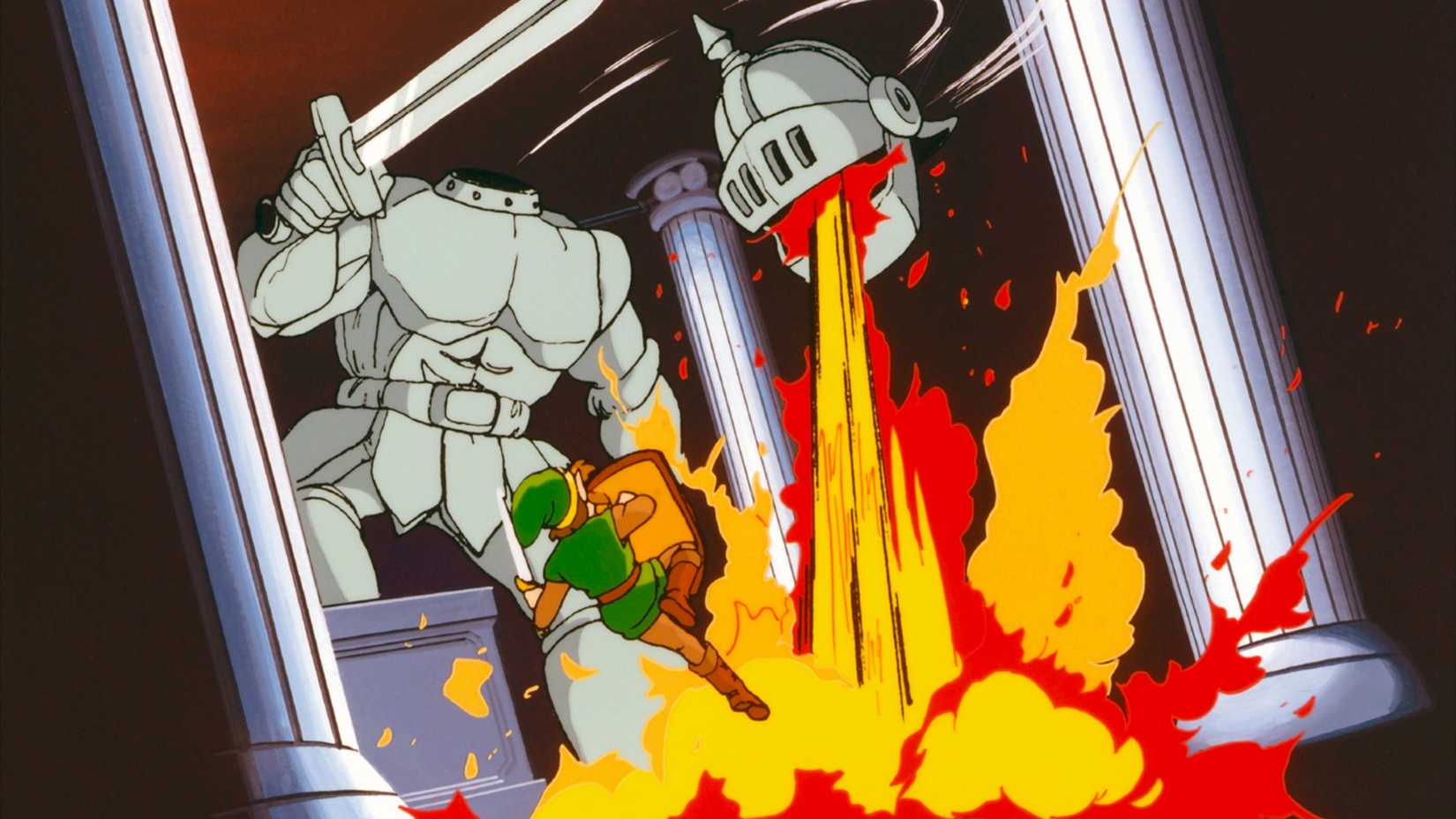 Image: Nintendo
Original release: 1987, on NES
Where to play now: Nintendo Classics on Nintendo Switch Online
If the original The Legend of Zelda is the series at its most youthful, exuberant, and promising, Zelda 2: The Adventure of Link represents the games’ awkward teen years. Fittingly, the Link we play in Zelda 2 is 16 years old, fumbling his way through new gameplay territory, as Nintendo explores the lite role-playing mechanics from a side-scrolling perspective. Spread across overworld segments of dangerous exploration and equally harrowing side-scrolling dungeon crawling, Zelda 2 is a more challenging, more obtuse style of adventure.
Long considered the black sheep of the Legend of Zelda games, The Adventure of Link was a harder, clumsier experiment for Nintendo. It was envisioned as an action game infused with role-playing game stats, and the end result feels like Nintendo's designers copying others' work (e.g. Dragon Quest, Kung-Fu Master) instead of flexing the company’s trademark originality. Zelda 2 is not a failed experiment, however. Nintendo clearly learned the right lessons from it, as well as influencing other games, including Castlevania 2: Simon’s Quest, Faxanadu, and Shovel Knight. Even the worst Zelda games have their importance. —Michael McWhertor
16 Phantom Hourglass
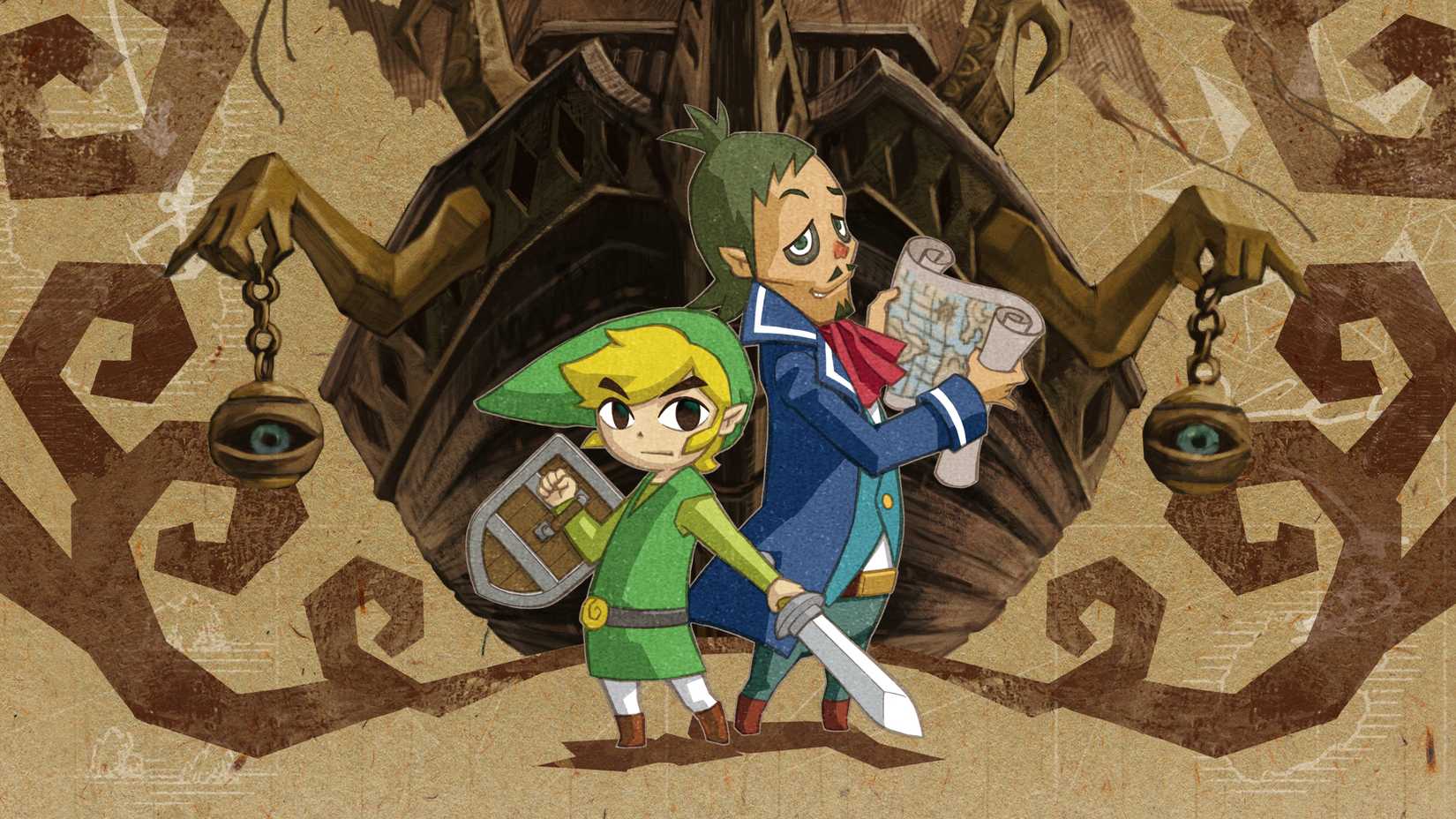 Image: Nintendo
Original release: 2007, on Nintendo DS
Where to play now: Unavailable — track down a used copy
The Legend of Zelda: Phantom Hourglass represents a somewhat awkward era of Zelda. As a direct sequel to The Wind Waker, it had big shoes to fill, and wore them a little clumsily. Phantom Hourglass was the first mainline Zelda game to be released on the Nintendo DS family of handhelds and the first Zelda game to take advantage of the console’s touch controls. Overall, the controls fit in nicely with the Zelda formula and allow players to scribble on dungeon maps and tap to fight. However, the game suffers from uneven pacing while traveling on your customizable steamboat ship, or revisiting the Temple of the Ocean King, a dungeon that requires you to come back to it multiple times. Still, I’ll remember it for its willingness to try new gameplay and test the Zelda waters. —Ana Diaz
15 Echoes of Wisdom
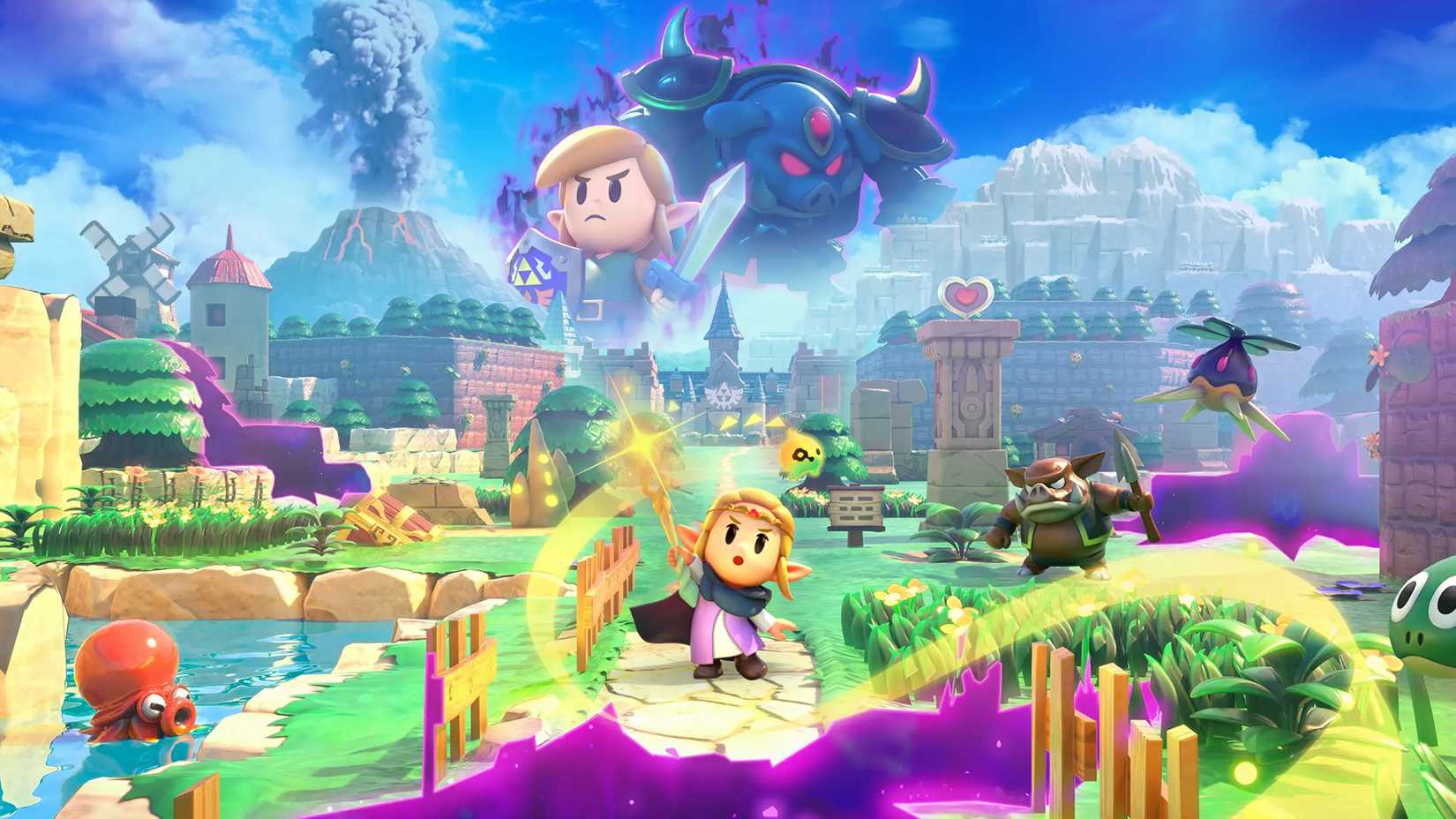 Image: Nintendo
Original release: 2024, on Nintendo Switch
Where to play now: Nintendo Switch/Switch 2
Princess Zelda’s first official starring role in the series that bears her name is one of the most inventive, but also one of the most frustrating, Zelda games. Nintendo worked with external developer Grezzo to make it, and Grezzo used the gorgeous, diorama-like engine it built for its 2019 Link’s Awakening remake. An original attempt to build a Mario Maker-style creative game didn’t pan out; what remains of that project is Zelda’s unique power to copy and replicate enemies and objects. Echoes of Wisdom tries to retrofit the player freedom of Breath of the Wild and Tears of the Kingdom into an old-school, top-down Zelda template. It doesn’t quite work: The interface is fiddly, and the design shies away from its potential for puzzling and strategy. But despite it all, it’s still a proper Zelda game — and a properly fascinating one. —Oli Welsh
14 Twilight Princess
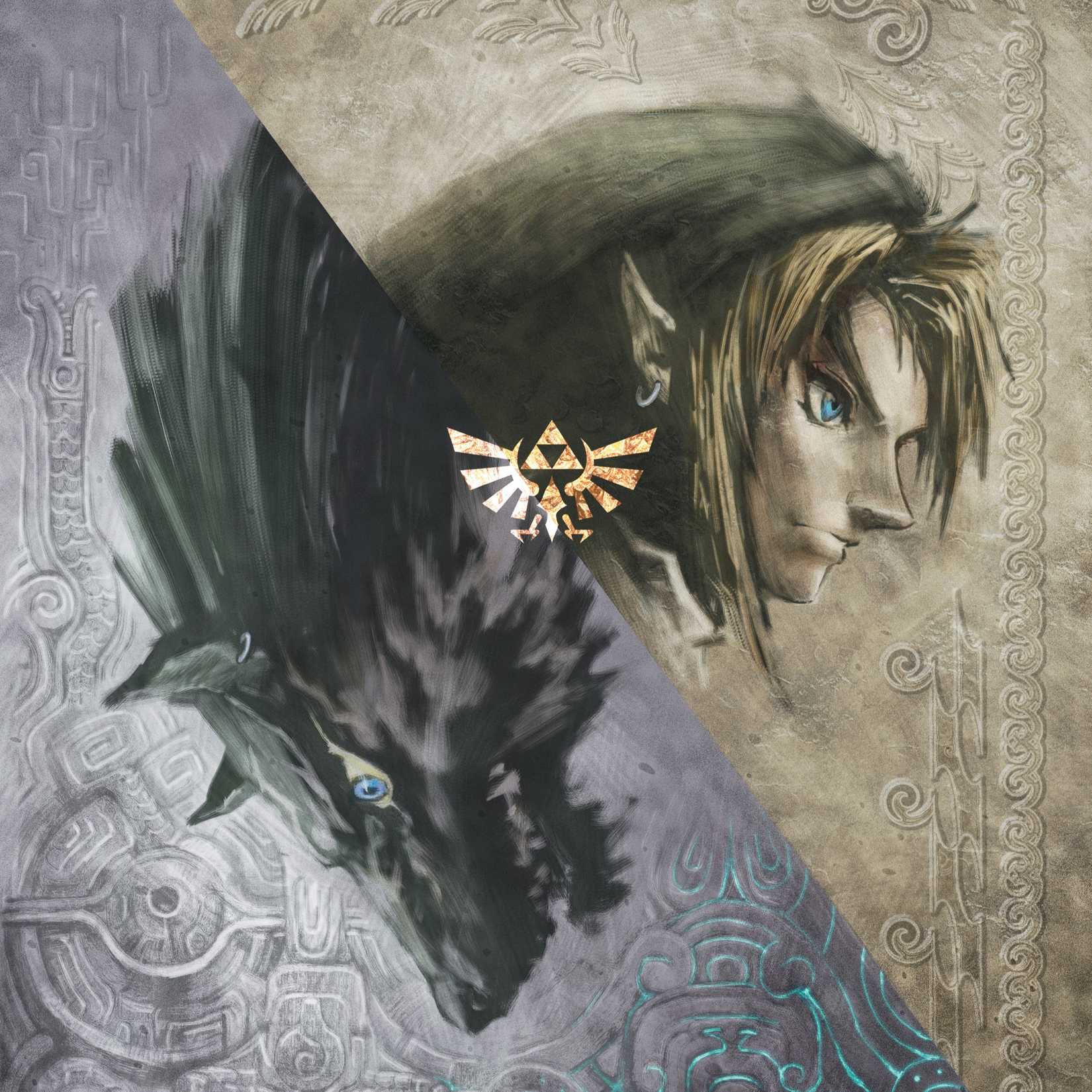 Image: Nintendo
Original release: 2006, on GameCube and Wii
Where to play now: Unavailable — track down a used copy of Twilight Princess HD for Wii U
Link spends a pretty big chunk of time in wolf form in Twilight Princess, which you’d think would be a selling point (because he looks so darn cute), but it’s actually pretty weird. After all, Link can't do all of the best parts of being Link when he’s a wolf: throwing a boomerang, say, or twirling his sword around in a circle while shouting "Hiyah!" Twilight Princess also introduces Midna, a helper character in the vein of Navi, but a lot more condescending. I find Midna’s snarky comments to be deeply satisfying, and the conclusion of her arc at the game's end feels more fulfilling than most of Princess Zelda's arcs. The Legend of Zelda series does not always allow its female side characters to have much to do, but by the end of Twilight Princess, it's actually more Midna's story than anyone else's. —Maddy Myers
13 Oracle of Ages / Oracle of Seasons
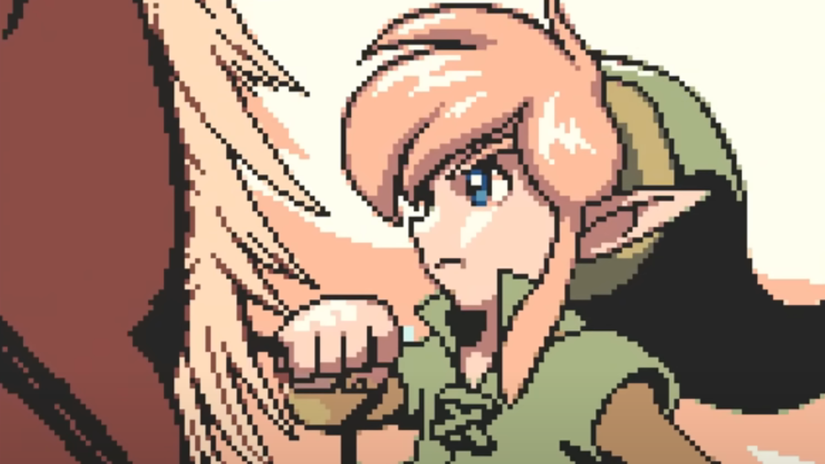 Image: Nintendo
Original release: 2001, on Game Boy Color
Where to play now: Nintendo Classics on Nintendo Switch Online
In 2001, Nintendo lent the proverbial Zelda keys to Capcom. As it turns out, Capcom didn't need them: It kicked down the door to one of gaming's most hallowed series and made itself right at home. Billed as a double feature focused on time- and season-based puzzles, respectively, Oracle of Ages and Oracle of Seasons are tight and sophisticated enough to have emerged from the offices of Nintendo itself. (Series creator Shigeru Miyamoto had big-picture production input, to be fair.)
Ages' time-traveling puzzles are among the finest in the 2D Zelda pantheon, and Seasons' more action-oriented approach makes it a fresh entry in the otherwise "left-brained" franchise. Director Hidemaro Fujibayashi would go on to direct a handful of later Zelda games (The Minish Cap, Skyward Sword, and — checks notes — Breath of the Wild and Tears of the Kingdom among them), but as far as "classic" Zelda goes, few entries capture the series on a grand scale like Capcom’s dark horse two-parter. —Mike Mahardy
12 Spirit Tracks
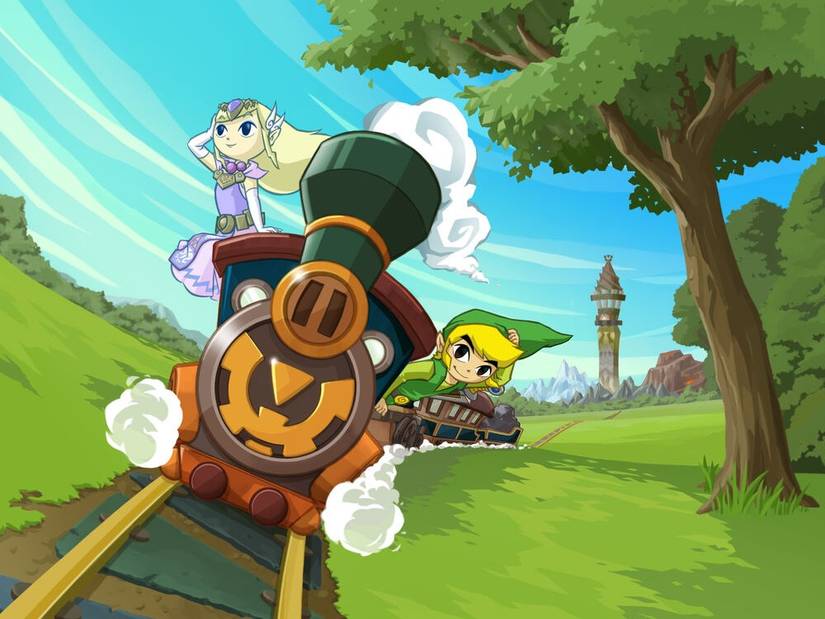 Image: Nintendo
Original release: 2009, on Nintendo DS
Where to play now: Unavailable — track down a used copy
As follow-ups in this endlessly changeable series go, Spirit Tracks has one of the most straightforward, cut-and-paste premises: It's Phantom Hourglass, but with a train instead of a boat. Like its immediate predecessor, it leans hard on stylus control, course-plotting map traversal, and a style of adventure that's breezily approachable until it suddenly isn't, in the grim, stealthy, piecemeal ascent of its central tower dungeon.
If Spirit Tracks ultimately surpasses Phantom Hourglass, it's because of its sheer, ebullient charm. The appeal of its steam-train play set is irresistible, and this is also the only game in the series in which Link and Zelda — the latter admittedly in ghost form — get to hang out for the whole thing. Zelda even gets to be semi-playable, by possessing clanking suits of armor, while the pair have an adorable, innocent chemistry. Choo choo! —OW
11 The Legend of Zelda
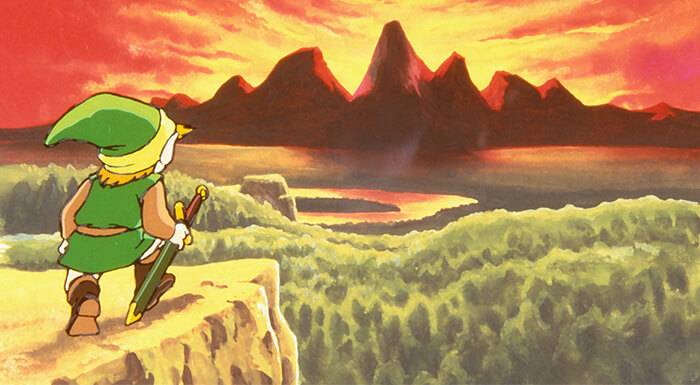 Image: Nintendo
Original release: 1986, on NES
Where to play now: Nintendo Classics on Nintendo Switch Online
It's the rare game that impresses me more with each passing year. But as trends come and go, genres flourish and stagnate, and open worlds continue to distance themselves from their late-2010s growing pains, The Legend of Zelda continually grows in my estimation. It's opaque by today's standards, replete as it is with hidden doorways and labyrinthine shifts from one screen to another. And, given the choice, it's fairly far down the list of "fun" Zelda games. But it stands as a progenitor of most of today's best games, open-world or otherwise, and it took Nintendo 31 years to circle back to its elegant conceit of a sprawling, mysterious world worth exploring in Breath of the Wild. —M. Mahardy
10 Skyward Sword
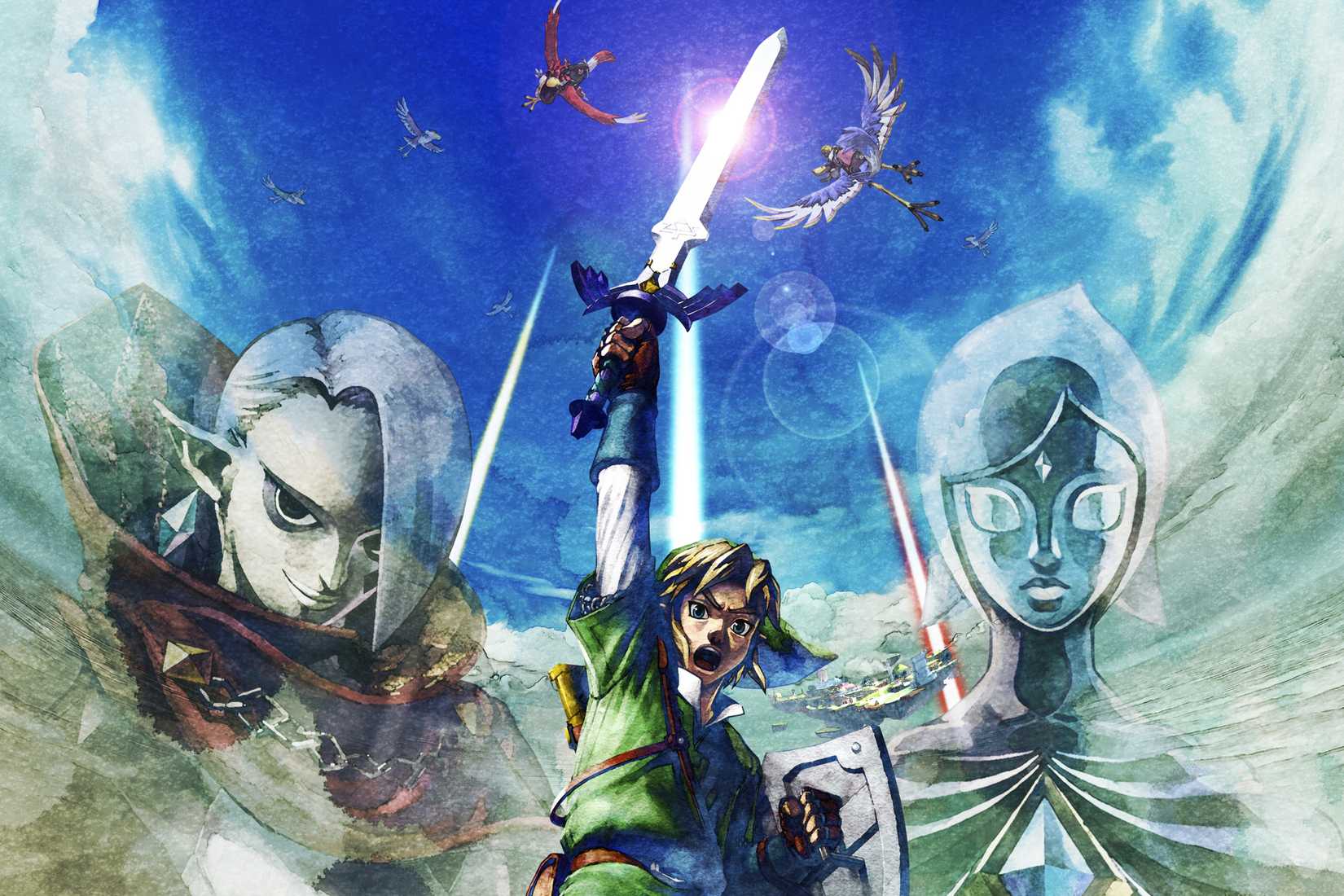 Image: Nintendo
Original release: 2011, on Nintendo Wii
Where to play now: Skyward Sword HD on Nintendo Switch/Switch 2
It's time to reclaim perhaps the most consistently underrated game in the Legend of Zelda series. There are reasons Skyward Sword's reputation has suffered. First, its original motion controls, while well implemented, are just not how anyone wants to play an epic adventure like this. Second, it has a ridiculously overwrought climax worthy of a Hideo Kojima game. Third, it arrived at just the point when the Zelda games' Ocarina of Time-inspired design was starting to show its age.
Skyward Sword ended up being a swan song for that era of Zelda — but what a swan song. It's a dense and satisfying game, expertly designed, with intricate, cleverly conceived dungeons that rank alongside the very best in the series' history. And it also has a soaring, romantic spirit. Skyward Sword is perhaps the purest expression of Zelda's high-fantasy aesthetic — and the only time the series fully owned up to being a love story. —OW
9 A Link Between Worlds
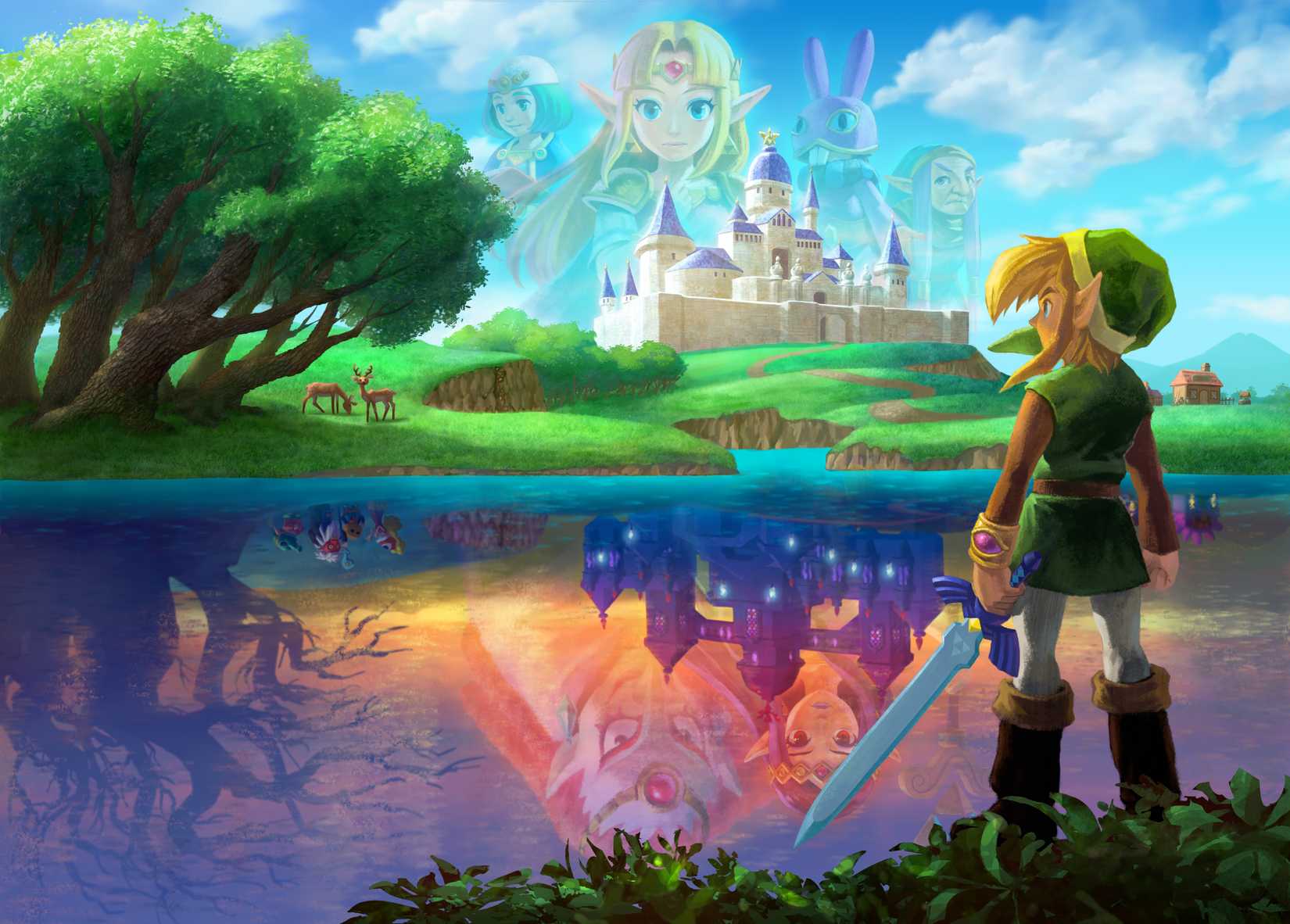 Image: Nintendo
Original release: 2013, on Nintendo 3DS
Where to play now: Boxed 3DS edition is still in print
I always found A Link Between Worlds to be a special game because of the way it iterates on the classic Zelda theme of traversing parallel worlds. Instead of using a mirror to flip between worlds, this game allows Link to transform into a 2D painting, in which form he can walk along walls and into the glittering crevices of Hyrule and its counterpart, Lorule.
For me, Lorule is one of the more interesting versions of Zelda’s classic Dark World. It isn't just a barren wasteland filled with monsters; it's also the home of kind and heroic people who want a better way of life. The game plays well, with perhaps the best-integrated touch controls in a Zelda game. On top of all that, it features an unconventional weapon rental system that allows you to explore wherever you want early on. The game's title nods to the revered A Link to the Past, and it certainly doesn’t fail to live up to its namesake. —AD
8 The Minish Cap
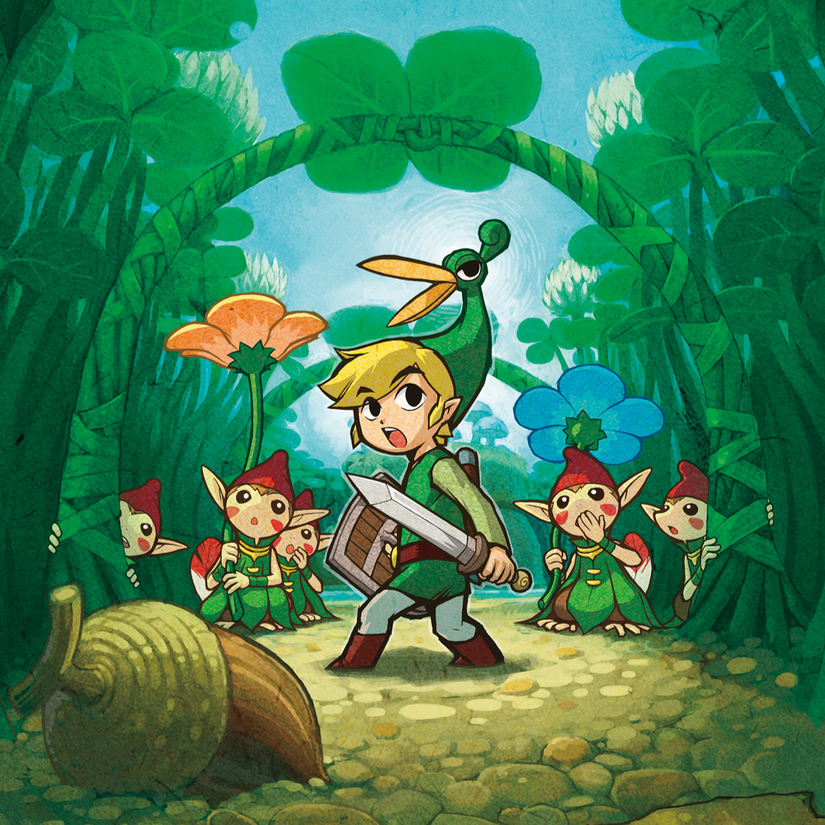 Image: Nintendo
Original release: 2004, on Game Boy Advance
Where to play now: Nintendo Classics on Nintendo Switch Online + Expansion Pack
The Minish Cap is a hidden gem of the Zelda series. Developed by Capcom, this Zelda game follows Link after he meets a talking hat named Ezlo that grants him the power to shrink to the size of a pea. Exploring as a tiny hero literally changes our perspective on Hyrule and allows the developers to conjure up a sensorial and vivid world where you'll fight Vaati and dodge the deathly plop of raindrops.
Similarly to The Wind Waker, The Minish Cap leans into a cartoony charm; you'll meet zany sword instructors and talk to cows chewing cud. This game also contains one of the Legend of Zelda’s goofiest items, a magical cane that turns objects upside down. Combine these charms with some great dungeon design, and you have the makings of a fantastic Zelda game. It might not usually be counted among the Zelda greats, but The Minish Cap finds its brilliance in the tiny details. —AD




 English (US) ·