
 3 weeks ago
65
3 weeks ago
65
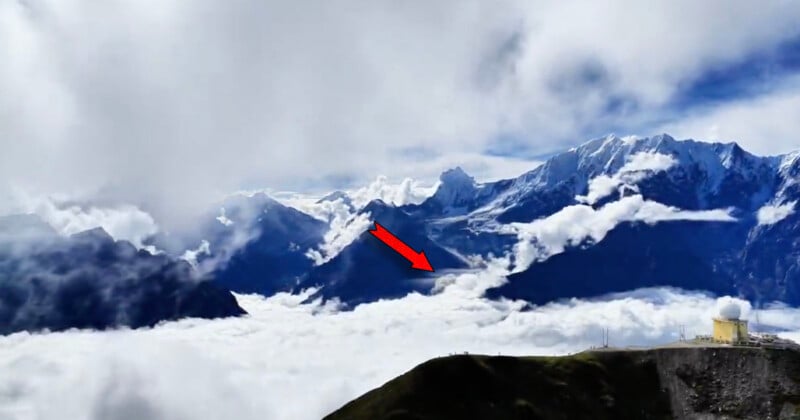 The glacier collapse is visible from plumes of smoke far in the distance. | Hei Mu
A drone photographer in Nepal unwittingly captured the horrific mudslide caused by a glacial collapse high in the Himalayas.
The video was posted to the Chinese social media platform RedNote, showing stunning Himalayan peaks with the photographer in view. See video below; the collapse starts at eight seconds in.
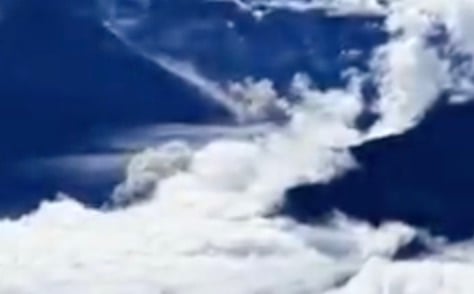 About 10 seconds in, small plumes of ice and rock can be seen cascading above the clouds; it looks a bit like big waves crashing into a pier.
According to the Nepali Times, the pilot was south of Langtang Lirung, a 24,000 feet (7,000 meters) peak where the glacier collapsed.
“I never imagined those loud noises behind me could be an ice avalanche and mudslide, nor did I expect such a huge impact,” the photographer, Hei Mu, writes on Rednote. “I was too focused on aerial filming. If we had heard the sounds, we would have immediately called the police.”
BBC Verify authenticated the footage, saying that Mu’s footage matches the direction of the flood water that surged down the Trishuli River.
The bedrock of the mountain itself crumbled, which took the glacial ice above it sliding 5,000 feet (1,500 meters) below. It brought down 500 million tons of rock and ice on Langtang’s north face.
Last week, PetaPixel reported on security camera footage that demonstrated the awful devastation that the collapse caused, as rock and ice wiped out a border crossing between Nepal and China.
The death toll in Nepal and China has surpassed 950. The Associated Press reports that more than 4,400 people are still missing. There are also at least 900 workers reportedly trapped in 12 hydropower projects that were damaged by the flash floods on the Nepalese side. 500 of them are trapped in tunnels.
“These tunnels are big enough to drive trucks through,” Jakob Steiner, a geoscientist at the University of Graz in Austria based in Dhaka, Bangladesh, tells AP. “And from what we understand, they have managed to get oxygen to some of those stuck inside and are trying to rescue them now. It’s a race for time, though, as people need food and water.”
Affiliate Disclosure PetaPixel articles may include affiliate links; we may earn a commission if you buy through one.







 English (US) ·