
 2 hours ago
2
2 hours ago
2

Published Feb 2, 2026, 10:00 AM EST
Square Enix has transformed a generational (but grueling) adventure into a must-play RPG
 Image: Square Enix
I’ve always felt protective — perhaps defensive — of the Dragon Quest games, even as someone who withers at the thought of spending dozens of hours to see a role-playing game’s story to completion. Dragon Quest’s cheery atmosphere, nameless heroes, and black-and-white villains resonate with me much more than Square Enix’s other big role-playing game brand.
Despite my lifelong fondness for Dragon Quest’s earnest heroes and Akira Toriyama’s silly monsters, I never played the original Dragon Quest 7: Fragments of the Forgotten Past. The original PlayStation game, released in North America in 2001, is infamous and oft-criticized for its drawn-out length. It’s a daunting undertaking, coming in at 75 hours just for the main story (closer to 100 when you factor in optional content).
Thanks to a new remake, however, Dragon Quest 7 Reimagined, I’ve finally experienced this important role-playing game. I’m glad I waited: Dragon Quest 7 Reimagined is a faithful, gorgeously polished remake that serves longtime fans and offers a perfect entry point into the franchise for newcomers.
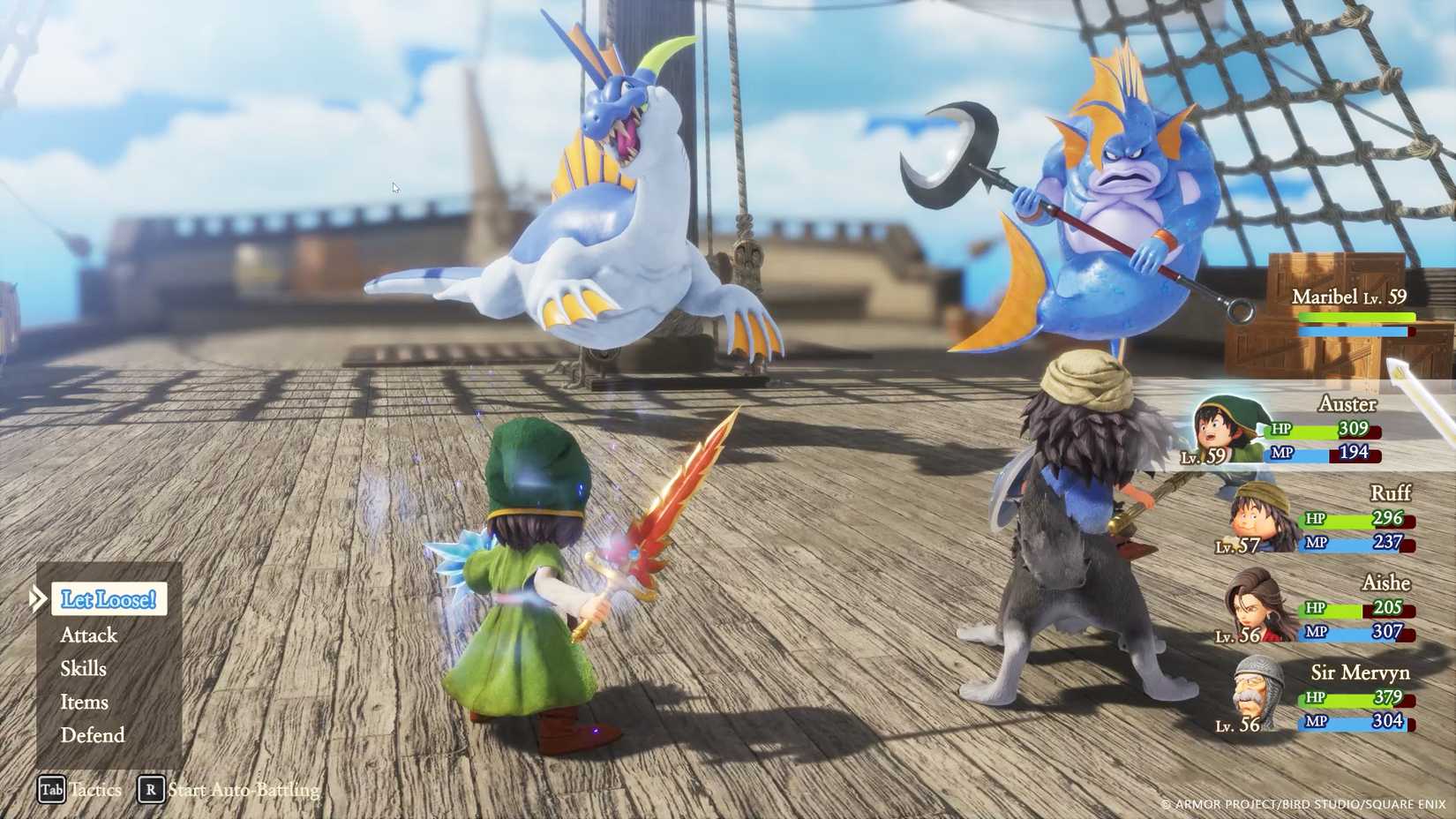 Image: Square Enix
Dragon Quest 7 Reimagined is a classic turn-based RPG that tells a story of young, curious adventurers trying to find their place in their world. In the role of the unnamed Hero, the son of a humble but respected fisherman, players join royal heir-to-the-throne Keifer and the feisty daughter of the local mayor Maribel as they try to uncover the mysterious nature of their island home, Estard. Early in the game, the heroes are transported backward in time to other islands, solving residents’ problems, defeating evil in each new location, and ultimately restoring the world to its past glory.
Along the way, the Hero and friends are introduced to a massive cast of characters, including new heroes who will join the group on the team’s world-saving quest. It’s a charming story of good prevailing over evil.
Dragon Quest 7 Reimagined doesn’t take that story in wild new directions. Rather, it streamlines it, treating players with respect for their time and offering choice and depth that belie the game's kid-friendly storytelling and style.
Square Enix and co-developer Hexadrive haven’t simply put a new coat of high-definition paint on the original Dragon Quest 7 (and its Nintendo 3DS remake). They’ve refined many of the game’s systems with new quality of life features that vastly speed up the experience. While battles typically run at a leisurely, turn-based pace, Reimagined lets players speed up combat encounters and occasionally skip some entirely if the heroes vastly overpower their foes. There are very few random battles, letting players engage with combat largely as they see fit.
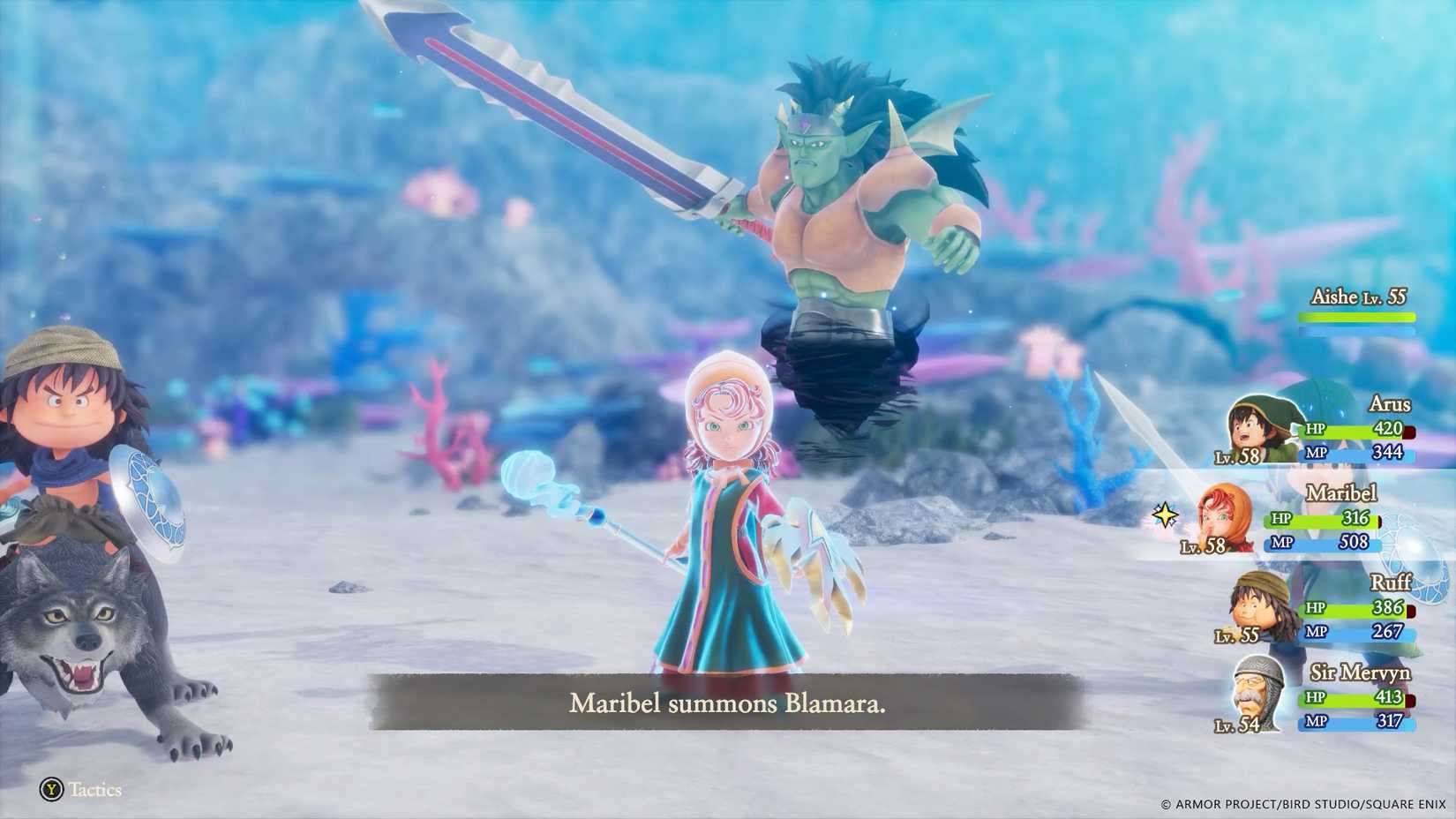 Image: Square Enix
The combat is rich, though. The original Dragon Quest 7 featured a deep vocation system that let players level up roles and unlock class-specific abilities, like spells and special attacks. The vocation system has received a massive overhaul in Reimagined. With the new Moonlighting system, players can now advance two vocations at once, reducing grind and encouraging experimentation with new roles. Changing vocations has been massively streamlined too. In the original, players had to trek to a temple called Alltrades Abbey to switch their role. Now, the administrator of that temple can be called upon at any time from the Career Sphere, saving countless hours of backtracking.
Other gameplay elements have been tweaked in smart ways. In the original DQ7, players could take on the vocation of specific monsters, leveling them up like any other role. In Reimagined, certain high-powered monsters instead drop Monster Hearts that can be equipped like charms to imbue characters with special abilities. Equipping a Slime Heart, for example, will let a character evade attacks more easily.
The sharp visual presentation of Reimagined matches the level of thoughtfulness in polishing gameplay systems. The characters and world of Dragon Quest 7 Reimagined are gorgeously rendered with a toylike style. In some cases, this style can be distracting; the primary cast can look stiff and expressionless at times. But the overall aesthetic works, particularly when applied to Dragon Quest’s iconic monsters, which are of a piece with the diorama-style approach to dungeons and towns.
Aurally, the game has been given ample polish. Beloved, hummable Dragon Quest themes are here, of course, and lavishly orchestrated. But it’s the voice cast that stands out. Despite hurrying through battles and conversations, I often found myself relishing the spoken dialogue. I somehow never grew tired of hearing post-battle barks from characters. Hearing Maribel gloat “Easy peasy!” after winning a fight is delightful — even after the hundredth time. (And despite whatever trimming and streamlining Reimagined does to DQ7, it’s still a meaty, old-school RPG with lots of battles.)
The developers of Dragon Quest 7 Reimagined haven’t tried to reinvent the way Dragon Quest has been played nearly since its inception. Instead, they’ve addressed the shortcomings of a 25-year-old entry, freeing it from the reputation it’s been saddled with — a reputation that has turned off players who were intimidated by its infamous 100-hour length.
That effort makes Dragon Quest 7 Reimagined a call to action. With an infectious enthusiasm, the game beckons a new generation of players to find their inner hero, to save the world through the eyes of those who long for adventure and aspire to make their own destiny. For newcomers, it's a great introduction to the series’ classic game mechanics and defining style shepherded by creators Yuji Horii and Akira Toriyama. It’s a reimagining that’s worth using as a template for more games in the Dragon Quest series (and others) that need this loving treatment too.
Dragon Quest 7 Reimagined will be released on Feb. 5 for Nintendo Switch, Nintendo Switch 2, PlayStation 5, Windows PC, and Xbox Series X. The game was reviewed on PS5 and Switch 2 using prerelease download codes provided by Square Enix. You can find additional information about Polygon’s ethics policy here.








 English (US) ·