Still, while The Expanse may be a world away from the absurd sci-fi of Douglas Adams novels like The Hitchhiker’s Guide to the Galaxy, that doesn’t mean the two styles of sci-fi are incompatible, and Lost in Space proves it. The three-season Netflix show made it clear that grounded survivalism and cosmic whimsy can work remarkably well together, and that a dangerous universe can still be strange, colorful, and wonderfully ridiculous.
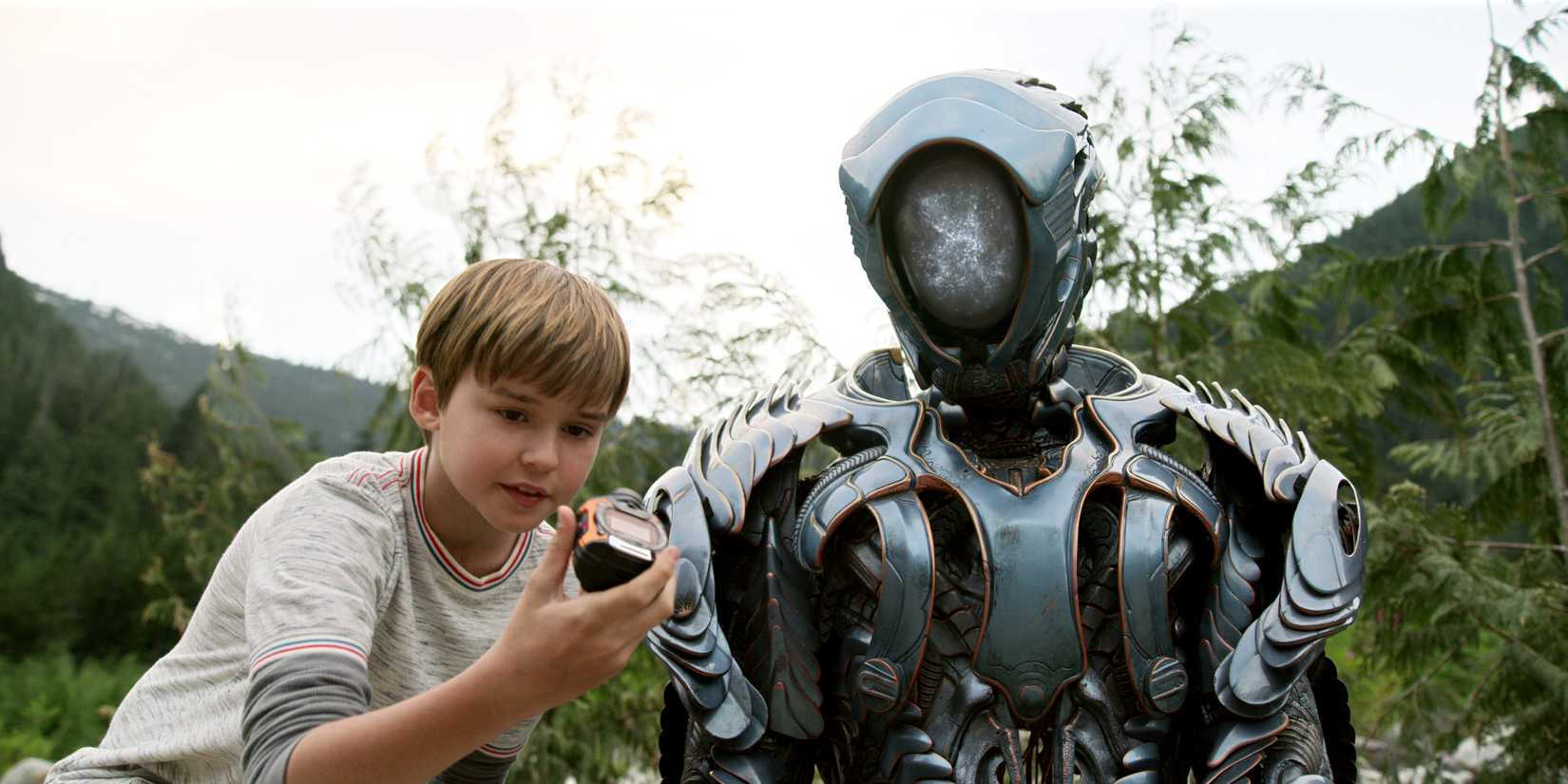
Netflix’s Lost in Space is a modern reimagining of the classic 1965 television series, following the Robinson family after their spacecraft is forced off course and they become stranded on an alien planet. As the family fights to survive, the series expands into a larger story involving alien technology and humanity’s uncertain future among the stars. For anyone who likes the idea of a show that brings the improbability of a Douglas Adams adventure to the high-stakes sci-fi survivalism of The Expanse, Lost in Space more than satisfies.
Lost In Space Brings Douglas Adams Energy To The Expanse’s Gritty Stellar Survivalism
The way Netflix’s Lost in Space combines two seemingly incompatible approaches to science fiction is nothing short of remarkable. Like The Expanse, the Lost in Space reboot gives its futuristic technology weight. Ships feel industrial, survival requires ingenuity, and the inherent danger of space travel is never shied away from. The Robinsons aren’t tourists gallivanting through a galaxy of wonders. They’re survivalists who are only ever one bad decision away from death, just like the crew of the Rocinante.
Despite this, Lost in Space never becomes as relentlessly serious as The Expanse. Far from it. The Netflix series embraces the kind of improbable concepts that would feel completely at home in Douglas Adams’ universe. Alien robots, unexplained technology, strange planets, and increasingly bizarre discoveries give the story a sense of wonder that prevents its survival narrative from becoming overly bleak. The universe of Lost in Space may be dangerous, but it also feels joyfully unpredictable.
It’s a unique blend that makes the Robinsons’ journey in the Netflix show especially entertaining. The industrialized sci-fi aesthetic and commitment to the danger of space exploration keep the show grounded, while the stranger elements add an unpredictability that leaves viewers constantly guessing what’s going to come next. Characters can spend one episode solving a credible engineering problem before confronting phenomena that defy rational explanation the next.
It is this tonal flexibility that gives Lost in Space such a unique identity compared to other sci-fi shows in the age of streaming. By combining The Expanse’s gritty approach to space survival with Douglas Adams’ fascination with the bizarre, Lost in Space creates accessible science fiction that can be tense, imaginative, and surprisingly funny without undermining its emotional stakes.
Netflix’s Lost In Space Deserved Much More Attention
Putting its fascinating blend of The Expanse and Douglas Adams’ novels to the side for one moment, Lost in Space is an all-round great sci-fi series that feels incredibly underappreciated. The production design is consistently impressive, it has a distinctive visual identity, and the Robinson family provides an emotional center that keeps the enormous scale of the narrative grounded.
What’s more, Lost in Space actually received the opportunity to tell a complete story. Netflix ended the series after three seasons, by which point its central narrative had reached a deliberate conclusion rather than leaving viewers with an unfinished cliffhanger. This gives it great rewatch value, especially since it’s incredibly easy to binge the 28 episodes over a weekend.
All in all, Lost in Space remains one of sci-fi’s more overlooked streaming gems. It does not have the cultural footprint of The Expanse, nor does it approach science fiction with the instantly recognizable comedic voice of Douglas Adams. Instead, it occupies a middle ground where family adventure, survival drama, hard-edged science fiction, and cosmic weirdness can coexist. For a series that does so many things this well, Lost in Space deserves considerably more recognition.
Release Date
April 3, 1998
Runtime
130 minutes
Director
Stephen Hopkins
Writers
Akiva Goldsman, Irwin Allen
Producers
Carla Fry, Mark W. Koch











 English (US) ·