


Published Sep 22, 2026, 9:01 PM EDT
Tom is a Senior Staff Writer at Screen Rant, with expertise covering everything from hilarious sitcoms to jaw-dropping sci-fi epics.
Initially he was an Updates writer, though before long he found his way to the TV and movies team. He now spends his days keeping Screen Rant readers informed about the TV shows of yesteryear, whether it's recommending hidden gems that may have been missed by genre fans or deep diving into ways your favorite shows have (or haven't) stood the test of time.
Tom is based in the UK and when he's not writing about TV shows, he's watching them. He's also an avid horror fiction writer, gamer, and has a Dungeons and Dragons habit that he tries (and fails) to keep in check.
Sign in to your ScreenRant account
The tone and atmosphere of Doctor Who have changed almost as often as its titular Time Lord has regenerated. However, no shift was more significant than the time Doctor Who effectively changed genres altogether, establishing the formula that would ultimately allow the BBC series to survive for more than six decades.
When Doctor Who first hit screens, it was envisioned as a much more educational kind of sci-fi show. The Doctor could travel in the TARDIS to the past to explore history or into scientifically interesting situations, giving younger viewers an adventure while teaching them something in the process. That direction was the driving force behind the show's first four episodes. Then, on December 21, 1963, “The Dead Planet” aired and introduced the Daleks.
“The Dead Planet” sees the First Doctor (William Hartnell) and his companions land on the seemingly dead alien world of Skaro. The Doctor eventually encounters the Daleks, sparking a seven-episode-long story detailing the conflict between the iconic Doctor Who villains and Skaro’s other species, the Thals. “The Daleks” arc became a sensation, and the resulting Dalekmania didn't just alter Doctor Who’s creative direction. It reshaped sci-fi TV forever.
Doctor Who Dramatically Shifted Genres After One Key Episode In Its Early Years

The first arc of the show, the four-episode “An Unearthly Child”, established a version of Doctor Who that could easily have developed into something very different. Ian (William Russell) and Barbara (Jacqueline Hall), were teachers, while Susan (Carole Ann Ford) was their student who just so happened to be the Doctor’s granddaughter. The TARDIS provided the perfect device for taking them into situations that could turn subjects like history and science into fun adventures, with the first storyline itself transporting the group back to prehistoric Earth.
Leaning into educational themes wasn't abandoned (and is, of course, still part of the show to this day), but “The Dead Planet” demonstrated that Doctor Who could be something considerably bigger. A mysterious alien world, a futuristic city, mutant creatures and a conflict threatening an entire civilization pushed the series firmly toward the kind of imaginative grand sci-fi that would eventually define it. The arrival of the Daleks four episodes into the show’s run kickstarted Doctor Who’s move away from its history-based, semi-educational beginnings toward fantasy adventure and creature-focused science fiction.
There’s a key reason “The Dead Planet” was so immediately influential too. Audiences loved the Daleks. Their popularity produced a wave of interest in Doctor Who that the British media fondly dubbed “Dalekmania”, and the creatures returned the following year for season 2’s “The Dalek Invasion of Earth,” this time bringing their threat directly to a devastated future London. They were more than popular villains; they showed the BBC what viewers wanted from Doctor Who.
The educational roots of the show consequently became only one part of a much broader identity. Monsters and aliens, distant planets, and increasingly ambitious science-fiction drama became central to Doctor Who. What could have remained a relatively short-lived educational adventure series instead had the formula needed to become an icon of small-screen sci-fi.
Doctor Who’s Early Genre Switch Helped Shape Modern TV Sci-Fi

Doctor Who is now so deeply embedded in sci-fi history that its influence is difficult to separate from the genre itself. It’s the world's longest-running television science-fiction series, and the Daleks' arrival was inarguably the turning point that ensured it would be. That makes “The Dead Planet” significant far beyond simply introducing one particularly successful monster.
The seven-episode Dalek serial that "The Dead Planet" kicked off demonstrated how effectively serialized storytelling, frightening extraterrestrial villains, speculative ideas, and family entertainment could be combined on the small screen. Its antagonists became cultural phenomena quickly enough to inspire a movie, Dr. Who and the Daleks, in 1965, to capitalize on the Daleks' enormous success. Few TV show monsters have arrived and transformed their parent series so decisively.
More importantly, the direction established by the Daleks gave Doctor Who an extraordinarily successful blueprint. It was arguably the first example of the kind of adventure sci-fi storytelling that has dominated the genre on TV for decades. The genre wouldn’t exist in the same form today without Doctor Who, and Doctor Who as fans know it wouldn’t be here were it not for “The Dead Planet” and the introduction of the Daleks.
“The Dead Planet” therefore represents one of the most important pivots in sci-fi TV. Doctor Who began as a series with a strong educational purpose. The Daleks helped turn it into an expansive, iconic, and influential science-fiction adventure, and the storytelling blueprint it laid in the process inspired more-or-less every sci-fi TV show that followed.
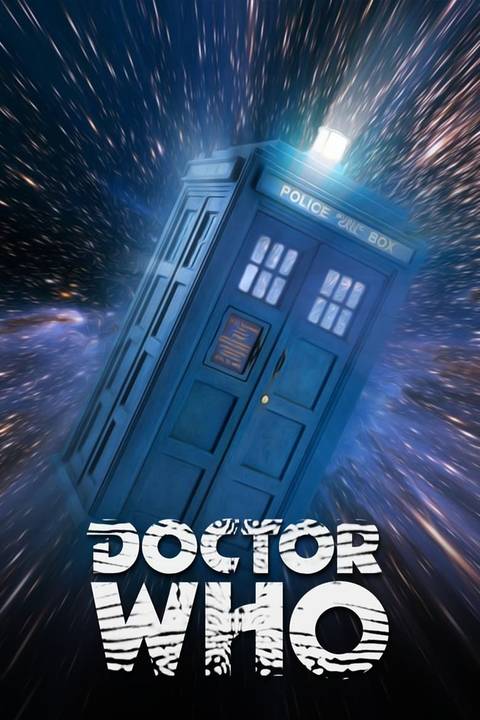
Release Date 1963 - 1989-00-00
Network BBC One, BBC Television
Directors Douglas Camfield, David Maloney, Christopher Barry, Michael E. Briant, Barry Letts, Michael Ferguson, Peter Moffatt, Richard Martin, Chris Clough, Lennie Mayne, Pennant Roberts, Ron Jones, Paddy Russell, Paul Bernard, Michael Hayes, Timothy Combe, Morris Barry, Graeme Harper, Gerald Blake, Hugh David, Mervyn Pinfield, Rodney Bennett, Waris Hussein, John Gorrie
Writers Robert Holmes, Bob Baker, Malcolm Hulke, Dave Martin, David Whitaker, Brian Hayles, Robert Sloman, David Fisher, Dennis Spooner, Terrance Dicks, Eric Saward, John Lucarotti, Don Houghton, Chris Boucher, Ian Stuart Black, Louis Marks, Peter Grimwade, Henry Lincoln, Johnny Byrne, Mervyn Haisman, Jane Baker, Pip Baker, Robert Banks Stewart, Anthony Read
-

Barry Jackson
Gordon Lowery
-



 English (US) ·