
This article covers a developing story. Continue to check back with us as we will be adding more information as it becomes available.
Predator: Badlands has come under fire for its "disturbing" new trailer.
Disney's latest advertisement for Predator: Badlands has been banned for its content ahead of the film's Hulu and Disney+ release. Predator: Badlands will be released on streaming in just one day, arriving on Hulu and Disney+ on February 12, 2026. The movie is the third in the franchise directed by Dan Trachtenberg, and the first to be rated PG-13.
However, according to Deadline, the UK’s Advertising Standards Authority (ASA) has banned a new trailer for Predator: Badlands, citing the advertisement as possibly resulting in "fear or distress for young children." The ad shows the main Yautja, Dek, holding a synthetic by the throat, the human-like android having been severed from the waist down.
The ad, which runs as a video poster, began running in November 2025, while the movie was in theaters. However, the ASA is taking action now following two complaints that the trailer for the action thriller is both "inappropriate and disturbing" for younger audiences. The image, which appeared for less than two seconds of the 10-second ad, was the cause for complaint.
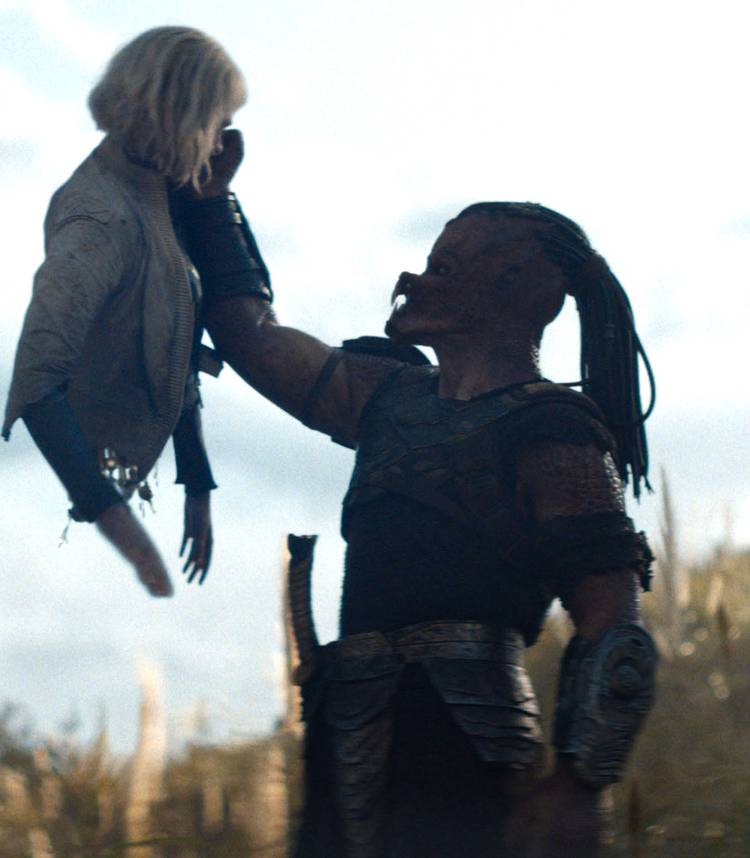
Disney responded to UK advertising regulators, arguing that the image, as seen above, was within the bounds of the film's PG-13 rating, and was prepared responsibly. However, the ASA ruled that the advertisement was not clear about the Predator: Badlands' character being a synthetic, with elements such as a human-like spine considered "gory." Disney released a statement following the ruling:
We acknowledge the ASA’s ruling. We take our responsibilities to audiences very seriously and strive to work closely with partners to meet the required standards.
The ad has only been banned in its current form, with the other eight seconds of the 10-second ad having been deemed suitable to run in the UK. Although the Predator movies are made with an adult audience in mind, the ASA considered the public nature of the ad when issuing its banning.
More to come...





:quality(85):upscale()/2026/02/02/940/n/1922153/tmp_2bS324_5518251436641b44_Photo_Grid_3_Up_-_Burgundy_Green-2-Photo_Grid_4up_Main_-_Green_Burgundy_1_.jpeg)
 English (US) ·