

Published Jun 14, 2026, 2:34 PM EDT
Cathal Gunning has been writing about movies, television, culture, and politics online and in print since 2017. He worked as a Senior Editor in Adbusters Media Foundation from 2018-2019 and wrote for WhatCulture in early 2020. He has been a Senior Features Writer for ScreenRant since 2020.
The return of Disney’s Alien prequel is proof positive that franchise canon was never all that important once the story is strong and the characters are worth caring about. The Alien movies have a messy history in terms of their reception among fans and critics alike. To be fair, the first two movies in the series, director Ridley Scott’s original Alien and James Cameron’s 1986 sequel Aliens, are universally seen as masterpieces.
However, things tend to get more complicated after that point, with some viewers defending David Fincher’s incredibly bleak, downbeat Alien 3 and others calling it a low point for the series. 1997’s bizarre Alien: Resurrection is no less divisive, while the two Alien Vs Predator movies that followed in the 2000s are typically viewed as a massive letdown that failed to live up to either franchise’s potential.
Scott’s return for 2012’s prequel Prometheus and its 2017 sequel Alien: Covenant impressed some critics, but massively complicated the canon of the franchise with new lore which contradicted both the earlier Alien movies and the Alien Vs Predator spinoffs. Although 2024’s Alien: Romulus did a good job of marrying the original movies and the Scott prequels by clarifying some plot holes, Disney’s prequel series Alien: Earth then surprised everyone by becoming a critical smash while completely ignoring the franchise’s established canon.
Alien: Earth Doesn’t Line Up With Either Earlier Versions Of The Alien Franchise’s Canon
 via MovieStillsDB
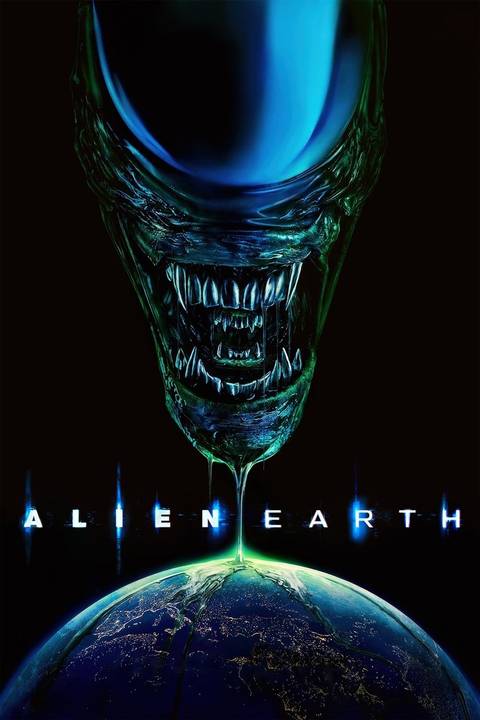
Taking place before Prometheus, Alien: Earth came from Fargo showrunner Noah Hawley and focused on a group of six hybrids, synthetic bodies with human consciousnesses transferred into them. Working with the Weyland-Yutani Corporation’s cyborgs and synthetics as well as a handful of human characters, these “Lost Boys” stumble upon an accidentally released Xenomorph as the series begins. Bizarre as it may sound, the events of Alien: Earth season 1 are not really concerned about matching anything other than the first two Alien movies, but this approach works for the series.
While Alien: Romulus’s shocking deaths and unexpected twists were a lot of fun, the movie did spend a lot of its limited screen time explaining the life cycle of the Xenomorph and effectively clearing up lore that was left unexplained by Scott’s previous prequels. In contrast, Alien: Earth completely discards the idea that Michael Fassbender’s villainous android David created the Xenomorph as a bioweapon, something seemingly floated in Alien: Covenant.
Instead, the show forges forward with its new story and trusts viewers to keep up, an approach that more than pays off for the series. Gripping, brutal, and unpredictable, Alien: Earth is filled with surprises for long-time franchise fans and clever Easter eggs that prove the show does share a fictional universe with the rest of the series.
Alien: Earth’s Season 2 Renewal Proves Canon Isn’t That Important

However, Alien: Earth never allows its predecessors to define its story, and this proves to be the Disney show’s best choice. While changing the Alien franchise’s canon could seem like a recipe for disaster when the series was already so complicated before the Disney show arrived, Alien: Earth manages to make its story feel fleet-footed as the show explores over a dozen lead characters and their reactions to coming face to face with the franchise’s iconic monster.
|
Alien (1979) |
$204 million |
93% Critics / 94% Audiences |
|
Aliens (1986) |
$183 million |
94% Critics / 94% Audiences |
|
Alien 3 (1992) |
$159 million |
44% Critics / 46% Audiences |
|
Alien Resurrection (1997) |
$161 million |
55% Critics / 39% Audiences |
|
Alien vs Predator (2004) |
$177 million |
22% Critics / 39% Audiences |
|
Aliens vs. Predator: Requiem (2007) |
$130 million |
12% Critics / 30% Audiences |
|
Prometheus (2012) |
$403 million |
73% Critics / 68% Audiences |
|
Alien: Covenant (2017) |
$240 million |
65% Critics / 55% Audiences |
|
Alien: Romulus (2024) |
N/A |
82% Critics / 88% Audiences |
With such a long runtime, it would have been all too easy for Hawley’s show to get lost in the weeds of the Alien franchise’s lore. A lesser version of the spinoff could have wasted much of its runtime trying to make sense of the events of Prometheus and Alien: Covenant and explaining how they link up to the later sequels in the series. However, Disney’s Alien: Earth made the right call when the Alien spinoff opted to simply ignore all these complications and tell a fresh, original new story.
Release Date August 12, 2025
Directors Dana Gonzales, Ugla Hauksdóttir, Noah Hawley
Writers Bob DeLaurentis








 English (US) ·