

Published Feb 16, 2026, 10:30 AM EST
Curious from birth, Fiona is a music writer, researcher, and cultural theorist based in the UK. She studied her Bachelor of Music in London, specializing in audiovisual practices, and progressed to a Master’s in Arts and Culture from the University of Groningen in the Netherlands. Her MA research focused on the societal impact of sound within urban communities and how the narratives of art can contribute to their shaping and commentary.
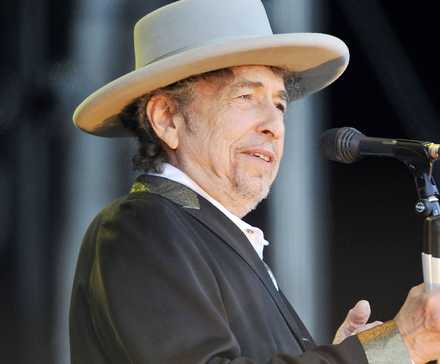
Bob Dylan, real name Robert Zimmerman, has influenced a plethora of musicians throughout his six-decade career. He’s an undeniable legend, and Dylan has created a tremendous body of musical work driven by his intrinsic poetic gift. Dylan’s impressive discography has not only established him as a great writer but also a fascinating muse.
Some fans, namely David Bowie, appreciate this and admire Dylan as a God-like figure, rather aptly in his “Song for Bob Dylan,” but others didn't share that belief. John Lennon grew tired of mythologizing God-like figures, religious and political leaders, and even Dylan, a theme he addressed in his song 'God.'" Despite both legendary musicians writing songs about Dylan for differing reasons, the overarching theme still remained: Bob Dylan is a crucial figure of music.
John Lennon’s Rejection of Idols, Specifically Bob Dylan
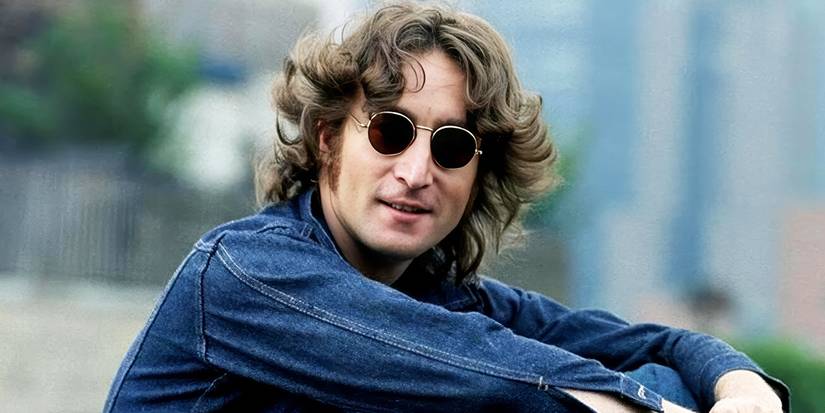 Image via Lionsgate
Through the 1960s, John Lennon and The Beatles did a great job of viewing the world through a positive lens, filled with beauty, wonder, and fun. But, as the decade slipped away with the band, so did Lennon’s optimism. His solo work began to reframe his previous state of mind by rejecting the possibility of an ideal at all.
In moving away from encouraging his listeners to dream, Lennon encouraged critical thinking, most famously with “Imagine,” a song to release themselves from the restrictions of labels and to live presently. But there’s a song Lennon wrote for Plastic Ono Band a year earlier. “God” is a song that strips down the notion of external idols, and that we should instead place more belief in what we know is real in and around ourselves. This is perfectly displayed in the first line of the song: “God is a concept / By which we measure our pain” Lennon’s renunciations declare a sense that the idealism of the ‘60s was long gone, and we mere mortals were on our own if we really wanted to understand all of our emotions, not only pain.
Related
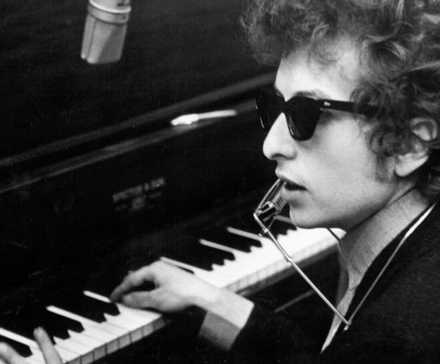
The lyrics of Lennon’s “God” that immortalized Dylan were “I don’t believe in Zimmerman.” On the surface, this may appear to discredit Dylan and his work as subpar and overrated, but that wouldn’t quite be my interpretation. In not “believing” in Dylan, Lennon acknowledges that the folk star had become a leader of music for some groups in society, a lyrical deity. But, in rejecting the idea of idols completely, Lennon highlights that listeners can find more peace in their own realities, not lose themselves to the mysticism of others. The only thing is, he states, believing in himself, which, as an artist, could potentially lead to allegations of hypocrisy.
So, What Was David Bowie’s Message?
To many, David Bowie’s “Song for Bob Dylan” is, bluntly, baffling. The song is a rather cryptic tale of the folk legend, but is actually a work of praise for Dylan. Pretty ironically, the enigmatic nature of Bowie’s writing is an accolade to Dylan himself. By using his narrative and poetic approach in the lyrics, Bowie not only saluted Dylan’s style but also repurposed it in a wonderfully clever commentary that felt almost like sampling.
Just in case we didn’t already know that “Song for Bob Dylan” was about Dylan, Bowie’s opening line of “Oh hear this, Robert Zimmerman / I wrote a song for you” clears things up pretty clearly. Bowie goes on to compliment Dylan, singing that his talents lie in having “A voice like sand and glue” and that “His words of truthful vengeance / They could pin us to the floor.” This clearly lays Dylan out to be a hugely significant figure for a generation of music-lovers, highlighting the effortless power that Dylan holds over his listeners.
Chorus … crucial for the painted lady…. The narrative develops in the chorus, with Bowie introducing the mysterious figure of the “Painted lady” who can “Scratch this world to pieces.” For me at least, the painted lady is desperately scratching around looking for some kind of meaning or explanation to her frustratingly static state, but Bowie relieves this by telling Dylan that “A couple of songs from your scrapbook / Could send her home again.” So, according to Bowie, Dylan’s songs are crucial not only to the enjoyment of a generation but to their baseline sanity and understanding of the world. To Bowie, Dylan unlocked a metaphysical meaning for listeners.
Related
But “Song for Bob Dylan” is not a plain-sailing pure admiration for Dylan. Bowie takes his chance to playfully criticize the shift Dylan took in his own musical style. The early ‘70s, after the somewhat chaotic Self Portrait, saw Dylan’s music calm to a warmer, rawer tone than the fuller arrangements of previous work. Bowie tells Zimmerman to “Ask his good friend Dylan” to “Give us back our family,” essentially, go back to what he was doing before. But Bowie did so graciously, if a bit cheekily, to highlight his love and appreciation for Dylan’s work. To be fair, if anyone were to understand the importance and joy of artist evolution, it would be Bowie.
Despite “God” and “Song for Bob Dylan” having pretty opposing meanings, the fact that the tributes exist at all solidifies Dylan’s status as a cultural phenomenon. While Lennon rejects the very notion in “God,” Bowie’s affectionate “Song for Bob Dylan” is an appreciation of Dylan’s mythologization, highlighting his influence on a generation, his own work included. God or not, Dylan has continued to thrive to this very day, so he’s definitely doing something right.








 English (US) ·