
 4 hours ago
10
Buying crypto can cost almost nothing or several percent of the money you put in. The price depends on where you buy, how you pay, which coin you trade and whether you move the coins later.
The advertised trading fee rarely tells the whole story. A beginner who buys $1,000 of Bitcoin in a simple app may lose $10 to $30 or more to fees and spread. An experienced trader who uses a limit order on a low-cost exchange may pay $1 to $5 for the same trade.
Costs can include trading commissions, bid-ask spreads, card charges, withdrawal fees, network fees, currency conversion, slippage and taxes. This article looks at the numbers behind each one in 2026.
A platform that advertises zero commission is not always free. The true cost is the gap between the money that leaves your bank account and the crypto you receive, plus the cost of selling it later.
Crypto Trading Costs at a Glance
Fee rates differ a lot from one platform to the next. Binance charges about 0.10% per spot trade, or about 0.075% when users pay fees with its BNB token. Kraken Pro starts at 0.40% for makers and 0.80% for takers.
Robinhood’s Smart Exchange Routing charges 0.95% for users with less than $50,000 in 30-day volume. PayPal charges 1.50% on trades above $1,000, plus a conversion spread. Coinbase simple trades include a Coinbase fee and a spread, and the exact cost is shown before you confirm.
| Binance spot | 0.10% | Same rate for makers and takers |
| Binance with BNB | 0.075% | 25% discount for paying fees in BNB |
| Kraken Pro maker | 0.40% | Under $2,500 in 30-day volume |
| Kraken Pro taker | 0.80% | Under $2,500 in 30-day volume |
| Robinhood Smart Exchange Routing | 0.95% | Under $50,000 in 30-day volume |
| PayPal, trades above $1,000 | 1.50% | Plus a conversion spread |
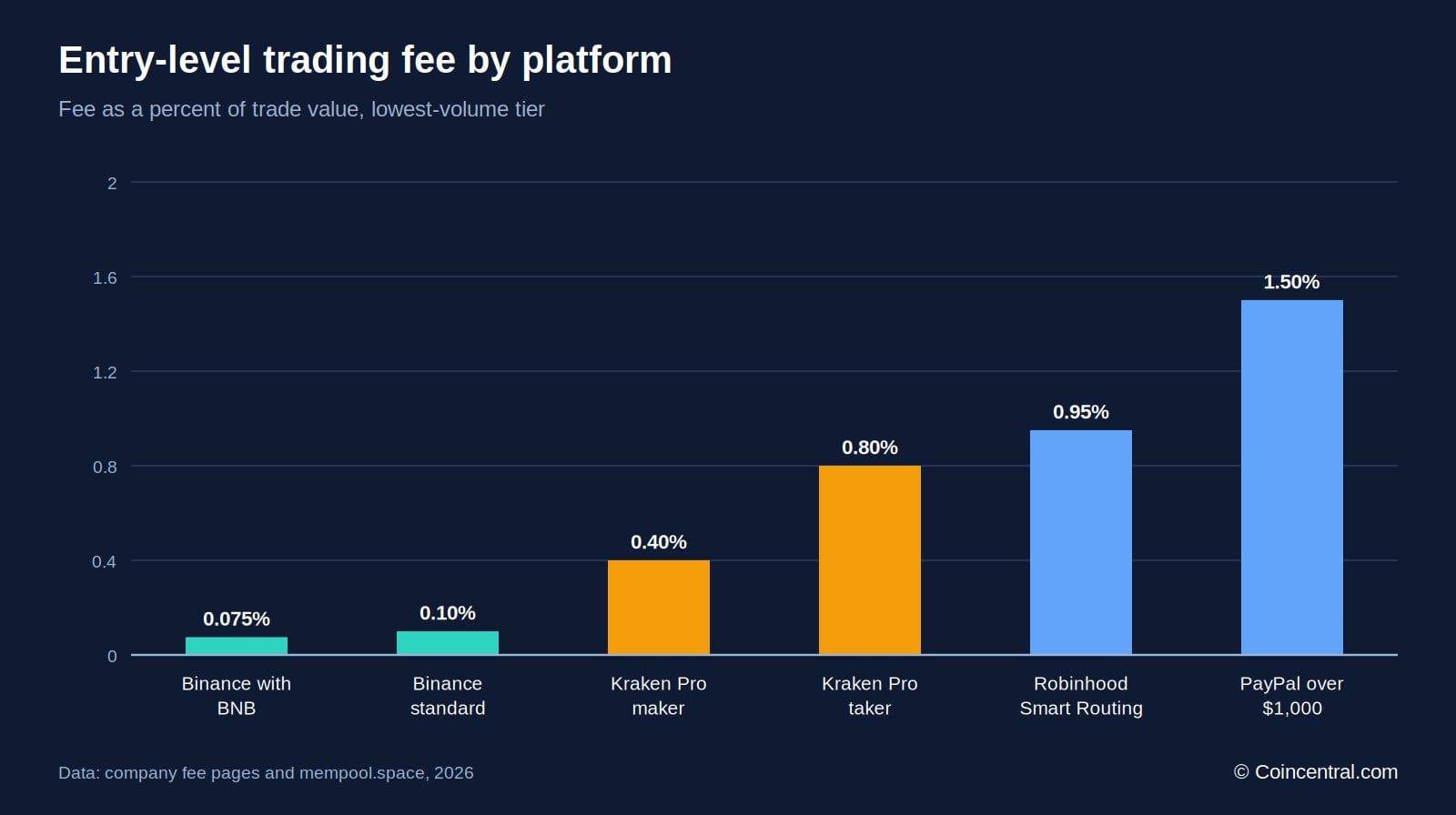 Figure 1: Entry-level fee rates for spot crypto trades, 2026.
The cheapest route is usually a liquid exchange’s advanced trading screen. Pay with a bank transfer, use a limit order or a low-cost spot order, and skip extra transfers.
Fee math is simple. On a $1,000 Bitcoin purchase, a 0.10% fee is $1. Buying and selling at that rate costs about $2 in total.
At a 1% fee, buying costs $10 and selling costs $10, for $20 in all. Bitcoin would need to rise about 2% just to cover those two commissions. That is before any spread or other cost.
Binance and Kraken Pro: Fees Fall as Volume Rises
Binance’s standard spot fee for regular users is 0.10% for makers and 0.10% for takers. Users who pay with BNB get a 25% discount, which lowers the rate to about 0.075%. A $1,000 Bitcoin purchase costs about $1 at the standard rate and $0.75 with the discount.
A $10,000 trade costs $10 at the standard rate. Higher-volume traders pay much less because Binance’s VIP tiers cut fees as 30-day volume grows. At the top displayed VIP tier, standard maker fees are close to 0.011% and taker fees are close to 0.023%.
Kraken changed its fee structure in July 2026. Traders with less than $2,500 in 30-day spot volume pay 0.40% as makers and 0.80% as takers. At $2,500 or more, those rates fall to 0.30% and 0.60%.
| Under $2,500 | 0.40% | 0.80% |
| $2,500 or more | 0.30% | 0.60% |
| $100,000 | 0.12% | 0.25% |
| $1 million | 0.06% | 0.18% |
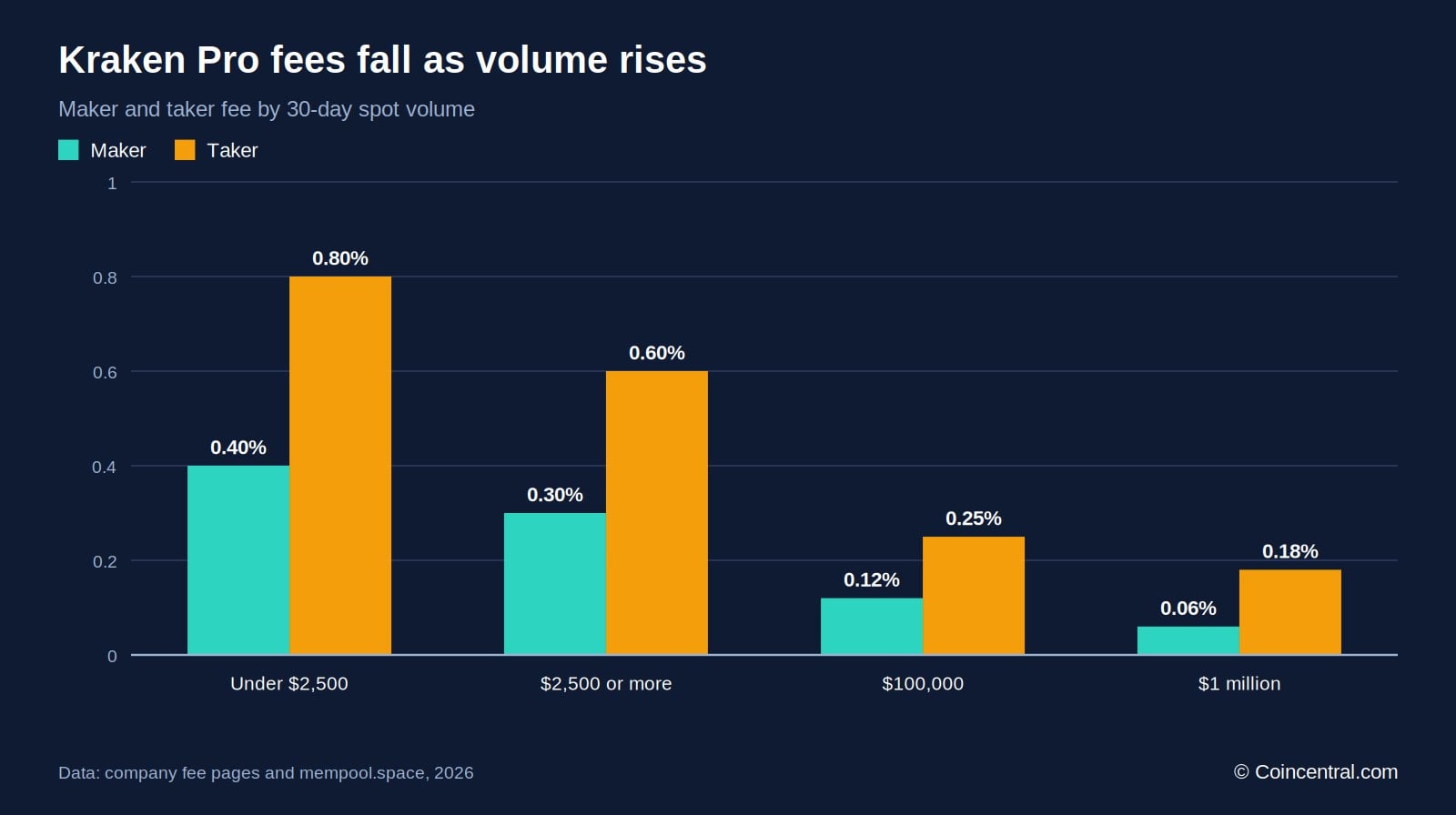 Figure 2: Kraken Pro maker and taker fees by 30-day volume tier.
Kraken says its full range runs from a negative maker rebate on some markets to a taker fee as high as 0.80%. The result depends on the trading pair and on volume.
Most exchanges use a maker-taker model. A maker places an order that adds to the order book and waits for a match. For example, Bitcoin trades near $80,000 and you place a limit order to buy at $79,500.
A taker trades right away against an order that is already on the book. This is what happens when you click buy at the market price. Exchanges charge makers less because they help build deeper markets.
Investors who do not need instant execution can use limit orders to lower costs. The gap between tiers also shows how pricing works. Retail investors often pay far more per dollar traded than professional market participants.
Retail Apps: Robinhood, PayPal, Coinbase, Cash App and Crypto.com
Robinhood became known for commission-free trading. Its current crypto pricing has more detail. Its market-maker routing carries no commission, but Smart Exchange Routing uses a tiered transaction fee.
| Under $50,000 | 0.95% |
| $50,000 to $250,000 | 0.25% |
| $250,000 to $500,000 | 0.15% |
| $500,000 to $1 million | 0.125% |
| $1 million to $5 million | 0.10% |
| Above $10 million | 0.03% |
Robinhood says crypto transfers carry no extra Robinhood fee, although blockchain network fees still apply. So commission-free and cost-free are not the same thing.
PayPal uses a fee that falls as the trade gets larger. It also says its exchange rate includes a cryptocurrency conversion spread. A $1,000 Bitcoin purchase carries an explicit fee of about $18 before the spread.
| $1 to $74.99 | 2.20% |
| $75 to $200 | 2.00% |
| $200.01 to $1,000 | 1.80% |
| Above $1,000 | 1.50% |
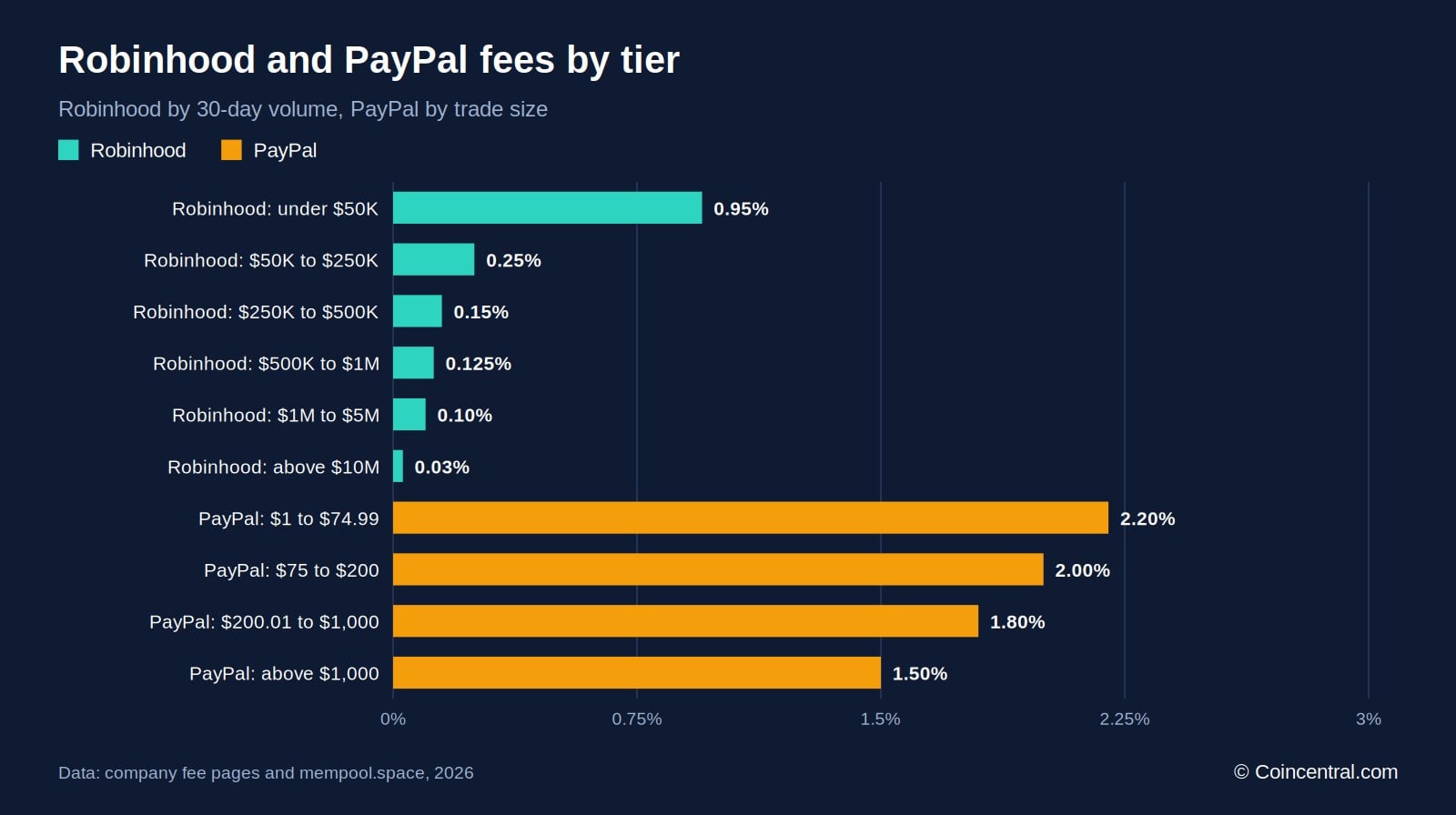 Figure 3: Robinhood Smart Exchange Routing and PayPal fee tiers.
If a similar fee applies when the coin is sold, the round-trip fee is about $36. That is 3.6% of the original investment before any spread. For small, occasional purchases the convenience may be worth it, but the cost adds up for larger or more frequent trades.
Coinbase says its standard buy, sell and convert transactions include a Coinbase fee set when the trade is placed. The amount depends on the payment method, order size, market conditions, location and coin. A spread is also built into the quoted price, and the user sees the total before confirming.
Coinbase’s simple limit orders can add a 1% execution fee. Another Coinbase fee of up to 1.875% may apply depending on the payment method. That does not mean every trade costs 2.875%, but it does mean users should read the preview.
Cash App announced changes to Bitcoin pricing in February 2026. Users who buy more than $2,000 of Bitcoin pay no fee and no spread on those purchases as the new structure rolls out. Direct deposit conversions to Bitcoin also carry no fee and no spread.
Crypto.com may charge an administrative fee when users buy, sell or trade. The fee can depend on market conditions, promotions, volatility and liquidity, and it is shown before the user submits the order. Card issuers may add their own international or merchant-category charges.
Offers like these can change, apply only to certain trade sizes or places, and may not cover every action. Always check the live order preview.
The Spread Is Often the Hidden Cost
Say Bitcoin’s real market price is $80,000, but an app quotes you $80,800. The $800 difference is a 1% premium. That is true even if the app says there is no commission.
Now say the same app buys Bitcoin back from you at $79,200 while the market stays at $80,000. Selling adds another 1% cost. The round trip costs about 2%.
| Retail sell quote | $79,200 | 1% below |
| Market price | $80,000 | None |
| Retail buy quote | $80,800 | 1% above |
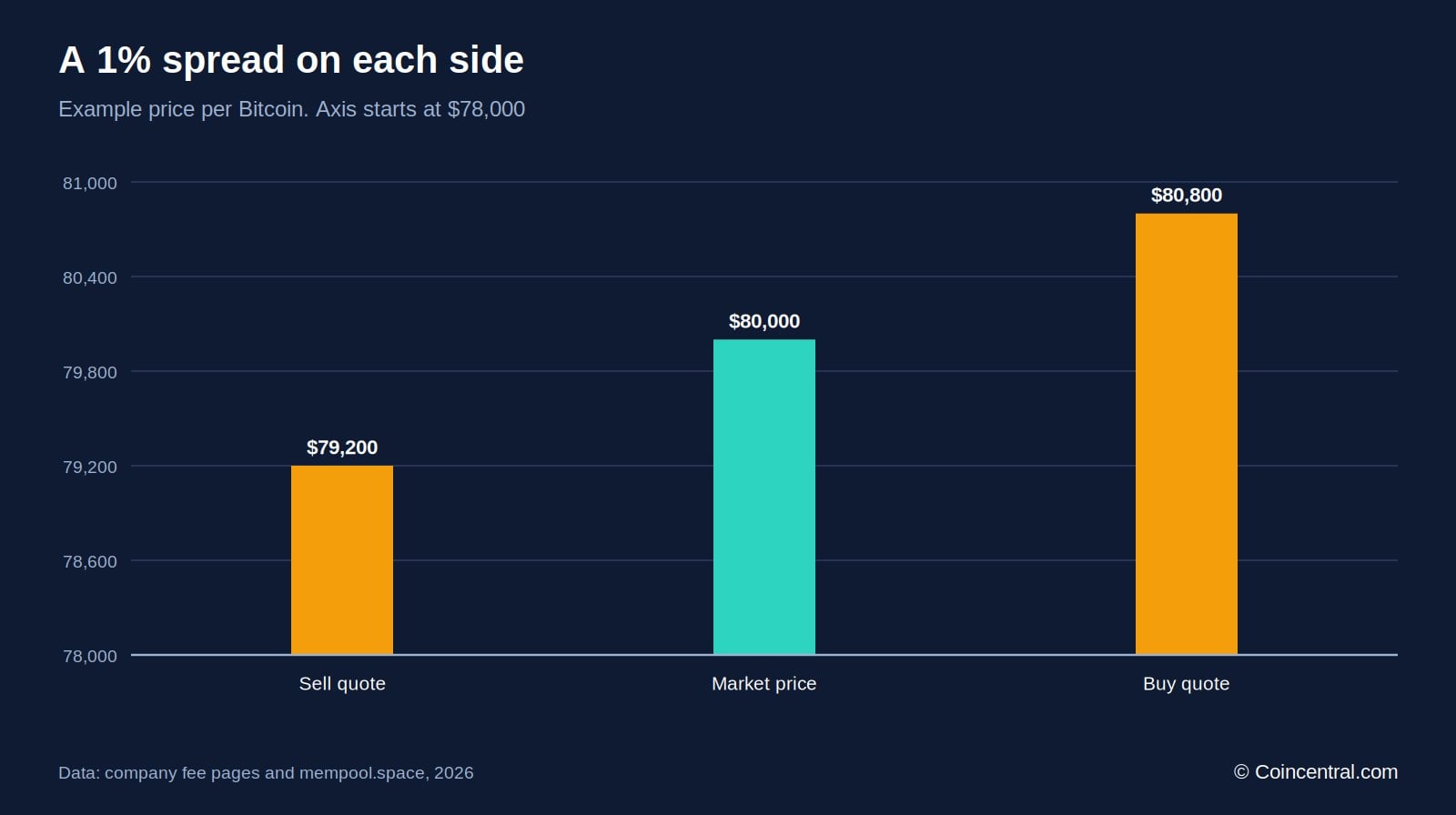 Figure 4: Example of a retail app quoting 1% above and below the market price.
This is why traders should compare the execution price with a liquid market price. Looking only for the word commission can be misleading. A platform can charge zero commission and still earn money from the spread.
Stablecoins can cut some costs. Many traders sell Bitcoin into USDC or USDT instead of cash and re-enter later, which avoids some bank steps. It does not remove trading fees, and there may still be conversion fees, spread, redemption risk and transfer costs.
Currency conversion is another hidden cost, especially in Europe. A person who deposits euros to buy a dollar-quoted coin may pay a foreign exchange charge at the bank, card issuer, exchange or processor. At a 0.75% spread, a 10,000 euro transfer costs 75 euros, so comparing native euro pairs such as BTC/EUR can help.
Card Payments Can Be the Costliest Way to Buy
Funding an exchange by bank transfer is often cheap or free. Using a credit or debit card may not be. A card purchase can include an exchange processing fee, a card-processing fee, a foreign transaction fee, currency conversion and, in some cases, a cash-advance charge.
Suppose an investor buys $1,000 of crypto and pays a 3% card fee. That alone costs $30. Add a 1% spread and the cost reaches $40 before the price has moved.
| Low-cost exchange | $1.50 (0.10% fee plus 0.05% spread or slippage) | None | $1.50 | 0.15% |
| Retail app | $22.50 (1.5% fee plus 0.75% spread) | None | $22.50 | 2.25% |
| Card-funded retail trade | $20 (2% fee and spread) | $30 (3%) | $50 | 5% |
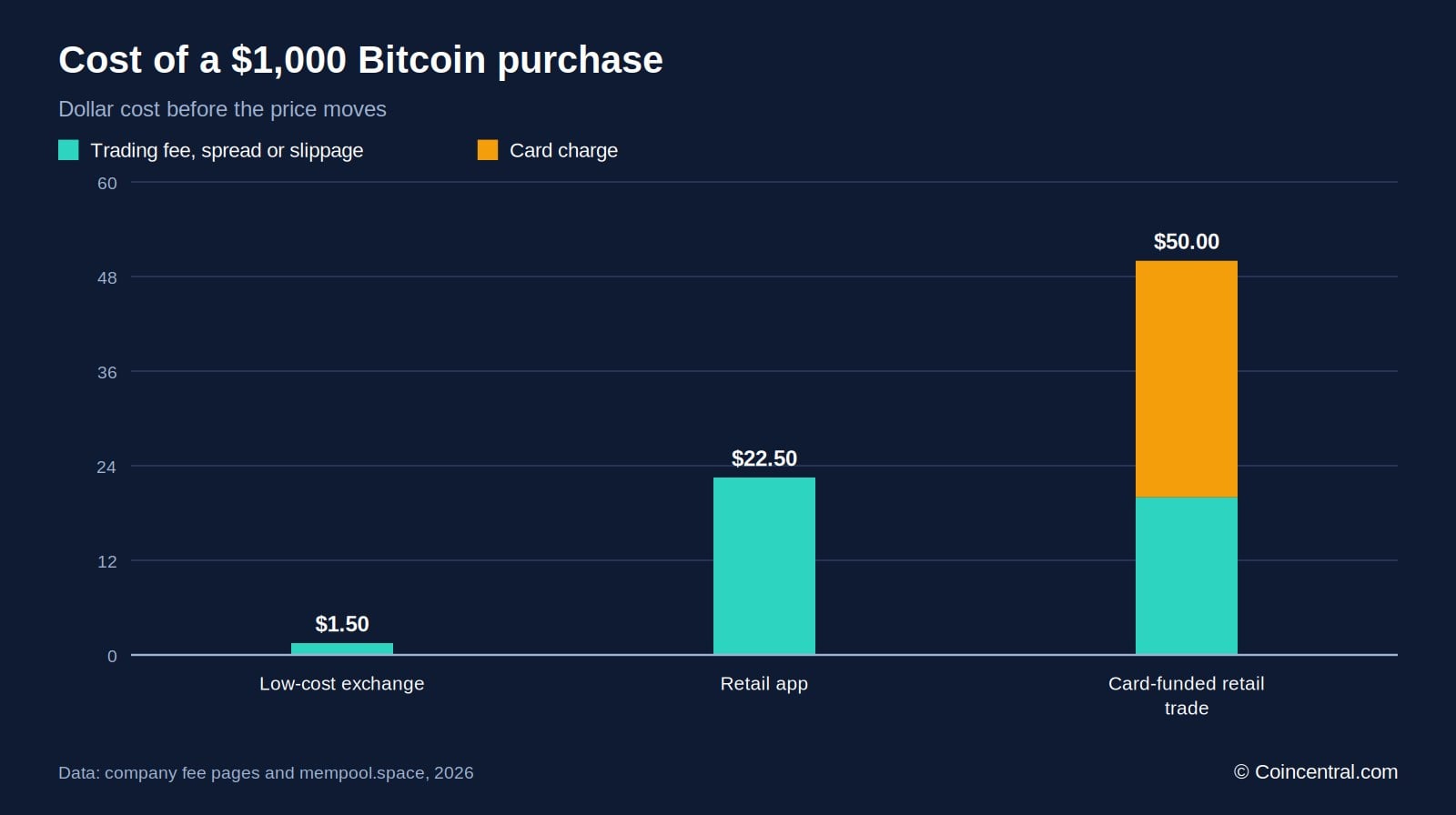 Figure 5: Three cost examples for a $1,000 Bitcoin purchase.
The investor in the third example needs Bitcoin to rise more than 5% just to recover the starting costs. The investor in the first example needs a rise of about 0.15%.
People who buy often should look at bank-transfer options. A few minutes of extra setup can save hundreds or thousands of dollars over time.
Zero commission is a starting point, not the full answer. Ask four questions: is there a spread, is the quoted price competitive, is there a withdrawal fee, and is payment processing free?
If a platform sells Bitcoin 1% above the market price, the lack of a separate commission offers little comfort. Sometimes zero-cost deals are real, such as Cash App’s no-fee, no-spread offer above $2,000. They still need a check.
Withdrawal and Network Fees
Buying crypto on an exchange does not always put it in your own wallet. Moving it to self-custody adds another cost. That cost can be a blockchain network fee, an exchange withdrawal fee, or both.
The two are different. The network fee pays the miners or validators who process the transaction. An exchange may add its own charge or set its own withdrawal rate.
As of late October 2026, mempool.space shows normal Bitcoin transactions clearing at roughly 1 satoshi per virtual byte in low-demand periods. Even high-priority estimates have recently been around 1 to 3 sat/vB. A simple 140-vbyte transaction at 1 sat/vB costs about 140 satoshis.
| Bitcoin network fee, 140 vbytes | 1 sat/vB | $0.11 |
| Bitcoin network fee, 140 vbytes | 3 sat/vB | $0.34 |
| Exchange withdrawal fee, example | Set by exchange | $10 to $20 |
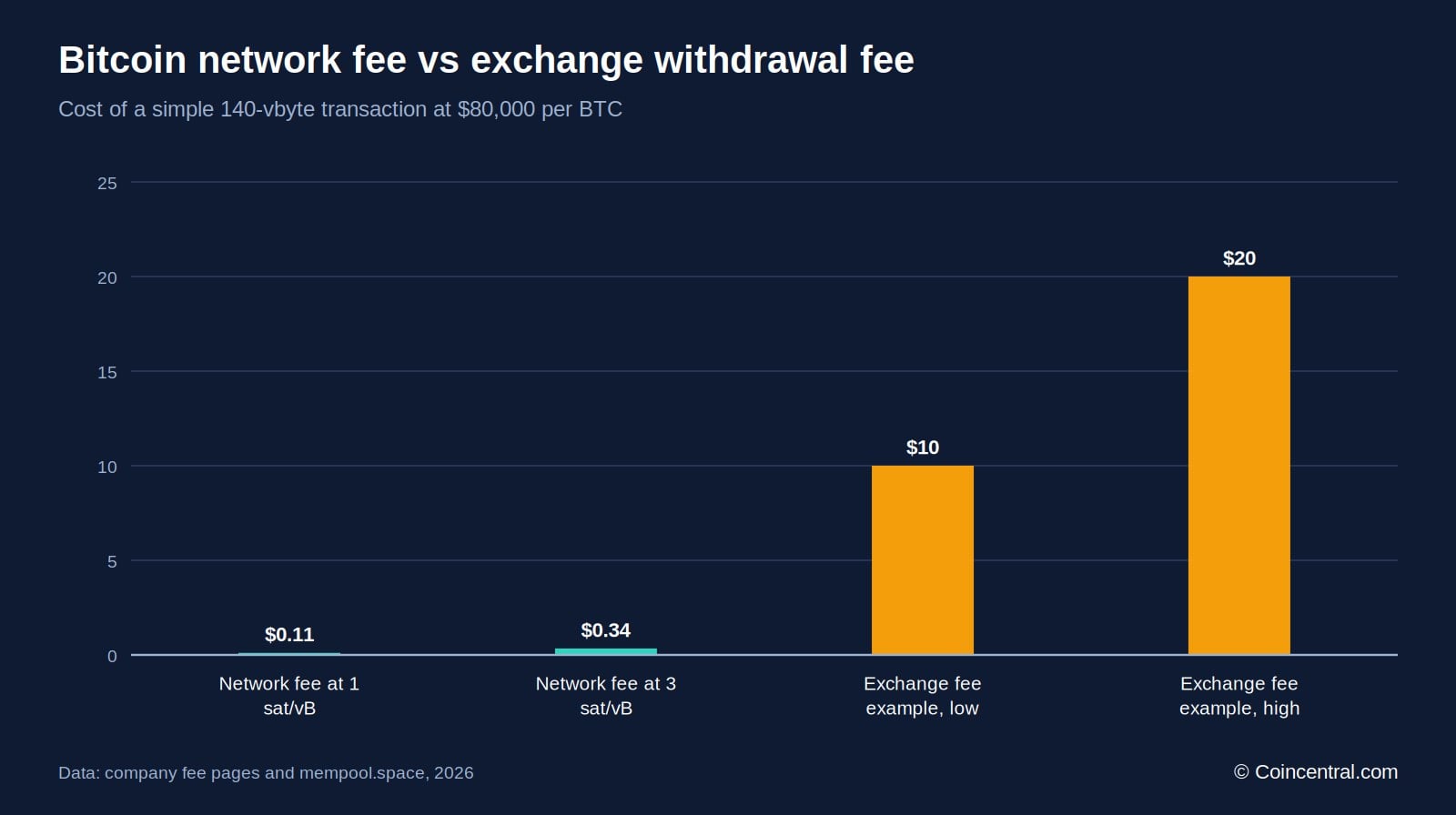 Figure 6: Network fees at low congestion compared with example exchange withdrawal fees.
Bitcoin fees are not always this low, and heavy congestion can raise them sharply. Still, an exchange that charges $10 or $20 to withdraw Bitcoin is not necessarily paying that much to miners. Part of the charge may be the platform’s own pricing policy.
Ethereum fees depend on the gas needed, the base fee, the priority fee and network congestion. A simple ETH transfer needs far less gas than a complex decentralized finance action. Sending ETH can cost cents or a few dollars when the network is quiet.
Swapping tokens on a decentralized exchange, adding liquidity or using a complex smart contract can cost much more. Layer 2 networks such as Base, Arbitrum and Optimism can cut costs a lot. Users may then pay bridge costs when they move assets between Ethereum and those networks.
Decentralized exchanges such as Uniswap bring a different cost mix. A user may pay a liquidity-pool fee, a gas fee, slippage, bridge costs and an aggregator or service fee. Coinbase says trades through its own DEX interface may include a service fee and blockchain costs, and the final price can differ within the user’s slippage setting.
The result can be cheap for large trades on liquid networks. A $50 token swap on Ethereum during a costly gas period makes little sense if the transaction costs several dollars.
Slippage and Order Types
Suppose a trader wants to buy $100,000 of a small cryptocurrency. The exchange advertises a 0.10% fee, which sounds like only $100. But the order book may not hold that much supply near the displayed price.
The first $10,000 may fill at $1.00, the next $20,000 at $1.01 and the next $30,000 at $1.03. The rest fills at higher prices. The average price might reach $1.04.
| Exchange fee | $100 | 0.10% |
| Slippage in this example | About $4,000 | About 4% |
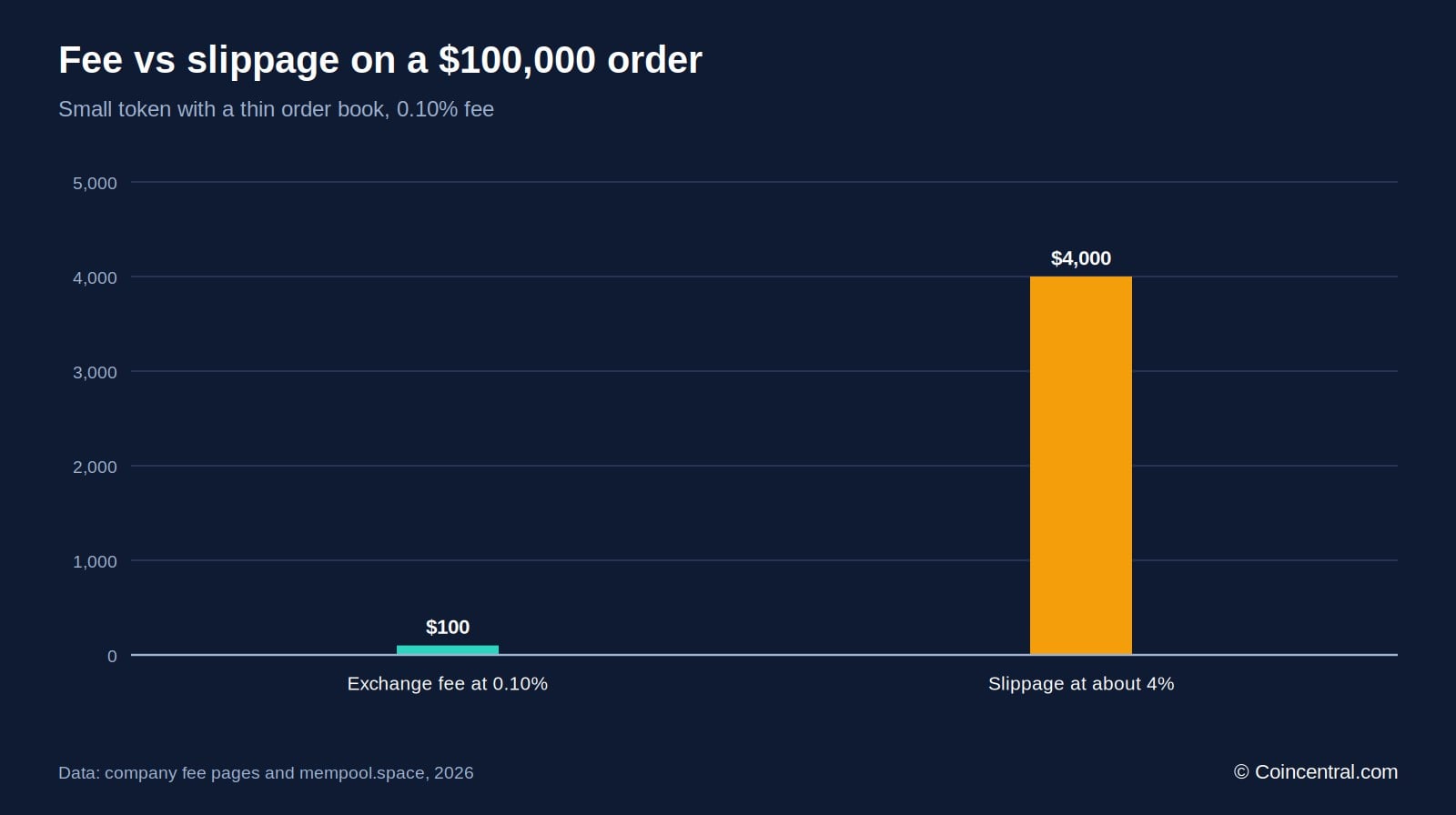 Figure 7: Example of slippage costing more than the exchange fee.
In this example the trader loses about 4% to slippage, or roughly $4,000, against $100 in exchange fees. Liquidity matters a great deal. For Bitcoin and Ethereum on major exchanges, slippage is usually small for ordinary retail trades, but for small tokens it can outweigh every other cost.
A market order says to execute right away at the best available prices. A limit order says to execute only at a set price or better. Market orders put speed first, and limit orders put price control first.
A small Bitcoin market order on a major exchange may have almost no slippage. A large memecoin market order in a shallow DEX pool can move the price a lot. That is why investors should compare order-book depth and not just trading fees.
Frequent Trading and Recurring Buys
A 0.5% trading fee seems small. But imagine someone trades a full $10,000 portfolio 50 times in a year. Each trade costs $50, so 50 trades cost about $2,500, ignoring changes in portfolio value.
If each position involves both a buy and a sell, the cost can be even higher. This is one reason frequent traders can fall behind even when some of their calls are right. Fees act as a steady drag.
| Weekly $100 buys, $5,200 invested | 0.10% | $5.20 |
| Weekly $100 buys, $5,200 invested | 2% | $104 |
| 50 trades of $10,000 | 0.5% | $2,500 |
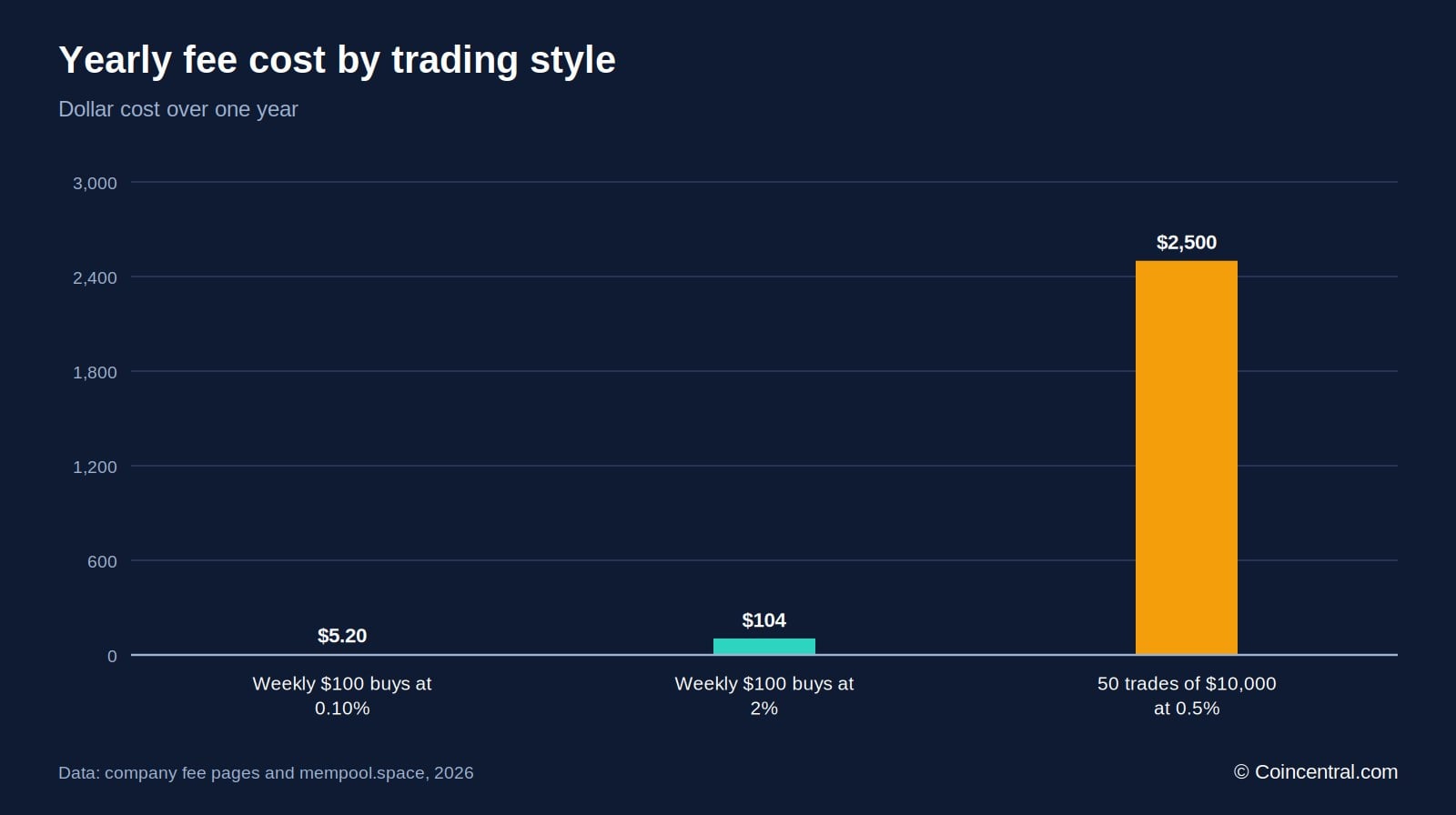 Figure 8: Yearly fee cost for recurring buys and frequent trading.
Dollar-cost averaging brings repeated fees too. Say someone invests $100 every week for 52 weeks, a total of $5,200. At a 2% fee per purchase, fees add up to $104, but at 0.10% the cost is only $5.20.
The strategy is the same, but the platform changes the cost by almost $100 a year. Over ten years the gap can grow much larger. Small recurring investors should pay close attention to percentage-based retail fees.
The Full Cost of a Buy-Sell Cycle
The right calculation is not just the cost to buy. It is the cost to buy, plus the cost to hold or transfer, plus the cost to sell.
Take this example. The buy fee is 1%, the buy spread is 0.5%, the withdrawal fee is 0.2%, the sell spread is 0.5% and the sell fee is 1%. The total friction is about 3.2%.
| Buy fee | 1.0% | $100 |
| Buy spread | 0.5% | $50 |
| Withdrawal fee | 0.2% | $20 |
| Sell spread | 0.5% | $50 |
| Sell fee | 1.0% | $100 |
| Total | 3.2% | $320 |
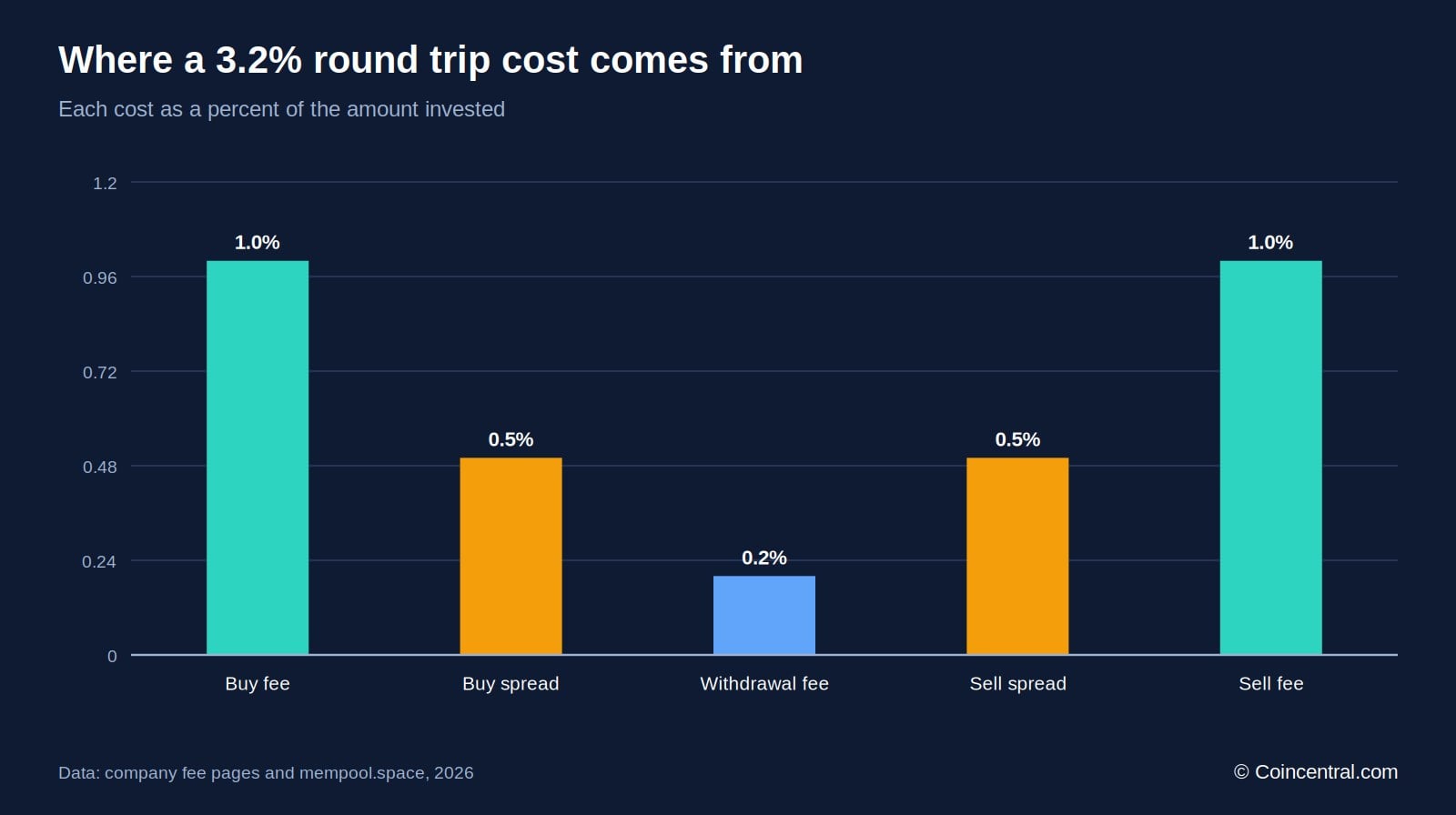 Figure 9: Example cost of a full buy and sell cycle, totaling about 3.2%.
A $10,000 investment would need to rise to about $10,320 just to recover that friction, ignoring tax. Low-cost trading can shrink that figure a lot.
For a careful investor on a low-cost exchange, a full buy or sell can cost well under 0.5%, and sometimes close to 0.1%. The gap between that and a 3.2% round trip is the reason fee comparison matters.
Taxes Can Cost More Than All Trading Fees
For profitable investors, tax can end up larger than every exchange charge combined. In many places, selling crypto for a profit is a taxable event. Crypto-to-crypto swaps may be taxable too.
Suppose someone buys Bitcoin for $10,000 and sells it for $20,000. The taxable gain may be $10,000, before allowed costs and local rules. A 20% tax rate on that gain equals $2,000.
| Purchase price | $10,000 |
| Sale price | $20,000 |
| Gain before costs | $10,000 |
| Tax at 20% | $2,000 |
| Trading fee example | $10 |
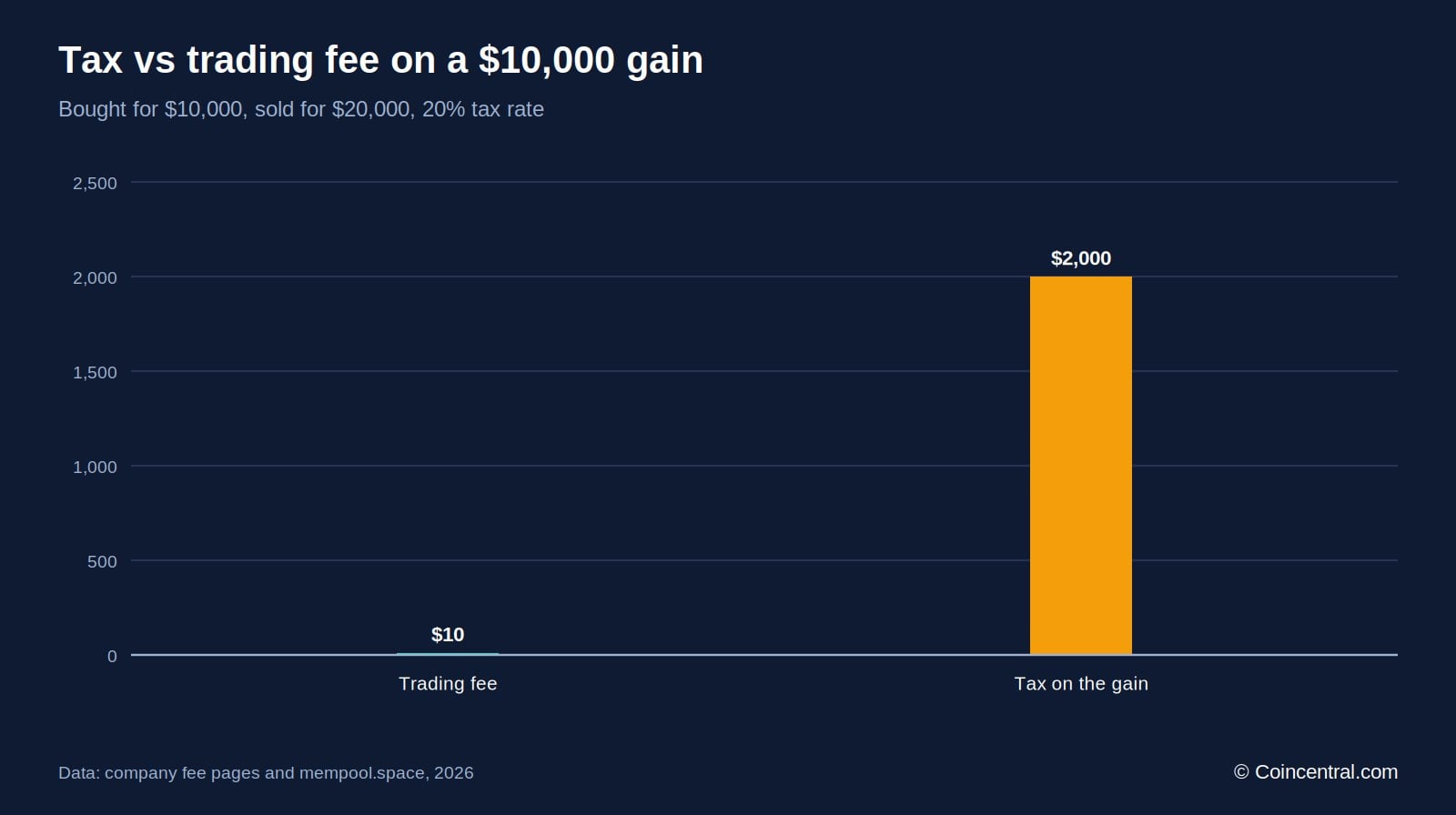 Figure 10: Example tax bill compared with a trading fee.
Next to a $2,000 tax bill, a $10 trading fee looks small. Tax rules vary by country and by personal situation. Investors should ask a local professional and not treat exchange fee calculators as the full cost of selling.
The Bottom Line
For a careful investor on a low-cost exchange, the cost of a full buy or sell can be well below 0.5%. Binance’s standard spot fee is about 0.10%, and higher-volume traders pay less. Kraken Pro starts at 0.40% for makers and 0.80% for takers, then falls as volume rises.
PayPal charges 1.5% to 2.2% depending on trade size, plus a conversion spread. Robinhood’s Smart Exchange Routing charges 0.95% at its lowest-volume tier. Coinbase’s simple buy screen includes both a fee and a spread.
The blockchain itself can be cheap. Bitcoin’s normal fee rate in late October 2026 is around 1 sat/vB, which puts a basic transaction at about 11 cents at an $80,000 price. Exchange withdrawal fees can be far higher than that.
The cost of crypto is not one fee. It is the combined effect of commission, spread, payment fees, slippage, withdrawal or network fees, currency conversion and tax. For someone who makes one or two trades, a 1% to 2% difference may not matter much.
For someone who invests every week or trades often, that gap can reach thousands of dollars. The best measure is not the advertised fee. It is how much money you spent, how much crypto you received, and how much cash will remain when you sell.
Sources
- Binance: Spot Trading Fee Rate. Current standard and VIP maker and taker spot trading fees, including the BNB discount.
- Kraken: How Trading Fees Work. Current maker-taker structure and the factors that set spot trading charges.
- Kraken: Cross-Platform Fee Tier Changes, July 2026. Spot fee tiers from 0.40% and 0.80% for entry-level users to lower professional rates.
- Coinbase: Pricing and Fees Disclosures. Current Coinbase fees, spreads, limit-order charges and decentralized exchange service fees.
- Robinhood Crypto: Standard Pricing Fee Schedule. Current Smart Exchange Routing fees and crypto transfer policies.
- PayPal: Consumer Crypto Fees. Current 1.5% to 2.2% crypto transaction fees and the conversion spread.
- Crypto.com: Crypto Purchase Fees. Guidance on administrative fees and possible card-issuer charges.
- Cash App: Bitcoin Fee Changes, February 2026. Policy removing fees and spreads from qualifying Bitcoin purchases above $2,000.
- mempool.space: Bitcoin Transaction Fees. Live Bitcoin network congestion and recommended sat/vB fee estimates.
The post Crypto Trading Fees Statistics: What It Costs to Buy and Sell in 2026 appeared first on Blockonomi.





 English (US) ·