
 3 hours ago
2
Follow us
Add us as a preferred source on Google
Subscribe to our newsletter
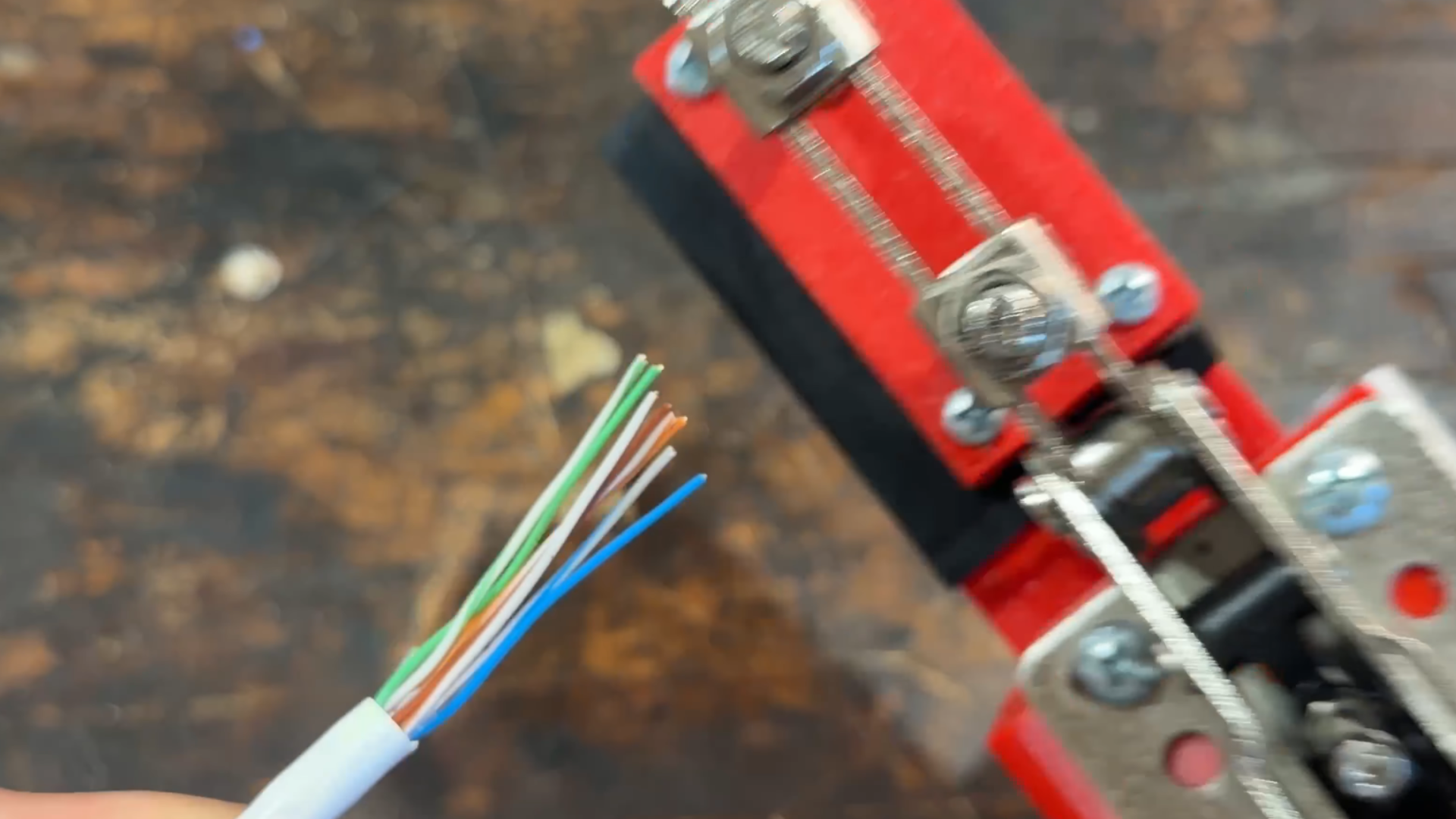
A contractor faced a project that required them to create 50,000 custom Cat6 cables from scratch, requiring 100,000 Cat6 terminations. The contractor, who goes by Analytical Horsepower on YouTube, had used a large, rare tool to streamline the job, but afterward he decided to build his own portable tool by modifying a Milwaukee Hackzall, cutting the time to straighten the twisted pairs to under two seconds.
Milwaukee doesn’t make this CAT6 tool, so I did - YouTube
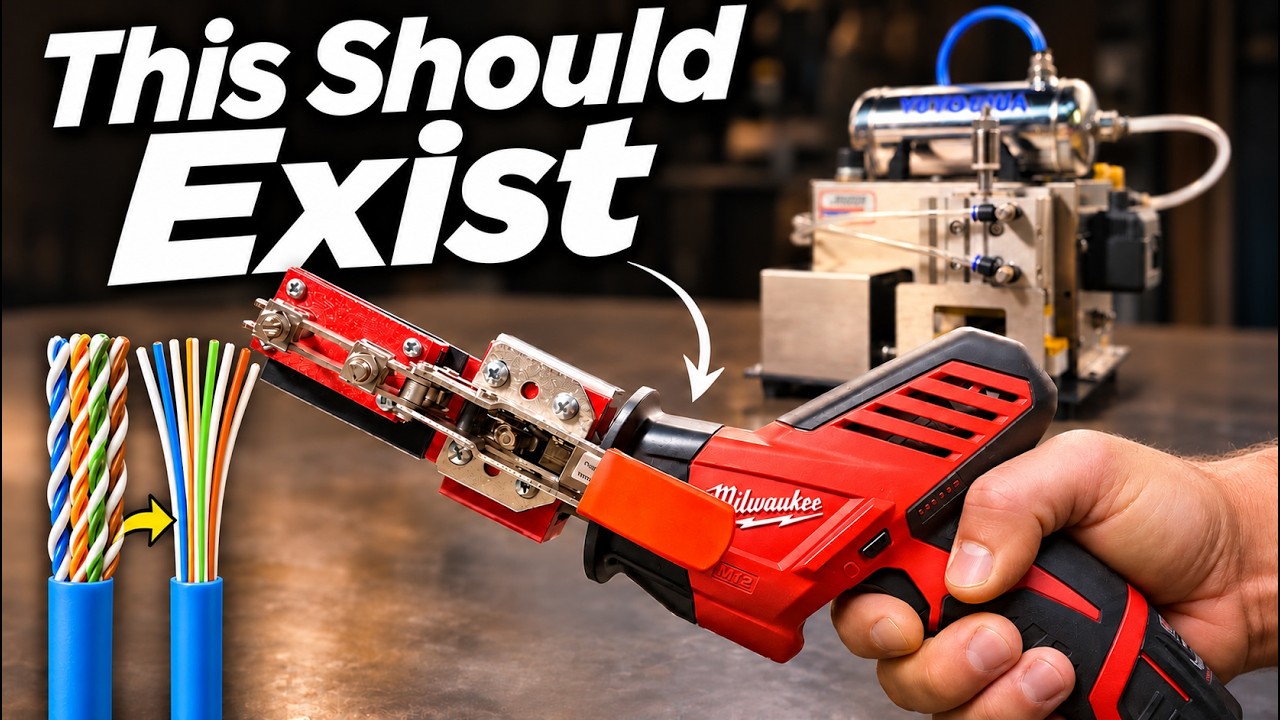
His first solution to the problem was to buy a “Wire Straightening Machine” from Alibaba for $500. It does the job well enough, but it’s an industrial machine designed for tabletop use, requiring an AC power source for the power brick and compressed air to run. The concept is that it clamps the wire between two rubber grips using air pressure, and then a linkage converts the rotary motion of the motor into a linear one, allowing the grip to untwist the cable. Since he wanted to use the machine in the field, he needed to make the thing portable — so he disassembled the entire thing, replaced the DC power brick with a 20V DeWalt battery with an adapter, added a push-button switch for power control, and a portable bike pump to deliver compressed air on the go.
It worked well at first, but he soon discovered that it was too bulky to use in the tight and hard-to-reach places where Ethernet cables sometimes terminate, like when you’re installing this heavy-duty outdoor Wi-Fi 7 access point. So, he studied the concept — it involved two flat, grippy surfaces grabbing the twisted cables and then moving back and forth. The back-and-forth motion of the surfaces causes the cables to untwist, with the clamping force ensuring that it remains in contact with the cables as they become flatter.
With this, he realized that he did not need such a bulky machine to do the job — he just needed a reciprocating tool that could accept a clamp. He first looked at a reciprocating saw, but he found that it still had the same bulky problem and also called it “not overly precise.” But when he looked at the Milwaukee Hackzall, he found that it offered the perfect balance of portability and precision. More importantly, it came with a detailed data sheet, instruction manual, and parts breakdown that allowed him to accurately 3D print the plastic parts and laser-cut and bend the metal parts he needed to build his machine. He also used a toggle clamp to hold the Cat6 cable in place instead of a pneumatic piston, which further simplified the machine and cut its size and weight.
After a few steps of trial and error, especially in the quality of the grippy materials used for the clamping surfaces, he finally got it to work. He could reliably untwist softer copper-clad aluminum cables in one go in under two seconds. Harder 100% pure copper conductors, sometimes called solid copper or pure bare copper Ethernet cables, must be untwisted pair-by-pair, though, requiring a bit more time, but it’s still undoubtedly much faster and more convenient than doing the job with just your bare hands.
This tool isn’t worth it if you only untwist a few Ethernet cables every month or so, like this telephone-to-gigabit internet conversion job. But if you’re facing a massive job like Analytical Horsepower, that half a minute you save with every cable end could translate to over 830 cumulative hours of labor saved on the jobsite. It’s a great first-generation tool, with its practical use apparent in the YouTube video. Some commenters suggest extending the toggle clamp handle to reach the trigger so activating the tool is easier, while it also looks like a good idea if there’s a way to incorporate the entire system into a crimper.

Download the Tom's Hardware app for up-to-the-minute updates on iOS and Android. Also follow Tom's Hardware on Google News, or add us as a preferred source, to get our latest news, analysis, & reviews in your feeds.
Get Tom's Hardware's best news and in-depth reviews, straight to your inbox.







 English (US) ·