
 3 weeks ago
26
3 weeks ago
26
When Robert Altman‘s “The Player” became his first hit in over a decade in 1992, it — combined with the critical accolades that greeted his previous film, “Vincent & Theo” — was widely seen as the director’s comeback film after years in the wilderness.
Yet Altman never really went anywhere; in between the perceived “failure” of “Popeye” (a film that was actually commercially successful, just not the blockbuster the studio wanted) in 1980 and the release of “Vincent & Theo” 10 years later, the director helmed over a dozen movies and TV shows, some of which rank with his best work.
The distinction between Altman’s ’80s output and what preceded and followed it is one of exhibition and distribution rather than productivity or artistic distinction. In the ’70s, the decade in which he made the majority of his consensus “classics” (“M*A*S*H,” “McCabe and Mrs. Miller,” “The Long Goodbye,” “Nashville”), Altman had big studio backing. From “The Player” on, he rode the crest of studio “indie” divisions like Fine Line and Miramax to return to healthy production budgets and generously marketed theatrical releases.


In between, Altman either worked in television or for now-defunct independent operations like Cinecom, United Artists Classics, Cannon, and New World Pictures, distributors rarely in a position to give his films wide releases, abundant advertising, or substantial resources during shooting.
Scaling down was a conscious decision for Altman after he burned Hollywood bridges with “Popeye.” “I fiddle on the corner where they throw the coins” was a favorite Altman saying, and when the studios were unwilling or unable to fund his projects, he quickly adapted and moved elsewhere, often adapting stage productions (“Streamers,” “Secret Honor,” “Fool for Love”) with limited locations that allowed him to maximize whatever time and money he could scrape together.
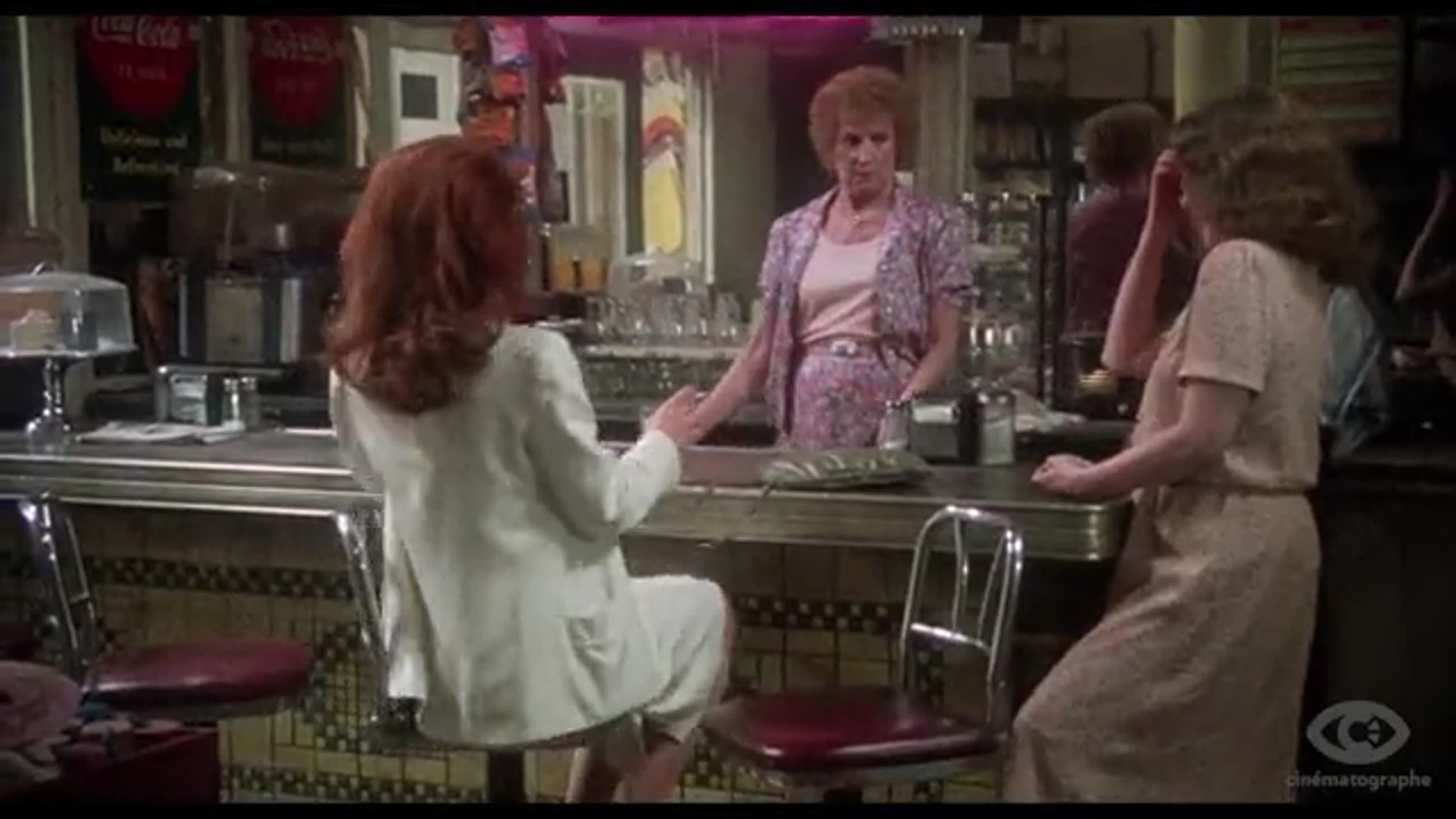
The first film in this cycle remains one of the best, and one of Altman’s best films, period. Released in 1982, “Come Back to the 5 and Dime, Jimmy Dean, Jimmy Dean” is an adaptation of Ed Graczyk’s play of the same name, which Altman directed on Broadway just before production. The movie takes place entirely in a Texas five-and-dime store where a group of old friends (among them Cher, Sandy Dennis, Karen Black, and Kathy Bates) reunite 20 years after James Dean’s death for a reunion of their James Dean fan club. Over the course of the day and evening, old secrets, resentments, and regrets bubble up to the surface and Altman crafts a devastating meditation on memory, identity, and the necessity as well as the danger of a vivid fantasy life.
Although the movie doesn’t travel through space — Altman’s camera never leaves the confines of the Woolworth’s in which the story is set — it traverses time with graceful visual imagination, as Altman employs mirrors and other frames-within-frames to bring the past into the present. The sophisticated set by ace production designer David Gropman enables Altman’s perpetually moving and zooming camera to drift in and out of two-way mirrors that depict memories and fantasies with both immediacy and a gauzy nostalgia.
The visual style, combined with Graczyk’s emotionally penetrating writing and the nakedly confessional performances, makes this both a key Altman work and a great case study for filmmakers trying to figure out how to create a sense of scale with limited funds.
The boutique physical media label Cinématographe, which has recently produced superb special editions of films by Jonathan Demme, Martin Scorsese, and Abel Ferrara, among others, is now releasing a deluxe 4K UHD and Blu-ray package of “Come Back to the 5 and Dime” that features hours of supplementary features to provide context and insight into Altman’s work. There are commentary tracks, video essays, and archival interviews with Gropman and other production personnel, as well as a booklet containing new written pieces examining the movie from a variety of perspectives.
Hopefully, this lavish release will inspire a new wave of interest in Altman’s ’80s output so that it’s no longer seen as a detour or interruption but the artistically fertile period that it was.
Watch an exclusive new trailer for “Come Back to the 5 and Dime, Jimmy Dean, Jimmy Dean” in the video above, and a clip from the film below.
“Come Back to the 5 and Dime, Jimmy Dean, Jimmy Dean” is now available on 4K UHD and Blu-ray from Cinématographe.








 English (US) ·