Clint Eastwood’s Greatest Quote Still Defines the Western Genre to This Day
1 week ago
34
Image via Warner Bros.
Published Nov 16, 2026, 7:04 AM EST
Collier Jennings is an entertainment journalist with extensive experience. Collier, or "CJ" to his friends and family, is a dedicated fan of genre films - particularly science fiction, fantasy, and comic book adaptations, not to mention all forms of animation. This stems from a close bond with his father, who introduced him to these genres via copies of X-Men comics and reruns of the original Ultraman series. With his near-encyclopedic knowledge and bottomless love of genre, he's tackled a wide variety of articles.
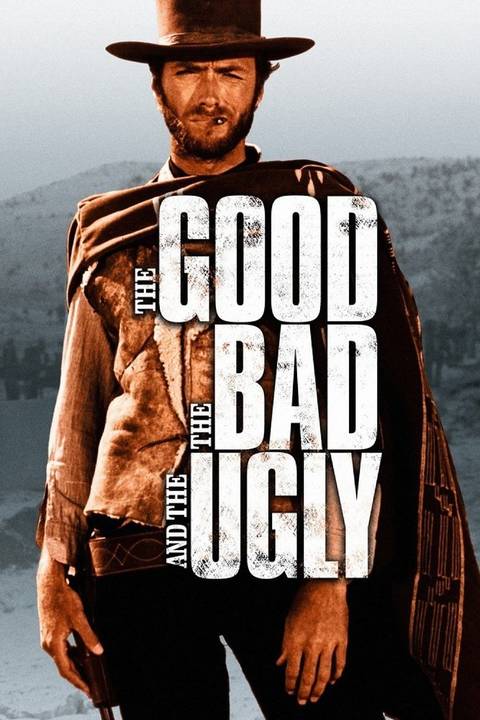
In the pantheon of Western icons, no one stands taller than Clint Eastwood. Much of that's due to his performance as the "Man with No Name" in Sergio Leone's Dollars trilogy, where he played a mysterious gunslinger whose mind was as sharp as his aim. The "Dollars" trilogy didn't just help define the spaghetti Western that dominated movies in the '60s; Eastwood's performance also helped define figures like El Mariachi in Robert Rodriguez's "Mexico Trilogy" and Din Djarin in The Mandalorian. It's the final movie, The Good, the Bad and the Ugly, that stands out, thanks to one key quote by Eastwood.
The Good, the Bad, and the Ugly centers on a race to find a stash of Confederate gold left buried after the Civil War, which boils down to a conflict between the Man with No Name — now nicknamed "Blondie," mercenary "Angel Eyes" (Lee Van Cleef), and notorious bandit Tuco Ramírez (Eli Wallach). In the movie's final moments, Blondie winds up killing Angel Eyes and holding Tuco at gunpoint due to the fact that he unloaded the latter's gun. He then says:
"You see, in this world there's two kinds of people, my friend: Those with loaded guns and those who dig. You dig."
This quote isn't just the perfect moment to end The Good, the Bad, and the Ugly.It also captures a key truth of the Western genre: to survive, you have to be more cunning and ruthless than those standing in your way.
'The Good, The Bad, and the Ugly' Shows Why Clint Eastwood's Man with No Name Is the Perfect Western Protagonist
Image via Produzioni Europee Associati
Blondie's line in The Good, the Bad, and the Ugly highlights how he's survived in the West for so long; he knows that Angel Eyes and Tuco, men who aren't exactly friendly with the law, will go to great lengths to get the gold. So he starts making moves to stay on top. Saving Tuco from being hanged gives him a temporary ally, and a key battle with Angel Eyes' group of bandits leads him to blow up a bridge, robbing the mercenary of backup he could have used. The real Wild West was a punishing landscape, full of threats that included criminals and the elements themselves, so one had to be ten steps ahead like Blondie if they wanted to live.
Anyone who's watched the previous entries in the Dollars Trilogy knows that a big part of what makes them so iconic is how the Man with No Name keeps outsmarting his foes. A Fistful of Dollarspits two rival gangs against each other, while For A Few Dollars Morehas him contact the authorities to thwart a gang of bank robbers (and, in a surprise twist, take the money they intended to steal at the end). This shows just how clever a character he is, and helps elevate the Dollars Trilogy above other Westerns.
Clint Eastwood Starred in a Pair of Westerns That Perfectly Underlined The West's Dangers
The Dollars Trilogy wasn't the end of Clint Eastwood's Western days, as he'd star in two more stories that took a darker look at the kind of stories that dominated the genre. First up was The Outlaw Josey Wales, where Eastwood's titular soldier embarks on a quest for revenge after losing his family and comrades. Next was Unforgiven, which featured him as a former outlaw turned farmer who's drawn back into a life of violence. Both movies deconstruct the typical Western, showing how a life of war or crime leaves its mark on you—and how ruthless you'd have to be to survive —painting Blondie's words from The Good, the Bad and the Ugly in a harsher light.
The Good, the Bad and the Ugly is often regarded as one of the most iconic Westerns ever made, yet one sentence fully cemented why it's the genre's definitive entry. It wasn't afraid to shy away from the harsh realities of the Wild West, where the difference between life and death was a loaded gun.

 Image via Warner Bros.

 Image via Produzioni Europee Associati





 English (US) ·