
 3 weeks ago
72
3 weeks ago
72
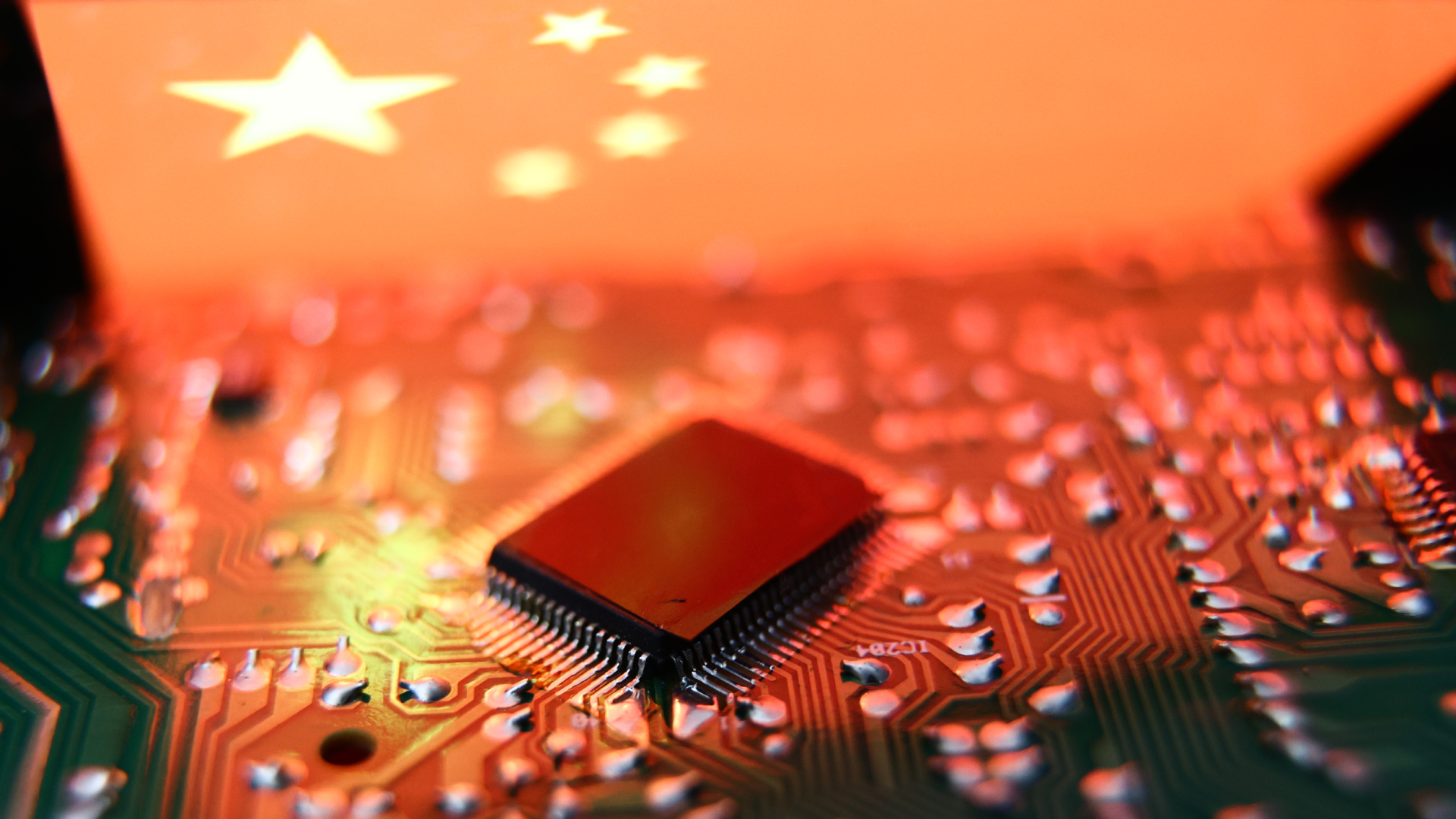
China exported 179.44 billion integrated circuits worth $177.28 billion in the first six months of 2026, an increase of more than 96% year on year by value, according to data released by the country's General Administration of Customs and reported by the South China Morning Post. The figures are Beijing's own customs numbers, presented at a state press briefing as part of a broader account of China's trade performance, and they made semiconductors one of the main contributors to the country's double-digit export growth over the period.
Go deeper with TH Premium: Taiwan, trade, and tariffs
The customs administration attributed the surge to global demand for AI hardware, but the underlying numbers point more towards a worldwide memory price boom that has inflated the value of the commodity-grade chips that China exports in volume.
The half-year value figure implies an average of roughly $0.99 per exported chip, which reflects the composition of China's IC exports: memory, power management, microcontrollers, and other mature-node parts, along with chips packaged and tested in China for re-export, rather than advanced processors.
Earlier customs releases this year show the growth is being driven by prices rather than shipments. In January and February, IC export value rose 72.6% year on year while volume grew only 13.7%, according to the same customs data series. In April, export value rose 100.1% year on year, the first monthly doubling on record, as price increases across AI servers, data centers, and memory spread through the supply chain.
Samsung, SK hynix, and Micron have redirected DRAM capacity toward high-bandwidth memory for AI accelerators and are phasing out DDR4 production, tightening supply of conventional memory and pushing spot and contract prices sharply higher through late 2025 and into 2026. Chinese memory makers, including CXMT in DRAM and YMTC in NAND, sell into exactly that commodity segment, so their export quotations have risen alongside global prices. China's IC export growth ran at 24.7% through the first ten months of 2025 per DigiTimes, before accelerating to the 70% to 100% monthly rates recorded this year, a timeline that tracks the memory price cycle, not any step change in Chinese output.
Volume growth is real, however, if far smaller than the value figure suggests. China produced 484.3 billion ICs in 2025 and counted 3,901 domestic chip design companies with combined sales up nearly 30% year on year, as a years-long buildout of mature-node fab capacity reached scale and exports became the outlet for output exceeding domestic demand.
It’s worth noting that a meaningful share of China's IC exports is processing trade, in which chips are imported, packaged or tested at Chinese OSAT facilities, and re-exported. These are counted in customs figures as gross value crossing the border, not domestically designed and fabricated silicon, and are therefore somewhat misleading,
Adjacent categories showed the same AI-driven pattern, with exports of automatic data processing machines and parts, a category covering computers, servers, and memory modules, rose 41.3% year on year to $138.08 billion in the first half. Industrial robot exports rose 18.6% to 6.29 billion yuan ($927.7 million) across 141 countries and regions.
As China reports record export figures, U.S. policy continues to shift. A Bureau of Industry and Security rule that took effect on January 16 moved license applications for Nvidia's H200 to case-by-case review for Chinese customers, and Nvidia has since booked orders for more than 400,000 units from ByteDance, Alibaba, and Tencent, though it had recognized no revenue from those orders as of March.
Beijing obviously presented the export figures as evidence of industrial strength. "The export growth was fundamentally driven by precisely matching 'Made in China' [products] with diverse global demand," Wang Jun, a vice-minister at the General Administration of Customs, said at Tuesday's briefing, as quoted by the South China Morning Post.

Follow Tom's Hardware on Google News, or add us as a preferred source, to get our latest news, analysis, & reviews in your feeds.







 English (US) ·