
 4 weeks ago
56
4 weeks ago
56
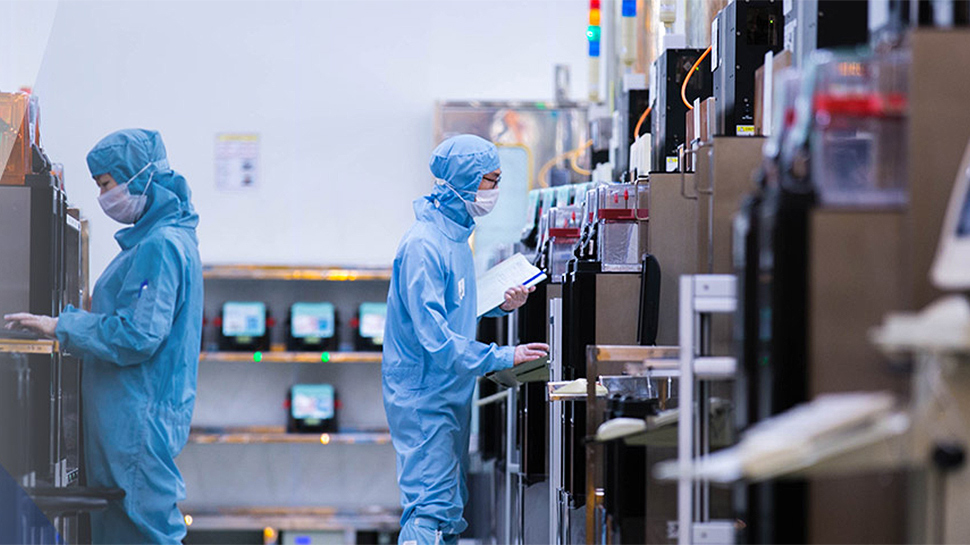
A state-backed company in Shanghai has begun mass-producing immersion deep ultraviolet lithography machines and is due to deliver the first units this year to SMIC, Hua Hong Semiconductor, and memory maker ChangXin Memory Technologies, according to The Information, citing two people familiar with the program. Output targets around five machines in 2026 and roughly 20 in 2027, and all three named recipients sit on the list of Chinese firms that a bill now moving through Congress would cut off from ASML sales and servicing by statute.
Go deeper with TH Premium: Chipmaking
The Information didn't name the manufacturer, but its sources described the operation as having pulled DUV development teams from several Chinese companies, one of them the state-backed startup Shanghai Yuliangsheng Technology. SMIC has been testing a Yuliangsheng immersion tool since September 2025. Most components in the new systems are domestic, though some critical parts still come from Japan, and delays at local suppliers have held back output this year.
U.S. House Resolution 8170 designates SMIC, Hua Hong, CXMT, Huawei, and YMTC as restricted entities in law, and three of those five are the named first customers for the domestic scanner. The MATCH Act, introduced in April, was reported out of the House Foreign Affairs Committee on April 22 and has a Senate companion filed as S. 4281. Its immersion DUV provisions cover servicing and technical assistance, not just new exports, which extends its scope to installed tools already operating in Chinese fabs, fabs which have spent the past two years stretching that installed fleet through secondary-channel upgrades.
ASML expects to ship about 130 immersion systems in 2026, matching 2025, CFO Roger Dassen told analysts during the company's July earnings call. Dassen added that ASML intends "to increase capacity by 30% in 2027" for immersion, and is investigating another 30% for 2028. China accounts for around 20% of ASML's net sales this year, down from 33% in 2025, driven mainly by mainstream logic demand.
Immersion DUV prints 28nm-class features in a single exposure and reaches 7nm through multipatterning, at a cost in overlay errors and yield. ASML CEO Christophe Fouquet told the same call that rising DRAM litho intensity partly reflects customers replacing multipatterning with cheaper single-exposure EUV.
Independent analysis from the AI Futures Project in June put commercial-scale Chinese immersion DUV in the mid-2030s, with ASML holding 98.7% of the immersion market. Qualifying the new machines for production lines could take many months, and they trail ASML's tools on performance and build quality. China's domestic EUV effort, which Reuters first reported as a working prototype in December, remains years away.

Follow Tom's Hardware on Google News, or add us as a preferred source, to get our latest news, analysis, & reviews in your feeds.




 English (US) ·