
 6 hours ago
14
6 hours ago
14
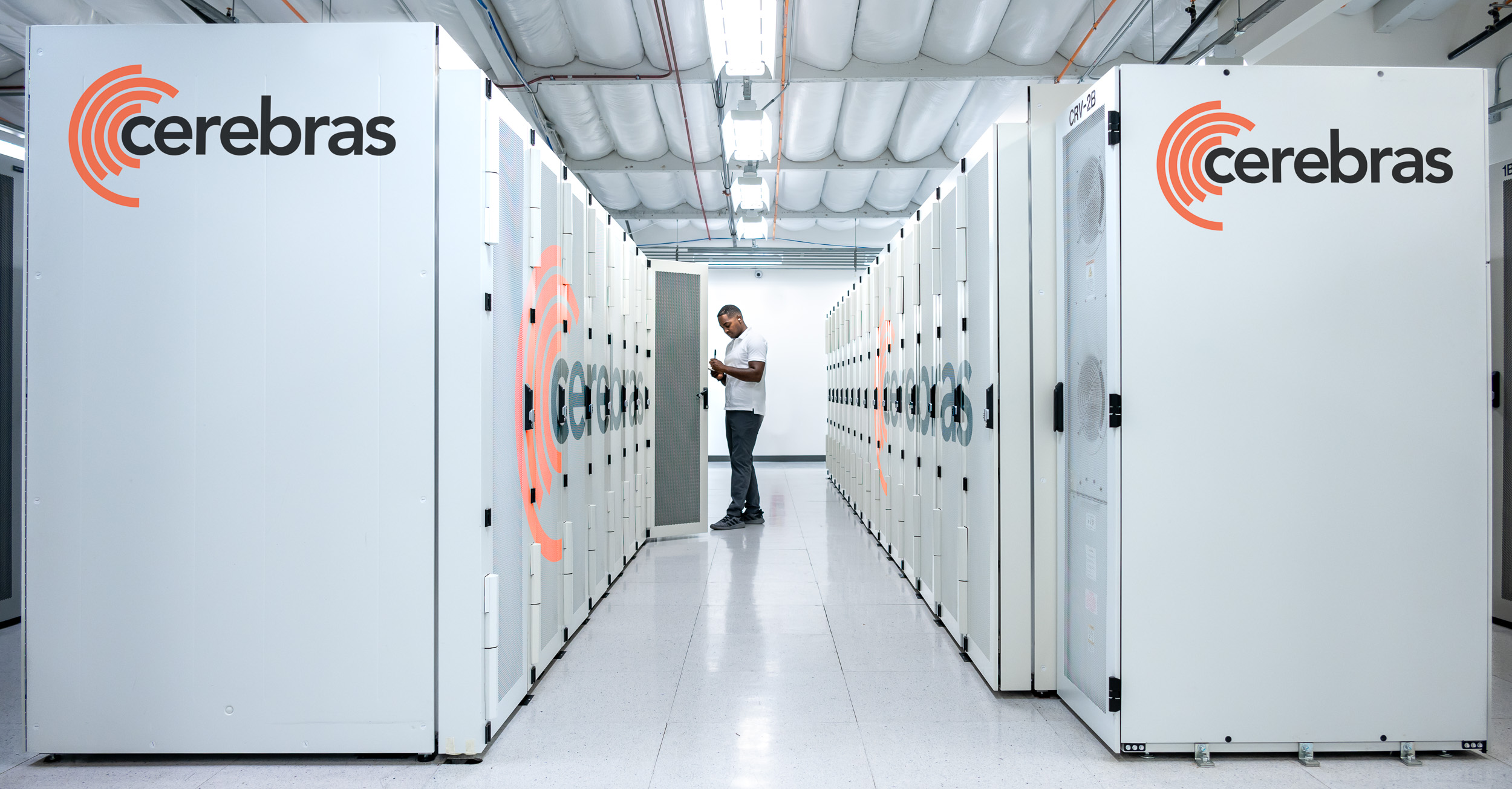
Cerebras on Wednesday reported its financial results for the second quarter, and while its earnings nearly doubled year-over-year, its shares plunged more than 18% in after-hours trading as it missed analysts' expectations, Reuters reports. Furthermore, the company's financial results suggest that Cerebras is increasingly succeeding at selling compute delivered by its hardware, rather than the hardware itself.
Tom's Hardware Premium Roadmaps
For the quarter ended June 30, 2026, Cerebras reported revenue of $180.11 million, up from $103.32 million in Q2 2025. Earnings of the company's cloud services totaled $125.99 million, up dramatically from 33.03 million in the same quarter a year ago, but sales of hardware dropped to $54.12 million from $70.3 million in Q2 2025. Wall Street analysts expected Cerebras to earn $194.23 million during the quarter.
During the quarter, Cerebras' operating expenses rose to $502.79 million (up from $89.28 million a year ago), its gross margin dropped to 14%, and it lost roughly $450.53 million. The main reason behind the company's skyrocketing operating expenses and losses is stock-based compensation triggered by its May IPO. Once the IPO happened, the company had to recognize the value of stock-based compensation as its expenses, as stock-based compensation jumped from $13.3 million in Q2 2025 to $377 million in Q2 2025. Without the stock-based compensation, the company's net loss would be $73.53 million.
That said, the analysts were not disappointed by the huge loss, but rather by the earnings miss, the rapidly dropping hardware sales, and uncertain returns generated by Cerebras' new business model.
Missing earnings expectations for an AI hardware company amid the AI market frenzy is not a thing that happens often. But perhaps more importantly is that Cerebras' hardware sales dropped 23% year-over-year, whereas cloud and other services revenue skyrocketed by 281%. On the one hand, this proves that the company's clients are more willing to buy its compute hardware in the cloud rather than own it, which means stable revenue streams. However, Cerebras' new business model requires Cerebras to put enormous amounts of capital into infrastructure before it can earn its cloud revenue.
Under its original hardware model, Cerebras has to manufacture its Wafer Scale Engines at TSMC, assemble systems on its base, and sell its CS systems to customers, which then own the machines, install them in their own or leased data centers, and assume the cost of operating the infrastructure. Under its new model, Cerebras retains and deploys the hardware itself, secures data-center capacity and power, and operates the infrastructure, while customers pay Cerebras for access to AI inference/training compute over time rather than buying the machines outright. Without any doubt, demand for inference AI compute is enormous these days, and Cerebras' results prove it. However, the question is whether the company can produce attractive and sustainable profits on the capital it spends on hardware and infrastructure.
The $20 billion OpenAI agreement is one example of the business model. Cerebras has committed to provide 750 MW of inference capacity over several years, and OpenAI has an option for another 1.25 GW. As a result, Cerebras must fund 750 MW of infrastructure buildout in advance and opt for another 1.25 GW well before it gets actual money from the AI giant. While OpenAI is assisting Cerebras in financing the project using a roughly $1 billion secured working-capital loan, still must spend money for quarters, if not years, before it earns any revenue.

Follow Tom's Hardware on Google News, or add us as a preferred source, to get our latest news, analysis, & reviews in your feeds.






 English (US) ·