
 Image via Prime Video

Published Oct 25, 2026, 6:45 AM EDT
Kelcie Mattson is a Senior Features author at Collider. Based in the Midwest, she also contributes Lists, reviews, and television recaps. A lifelong fan of niche sci-fi, high fantasy, Gothic horror, elaborate action, and witty detective fiction, becoming a pop culture devotee was inevitable once the Disney Renaissance, Turner Classic Movies, BBC period dramas, and her local library piqued her imagination.
Rarely seen without a book in one hand and a cup of coffee in the other, Kelcie explores media history (especially older, foreign, and independent films) as much as possible. You'll also find her enjoying video games, amateur photography, geeking out over all music genres, admiring birds from her porch, trying to overcome her meager baking skills, and attending fan conventions with her Trekkie family.
Sign in to your Collider account
The collaborative deal between Mike Flanagan and Prime Video is already a rousing success. Two weeks after Carrie premiered and skyrocketed to the top of the streaming charts faster than you can say "telekinesis," Prime Video has already commissioned a second season. The news may come as a surprise to anyone familiar with the beats of the original novel, but it's precisely the outcome Flanagan envisioned for his modernized spin on one of Stephen King's most venerated and influential classics.
Last month, the prolific horror maestro told Collider his "dream scenario" for the show's future involved "a wonderful three-step arc." If anyone can work the magic required to sell three seasons of Carrie, it’s certainly a creator of Flanagan's caliber. But Prime Video bringing his intent closer to fruition might have already undercut the story's iconic potency.
Mike Flanagan's 'Carrie' Is an Inspired Transformation — Until the Finale
Flanagan's new streaming partner suggested he tackle Carrie when pre-production on his dream project, a television version of King's The Dark Tower series, took longer than anticipated. Agreeing meant brainstorming what warranted yet another iteration after four previous films within the last five decades. It's a transformative approach that has served Flanagan well time and again — remixing a seminal piece of horror literature's narrative beats into a vision that's richer for its newness, while still fully respecting its source material's DNA.
In Carrie's case, Flanagan's methodology scores another near-perfect home run. Magnificent and timely, yet sensitive, informed by teenage consultants and women writers and directors, it cracks open the spine of King's work, lets its defining traits gain revitalizing multidimensionality, and invents unexplored corners from scratch instead of replicating established traditions. Paradoxically, it's the deviations from Carrie's unforgettable conclusion where the series' accomplishments turn from soaring into dangling lopsided off a cliff.
The Original 'Carrie's Power Comes From Its Simplicity
Standalone, precisely paced projects comprise the vast majority of Flanagan's feature films and small-screen work with Netflix. Expanding King's shortest book into a "trilogy" format risks the opposite — doing too much. In all fairness, absolving Carrie White (Summer H. Howell) of her active role in the prom's bloodbath and letting her survive deals in the same wish-fulfillment mercy Guillermo del Toro shows the Creature (Jacob Elordi) in his redefined Frankenstein. After so many famous adaptations, both creators have room to subvert their particular versions of these tragedies.
NBC's 2002 made-for-TV movie remake also lets Carrie defy the odds by necessity and out of sympathy. For one, screenwriter Bryan Fuller found killing a teenage girl who has only known lifelong suffering to be, in his words, too "cruel." Secondly, an unrealized sequel television show would've followed Carrie (Angela Bettis) and Sue Snell (Kandyse McClure) encountering other psychically gifted young women. The 2026 series introducing a group of psychically skilled women certainly isn't a conceptual misstep, especially in terms of fleshing out an approximately 200-page book into an eight-episode series.
Collider Exclusive · Horror Survival Quiz Which Horror Villain Do You Have the Best Chance of Surviving? Jason Voorhees · Michael Myers · Freddy Krueger · Pennywise · Chucky
Five killers. Five completely different ways to die — if you're not smart enough, fast enough, or self-aware enough to avoid it. Only one of them is the villain your particular set of instincts gives you a fighting chance against. Eight questions will figure out which one.
🏕️Jason
🔪Michael
💤Freddy
🎈Pennywise
🪆Chucky
TEST YOUR SURVIVAL →
01
Something feels wrong. You can't explain it — you just know. What do you do? First instincts are the difference between the survivor and the first act casualty.
ALeave immediately. I don't need to understand a threat to respect it. BStay quiet and observe. If I can see it, I can understand it. If I can understand it, I can avoid it. CStay awake. Whatever this is, I am not going to sleep until I feel safe again. DConfront it directly. Fear grows in the dark — I'd rather know what I'm dealing with. ECheck everything, trust nothing. The threat might be closer than I think — and smaller.
NEXT QUESTION →
02
Where are you most likely to find yourself when things go wrong? Setting is everything in horror. Where you are determines which rules apply.
ASomewhere remote — a cabin, a campsite, off the grid and away from people. BA quiet suburban neighbourhood where nothing ever happens. Except tonight. CIn my own head — the most dangerous place of all, depending on what's already in there. DWherever children are — because something about this place attracts the worst things. ESomewhere ordinary — a house, a toy store, a place where the last thing you'd expect is a threat.
NEXT QUESTION →
03
What is your most reliable survival asset? Every survivor has a quality the villain didn't account for. What's yours?
APhysical fitness — I can run, I can swim, I can outlast something that relies on brute persistence. BSpatial awareness — I always know the exits, the hiding spots, the fastest route out. CPsychological resilience — I've faced my worst fears before. They don't have the same power over me. DEmotional steadiness — I don't panic. Panic is what gets you caught. EScepticism — I don't underestimate threats because of how they look. Size is irrelevant.
NEXT QUESTION →
04
What kind of fear is hardest for you to fight through? Knowing your weakness is the first step to not dying because of it.
AThe unstoppable — something that will not stop, cannot be reasoned with, and is always getting closer. BThe invisible — a threat I can feel but can't locate, watching from somewhere I can't see. CThe psychological — something that uses my own mind and memories against me. DThe unknowable — something ancient, shapeless, that feeds on the fear itself. EThe mundane — a threat so ordinary-looking that no one will believe me until it's too late.
NEXT QUESTION →
05
You're with a group when things start going wrong. What's your role? Horror movies are brutally clear about who survives group situations and who doesn't.
AThe one who says "we need to leave" first — and means it, even when no one listens. BThe one who stays quiet, watches the others, and figures out the pattern before anyone else does. CThe one who holds the group together when panic sets in — because someone has to. DThe one who asks the questions nobody wants to ask — because ignoring them gets people killed. EThe one who takes the threat seriously when everyone else is laughing it off.
NEXT QUESTION →
06
What's the horror movie mistake you're most likely to make? Honest self-assessment is a survival skill. Denial is not.
AGoing back for someone — I know I shouldn't, but I can't leave them behind. BAssuming I'm safe once I've found a hiding spot. That's when it finds me. CFalling asleep when I absolutely cannot afford to. Exhaustion is its own enemy. DLetting my curiosity override my instincts — I always need to understand what I'm dealing with. EDismissing the threat because of how it looks. That's exactly what it wants.
NEXT QUESTION →
07
What's your best weapon against something that can't be stopped by conventional means? Every horror villain has a weakness. The survivors are always the ones who find it.
AThe environment itself — I use the terrain, the water, the geography against it. BPatience — I wait, I watch, and I strike at the one moment it doesn't expect. CLucidity — if I can stay in control of my own mind, it loses its primary weapon. DCourage — facing it directly, refusing to run, taking away the fear it feeds on. EImprovisation — I use whatever's at hand, however unconventional. Creativity over brute force.
NEXT QUESTION →
08
It's the final scene. You're the last one standing. How did you make it? The final survivor always has a reason. What's yours?
AI kept moving. I never stopped, never hid for too long, never let it corner me. BI figured out the pattern before anyone else did — and I used it against the thing following it. CI stayed awake, stayed lucid, and refused to give it the one thing it needed most. DI stopped being afraid of it. And the moment I did, everything changed. EI took it seriously from the start — and I never once made the mistake of underestimating it.
REVEAL MY VILLAIN →
Your Survival Odds Have Been Calculated Your Best Chance Is Against…
Your instincts, your strengths, and your particular way of thinking under pressure point to one villain you actually have a fighting chance against. Everyone else — good luck.
Jason Voorhees
Jason is relentless, but he is also predictable — and that is the gap you would exploit.
- He moves in straight lines toward his target. He doesn't strategise, doesn't adapt, doesn't outsmart. He simply pursues.
- Your ability to keep moving, use the environment, and resist the panic that freezes most victims gives you a genuine edge.
- The Crystal Lake survivors were always the ones who stopped running in circles and started thinking about terrain, water, and distance.
- You think like that. Which means Jason, for all his indestructibility, would face someone who simply refused to be where he expected.
Michael Myers
Michael watches before he moves. He is patient, methodical, and almost impossible to detect — until it's too late for anyone who isn't paying close enough attention.
- But you are paying attention. You notice the shape in the window, the car parked slightly wrong, the silence where there should be sound.
- Michael's power lies in the invisibility of ordinary suburbia — the fact that nothing ever looks wrong until it already is.
- Your spatial awareness and instinct to map every room, every exit, and every shadow before you need them is precisely the quality Laurie Strode had.
- You are not a victim waiting to happen. You are someone who already suspects something is wrong — and acts on it.
Freddy Krueger
Freddy wins by getting inside your head — using your own fears, your own memories, your own subconscious as weapons against you. That strategy requires a target who can be destabilised.
- You are harder to destabilise than most. You've faced uncomfortable truths about yourself and you haven't looked away.
- The survivors on Elm Street were always the ones who understood what was happening and chose to face it rather than flee from it.
- Freddy's greatest weakness is that his power evaporates in the presence of someone who refuses to give him the fear he feeds on.
- Your psychological resilience — the ability to stay grounded when reality itself becomes unreliable — is exactly the quality that keeps you alive here.
Pennywise
Pennywise is ancient, shapeshifting, and feeds on terror — but it has one critical vulnerability: it cannot function against someone who genuinely stops being afraid of it.
- The Losers Club didn't survive because they were braver than everyone else. They survived because they faced their fears together, and faced them honestly.
- You ask the questions others avoid. You look directly at what frightens you rather than turning away.
- That directness — the refusal to let fear fester in the dark — is Pennywise's worst nightmare.
- It chose the wrong target when it chose you. You are exactly the kind of person whose fear tastes like nothing at all.
Chucky
Chucky's greatest advantage is that nobody takes him seriously until it's already too late. He exploits the gap between how something looks and what it actually is.
- You don't have that gap. You take threats seriously regardless of how they present — and you never make the mistake of underestimating something because of its size or appearance.
- Chucky relies on surprise, on the delay between recognition and response. You close that delay faster than almost anyone.
- Your instinct to treat every unfamiliar thing with appropriate scepticism — rather than dismissing it because it seems absurd — is the exact quality that keeps you breathing.
- Against Chucky, not laughing is already winning. You are very good at not laughing.
↻ RETAKE THE QUIZ
Like del Toro's Frankenstein, however, minimizing both characters' destructive carnage and removing their bleak ends softens ideas that should be held in tension. Carrie White should exist as simultaneously sympathetic and hostile, her fury justified and her grieving, traumatized descent into viscerally unsettling retribution should be a point of no return. King concludes his debut with the broader context that many women inherited the same "TK gene" as Carrie — and the agonizingly lonely eponymous heroine will never get to experience that communal strength in numbers. The book's insular, character-driven premise is as lean and mean as the themes of adolescent identity, social harassment, and complicity.
Between Flanagan's heartfelt statements about this project and his established track record, there’s little doubt that his three-act structure for Carrie emerged from thoughtful intuition. Still, it might've been smoother to use Carrie White's name recognition to launch a Castle Rock-esque anthology show that unites King's oeuvre in one space and builds toward Prime Video's The Dark Tower as the nexus of his multiverse. Applying the original concepts Flanagan's known for onto the ending and beyond of this particular work risks diluting the iconic story’s enduring foundation. Its self-contained simplicity remains its most effectively harrowing and memorable selling point, not the mythology or the character's retroactive place within King's multiverse. Carrie's second season, whether fascinating or unnecessary in the long run, means it's no longer as fiercely focused on an isolated, abused, superpowered girl who never stood a chance of triumphing.
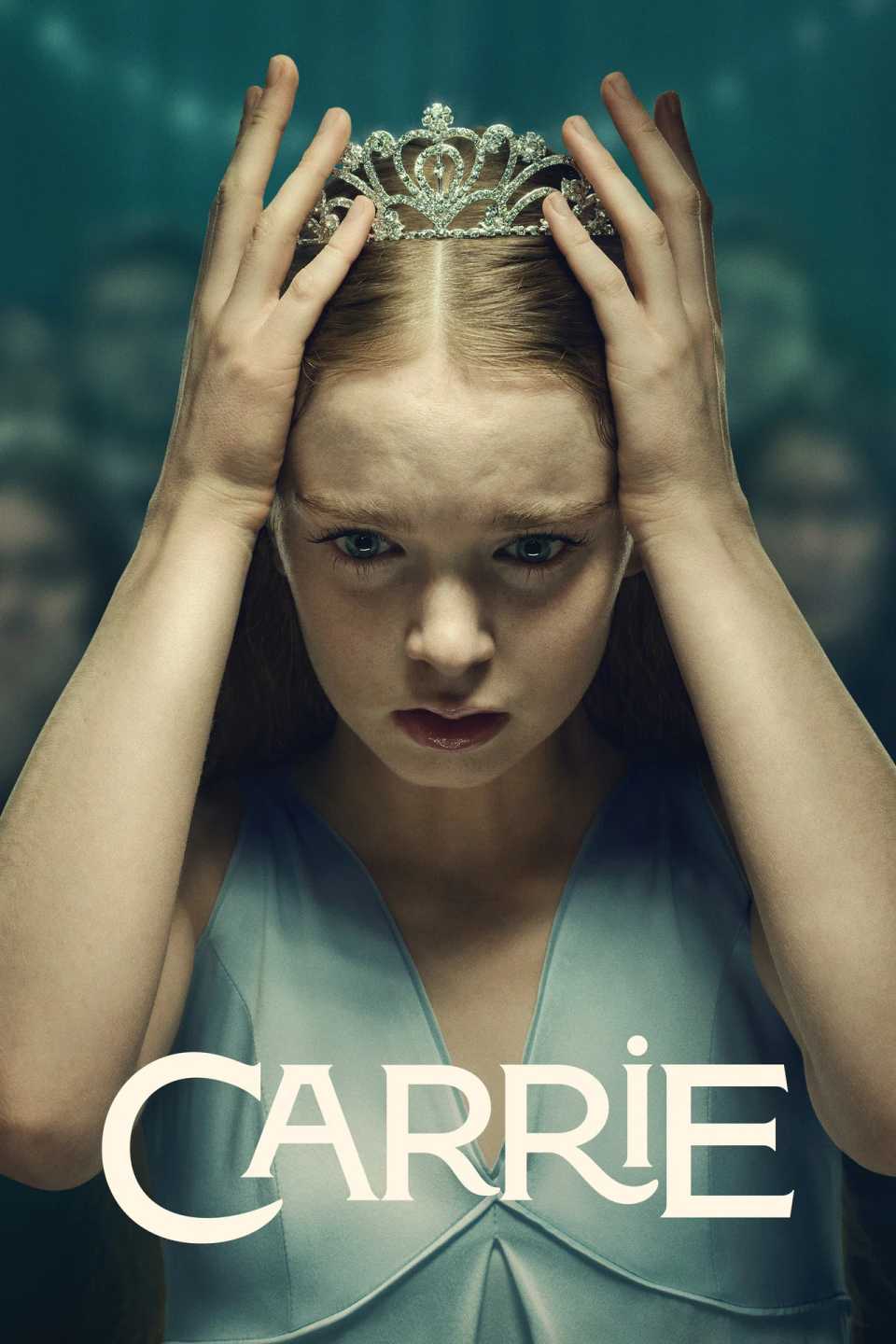
Carrie
Release Date 2026 - 2026-00-00
Network Prime Video
-

Summer H. Howell
Carrie White
-

Samantha Sloyan
Margaret White



 English (US) ·