
 59 minutes ago
5
Check these common culprits before you go to the pros.
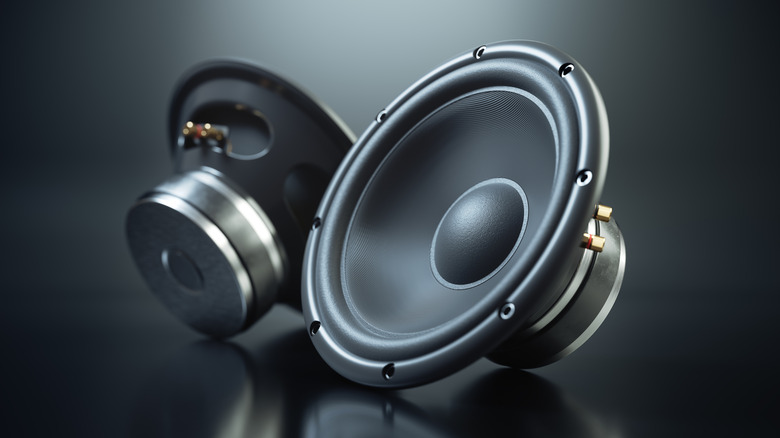
Grassetto/Getty Images
There you are, just singing along to your favorite tunes when you hear that awful noise. Rattling car speakers. Your mind probably wanders right to your bank account balance, because this is definitely going to cost you hundreds, if not thousands, of dollars for a new car audio system. Right?
Not so fast. Rattling car speakers, while extremely annoying, may not be the result of any catastrophic audio equipment failure or damage. It could actually be a simple fix. So, before you take your car to an audio specialist and have a new sound system installed, try to first determine the cause of the rattling. Then see if one of these easy solutions works for you.
What may be causing your car speakers to rattle
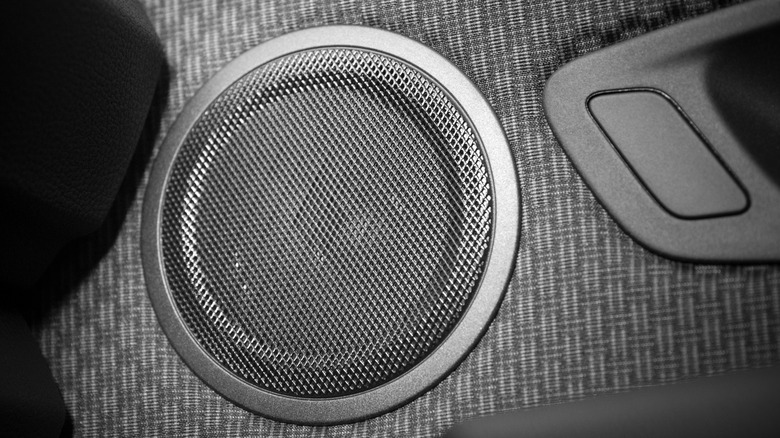
Deepblue4you/Getty Images
Obviously, if components within the speakers are damaged, rattling can occur. But the culprits are often simply power and volume. If your speakers are using more power than the speaker cone can handle, the result is typically rattling and distortion. But not enough power, usually caused by a weak amplifier, can also cause distortion.
As far as volume is concerned, you probably already know that the higher the volume (especially if there's lots of bass), the more likely your car speakers are going to rattle. The reason? Science. Bass frequencies use a lot of power, and that causes more movement in the cones inside the speakers. That movement can cause loose components in the speaker to move against each other. Heavy bass also makes your car's door panels vibrate, in which case it may not be your speakers vibrating at all. But it's not just booming bass that can cause rattling issues. High volume creates excess heat in the speaker's voice coil, resulting in rattle-like distortion.
Debris finding its way into the speakers can also cause rattling if it comes into contact with moving speaker parts. And the cabinet that holds the speaker within the door panels or rear decks often vibrates with the music if the surfaces are poorly dampened — this creates a rattling sound that many people think is coming from the speakers themselves.
The rattling, especially if it occurs even at low volumes, could also be something as simple as loose mounting hardware. When the screws come loose, as a result of either poor installation or road vibration, rattling is common. Check to see if there is space between the speaker and its mounting surface. If so, tightening the screws should help. Also, try pressing the speaker panel when you hear distortion. If the distortion stops when you press it, it's likely just loose mounting hardware or noise from the cabinet.
With all these possibilities, the next thing to do is try to eliminate some of the causes and diagnose the origin of the rattling so you can determine whether it can be fixed at home or needs to be seen by a professional.
Is the speaker just rattling or is it blown?
Mucky38/Shutterstock
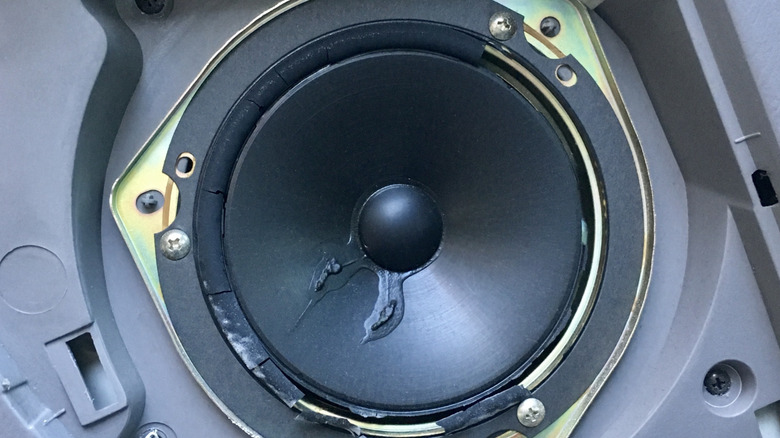
The first thing to focus on is finding out whether the speaker is simply rattling or if it's completely blown. If it's just rattling, it should be fixable. If it's blown, however, you're going to need a new speaker.
You can often tell if a speaker is blown simply by listening. For example, you'll hear distortion at any volume level, where rattling typically only happens at high volumes. Another thing to listen for is a missing frequency, like a lack of bass or no high frequency. This could be the result of a broken speaker.
If you determine that the speaker is not blown, it's time to start testing different tones and frequency ranges to identify the source of the rattling. Using test tones or the equalizer on your stereo's head unit, try out different frequency ranges to find the point where the rattling occurs. Rattling coming from low frequencies signals that the problem may involve bass-related components like subwoofers (if your vehicle has them) or bass response. If the rattling occurs during midrange frequencies, the culprit could be the door speakers. And if you notice the rattling when high frequencies are played, it might be smaller components like the tweeters.
Finally, use the eye and touch tests. Thoroughly check your speaker for any broken components; surrounds, voice coils and cones are typically the components that show visual damage. And if any of them are broken or damaged, it's time for a new speaker.
Troubleshooting a rattling car speaker
Benedek Alpar/Shutterstock
First, check the speaker wiring, especially if you've ever had work done on the speakers or have done any yourself. Sometimes the rattling can simply be reversed polarity, with the positive and negative terminals incorrectly connected. More often, however, wiring can become jarred loose from years of road vibration. You can test this by playing music and then lightly wiggling the speaker wires behind the head unit or where they come into the door. If the noise stops or gets worse when you move the wire, it's either a loose terminal or a break in the wire's insulation.
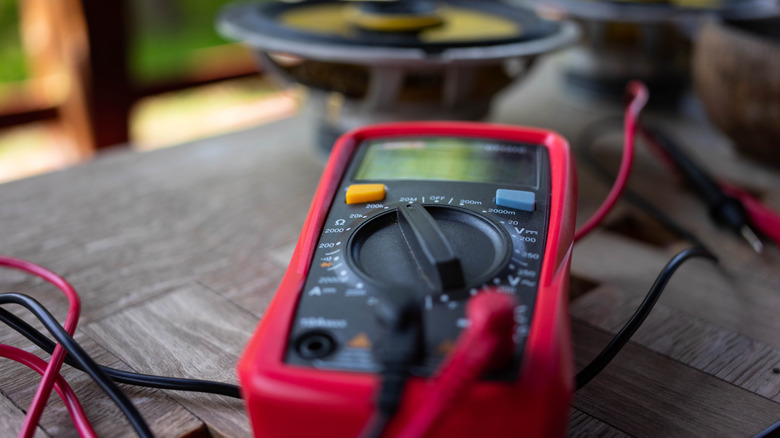
If you've diagnosed a power issue, there are a few fixes to try. If overpowering is the problem, start by reducing the gain on your amplifier and then slowly increasing it until you find the right balance. A multimeter can come in handy here, as it'll let you know whether you're going beyond the speakers' RMS power rating. If underpowering is the problem, you can either upgrade the amplifier or disconnect some speakers to cut down on the amp's load.
Test out your equalizer settings by resetting your EQ to zero across the board, then play music and gradually turn up the settings until you identify where the rattling begins. If you can find the frequency range where the rattling starts, you should be able to adjust your settings until the rattling stops.
If you think loose mounting hardware is the cause of the rattling, take off the speaker grilles and check to see whether any mounting screws are loose. Any trouble tightening them may require longer screws or new mounting holes. To minimize vibrations, you can also add a foam gasket between the mounting surface and the speaker.
Adding sound-deadening material like peel-and-stick butyl rubber mats with an aluminum foil backing to some of the flat metal surfaces on your car's door panels can also minimize resonance. Closed-cell foam decoupling sheets, weather stripping tape or foam speaker baffle rings placed around the speaker and along the panel edges also act as a cushion between vibrating pieces.
Ultimately, if these fixes don't help, there could be major damage to a speaker component, at which point replacement by a car audio specialist probably makes the most sense. But it's definitely worth giving these DIY fixes a shot before you drop big money on new speakers.





 English (US) ·