
 5 hours ago
3
5 hours ago
3
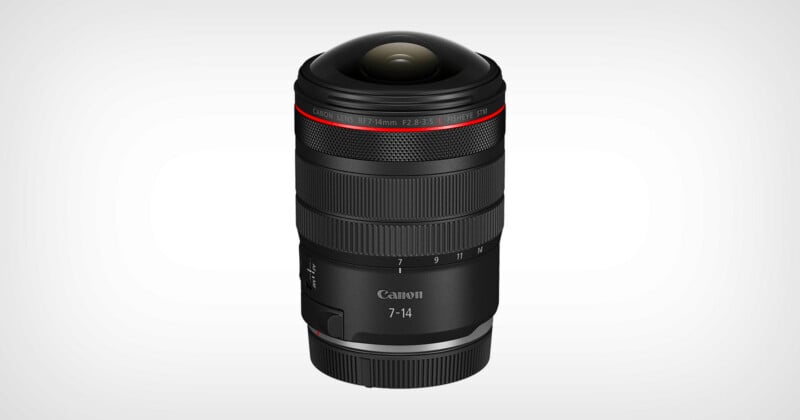
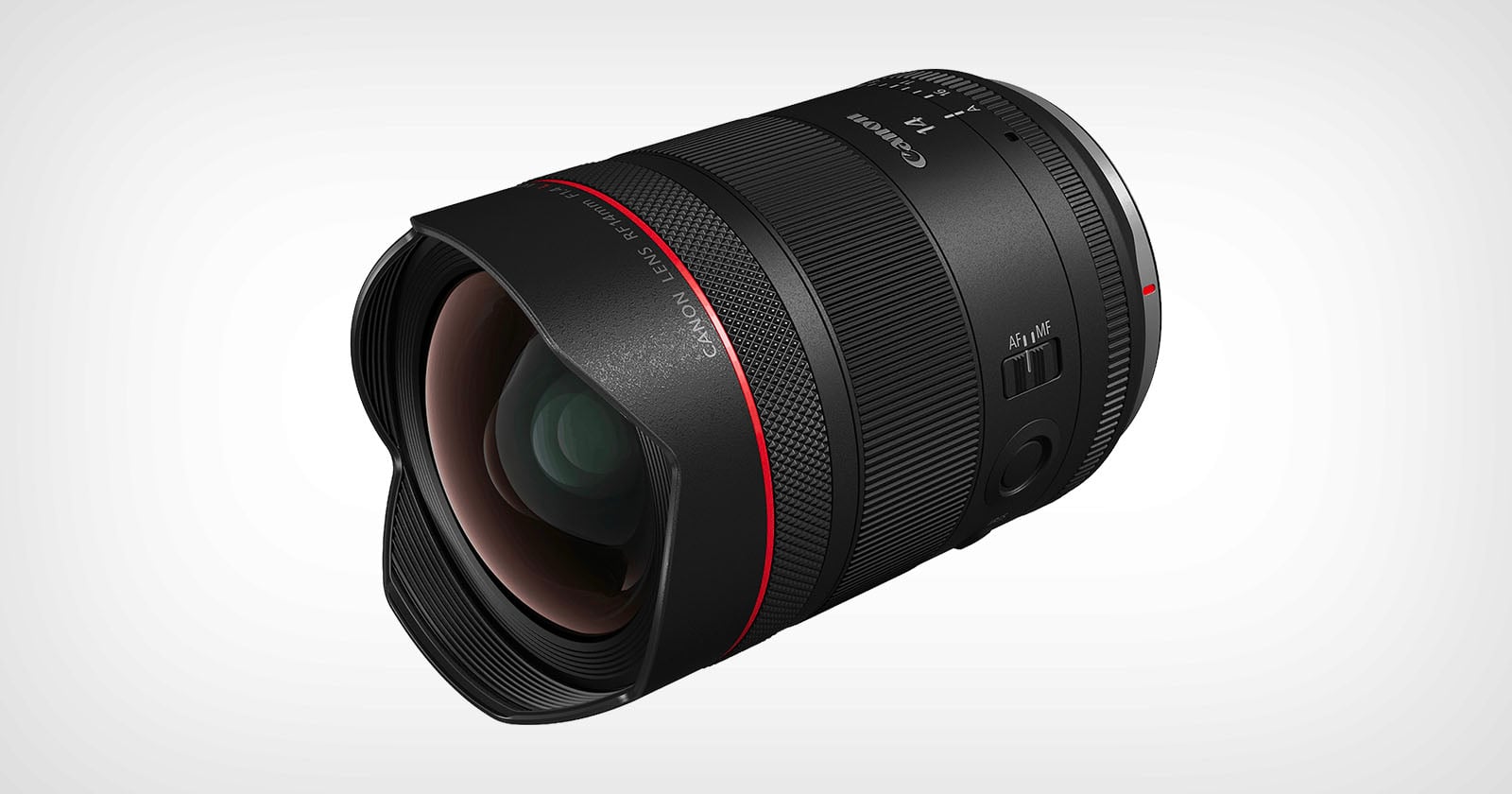
Canon has announced a groundbreaking new ultra-wide angle fisheye zoom lens, the RF 7-14mm f/2.8-3.5L Fisheye STM. This new lens is the first of its kind for the Canon RF mount and picks up the mantle from the legendary Canon EF 8-15mm f/4L USM.
The Canon RF 7-14mm f/2.8-3.5L STM is the world’s widest angle zoom lens with a 190° field of view, meaning it can see behind itself. The popular EF 8-15mm f/4L USM, which was a pioneering lens at its launch in 2010, delivers a 180° field of view. As if it needed another feather in its cap of technical achievements, the lens is also Canon’s brightest ultra-wide angle lens ever made.
With an even wider field of view, faster aperture, and modern optical technology, Canon believes its new fisheye zoom will be an exceptional choice for dynamic action, sports, and landscape photography and videography.
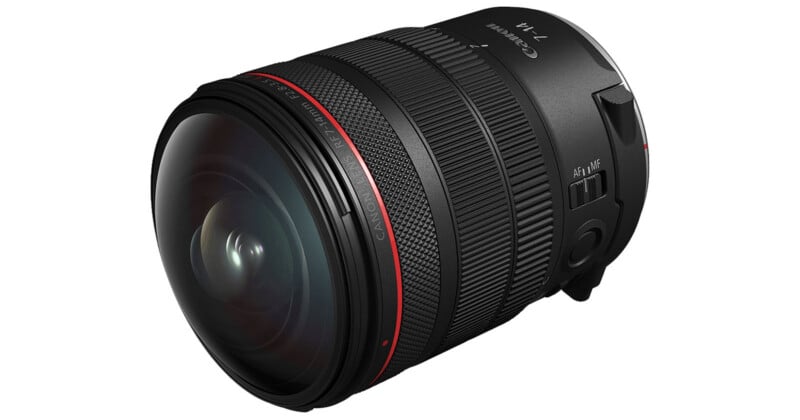 Canon RF 7-14mm f/2.8-3.5L Fisheye STM
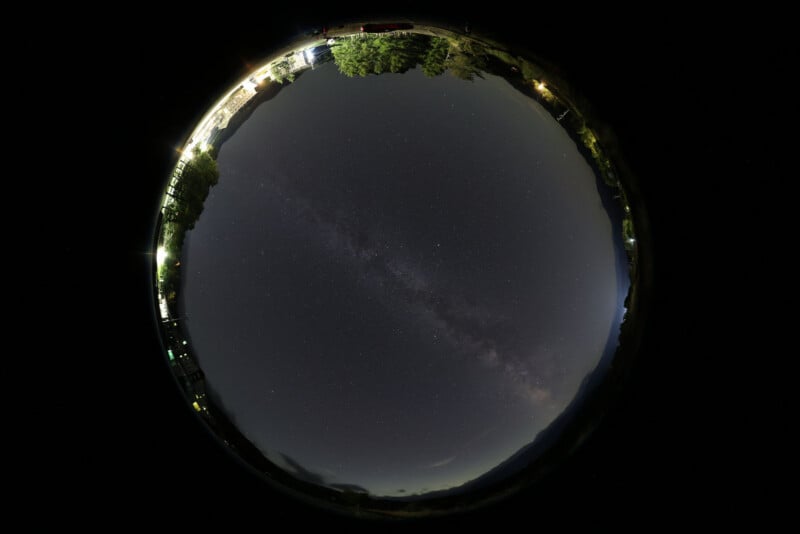
When used at 7mm, the lens delivers a 190° field of view and a circular fisheye picture. As the user zooms, the lens transforms into a diagonal 180° fisheye zoom. As for the variable aperture, the lens maintains its f/2.8 aperture only at 7mm. At 8mm, the lens slows to f/3.2, then reaches its slowest maximum aperture of f/3.5 at 11mm.
As expected, the lens has a sophisticated optical design. It features 16 elements arranged across 11 groups, including five ultra-low dispersion (UD) elements and a pair of aspherical glass elements. It features Canon’s Super Spectra Coating (SSC), Air Sphere Coating (ASC), and fluorine coating on the front element.
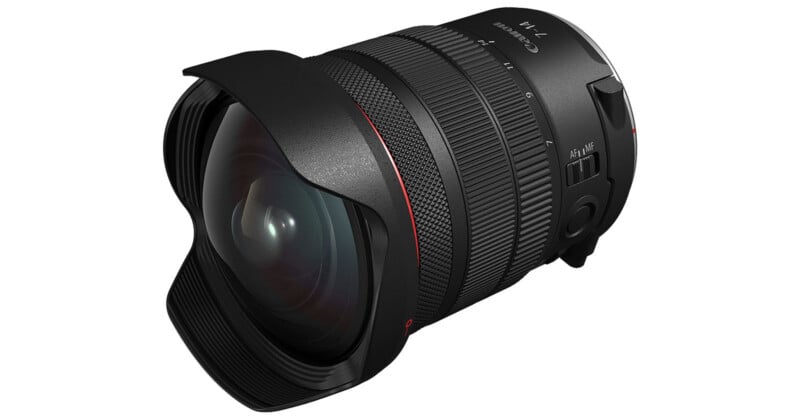
Although difficult to quantify, the new fisheye zoom lens also promises more realistic rendering than the EF 8-15mm f/4L lens. The new zoom lens offers equidistant projection, meaning that the image field projects evenly to the center, and the relative size of subjects in different portions of the frame and at various distances from the lens is accurately rendered. The older EF 8-15mm lens, on the other hand, projects slightly larger in the center. This may not matter much in most applications, but it does benefit performance in VR workflows.
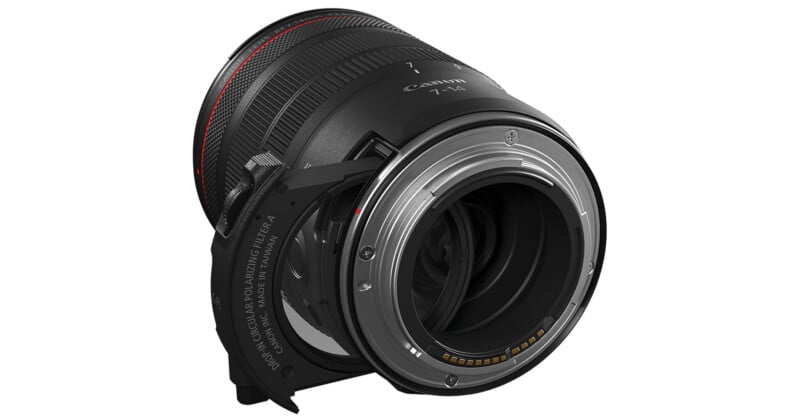
The internal zoom lens has a drop-in filter slot at its rear, which accepts the same drop-in filters as Canon’s Mount Adapter EF-EOS R. A clear drop-in filter ships with the lens and is functionally identical to Canon’s existing clear drop-in filter, though it lacks text on its edge. The drop-in filter is part of the lens’s optical path, so one should always be installed when shooting. Thanks to this drop-in filter holder, photographers and videographers can utilize circular polarizing and variable neutral density (ND) filters on the fisheye zoom lens. Given the shape of the lens, it is obvious why a front screw-in filter is not an option.
From a design perspective, the new RF 7-14mm f/2.8-3.5L Fisheye STM is quite similar in size to the EF 8-15mm f/4L Fisheye. The new lens is approximately 4.3 inches (109.4 millimeters) long, similar to the length of the EF 8-15mm f/4L Fisheye when used with a Canon EF-RF adapter. The lens has a max diameter of three inches (76.5 millimeters) and weighs 16.8 ounces (476 grams), less than the EF 8-15mm by over two ounces (64 grams).
The ultra wide-angle fisheye zoom lens features Canon’s leadscrew-type STM focusing system, promising quick, quiet, and accurate focusing for both photos and videos. The lens can focus as close as 5.9 inches (0.15 meters), resulting in a max magnification of 0.35x in the center of the image at 14mm. Canon notes that the lens has minimal focus breathing of just 0.4% at wide and 1.5% at tele.
Sample Images





Pricing and Availability
The Canon RF 7-14mm f/2.8-3.5L Fisheye STM will be available by the end of this month for a suggested retail price of $1,899.
Image credits: Canon






 English (US) ·