Can We Finally Agree That Dragon Age: The Veilguard Was Actually Terrific?
3 hours ago
4
Published Oct 22, 2026, 1:00 PM EDT
BioWare's swan song now leaves a grand legacy
Image: BioWare/EA
BioWare is officially closing down after three decades, EA announced Wednesday. By virtue of this fact, Dragon Age: The Veilguard, the 2024 action-RPG that was the center of much online discussion, is now the studio’s swansong. It shouldn’t be. By all rights, BioWare should’ve had the opportunity to see through its existing projects, including the Mass Effect game that was in development. But we so rarely have a hand in our own finality, so for BioWare, The Veilguard it is. At least it leaves behind one hell of a legacy.
That legacy is perhaps most succinctly memorialized by a former Veilguard writer, who shared in a post on Bluesky a quote from Rook, the game’s main character: “We will always be grateful for those whose stories brought us where we are today. And those whose stories will live on with us forever.
At almost every stage, Dragon Age: The Veilguard found itself the victim of a chimera comprising some of the gaming industry’s biggest woes. It was a victim of corporate interference — a classic case of business-minded executives thinking they know better than the creatives who actually make the thing. It was a victim of the warped online outrage cottage industry — another now-sadly classic case of incendiaries peddling bad-faith arguments for profit. And it was a victim of the current gaming landscape — an oversaturated market that’s harder to break into with every passing year, even off the back of a three-decade portfolio of landmark games.
Most damningly, Dragon Age: The Veilguard was subject to an extraordinarily tumultuous development cycle. As reported by Kotaku, BioWare internally cancelled an early prototype for the fourth Dragon Age game in 2017, before restarting development again in the following year. The studio infamously implemented live-service elements at EA’s behest, in an effort to generate recurring revenue a la sports games. (Every prior Dragon Age was a narrative-driven single-player game.) In 2021, Bloomberg reported that EA and BioWare pivoted hard, rebooting the project to remove all of those live-service elements. (This decision was reportedly inspired by the success of the EA-published Star Wars Jedi: Fallen Order, a narrative-driven single-player game.)
Image: BioWare/EA via Polygon
Pretty much dating back to its public reveal in 2022, The Veilguard (then known as Dragon Age: Dreadwolf) fielded one criticism or another. Some fans skewered the updated art style, which traded muddy photorealism for a cartoonish look reminiscent of Fortnite. Others were skeptical that an entire game could hinge on the so-called Dreadwolf — Solas, an elven mage from 2014’s Dragon Age: Inquisition whose complex worldview and arrogant demeanor divided fans.
But the most vile criticism ahead of release came at the introduction of Taash, a nonbinary Qunari (a Dragon Age race of jacked humanoids with devil horns), as one of The Veilguard’s recruitable party characters. I’m paraphrasing, sure, but the collective outcry from a subset of influencers could be summarized as: “This character is nonbinary, I’m mad and that should make you mad.” (Twitter introduced revenue sharing for viral posts in 2023.)
Some such critiques were disguised as claims that BioWare had strayed from its own lore bible; in the Dragon Age universe, Qunari culture strictly hews to conservative doctrine, and thus would not support a person coming out as nonbinary. But if those people actually played the game when it finally came out, they’d have discovered that Taash’s storyline explicitly grapples with that. (Fair play to Kotaku, which pointed out in a searing retrospective of EA’s mishandling of BioWare that those people were almost certainly never going to play The Veilguard in the first place.)
Image: BioWare/Electronic Arts via Polygon
Upon release, Dragon Age: The Veilguard received lukewarm reception. Reviews were solid if not amazing. (The Veilguard is currently sitting at an 82 on Metacritic for PlayStation 5, its most-reviewed version). Sales were less amazing, when measured against targets: Roughly 1.5 million played The Veilguard in its first two months — about half of EA’s expectations. And at that year’s Game Awards, it was ultimately almost completely snubbed despite checking many of the typical boxes for nominees.
Part of the muted reception could be attributed to the smear campaign against the game. But The Veilguard was also released in a historically stacked year of huge video games that severely minimized any chance of it breaking through: Astro Bot, Palworld, Metaphor ReFantazio, Final Fantasy 7 Rebirth, Dragon’s Dogma 2, Tactical Breach Wizards, The Legend of Zelda: Echoes of Wisdom, Hades 2’s early access, and Elden Ring’s DLC were all released in 2024. Not to mention Balatro devouring every second of every gamer’s free time back then. How in the world would a 65-hour middlingly reviewed RPG stand a chance?
So it’s remarkable that despite the entire deck stacked against it — despite the chaotic dev cycle, the short-sighted corporate meddling, the barely coherent public outrage, and the crowded release window — Dragon Age: The Veilguard was legitimately a very excellent game.
Image: BioWare/EA
I’m by no means a Dragon Age diehard: I dabbled with the first game, skipped the second, and made it 50 hours into Inquisition before realizing I had nearly another 50 left and bailed. But The Veilguard nevertheless felt like a natural reintroduction to the series. Despite not being steeped in Dragon Age canon, the game’s world and story are close enough to classic fantasy tropes that I could immediately understand the stakes. And the smooth action combat, which revolved around crafting builds out of three cooldown-based abilities, was much easier to get into than the turn-based toolbars of its predecessor. Yes, some critics pointed out that the combat system reeked of live-service game design, and it’s hard to disagree. But if I hadn’t known about The Veilguard’s development process, though, I would not have picked up on that.
Free sign-up
Get Polygon’s Wishlister newsletter
A weekly cheat sheet to what you’ll eventually love to play. No buying, no
commitment — just saving for later.
Dragon Age: The Veilguard also took a massive creative risk: It was notably not an open-world game — an extreme outlier for fantasy RPGs in a post-Skyrim world. Instead, its world featured about half a dozen regions you’d repeatedly return to and explore. Some pathways would be blocked, but you’d be able to double back and unblock them as you progressed, recruited companions, and unlocked more abilities, sort of like a Metroidvania by way of an RPG party. By the end of the game, The Veilguard’s series of locations felt like well-trod neighborhoods, way more familiar than the imposing expanse of an “if you see that mountain, you can walk to it” map. The Veilguard is yet one more case in point that tight, densely crafted environments can often be more enjoyable to explore than vast, repetitive open worlds.
Image: BioWare/EA
But the highest praise, as with all BioWare RPGs, must be reserved for its motley crew of main characters. It’s not just Rook, a snarky, rakish avatar who actually rocked a distinct personality (and who could claim the inimitable Erika Ishii as one of four vocal options). It’s also Emmerich, the uppity underworld scholar torn between devoting his existence to research or to friendship. And Lucanis, my sweet beloved Lucanis, the Italian vampire assassin so hesitant to take over the family business (the mafia). And Neve, the urbane mage investigator, or Davrin, the monster hunter who ends up caring for a baby griffon. All seven companions in the party were compelling and unforgettable, and all seven faced a moral crossroads with no “best” option at the end of their questline. The Veilguard was, if nothing else, a collection of intimate vignettes about a group of people who found each other amid incredible pressure and worked together against insurmountable odds to pull off a series of miracles.
Dragon Age: The Veilguard shouldn’t have been BioWare’s final game. If you haven’t played it yet, it’s worth taking the time to check it out — not just for purposes of playing a terrific action-RPG, but for seeing what this tremendously talented studio was able to create under relentless shitty circumstances, and for wondering what it could’ve made in a better world, one that keeps the suits out of the kitchen and lets the cooks cook.

 3 hours ago
4

 Image: BioWare/EA
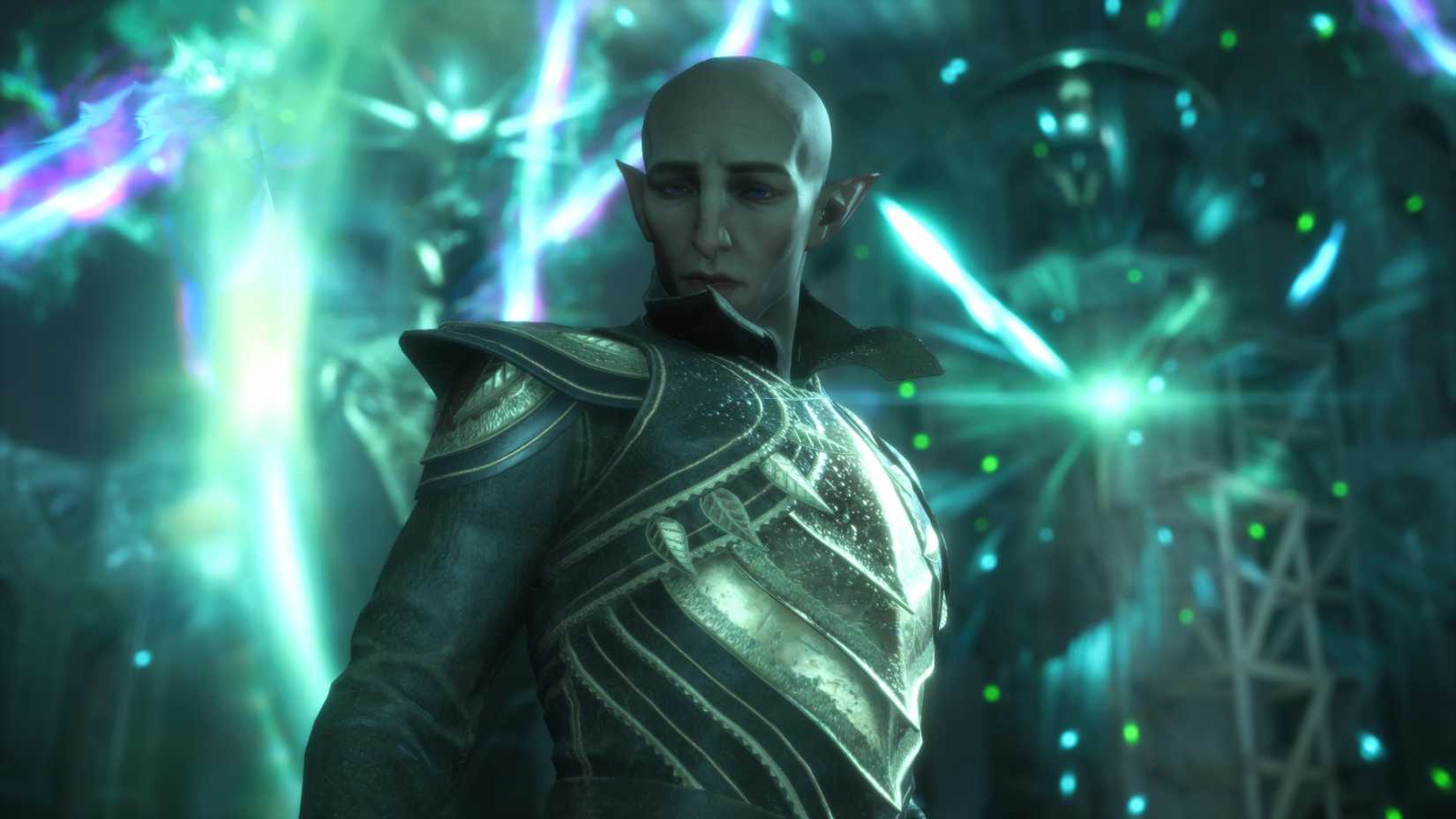 Image: BioWare/EA via Polygon
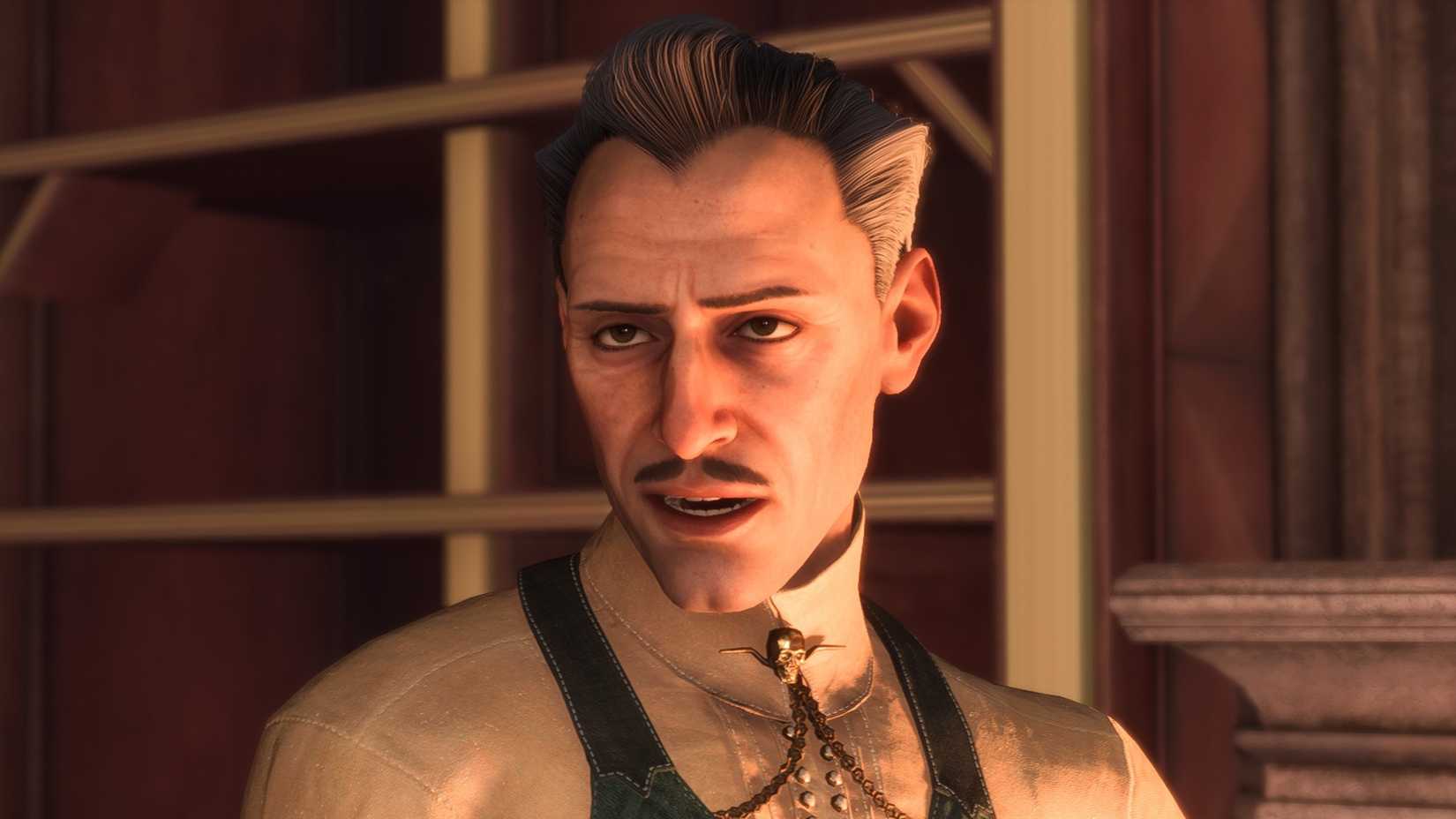 Image: BioWare/Electronic Arts via Polygon
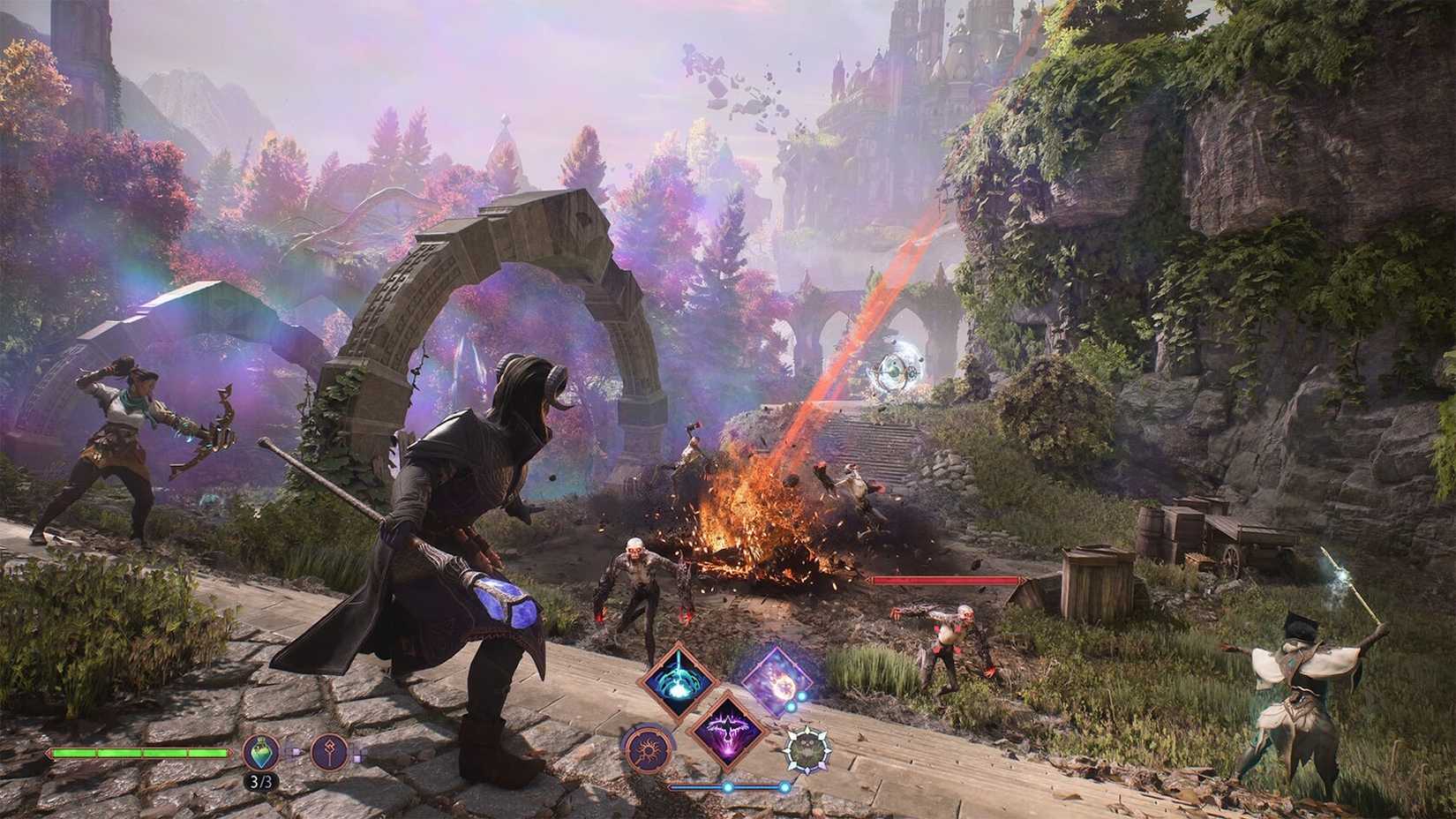 Image: BioWare/EA

 Image: BioWare/EA



 English (US) ·