

Published Sep 8, 2026, 9:00 PM EDT
Nicolas Ayala is a Senior Writer for the Comics team at ScreenRant, with over five years of experience writing about Superhero media, action movies, and TV shows.
One subtle detail from Blade Runner plays a much bigger role in Philip K. Dick’s original novel. Blade Runner is one of the most iconic and influential milestones in sci-fi history, as it pioneered the blueprint for the cyberpunk and neo-noir genres. Jordan Cronenweth’s rain-slicked cinematography and Douglas Trumbull's breathtaking physical special effects created a claustrophobic vision of the future that's still a masterclass in atmospheric world-building almost half a century later. To top it off, Harrison Ford’s world-weary portrayal of Deckard and Rutger Hauer’s legendary antagonistic role as Roy Beatty elevated Blade Runner way above a regular sci-fi movie.
Long before it was translated to the screen, Philip K. Dick’s 1968 novel Do Androids Dream of Electric Sheep? was a literary masterpiece that was radically ahead of its time. Dick ditched the spaceships and laser guns of mid-century science fiction to deliver a psychological and existential critique of consumerism and human identity. Do Androids Dream of Electric Sheep? accurately predicted the rise of pervasive corporate commercialism, the psychological isolation of social media-like technology, and the deep ethical dilemmas surrounding advanced artificial intelligence and synthetic life. Its depiction of a planet ravaged by climate disaster and radioactive fallout eerily foreshadowed contemporary anxieties regarding environmental damage.
Similarly to 2001: A Space Odyssey, T2: Judgment Day, and Alien, Blade Runner is the type of sci-fi Hollywood classic that's often described as unimprovable, and yet, it still left several important details on the cutting room floor.
Blade Runner's Replicant Animals Are A Major Plot Point In The Book
Androids Do In Fact Dream Of Electric Sheep

In Ridley Scott's Blade Runner, synthetic animals appear as subtle hints at the pervasive nature of the replicants, but they aren't explored in depth. The 1982 movie barely acknowledged their existence with the Tyrell Corporation’s owl, whose milky eyes glow with the same artificial luminescence seen in the human replicants. Later, when Deckard interrogates Zhora, she admits her exotic performer's snake is fake before Deckard uses a microscopic serial number found on a shed scale to trace the creature to an artificial animal maker.
In Philip K. Dick’s original novel, Do Androids Dream of Electric Sheep?, the extinction of natural wildlife transforms pet ownership into a societal obsession. In the 1968 book, a radioactive post-war fallout has wiped out most fauna, which in turn made the care of a living animal both a moral obligation and a marker of social prestige given their rarity. Rick Deckard's story is partly driven by the embarrassment of tending to a mechanical sheep on his roof, and his motivation for hunting androids is to earn enough bounty money to replace it with a prestigious organic animal.
Blade Runner's Adaptation Changes Were Carefully Chosen
Blade Runner Improves On Do Androids Dream of Electric Sheep?

Blade Runner streamlined Philip K. Dick’s sci-fi novel by skipping several prominent subplots. Director Ridley Scott and screenwriters Hampton Fancher and David Peoples excised the book's bizarre religious movement, Mercerism, along with the ubiquitous empathy boxes and "mood organs" that characters used to artificially regulate their emotions. Blade Runner also removed Deckard’s wife, Iran, in order to allow Deckard to be a solitary noir detective whose isolation makes his eventual romance with Rachael much more intense. Most importantly, the androids described in the novel struggle to feel and display empathy, whereas Blade Runner's Replicants yearn for life, best exemplified by Roy Batty’s iconic "tears in rain" monologue.
Blade Runner lets the constant rain and neon-drenched smog, as well as the replicants' indistinguishable appearance and behavior, do the heavy lifting to create the oppressive tone of the story. Notably, Blade Runner retains the Voigt-Kampff test's focus on animal cruelty, using questions about upside-down tortoises to measure involuntary emotional reactions. Some character changes also improved upon the novel; for instance, the lonely "chickenhead" J.R. Isidore was replaced with J.F. Sebastian, a brilliant but physically decaying genetic designer, with a tragic fate directly tied to the replicants he helped build.
Would you have liked Blade Runner to focus on Replicant animals?
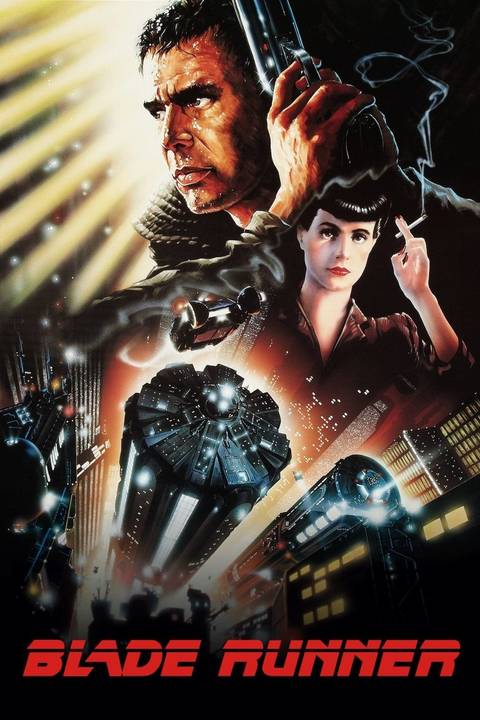
Release Date June 25, 1982
Runtime 118 minutes
Writers David Webb Peoples, Hampton Fancher, Philip K. Dick
Producers Michael Deeley, Run Run Shaw






 English (US) ·