
 MovieStillsDB
Blade Runner 2099 is simultaneously better than and a slight step down from the Ridley Scott-produced films that established a sci-fi high.

Published Nov 23, 2026, 9:00 AM EST
Grant Hermanns is a TV News Editor, Interview Host and Reviewer for ScreenRant, having joined the team in early 2021. He got his start in the industry with Moviepilot, followed by working at ComingSoon.net. When not indulging in his love of film/TV, Grant is making his way through his gaming backlog and exploring the world of Dungeons & Dragons with friends.
Despite being universally deemed one of the genre's best and being the first film adaptation of Phillip K. Dick's thought-provoking works, Ridley Scott's Blade Runner has proven something of an enigma in the sci-fi genre with how few titles it has to its name. Denis Villeneuve brought his own mix of gorgeous visual stylings and a compellingly slow-burn pacing to 2049 that, for me, proved more engaging than Scott's original, while the anime Black Lotus was an energetic enough ride.
Now, the franchise is back with its next chapter in Prime Video's Blade Runner 2099, and much like its direct film predecessor, it's clearly learned the right lessons in how to deliver something both fresh and familiar. In pushing the timeline to its farthest future point yet, creator/showrunner Silka Luisa offers a completely new vision of the Replicant-filled dystopia, shifting the power from humanity to the synthetic humans.
Even more fascinating is that Luisa simultaneously finds ways to make Blade Runner 2099 better than and not quite as good as its Scott-backed film predecessors. With more narrative room across its eight-episode run, she and her writing team take better advantage to flesh out the lore of the franchise and delve into the ever-blurred thematic line between Replicants and humans, but at the same time, a few choices just narrowly hold it back from being another 10/10 masterpiece.
Blade Runner 2099 Brilliantly Explores Cora & Olwen's Very Similar Journeys
Acting as a standalone story in the series, Blade Runner 2099 picks up in a version of Los Angeles in which the Replicants have successfully overthrown humanity and are similarly exerting their power across the country. Humanity now lives as second-class citizens in the California hub, while many Replicants have taken to working as the eponymous police officer, albeit now working to put down any kind of uprising.
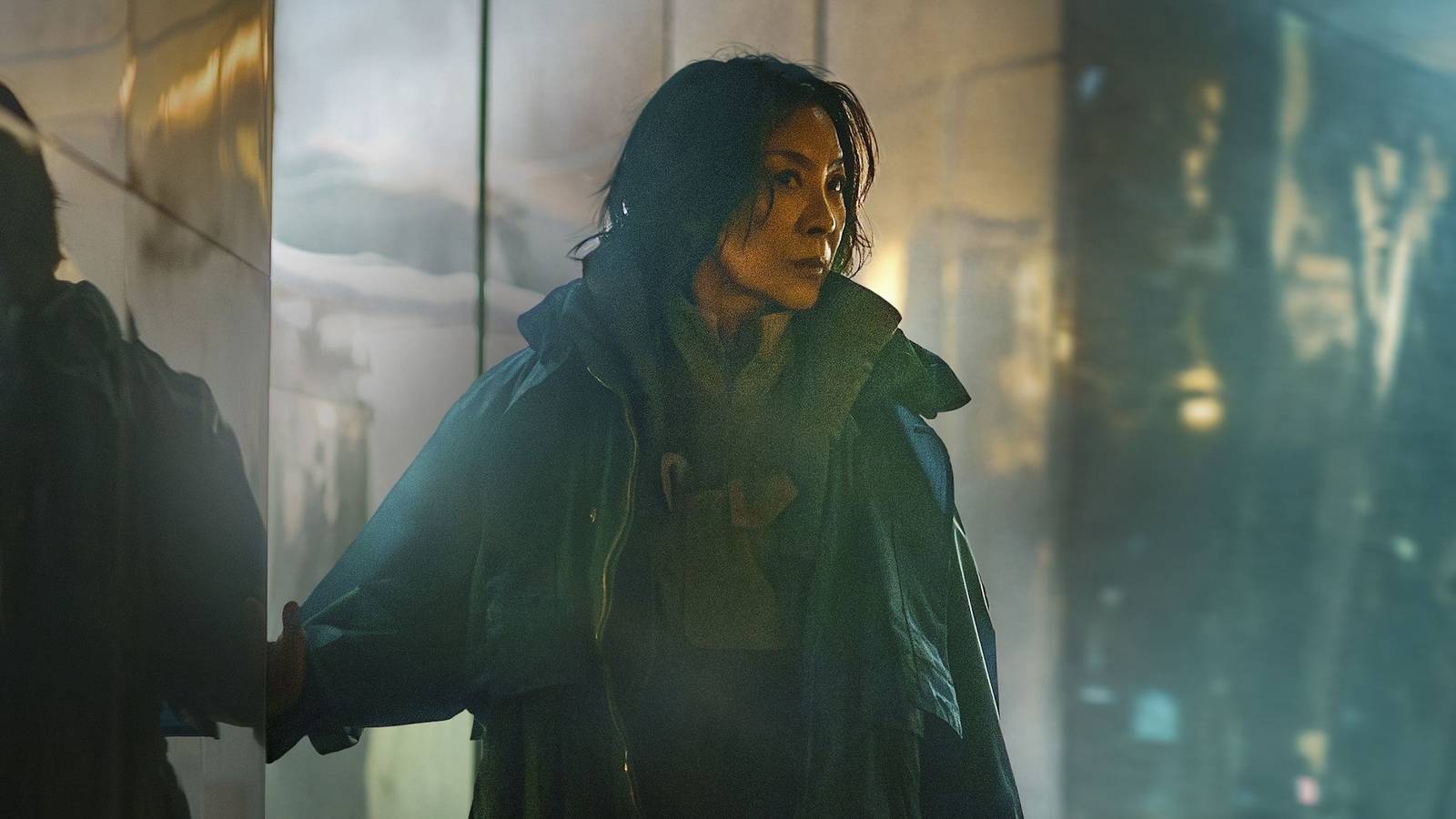
The series quickly turns its focus to Hunter Schafer's Cora, a young woman who has been running from Blade Runners her whole life while trying to protect her ill brother, Elias. As the walls start to close in, Cora is offered a way out of the city in exchange for acquiring something from the LAPD evidence, requiring her to pretend to be the very thing she's feared her whole life. When she becomes partnered with Michelle Yeoh's Olwen, a Replicant nearing the end of her life, Cora is put to the ultimate test as she has to help hunt down a rogue group of Replicants.
...Luisa and the rest of Blade Runner 2099's writers find a new angle to explore the blurred line between where humanity and the concept of a soul begin and end.
One thing that Blade Runner 2099 immediately does differently compared to its predecessor films is give a more unique reasoning for its central characters having a somewhat cold personality for much of the show's run. Harrison Ford's Deckard certainly had his charismatic moments in Scott's original film, but was still generally a throwback to classic noir detectives in that he proved a stoic figure for much of the film. Ryan Gosling's K, meanwhile, being a Replicant in 2049, made his evolution into more human territory a compelling one to watch.
For Olwen and Cora, the pair may have seemingly different motivations and goals, but Luisa and her team find intriguing ways to actually make both journeys two sides of the same coin. Yeoh's character is fascinating in being torn between the logic and reason of her Replicant programming and impending death, and the genuine feelings she has developed for one of the rogue Replicants and fears of mortality.
Cora, meanwhile, is already a largely shut-off and skittish individual, and as she starts having to pretend to be a Blade Runner, there's an intrigue to seeing the struggle between losing her humanity and trying to hold onto it. As the stakes rise in the back half of the series, and secrets for both characters come to light, Luisa and the rest of Blade Runner 2099's writers find a new angle to explore the blurred line between where humanity and the concept of a soul begin and end.
That being said, while Yeoh does a fantastic job of finding this balance in her performance, the same can't quite be said for Schafer as Cora. It's not to say the Euphoria breakout is lackluster in her work, as there are so many moments in which she delivers a deeply moving performance as she grapples with the demons of her past. But for someone who's meant to be faking their way through being a Blade Runner, she's so often displaying bouts of emotion that it's hard to believe a seasoned Runner like Olwen can't immediately clock her as human.
Blade Runner's Lore Gets A Few Intriguing Updates Without Upending Any Canon

Another thing that proves a real highlight for Blade Runner 2099 is that by moving far ahead in the franchise's timeline, Luisa and her team get to avoid any narrative hurdles that come from dealing with canon. A mild spoiler, but no mentions are made to Deckard, Rachael, or K, and that works just fine as it avoids offering any underwhelming explanations of character fates after 2049's more open-ended conclusion.
Additionally, while Villeneuve's 2017 sequel took to expanding the world of Blade Runner a bit with the irradiated Las Vegas, Prime Video's series takes things even further with a journey across the border into Mexico. Where Vegas served as a cautionary tale of war in the same vein as the Fallout games and series, Mexico taps into the environmental destruction humanity has waged on Earth, something that makes the efforts for off-world colonization all the more impactful in hindsight.
The Series Brings The Same Gorgeous Visual Palette & Stylish Soundtrack As The Blade Runner Films
Beyond the thoughtful explorations of sentience and morality, one of the biggest things Blade Runner 2099 had to nail to live up to the films was the more technical elements of its direction, visual effects, and soundtrack, and it thankfully almost does so for all of them. The directorial team of Jonathan Van Tulleken, Ariel Kleiman, Marcela Said and Karena Evans find a fascinating mixture of the rainy gloom of Scott and Villeneuve's movies and a sun-baked palette that amplifies the exhilarating and suffocating tension.
One area where the show's direction does somewhat underwhelm is in many of Blade Runner 2099's action sequences. The actual stunts and choreography are all clearly well put together, and should have been more thrilling to watch, but between an overuse of shaky cam and choppy editing in certain fight sequences, I couldn't help but feel taken out just trying to keep track of what was happening.
...it's not all perfect, as there are moments in which it's apparent less CGI budget was allocated to them in a distracting fashion.
As for the show's visual effects, there is an intriguing mixture of CGI and practical sets and locations to bring Blade Runner 2099's dystopian future to life. One set piece in particular, involving an iconic location from the previous films, utilizes some breathtaking effects to pull it off, while also featuring a sneaky Easter egg to the 1982 original. However, it's not all perfect, as there are moments in which it's apparent less CGI budget was allocated to them in a distracting fashion.
One underlying element that remains consistently fantastic throughout Blade Runner 2099 is the show's score, composed by Grammy and Emmy nominee Leopold Ross. Hewing closer to Vangelis' score from the original film than Benjamin Wallfisch and Hans Zimmer's for 2049, Ross brings an enthralling mixture of orchestral sounds akin to some of the noir genre's all-time classics and the electronic synthesizers of its cyberpunk setting.
Blade Runner 2099's Ending Is One Of Its Trickier Stumbles

When it comes to the Blade Runner franchise, the film's endings are notorious for leaving viewers split on character choices and twists, establishing very different fates for certain characters. Unfortunately, 2099 continues this underwhelming trend in going for what, on paper, seems like the neatest ending yet, but couldn't be any messier.
Without giving away specifics, the show's finale, which Luisa has described as being a planned close-end note, sends certain characters down a path that they shouldn't return from, morally or physically. But with the last-minute appearance of a deus ex machina, and no clear explanation as to how others go on to end up in the places we see, Blade Runner 2099's ending feels like it can't decide between being a happy one and an ominous one in the vein of its predecessors.
Despite having a few stumbles, though, it's hard to deny just how fantastic Blade Runner 2099 otherwise is. The show's exploration of Replicants' fears of death and efforts to avoid it feels even more compelling than the broad debates about personhood from the movies, while the cat-and-mouse game of Cora and Olwen's partnership gives the proceedings a much more propulsive pace that is hard to pull away from.
Blade Runner 2099 begins streaming November 25 on Prime Video.

Release Date November 23, 2026
Network Prime Video
Episodes 8
Pros & Cons
- The pacing is wonderfully suffocating in a way that keeps you hooked through all eight episodes.
- Many of the show's visuals are astonishing, including the destruction of an iconic location.
- Leopold Ross' score is a stellar mix of noir-like jazz and electronic synth.
- A few VFX shots are distractingly lower-quality compared to the rest of the series.
- The ending feels a little too neat for a Blade Runner story.





 English (US) ·