
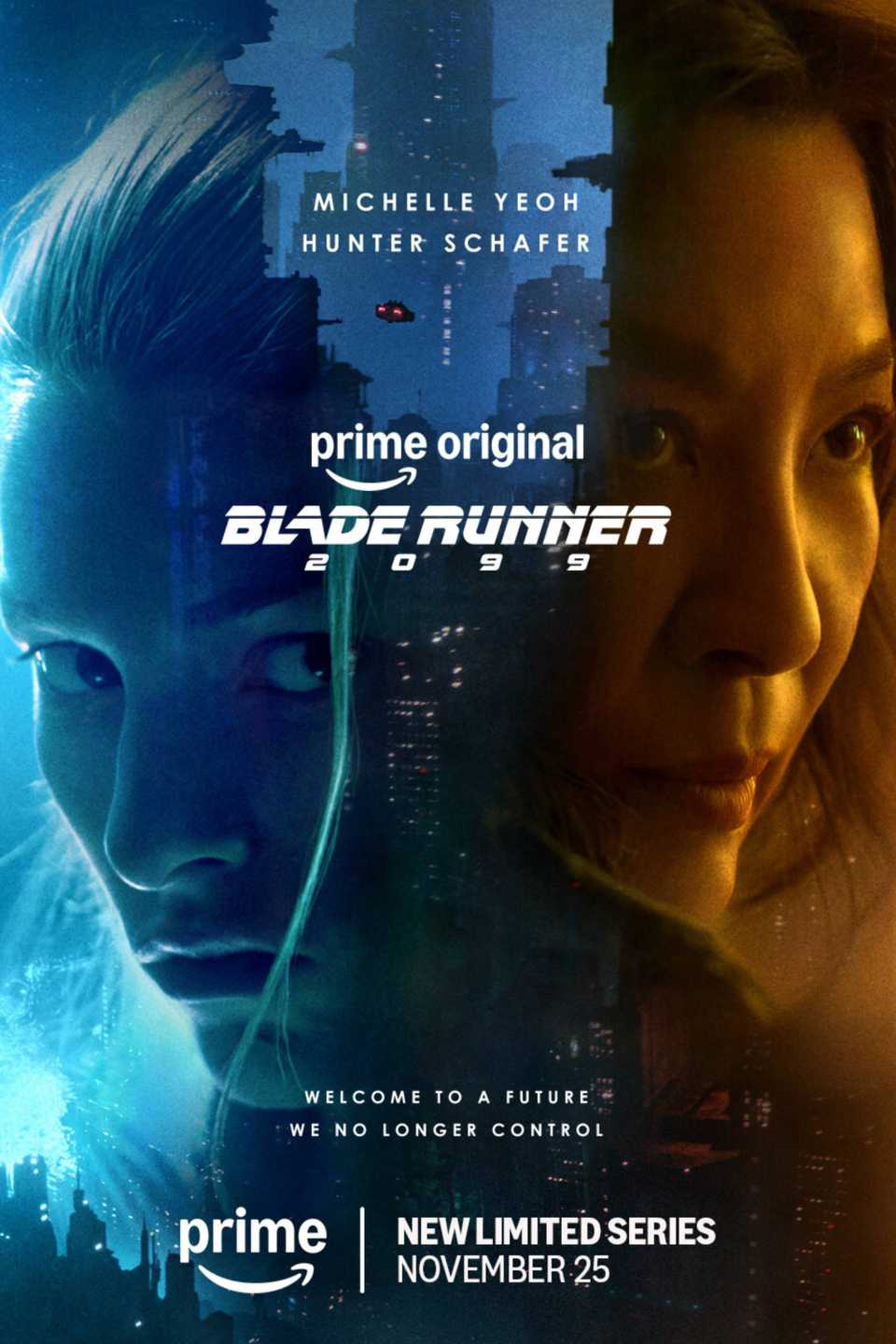
After a long wait, Blade Runner 2099 is nearly on our doorsteps! The sequel series that follows up 50 years after Blade Runner 2049 takes us into a completely new dystopian Los Angeles. Now, the titular Blade Runners aren't humans hunting down rogue replicants; the replicants have taken control, and now humans have become second-class citizens. The Prime Video series focuses on Cora (Hunter Schafer), a human hiding undercover as a replicant Blade Runner alongside her partner Olwen (Michelle Yeoh), who is in the last days of her life cycle. As a mystery slowly unfolds, Cora's secret becomes harder to keep, and when the two Blade Runners finally unearth the truth at the heart of the show, the line between human and replicant becomes fully blurred.
Collider spoke with Blade Runner 2099 executive producers and co-founders of Alcon Entertainment Andrew Kosove and Broderick Johnson about what it takes to bring a property like Blade Runner to the small screen and the hard work that goes into the practical sets made for the show. Revealing the challenges behind the adaptation and the flexibility that comes with expanding a story to eight episodes, Kosove and Johnson also get into collaborating with Ridley Scott and working with creator/showrunner Silka Luisa on this new vision of the beloved sci-fi franchise.
'Blade Runner 2099' Found Its Aesthetic in a "Pre-IBM" Universe
"You're staying with the noir aspect of the aesthetic, but this is a new version of that."
 Image via Prime Video
This show is absolutely gorgeous; I think the look of this show is so retro, and it really, really helps you lean into the tone of this series. Can you talk about why you guys made that decision to lean further into the vibe of the original films and the retro feel as opposed to modernizing it?
ANDREW KOSOVE: I think that Blade Runner has established a pretty iconic aesthetic that one wants to both be original with but honor certain aspects that are sort of core to the aesthetic. So, for example, in the show, we're very much noir, as you know, but we're sunshine noir this time. So, again, you're staying with the noir aspect of the aesthetic, but this is a new version of that.
But on the other hand, one thing about Blade Runner is Blade Runner is a fundamentally tactile, analog world, because it is noir, and that's something we wouldn't change. In other words, we'll never have Blade Runner be a digital universe. This is not an Apple universe; this is a pre-IBM universe, so to speak. In the show, we're very analog, like both the movies were, so we had to balance that out.
And Paul Inglis, who was the production designer on the show, who was our supervising art director on 2049, worked with Dennis Gassner and won the Academy Award on that. Paul is so knowledgeable about the history of Blade Runner, so he was kind of the perfect person to work with Silka to find that balance that you're talking about.
Broderick Johnson and Andrew Kosove on the Importance of Practical Sets for 'Blade Runner 2099'
"...we have to do the real thing for you, otherwise it doesn't work."
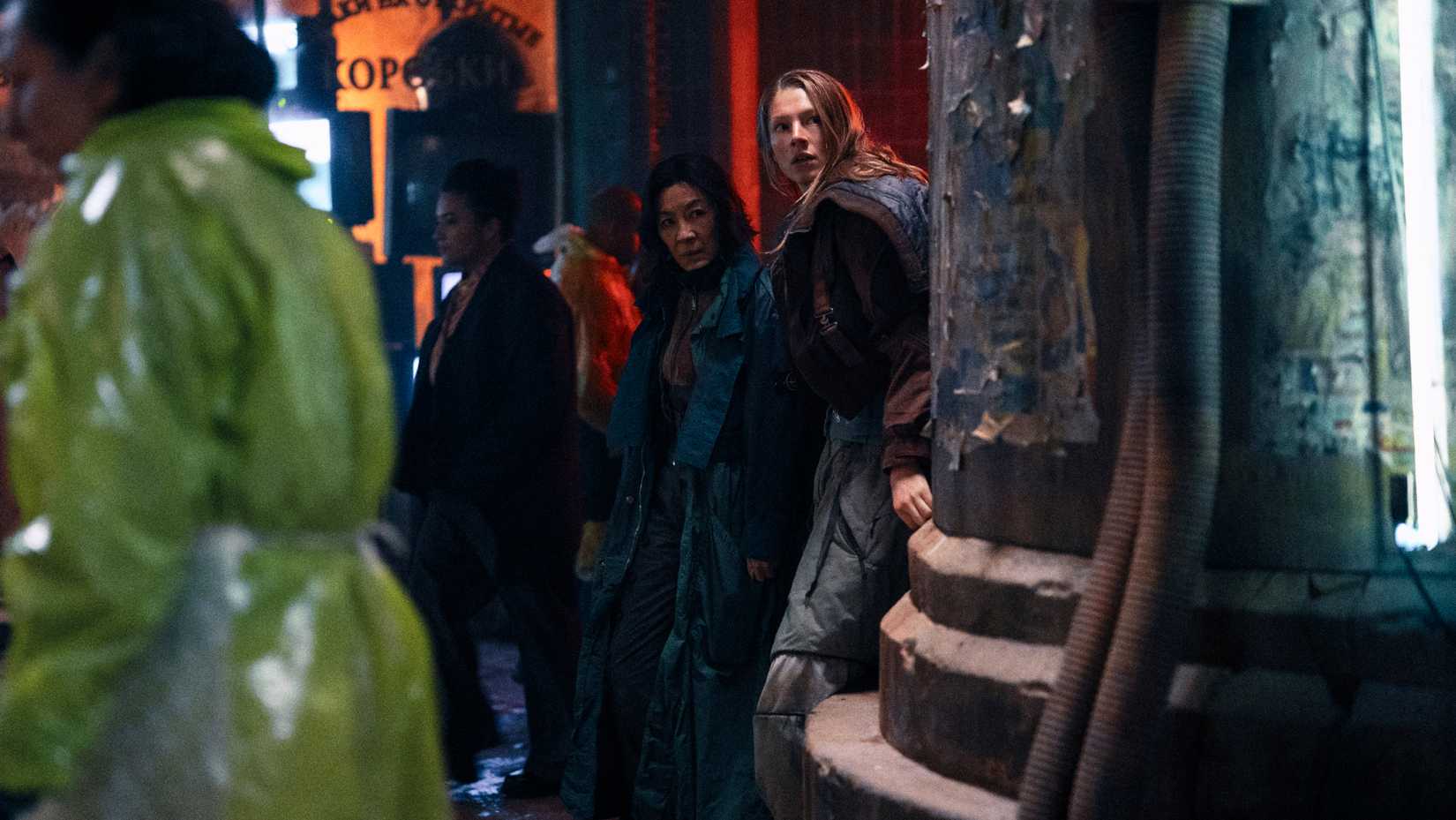 Image via Prime Video
I wanted to talk a little bit about that production design because it is absolutely stunning in this show. I think one of my favorite scenes is when they go to Mexico. I thought the set of that was just beautiful; I wanted to walk around in that world. Can you talk a little bit about how much work goes into that? Because if I'm hearing you right, it sounds like these were mostly practical sets that we were standing on.
BRODERICK JOHNSON: A lot of it is practical, whether it be actual locations that you enhance. I mean, obviously there's quite a bit of visual effects to create this massive world, but it is always grounded in something real. We had a massive stage built for a lot of these locations so that when the actors walk in — it's funny, you should talk to them — you know, they feel like they're in a real place. It really creates an environment where they can do their work more effectively. And there were a lot of actual locations that we went to, whether it be in Prague or Barcelona, and we had some locations in Germany. We had a pretty extensive shooting schedule on it.
KOSOVE: What we have almost none of in the show and had almost none of it in the movies is green screen.
JOHNSON: Or virtual sets.
KOSOVE: And our partners at Amazon were wonderfully supportive. This kind of show has to be done practically, and that requires more time and more expense. But in order to get the look that you like so much, we have to do the real thing for you; otherwise it doesn't work.
Yeah, I think it really was effective so I think that was a good choice.
JOHNSON: Thank you.
KOSOVE: Oh, thank you, and so gratifying to hear.
Kosove Reveals the Most Daunting Part of Creating '2099'
"I think the core of it is in the story..."
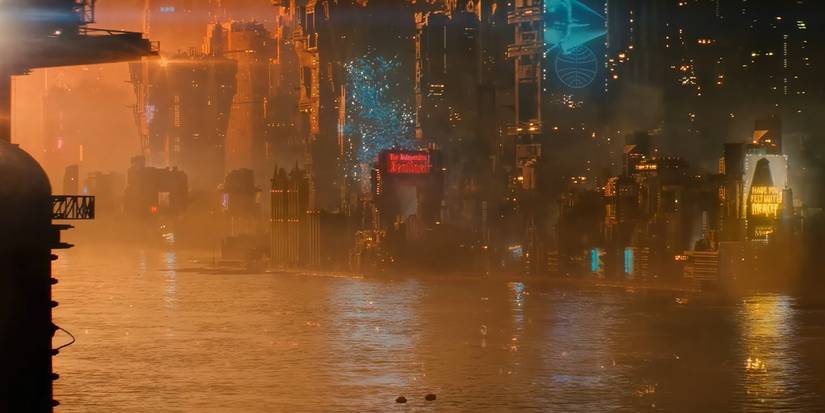 Image via Prime Video
Going into the story, what was the most daunting part of formulating 2099's world? Because obviously it's 50 years in the future after 2049 and things are going to look different, the world is going to have changed. What do you think was the biggest challenge for you guys personally?
KOSOVE: Well, I think the core of it is in the story, right, which is that the replicants have begun to rehabilitate the planet as they've taken over and rehabilitated Los Angeles, specifically. So once you have that story idea, the design comes from that. What does that look like? What is that process of rehabilitating the environment?
A lot of the decisions, which you got to see, come from that. So if you have the towers that are pulling in the dirty air, for example, that we established at the beginning of the show, or the sunshine coming through the clouds, things of that nature, they came from the story idea that Silka came up with.
Johnson Reveals Ridley Scott's Involvement in 'Blade Runner 2099'
"...he's very respectful of the artists who are on the front lines..."
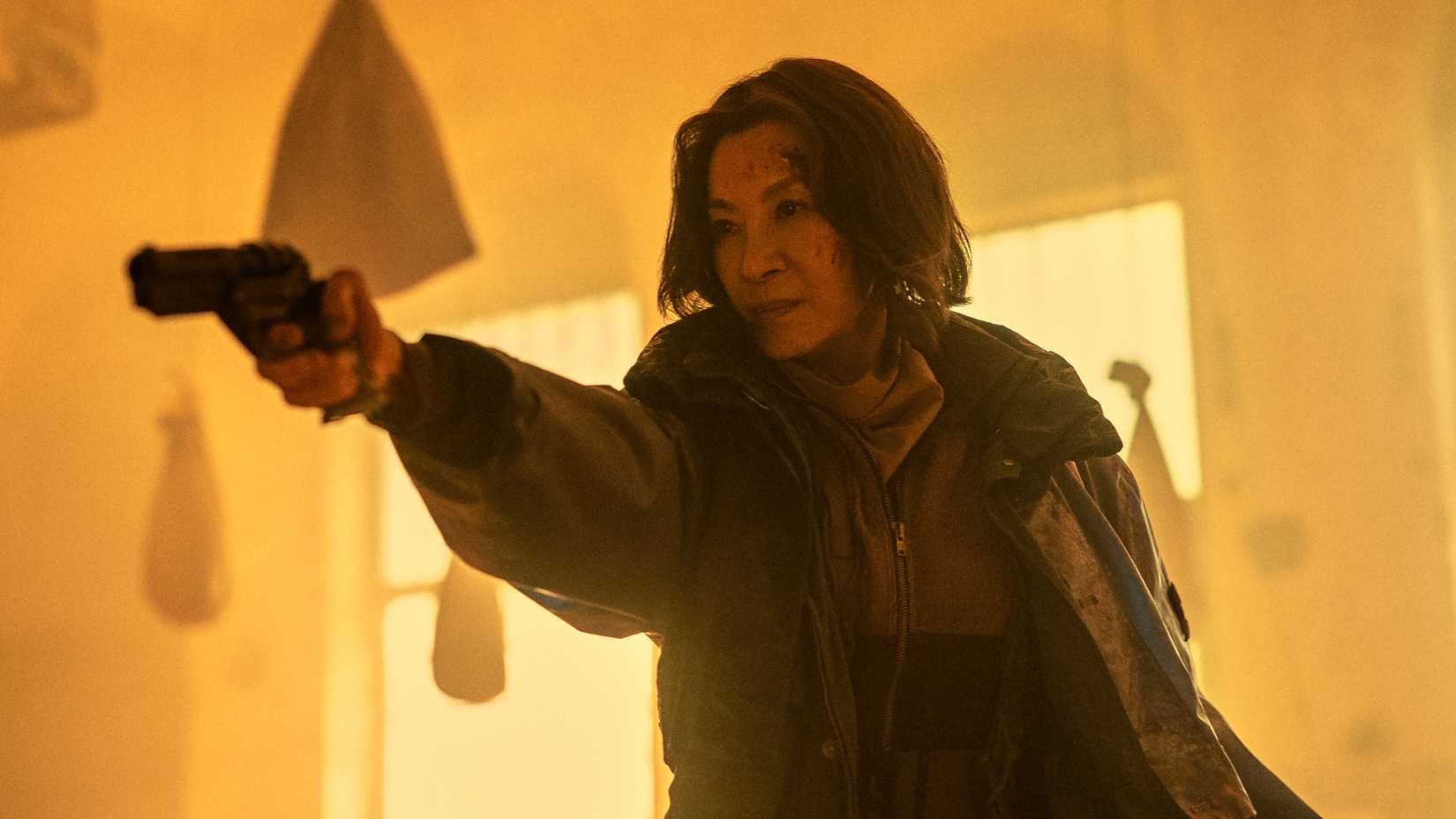 Image via Prime Video
Knowing that Ridley Scott is involved in the production of the series in some way, how much input did he give into the process of making the show? And what was his reaction, if you can share it, to the final product?
JOHNSON: We've worked with Ridley now for upwards of 15 years from when we first acquired the IP, so we're very used to collaborating with him. He's always there as a bit of a guiding star, but he's very respectful of the artists who are on the front lines of making whatever particular thing, whether it was Denis in 2049 or whether it was Silka in this. He was involved in the early beating out of the story, and what year was it going to take place in, and how far to push certain things. He was certainly involved in editorial with notes on cuts and whatnot, and recently gave us some comments on sound design. So, I mean, he's always there.
Nice to know that he's looming overhead.
KOSOVE: Oh, absolutely, he's always looming, you can be sure of that.
Kosove Gets Into What Makes a Good Sci-Fi Story
"I think it's one of the great aspects of this show that we're really hoping audiences embrace..."
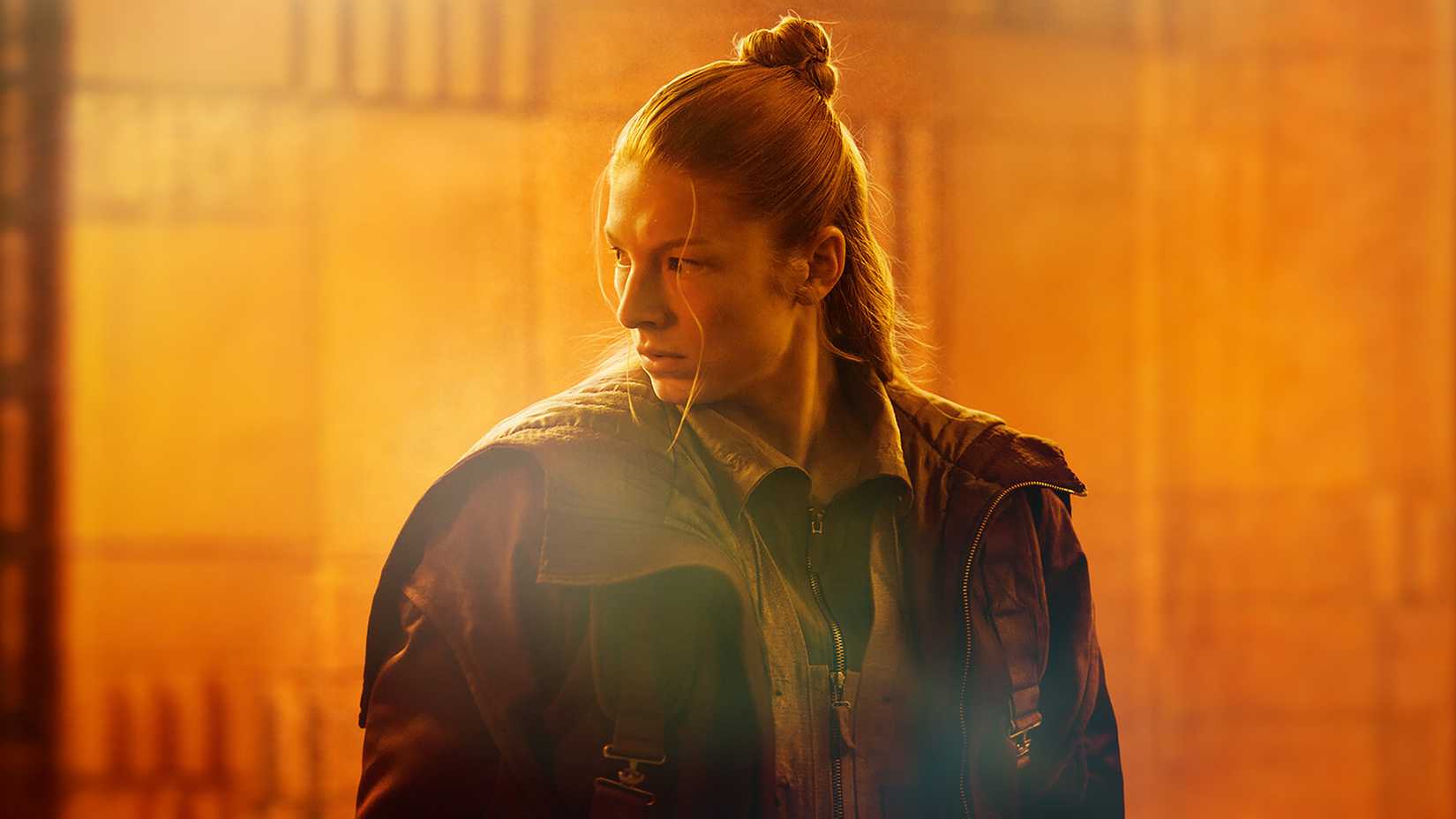 Image via Prime Video
At the time that Ridley made the first movie, the world that he was in then and the world that we're in now is very, very different. Obviously, the story is about robots and technology, and I can't not think about AI advancing at the pace that it is going at to the point where oftentimes today we have a hard time telling the difference between what is human-made and what is computer-made. Was that consciously in the back of your minds when it comes to telling a story like this, where these two characters are sort of learning to understand the other side of this world that they don't understand?
KOSOVE: Yeah, I think it's one of the great aspects of this show that we're really hoping audiences embrace, which is by doing this in long-form on TV — and this is a bit of a pit stop for us because we think Blade Runner is a theatrical property at its core — but we wanted to do something on TV, and we specifically wanted to do it with our friends at Amazon because we've done The Expanse together, which has been very successful. The benefit of long-form storytelling is that you can delve into characters and ideas in more depth than a two-hour movie.
So, precisely what you bring up, which is, here you have these two people: one that's an organically created life and the other is an artificially created life, but they are both sentient beings, and how those two beings find commonality among their differences. You know, someone once said it to us, but I think it's a common phrase; good science fiction isn't about the future — it's about today. And what we hope is that people will relate to this show, because a lot of the issues that it explores are particularly relevant today, and that's why we were so taken by Silka's idea originally.
Blade Runner 2099 premieres November 25 on Prime Video.
Release Date 2026 - 2026-00-00
Network Prime Video
Showrunner Silka Luisa
Directors Jonathan van Tulleken
Writers Silka Luisa, Ryan Willison, Claire Kiechel, Kirsa Rein, Tom Spezialy






 English (US) ·