
 3 weeks ago
36
3 weeks ago
36
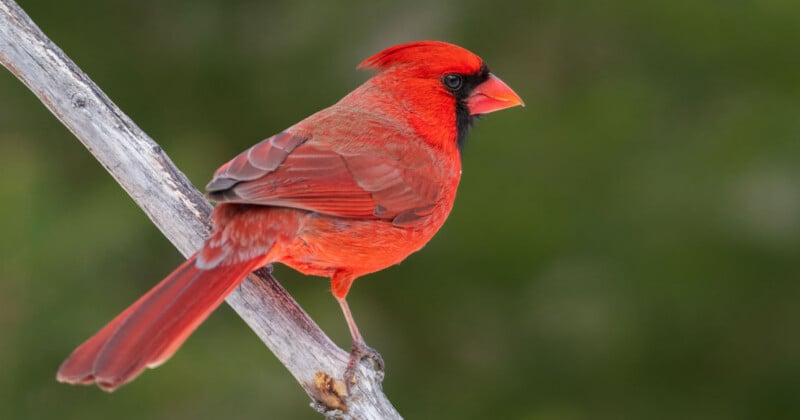
Newly published research shows that birding may have dramatic benefits for people’s neurological health as they age, and there’s good reason to believe the same benefits extend to an adjacent, popular hobby: bird photography.
As NBC News reports, the newly published Canadian study, “The tuned cortex: Convergent expertise-related structural and functional remodeling across the adult lifespan,” showed that the brains of expert, longtime birders showed more density in regions of the brain related to attention and perception. Scientists believe there may be a link between tissue density in these brain areas and increased communication between neurons.
“Our brains are very malleable,” lead study author Erik Wing says.
As people learn new skills, neuroplasticity in the brain increases, which directly correlates with a person’s ability to remain cognitively flexible and mentally healthy.
The research team wanted to focus specifically on birders because observing and identifying birds in the wild requires a unique blend of cognitive skills. In the case of birding experts selected through a performance-based screening process, brain regions related to attention and perception “showed structural modification,” and these same regions were “selectively engaged to support identification in challenging circumstances.”

The study’s results also showed that engaged birding practices may help mitigate the typical age-related decline in related regions of the brain.
While the study stops short of proving that birding prevents cognitive decline, there is already strong evidence that it supports overall brain health.
“Birding isn’t just a single thing. There are so many different cognitive aspects,” Benjamin Katz, an associate professor in the department of human development and family science at Virginia Tech, tells NBC News.
Just as birding involves being in nature, exercising, socializing, and observing, so too does bird photography. It ticks all the same boxes, and many birders routinely bring a camera along to document their observations.
“Our interests and experiences — especially the ones we dedicate hours, hundreds of hours or decades to — leave an imprint on brain structure,” Wing tells NBC News. “We can figure out how people can use these accumulated areas of knowledge that they’ve built up to support cognition across the entire lifespan.”
Hundreds of hours or decades? That sounds an awful lot like many photographers out there.
Image credits: Jeremy Gray








 English (US) ·