
 2 hours ago
8
2 hours ago
8

Published Aug 9, 2026, 11:00 AM EDT
A walk to remember
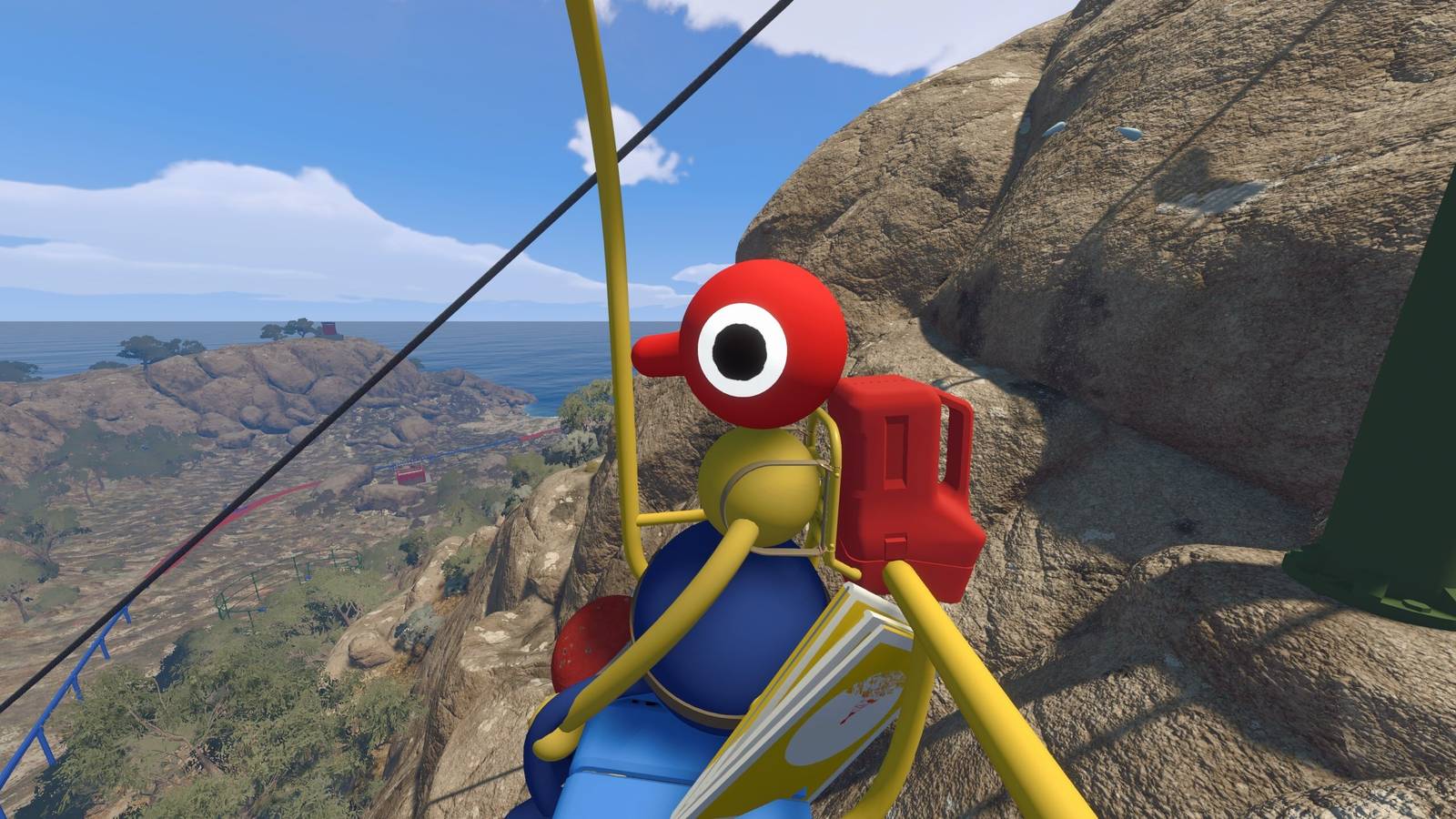 Image: House House/Panic via Polygon
From a distance, Big Walk doesn’t look like the kind of video game that’s out to deliver a big emotional payoff. It’s a chilled out co-op game that mostly tasks you and your friends with solving puzzles scattered around an open-world island environment. Any story here is the one you invent with your friend(s) while goofing around. And yet, the “ending” of Big Walk left me speechless — in both a figurative and literal sense. The remarkable sequence snaps House House’s excellent game in place, elevating a carefree multiplayer adventure into one of the most emotionally affecting experiences I’ve ever had with a video game.
[Ed. note: End spoilers for Big Walk follow from here.]
For the bulk of Big Walk, you follow a clear structure. The island you’re exploring has multiple towers, each of which holds a key locked in place by a mechanism. You can free those keys by collecting red gourds, which are earned by completing puzzles, and placing them in receptacles within the towers. Once you complete every tower, you can open a giant gate on the island and find out what’s hiding off on the horizon.
Everything that leads up to that final moment is important to the finale. Big Walk’s puzzles require you to effectively communicate with your teammates to complete them. Sometimes that means talking it out to figure out a solution, but House House routinely toys with your ability to hear or see one another. Some puzzles drop a soundproof wall between you and your friends, requiring you to get creative in how you signal to one another. Your characters’ very limited body language becomes crucial to that, as you need to learn how to convey an idea by waving your arms around or squatting. Savvy players can get around these problems with walkie-talkies and laser pointers, but the important thing is that you flex your problem-solving skills together.
Like any great video game, the ending is the ultimate test of those learnings. After walking through the final gate and approaching an orb, your squad is transported to a surreal tower filled with puzzles. The twist? You can no longer hear one another. Not only that, but all the colors that distinguish players from one another have been washed away. Unable to talk or even know who you are waving at, you’re left to solve a suite of puzzles based solely on the trust and communication you’ve built over time.
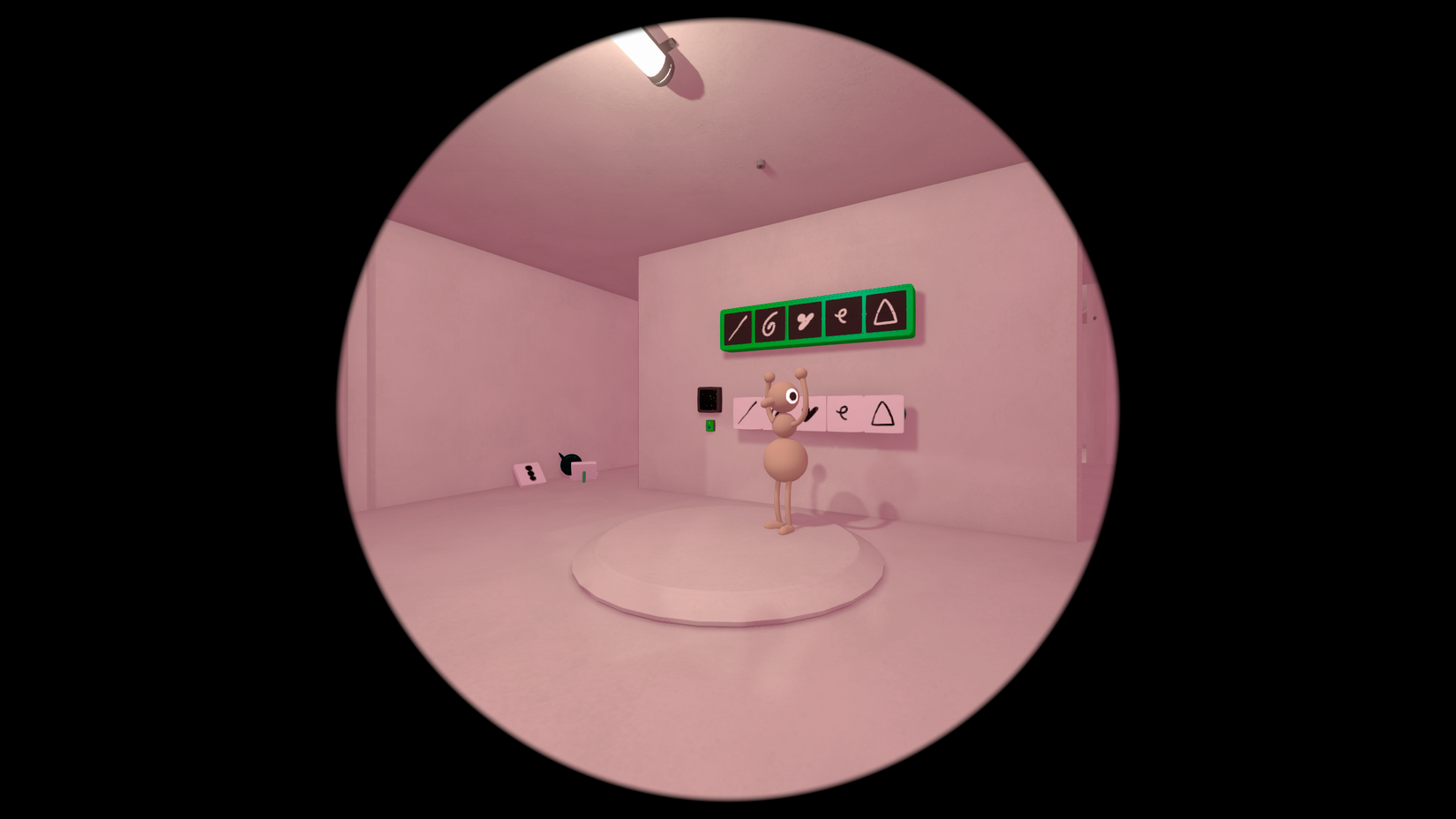 Image: House House/Panic via Polygon
That might sound like a recipe for frustration, but that wasn’t the case in my playthrough. I quickly found that I no longer needed audio to communicate with the two friends I had spent so much time playing with. I had learned how each one used gestures to communicate over time. When we had to relay symbols to one another to solve a puzzle, I knew exactly what one of my friends meant when they sporadically waved their body around to tell me I had misinterpreted them. I knew that when they threw their arms up in the air, they were telling me I heard them right.
I had learned everyone’s body language to the point where I could tell who was who based on movement alone. The same was true of my teammates. At one point, we found a teapot that was needed to solve a puzzle. I decided to take it with us through the entire tower as a running joke. Later, when we could talk again post-ending, my teammates told me they knew the person carrying the pot was me because I had spent the entire game up to that point hyper fixating on a laser pointer that I refused to get rid of. Of course, I was the guy who wouldn’t drop the pot!
It all culminates in an unexpectedly emotional moment. After finishing the puzzles, you exit the tower and everything returns to normal. Your colors come back, and you can once again speak to each other. Just outside the tower, there’s a couch in front of a projector that rolls the end credits. My team naturally gravitated towards it, using the moment to decompress after the gauntlet. We celebrated our victory, shared all the things we couldn’t say in the tower, and told each other how we were able to identify one another. It was like seeing your best friend for the first time after getting split apart for college; we could have talked forever.
But you can’t, of course. You always have to say goodbye eventually. Big Walk’s final moment drives that home with its final puzzle. Your squad comes up against a turnstile that you can’t pass through. A mechanism on the side lights up, showing three colors. Those colors correspond to the colored body parts of one of your teammates, signaling they can pass through. They cross over and begin to fall out of range of the proximity chat as they pass through into a white light. Each team member exits until no one remains. You’re alone once you cross into the light, greeted only by a splash screen that thanks you for playing.
 Image: House House/Panic via Polygon
It’s hard to do any of this justice in writing, because you have to feel the moment. The hours leading up to this are spent forging bonds with your teammates. You solve puzzles together that reward your ability to communicate. You spend the time between them shooting the shit as you walk through the woods. You inevitably create some hilarious moments that stick in your memory. All of that comes to a head in an ending that tests the friendships you have strengthened and gives you space to reflect on those memories.
As I sat in silence after crossing into the light, I didn’t just think of my squadmates who I could no longer hear; I thought of the friends I’ve had in my life. The ones I still see regularly, the ones I’ve fallen out of touch with, the ones I’ve lost altogether. I carry all of them with me. Every memory, from recess to weddings, is a lasting reminder of someone who made me into who I am. That’s baked into Big Walk right from the start. You can’t customize your own character; your teammates have to paint your body segments for you. The colors they choose are the ones the final turnstile shows to signal that it’s time for you to pass into the light. In your final moment, you are defined by the identity your friends built for you.


 English (US) ·