
 1 month ago
24
1 month ago
24
Wildlife photographer Tiffany Taxis had been sitting with a bear and her three cubs on the Alaska coast for hours when the large animal went rigid. She stopped nursing. Her gaze became focused and she started to drool. Thirty yards away, a lone wolf stood against the glaciers. Every photographer’s instinct would say the same thing: zoom tight, fill the frame with the wolf. Taxis did the opposite. She pulled wide, trusting her storytelling instincts that years of art school had taught her.
Full disclosure: This article was brought to you by OM SYSTEM.
Tiffany Taxis leads guided wildlife photography tours in Alaska and the Greater Yellowstone Ecosystem. While many of Taxis’ images are captured with the M.Zuiko Digital ED 150-400mm F4.5 TC1.25x IS PRO, the M.Zuiko Digital ED 100-400mm F5.0-6.3 IS provides similar reach at a more accessible price point for photographers building their wildlife kit.
At a Glance
“I’d been watching that sow all summer, so I knew her well,” Tiffany Taxis, a wildlife photographer and OM SYSTEM ambassador, recalls. The bear locked eyes with the wolf. Neither animal moved. For 10 minutes, Taxis sat motionless on the beach.
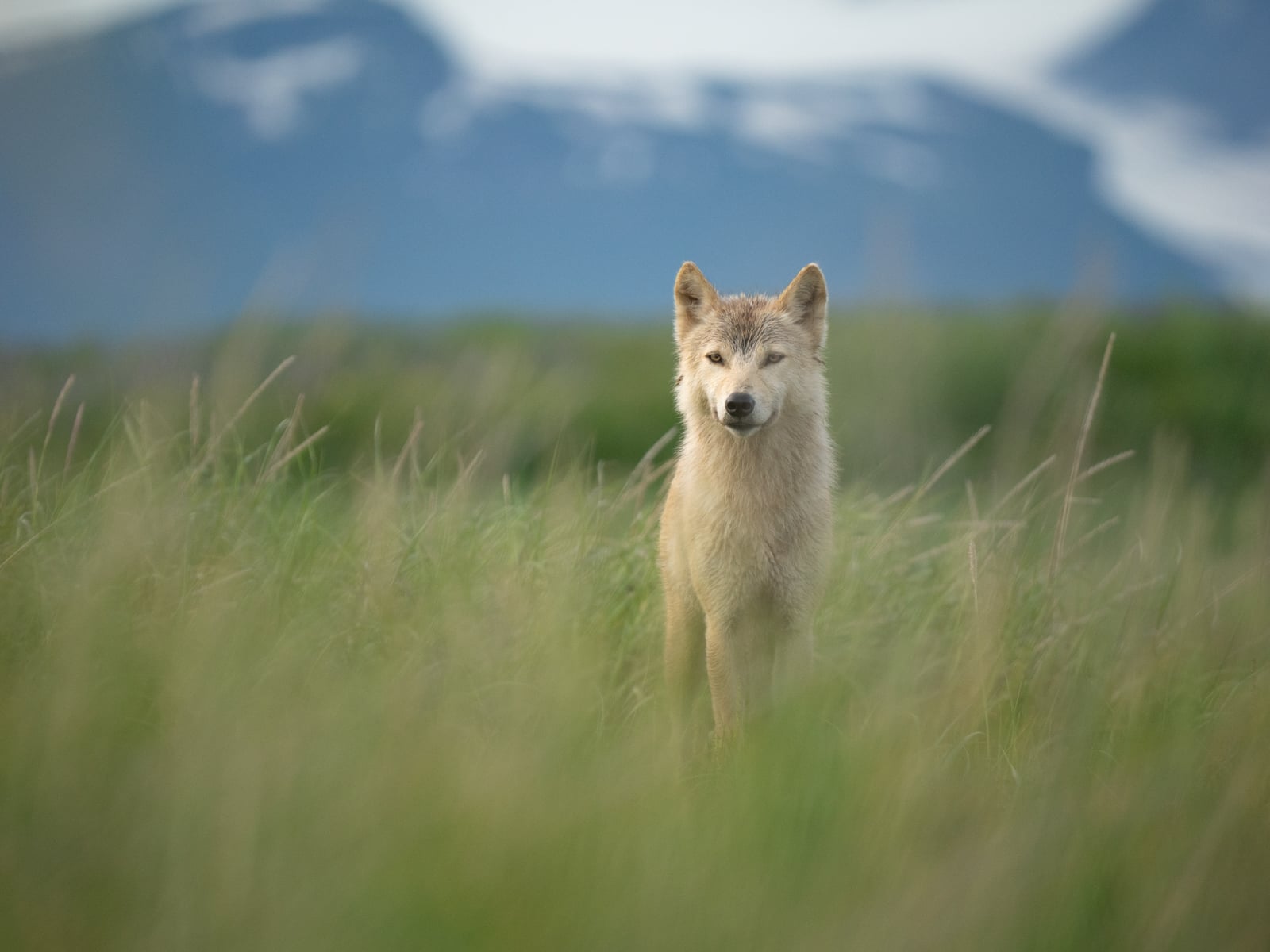 OM-1 Mark II • M.Zuiko Digital ED 150-400mm F4.5 TC1.25X IS PRO • 400mm (801mm equivalent) • 1/1250sec • f/4.5 • ISO 640
“If I’d been chasing bears across the beach, that wolf never would have shown itself,” she observes. “But since I was sitting there, completely still, completely silent, that’s when it decided it felt comfortable enough to appear.”
When it did, Taxis didn’t zoom in.
“I pulled wide,” she explains. “For me, the story wasn’t just the wolf. It was the wolf in that world, in that light, at that moment. That’s the image you can’t recreate like you can with a zoomed in portrait.”
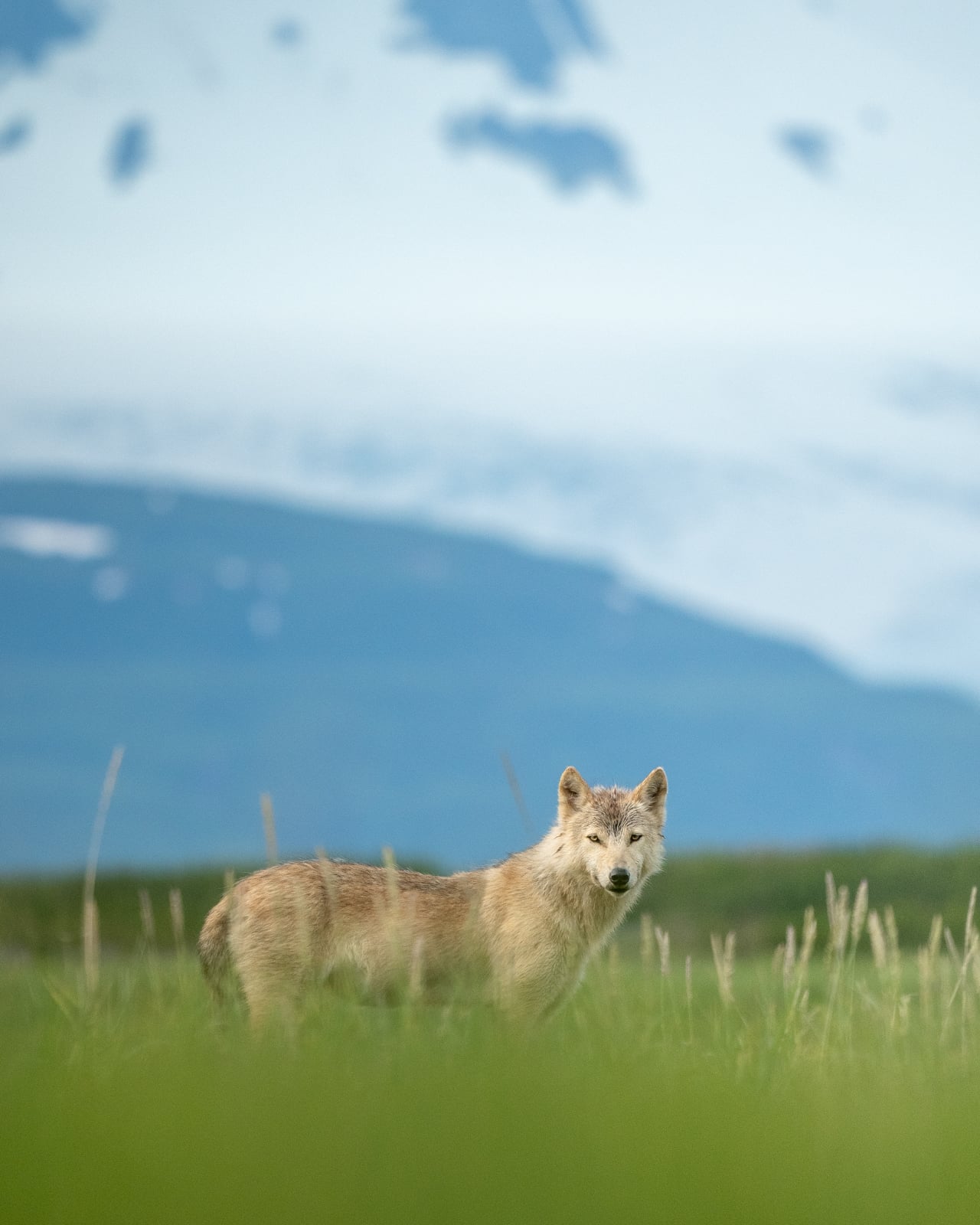 OM-1 Mark II • M.Zuiko Digital ED 150-400mm F4.5 TC1.25X IS PRO • 335mm (671mm equivalent) • 1/1250sec • f/4.5 • ISO 640
Taxis brings a different background to wildlife photography. She holds a Bachelor of Fine Arts in Studio Art from Florida State University.
“I grew up in South Florida, and I always loved two things: animals and art,” Taxis says. “I studied graphic design and photography in college. After graduation, though, I moved to Jackson Hole, Wyoming thinking I’d stay six months. Once I discovered my passion for wildlife photography in the Yellowstone region, I never left.”
That degree gave her a framework that starts before the shutter fires.
“In art school, every critique started the same way: what was your intention?” she describes. “I had to defend every choice, from the composition to the color palette to how I used negative space. It wasn’t about being right. It was about being deliberate. I didn’t realize it at the time, but that discipline is the foundation of everything I do with wildlife now. Before I press the shutter, I’m still asking myself that same question: what is the story I am trying to tell with this one photograph?”
“The shift took time. I spent my first two years in Yellowstone improving my wildlife photography in a technical way. The images got sharper, the compositions got tighter, but I started to think that they looked like everyone else’s work,” Taxis notes. “The shift happened when I stopped asking ‘did I get the shot.’ A sharp photo of a bear is documentation. A sharp photo of a bear with intention behind it is the type of story that I want to tell.”
She shared with PetaPixel her approach to turning technically correct exposures into the stories of the wildlife she strives to protect.
Build the Frame Around the Subject, Not the Subject in the Frame
Most wildlife photographers default to filling the frame. The animal is the subject, and the goal is to get as close as possible. While there is nothing wrong with that, Taxis says, she uses her art background to go the opposite direction.
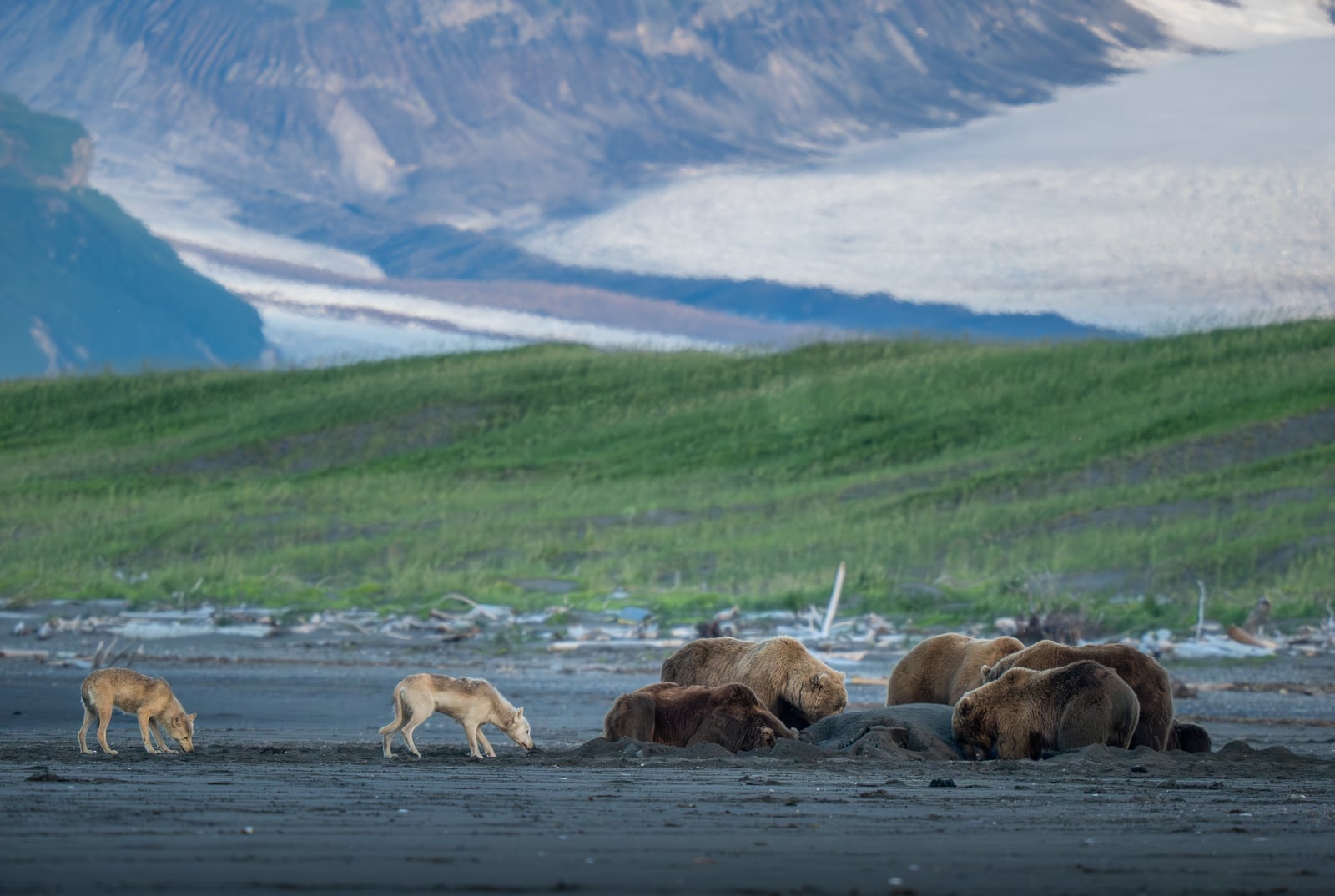 OM-1 Mark II • M.Zuiko Digital ED 150-400mm F4.5 TC1.25X IS PRO • 395mm (791mm equivalent) • 1/1250sec • f/5.6 • ISO 1600
“This summer in Alaska, I spotted a whale carcass from a plane and I was able to camp nearby overnight,” she recalls. “That evening, about 15 bears came down to the beach, and while they were there, two wolves moved through the scene.” Her first instinct was to use her OM-1 Mark II and the M.Zuiko Digital ED 150-400mm F4.5 TC1.25x IS PRO and zoom in to get the close-up portraits of the bears feeding. “But I thought back to my art school training on shooting with intention. So I zoomed out. Because it’s so much more powerful to have 15 bears, two wolves, a whale, and glaciers and mountains all in one frame. That tells the whole story of what’s been happening on that landscape for thousands of years. A close-up photo only tells a fraction of it.”
Taxis notes that the scene had everything a wildlife photographer would normally isolate into separate compositions, but she chose to let it coexist in one frame.
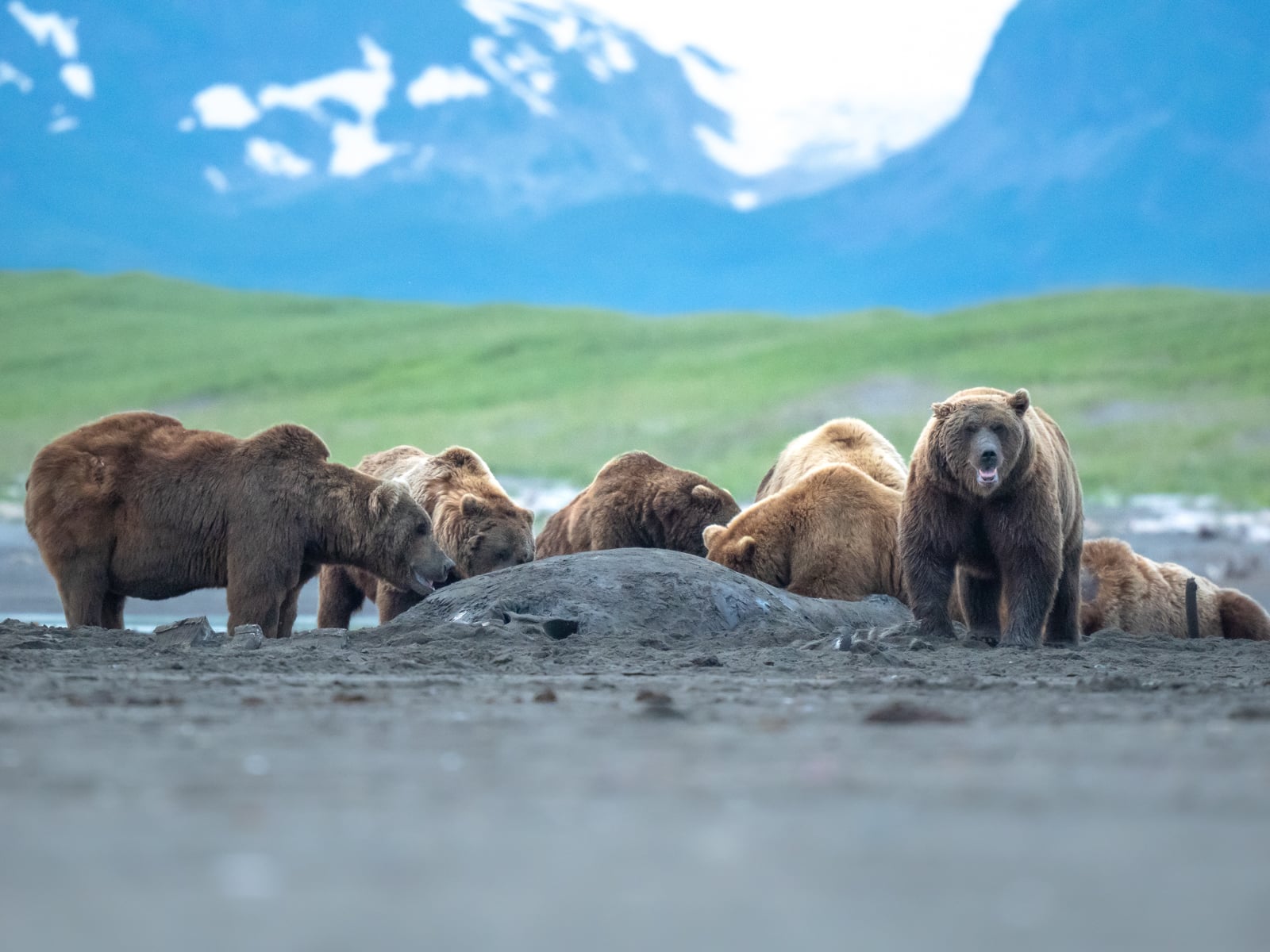 OM-1 Mark II • M.Zuiko Digital ED 150-400mm F4.5 TC1.25X IS PRO • 406mm (813mm equivalent) • 1/400sec • f/5.6 • ISO 4000
“I had to teach myself to zoom out and look at the whole story,” Taxis describes. “When I first started taking photos of wildlife, I just wanted those close-up, charismatic portraits. I got a bear, I got a coyote. But the more I shot, the more I realized the landscape around the animal was carrying half the story. Now I build the frame around the subject instead of building the subject inside the frame.”
Chase Light, Not Wildlife
One October morning in Grand Teton, Taxis drove past a meadow she had visited hundreds of times. Heavy fog had settled overnight. A bull moose stood in the center of the clearing, but the fog had stripped away everything around it.
“I stopped the car and just sat there because it didn’t look like a photograph,” she recalls. “It looked like a drawing. The moose was just this dark form with antlers, and the fog had taken away the tree line, the mountains, everything. All I had was shape and tone and this faint warmth bleeding through. That morning, the fog stripped out every distraction and handed me a composition I would’ve spent hours trying to build in a studio.”
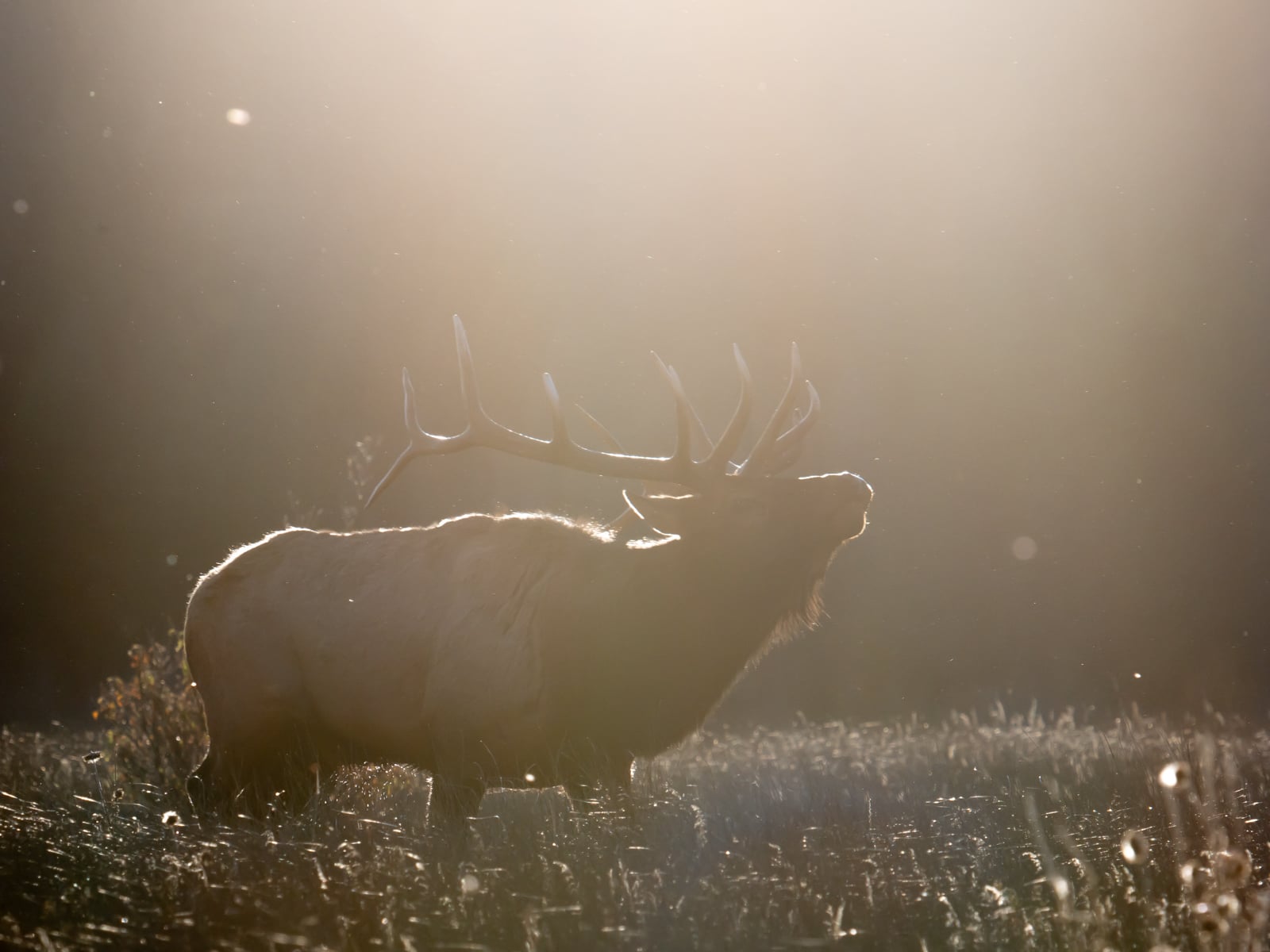 OM-1 Mark II • M.Zuiko Digital ED 150-600mm F5.0-6.3 IS • 342mm (685mm equivalent) • 1/320sec • f/9.0 • ISO 200
She does not plan her days around animal activity. She plans around conditions.
“Light is everything, and I’m trying to use the light I’m given as part of the story,” she stresses. “Everyone’s seen a bear in a beautiful landscape, but the light is what makes it different, and light is never the same from day to day. I’m looking for the conditions that are going to make any subject stand out.”
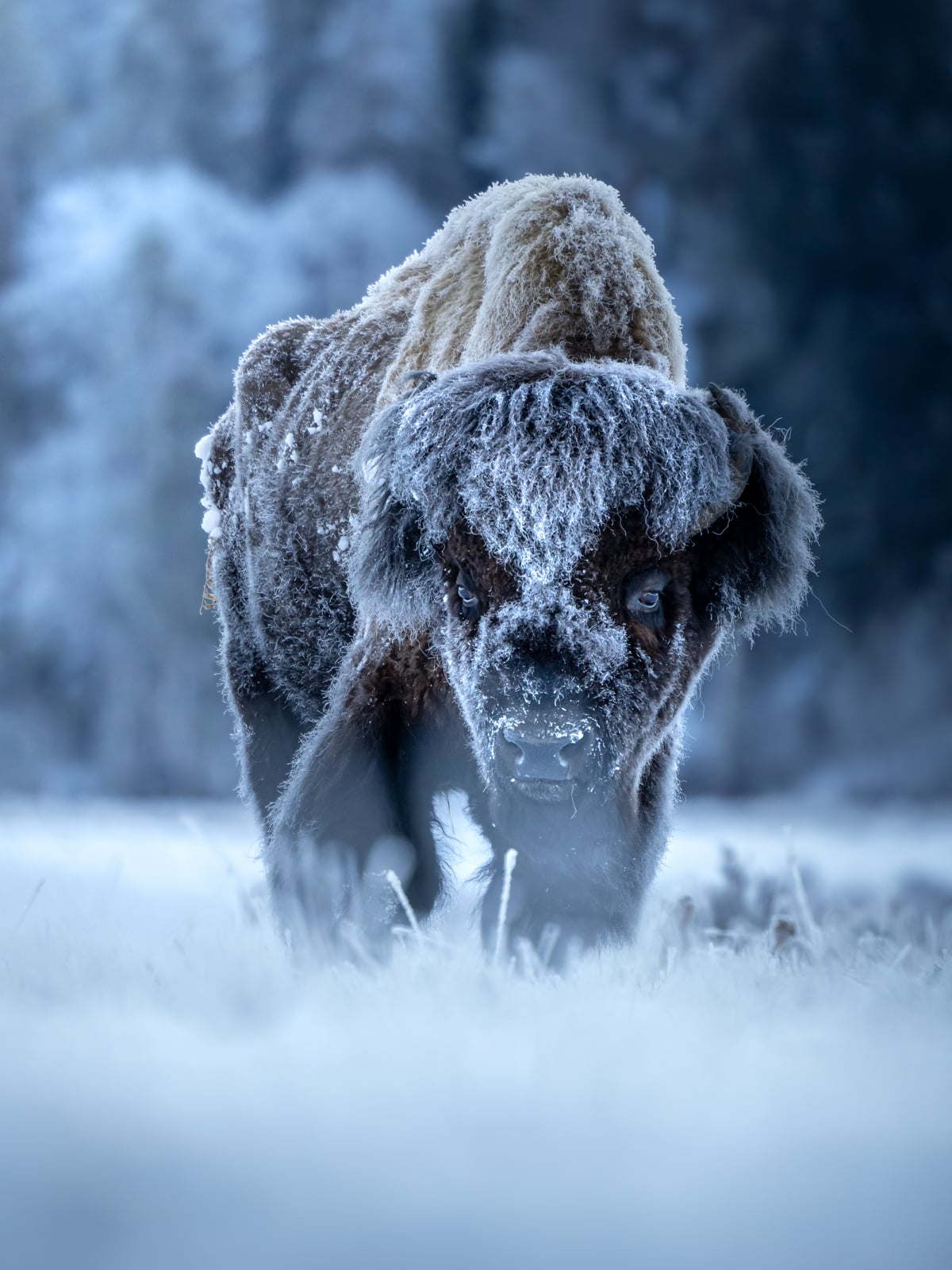 OM-1 Mark II • M.Zuiko Digital ED 150-400mm F4.5 TC1.25X IS PRO • 306mm (613mm equivalent) • 1/500sec • f/4.5 • ISO 800
“Very few people are out there at dawn in the cold and heavy fog,” she adds. “Fog strips everything down to shapes and silhouettes. That’s the art school part of my brain taking over.”
Shoot the Moment Before the Moment
The peak action frame gets all the attention. Taxis looks for the story in the seconds before and after.
“When I’m photographing sandhill cranes, I’m watching for the bird to hunch,” she explains. “Cranes drop into this awkward, compressed posture right before they launch. If you know the wind direction, you know the angle they’re going to take off from. The second I see that hunch, I’ve already got the frame set and I’m ready to capture the moment it begins to make its move. Otherwise, once a crane’s airborne, it’s gone before you can find it in the viewfinder.”
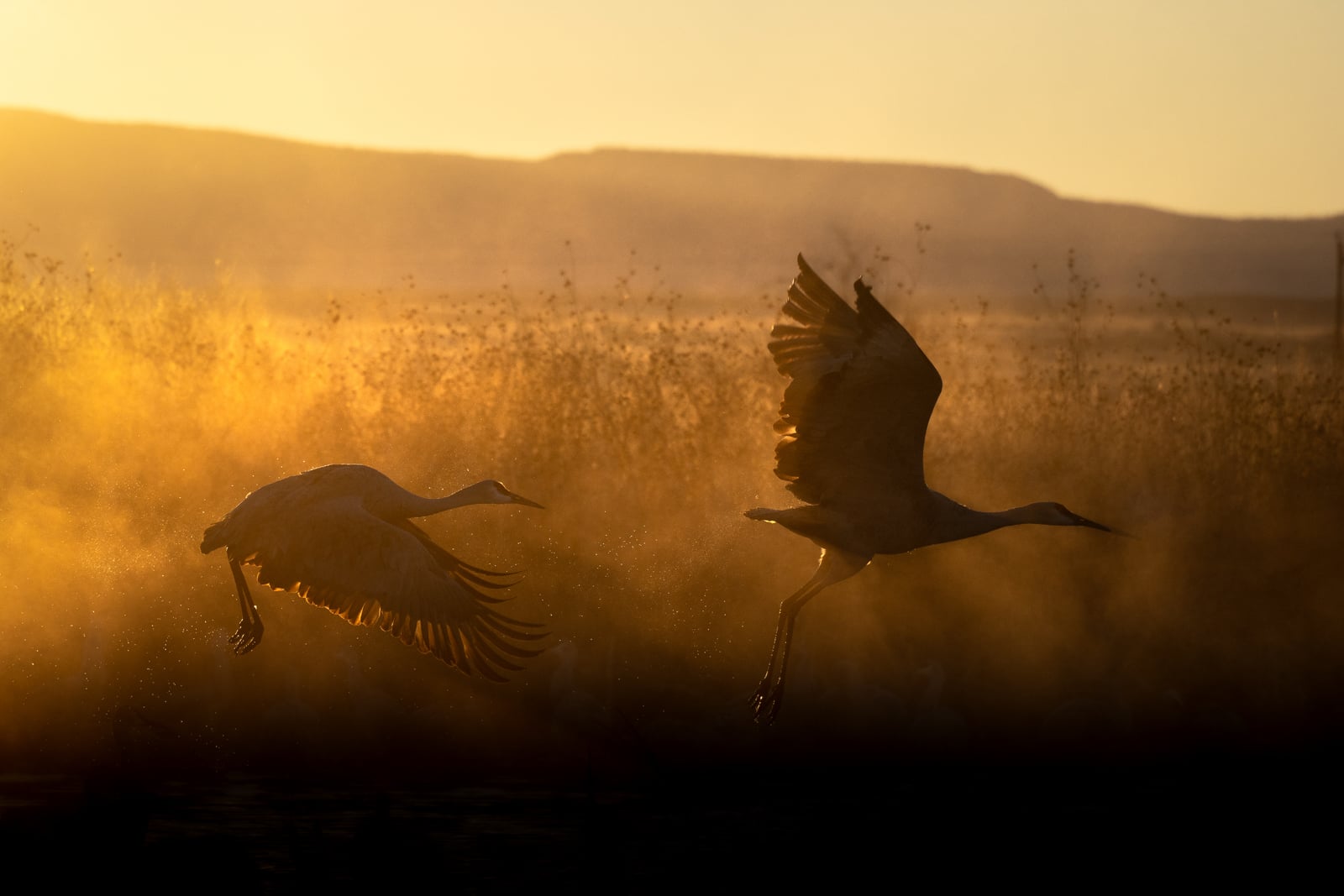 OM-1 Mark II • M.Zuiko Digital ED 150-400mm F4.5 TC1.25X IS PRO • 150mm (300mm equivalent) • 1/1600sec • f/4.5 • ISO 160
Eagles follow the same pattern. They shift their weight and fan their talons before launching. Bears drop their shoulders before charging a rival. Knowing the cue gives a photographer one to three seconds of lead time.
“Some of my favorite images from this past season aren’t the soaring eagle photos that everyone wants,” Taxis notes. “They’re the moments right before an eagle starts to take off, or the moments as it prepares to land. The wings half-open, the focus in their eyes. There’s tension in those frames that the full-flight shot misses.”
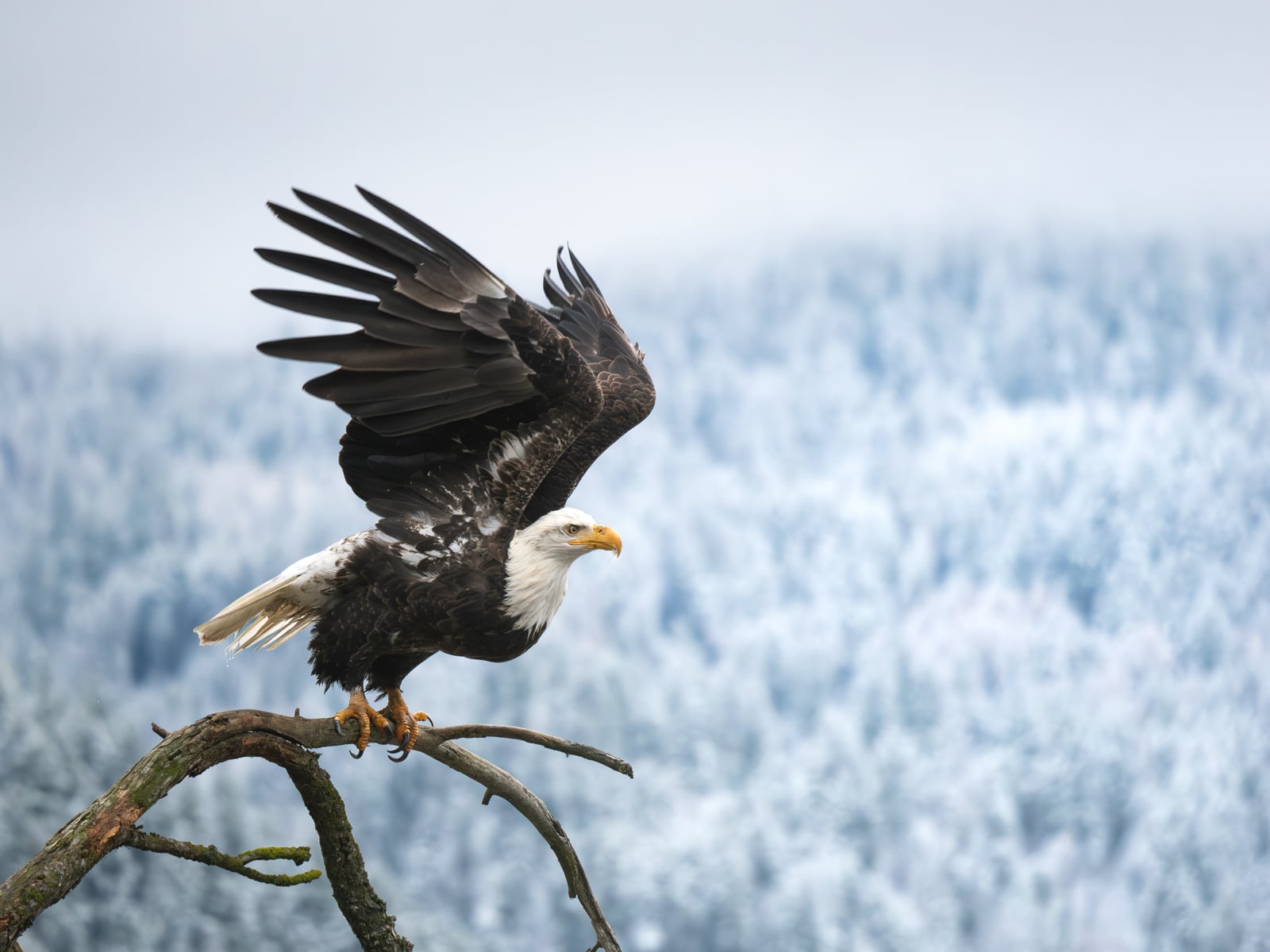 OM-1 Mark II • M.Zuiko Digital ED 150-400mm F4.5 TC1.25X IS PRO • 168mm (337mm equivalent) • 1/1600sec • f/4.5 • ISO 2500
For Taxis, the OM-1 Mark II’s Pro Capture mode turns that lead time into a safety net. It continuously buffers frames while the shutter is half-pressed, then saves them when fully pressed.
“I used to second-guess my timing when an eagle was about to launch,” Taxis continues. “With Pro Capture, the camera’s already recording before I fully press down the shutter. So when I see that hunch, I know the whole buildup is in the buffer. I’m not chasing the moment anymore. I’m already ahead of it.”
Let Weather Set the Mood
“I’ve been out in Alaska rain so heavy my own rain gear gave up,” Taxis shares. “Good shell and good pants didn’t matter. The water came through every seal and soaked through everything. But I was still out there because the fog was rolling in, and late that afternoon a bear walked onto the beach with two cubs. Fur dripping, every strand catching the light. If I’d packed up when my jacket failed, that image doesn’t exist.”
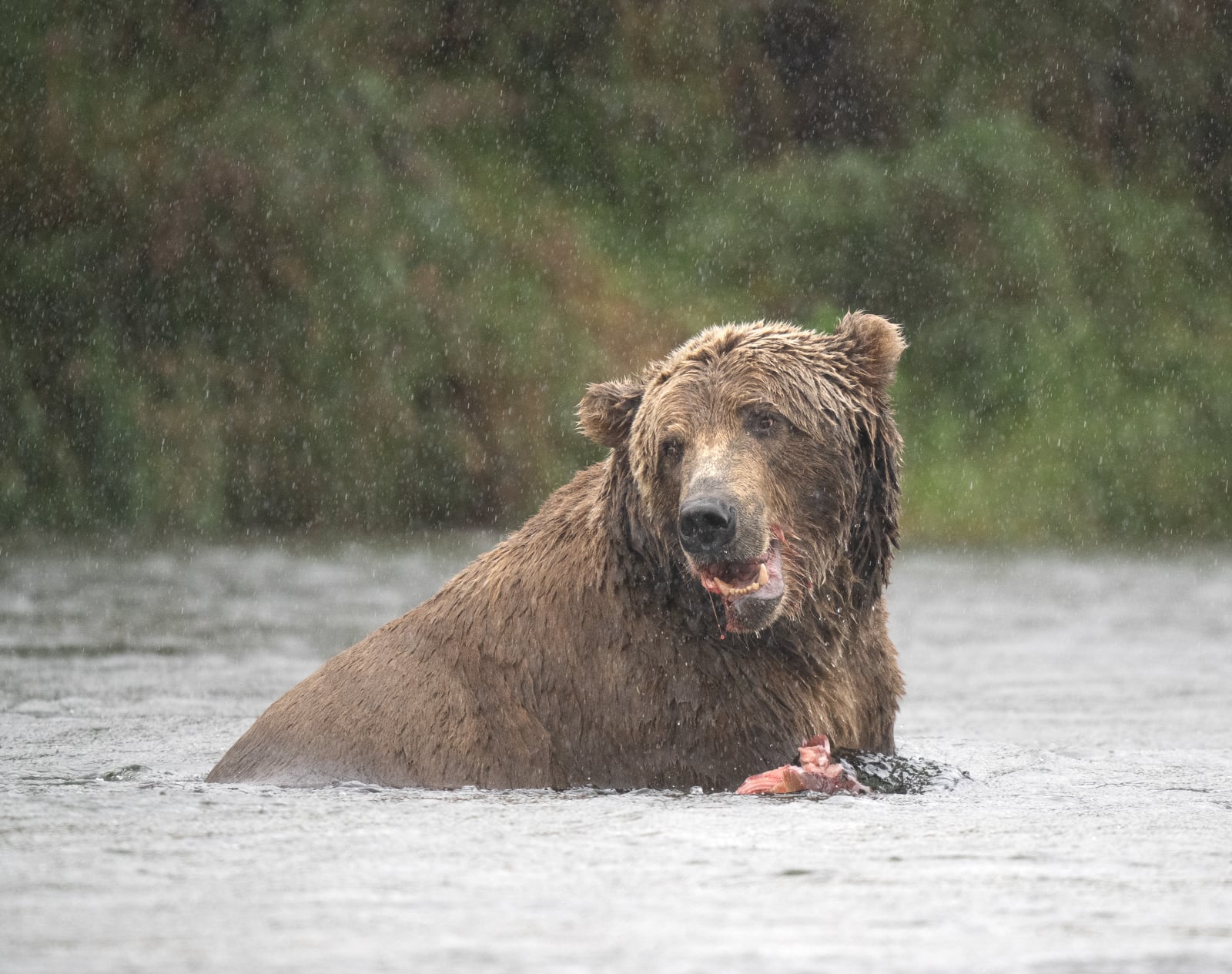 OM-1 • M.Zuiko Digital ED 150-400mm F4.5 TC1.25X IS PRO • 445mm (891mm equivalent) • 1/800sec • f/5.6 • ISO 2000
The OM-1 Mark II, the M.Zuiko 150-400mm, and most of the OM SYSTEM wildlife lenses carry IP53 weather sealing, and are rated dustproof and splashproof down to -10C (14F). In the same storm that soaked through her own gear, the camera and lens worked without issue.
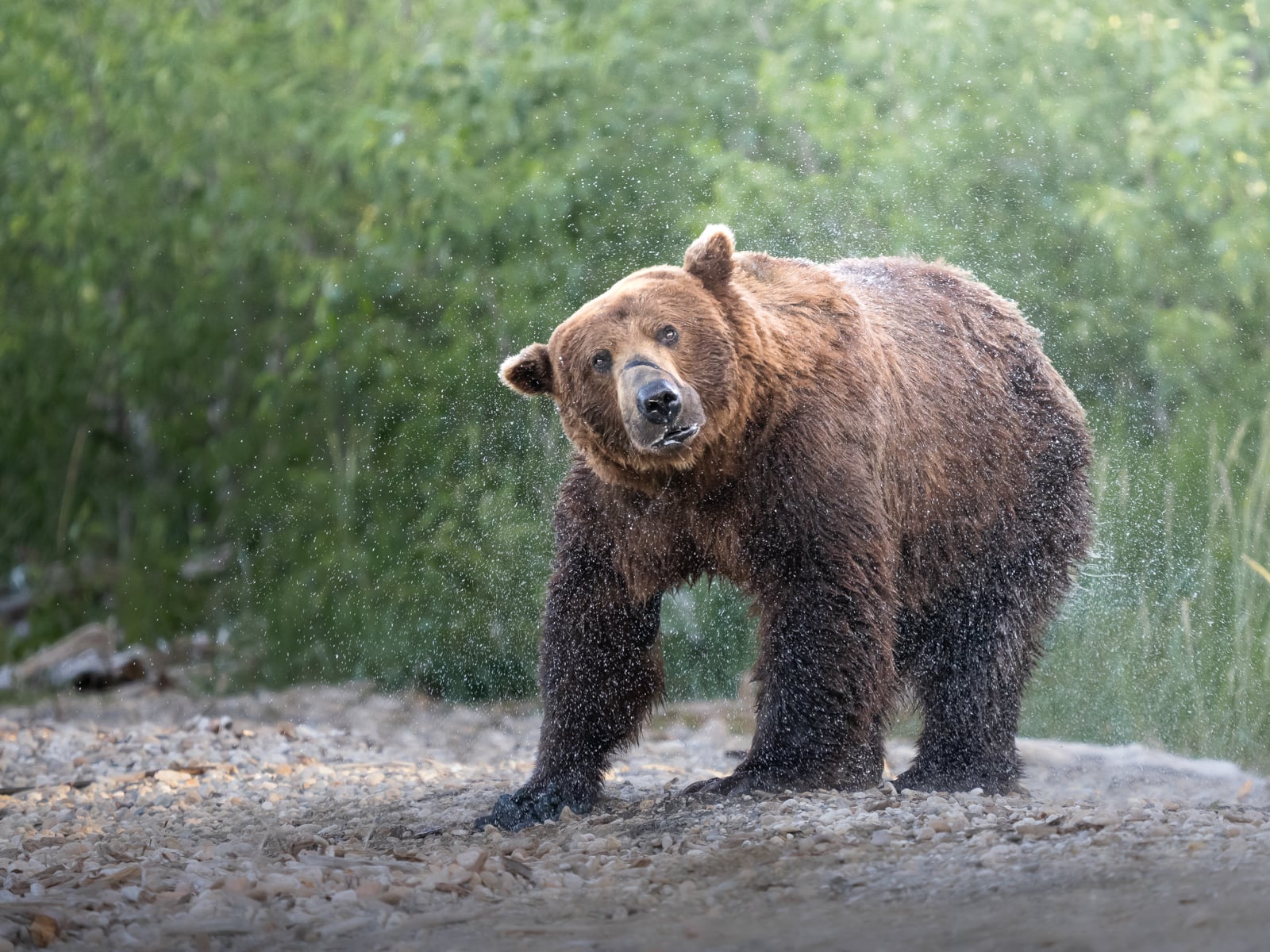 OM-1 • M.Zuiko Digital ED 150-400mm F4.5 TC1.25X IS PRO • 400mm (801mm equivalent) • 1/800sec • f/4.5 • ISO 2000
“Often, making art is not comfortable,” she insists. “It takes time, it takes dedication, it takes putting in long hours to make images that are worthwhile. I don’t want to sit out in the rain or the snow or negative 30 degrees, but that’s when the good images happen. It’s intentional. It’s a choice to go out and create on days like that, and that choice is what separates your work from everyone else’s.”
Wet fur shows texture that dry conditions hide. Fog strips backgrounds down to soft, single-tone depth. Snow creates dramatic scenes that show the challenging conditions that animals need to endure to survive.
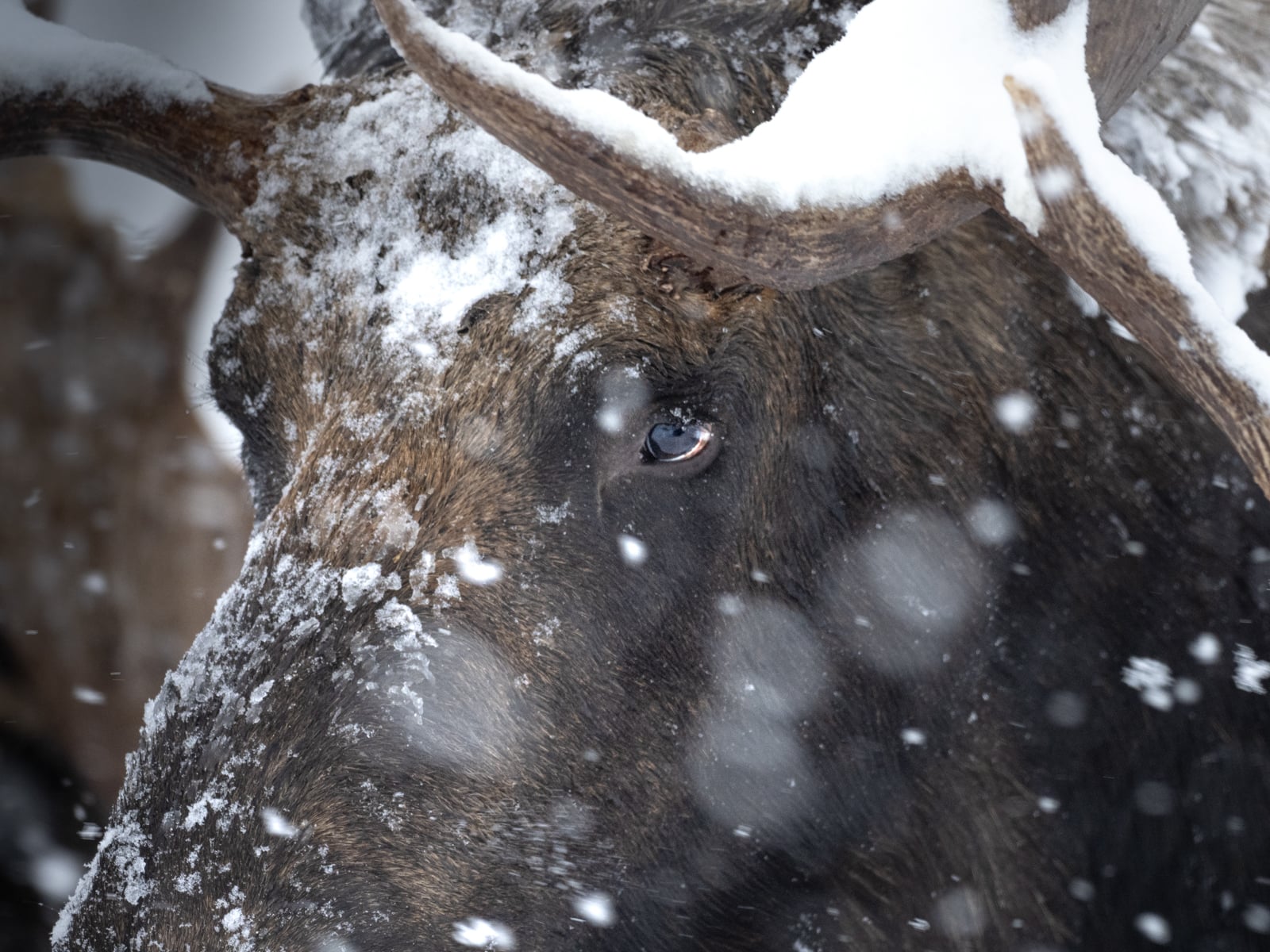 OM-D E-M1 Mark III • M.Zuiko Digital ED 300mm F4.0 IS PRO • 300mm (601mm equivalent) • 1/640sec • f/4.0 • ISO 640
“The conditions most people walk away from are the ones I want to be in. Those conditions take a photograph and turn it into a piece of art,” she says.
Use Backgrounds as Emotional Texture
In one of Taxis’ favorite images, a bull elk crosses a Grand Teton ridgeline with the sun behind it, all orange and yellow hues. She chose that angle for one reason: the background was doing the emotional work.
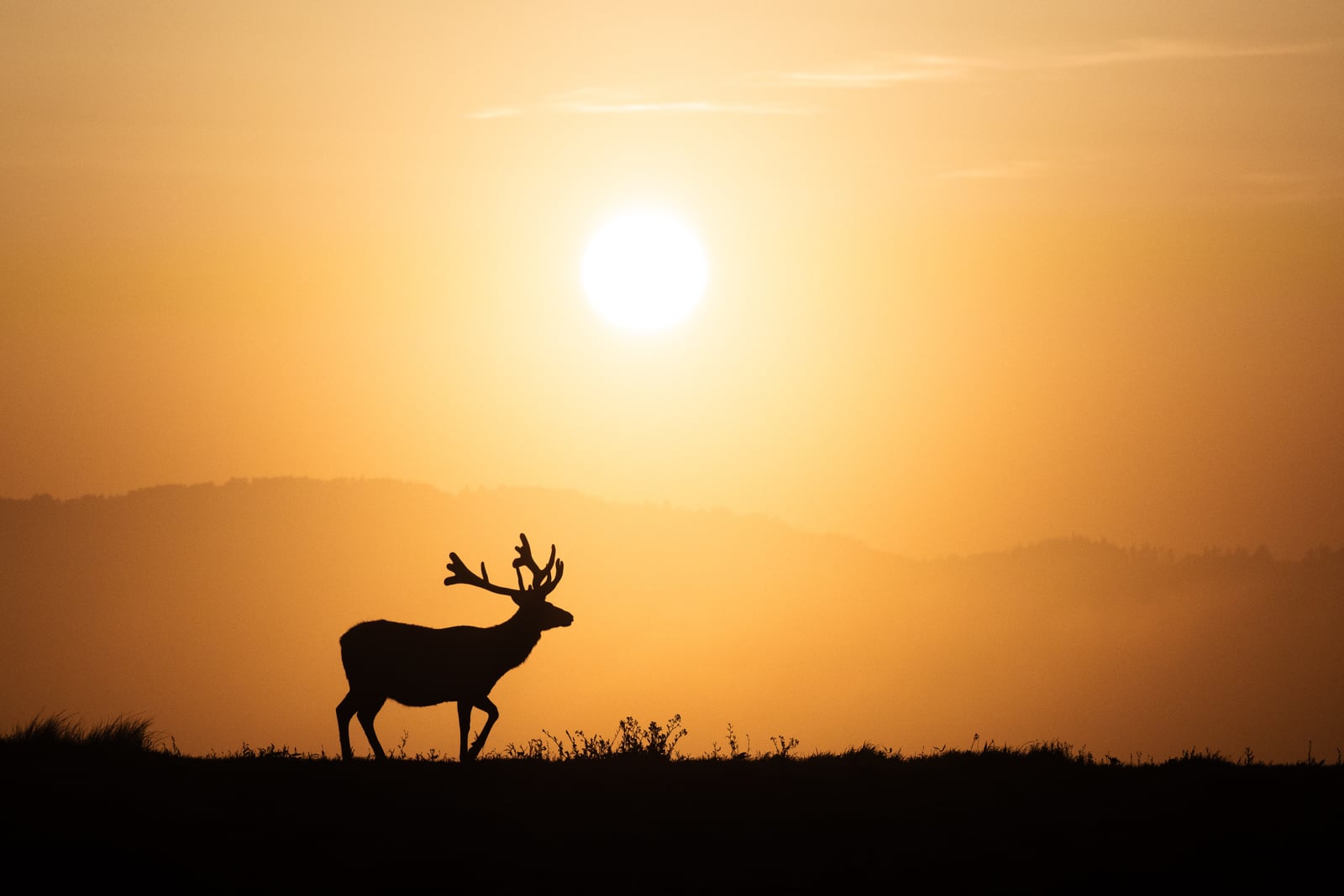 OM-1 • M.Zuiko Digital ED 150-400mm F4.5 TC1.25X IS PRO • 150mm (300mm equivalent) • 1/32000sec • f/4.5 • ISO 1000
“The first thing I do when I show up on a scene is look around before I take a single photo,” she describes. “Where’s the light coming from? What’s behind the animal? If I’m shooting something dark, I’m looking for a lighter background to create contrast. If there’s blue sky behind a bird, I’m moving. It’s the most boring background there is. I’m looking for something that’s going to make the viewer feel something, not just see something.”
That process requires moving fast, especially at extreme telephoto focal lengths where small repositions change the background entirely.
“Last fall in the Tetons, I was photographing a bull elk feeding near a stand of aspens,” she continues. “The background behind him was just a brown hillside, nothing. I took two steps to my left and suddenly the aspens framed him in gold. A four-second decision, and you can only make it if you’re not locked to a tripod.”
 OM-1 • M.Zuiko Digital ED 150-400mm F4.5 TC1.25X IS PRO • 288mm (577mm equivalent) • 1/1000sec • f/4.5 • ISO 80
The OM-1 Mark II’s 5-axis Sync IS provides up to 8.5 stops of stabilization. For Taxis, that means sharp handheld frames in conditions that would normally demand a tripod.
“I think the background is just as important as the subject,” she observes. “When the background is doing the emotional work, the animal doesn’t have to.”
Embrace Minimalism and Negative Space
“The wolf is probably the most polarizing subject you can photograph in the wild,” Taxis notes. “So when you see one in this untouched landscape, it makes people think about more than just the animal. It makes them think about where it lives, how long it’s survived on that land, what they have to do to survive on that land, and what our choices do to places like that. Showing the wolf within it, small against all that space, tells a bigger story than any telephoto portrait could.”
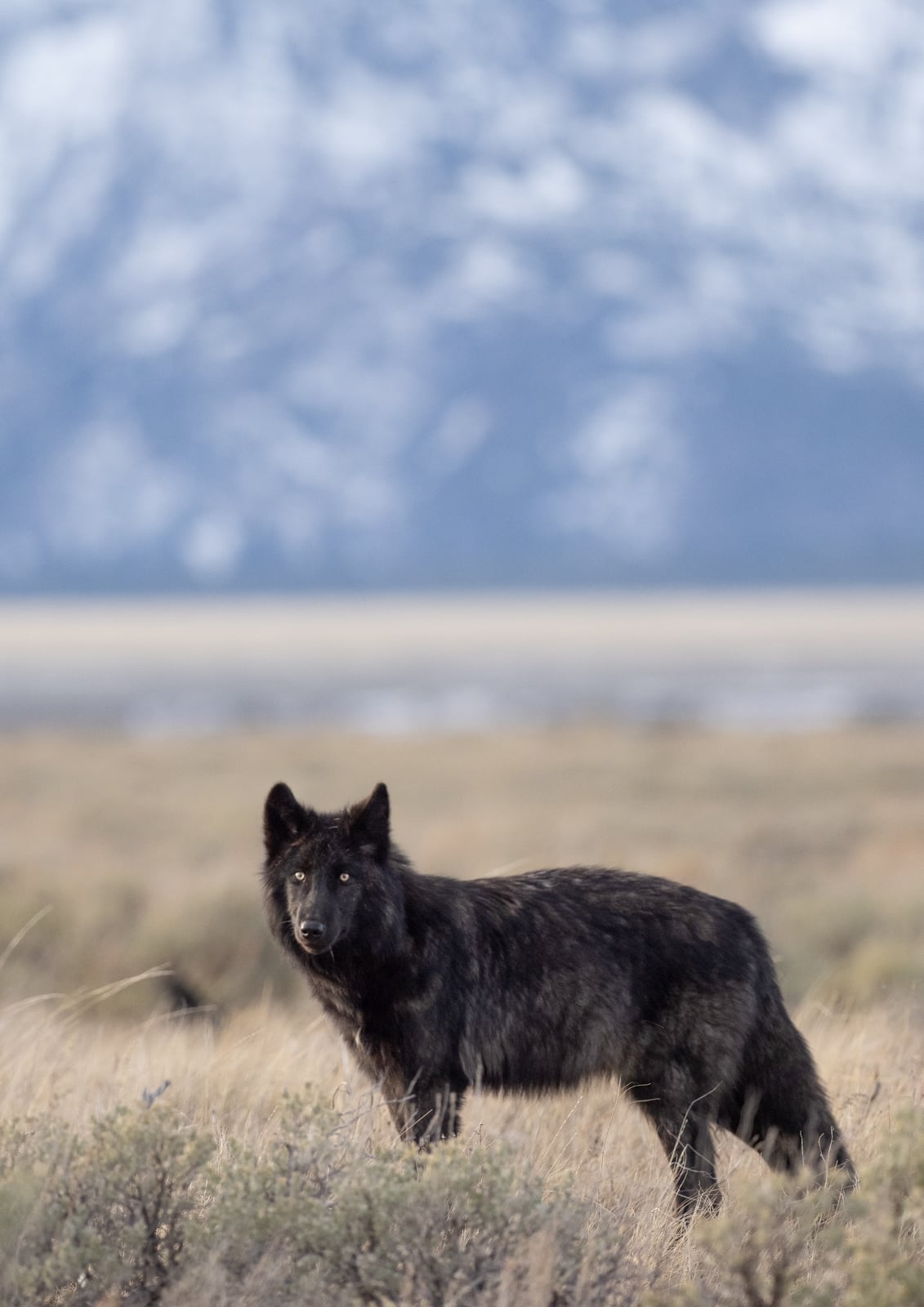 OM-D E-M1 Mark III • M.Zuiko Digital ED 300mm F4.0 IS PRO • 300mm (601mm equivalent) • 1/1250sec • f/4.0 • ISO 200
Taxis applies the same thinking to birds. She had the telephoto reach for a tight portrait of a bald eagle in Yellowstone. She pulled wide instead, placing the bird small against the snow-covered hills because the landscape was carrying the story.
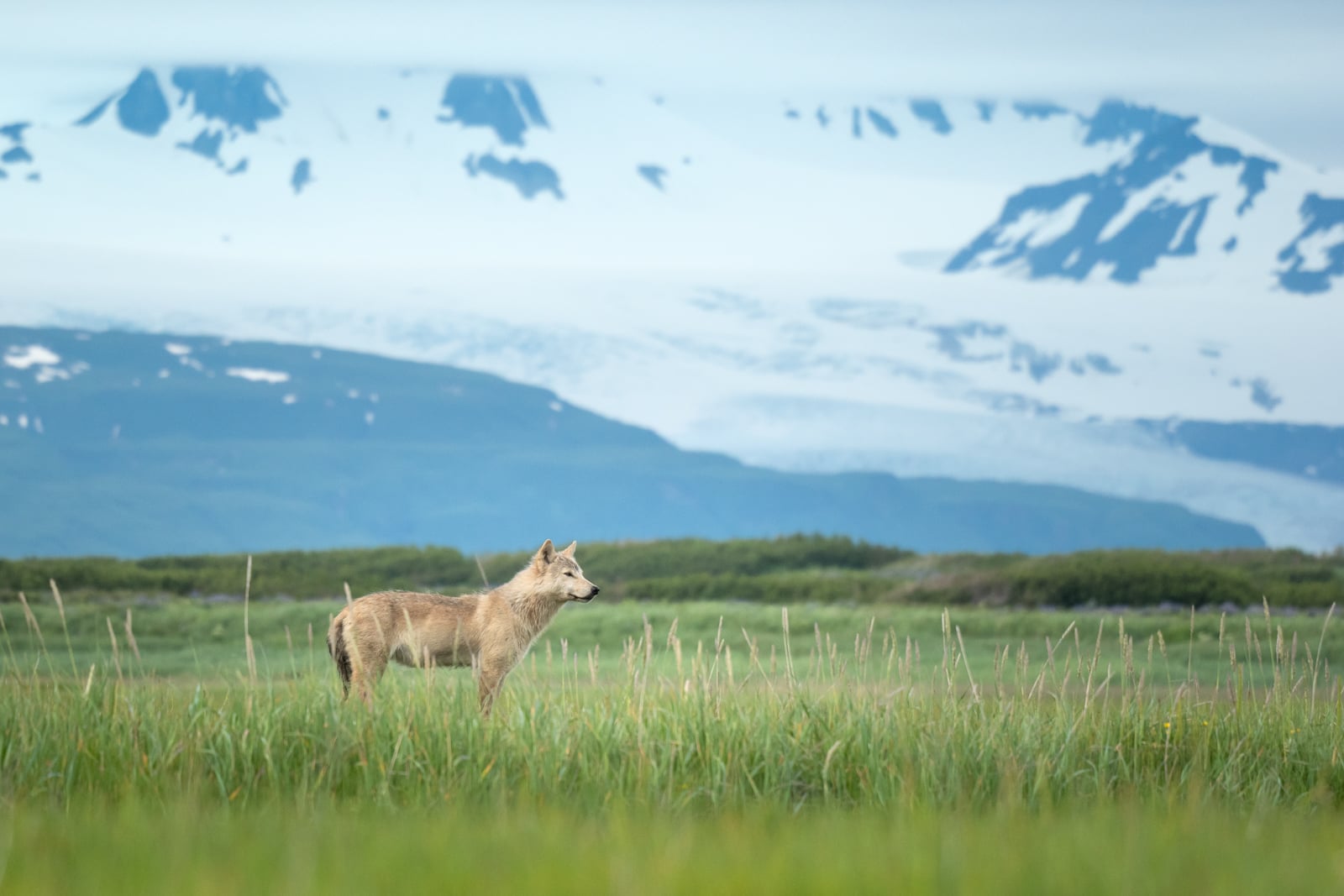 OM-1 Mark II • M.Zuiko Digital ED 150-400mm F4.5 TC1.25X IS PRO • 189mm (379mm equivalent) • 1/1250sec • f/4.5 • ISO 640
Her art background has a name for the concept: negative space. The empty frame around a subject tells a different story than a close-up.
 OM-1 Mark II • M.Zuiko Digital ED 150-400mm F4.5 TC1.25X IS PRO • 200mm (401mm equivalent) • 1/1600sec • f/4.5 • ISO 400
“With wildlife, the instinct to fill the frame is even stronger because the animal’s right there and you’ve got a long lens,” she reflects. “But that wolf standing alone in all that open landscape, that’s where I finally understood it. The space around the subject is the story. It says solitude, it says wildness, it says this place is bigger than any one animal.”
Find Abstracts Inside the Familiar
Taxis stresses that wildlife photography doesn’t have to be literal. Motion blur, detail crops, silhouettes, and slow-shutter techniques expand what a wildlife image can tell. She traces her interest in non-literal work to another photographer.
“I really admire Steve Mattheis’ work,” she says. “He’ll photograph a wolf at 50 yards, but at 1/10th or 1/15th of a second. This can create a sharp section around the wolf’s eye, but then the rest of the image conveys a sense of motion, which really tells the story of the wolf. Always on the move, always trying to survive. When I first saw that, it completely changed how I thought about wildlife photography.”
“Before I went to Brooks Falls in Alaska, I already knew I wasn’t just going to shoot bears on the waterfall at a fast shutter speed,” Taxis continues. “I planned to shoot at 1/15th to blur the water and create that painterly effect and give a sense of motion to the story. Catching salmon off a fast moving waterfall isn’t easy, even if the bears make it look like it is. That movement gave the images a critical story element.”
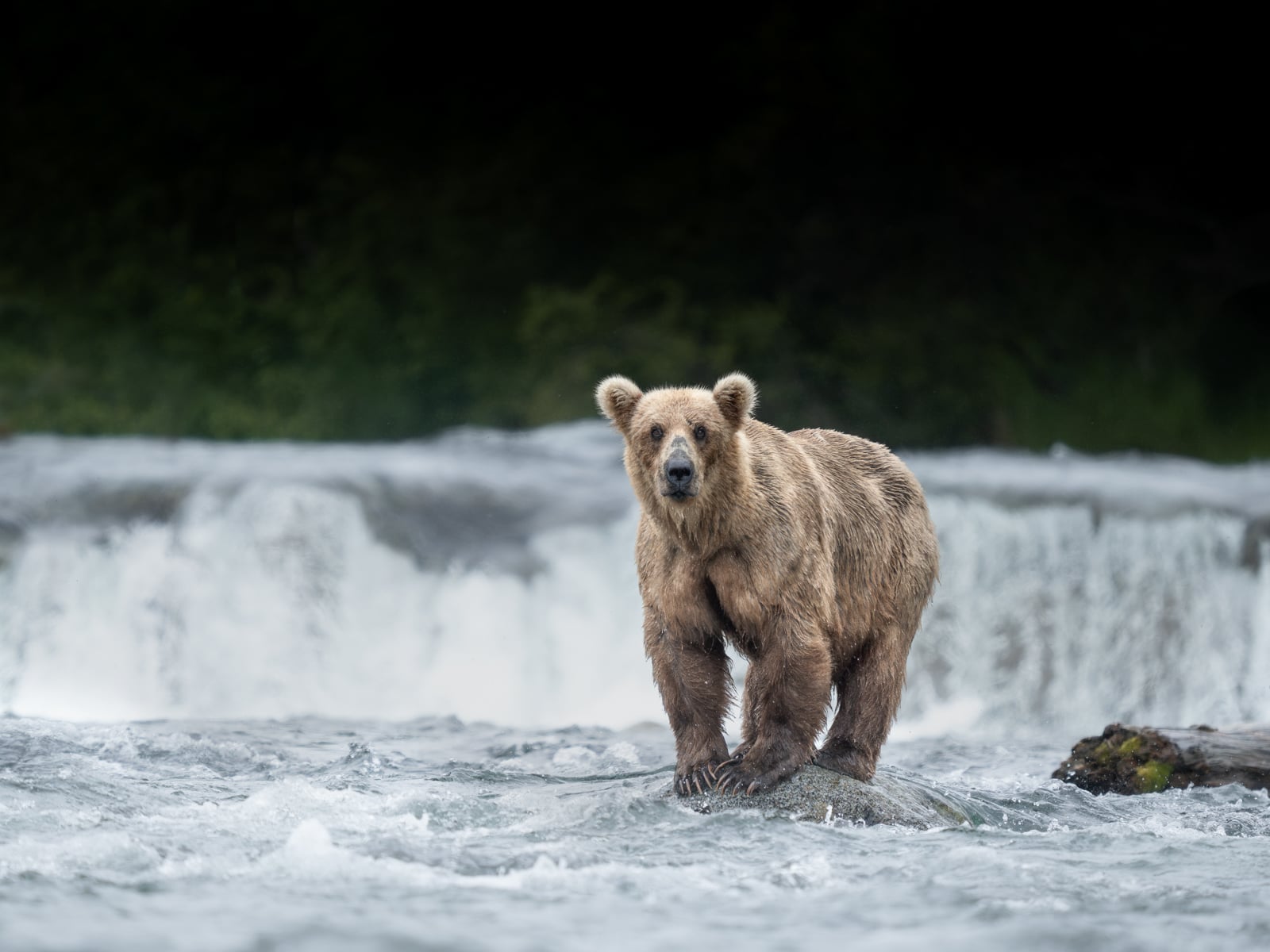 OM-1 • M.Zuiko Digital ED 150-400mm F4.5 TC1.25X IS PRO • 400mm (801mm equivalent) • 1/1250sec • f/4.5 • ISO 1000
Using slow shutter speeds in the field creates two practical problems. Shooting at 1/15th of a second handheld requires serious stabilization, which the OM-1 Mark II provides. “But bright daylight at those speeds also means my images might be overexposed,” Taxis explains. “Some photographers carry physical ND filters for slow shutter speeds. My camera’s Live ND Mode feature handles it in-camera with a real-time preview through the viewfinder. I love it because I don’t need to carry and swap heavy ND filters while I’m moving in the field. When I’m out at Brooks Falls and a bear freezes mid-catch, I’ve got maybe a few seconds to switch my whole approach from fast shutter to slow. Being able to dial that in on the camera and see the effect before I shoot? That changes what’s possible in the moment.”
 OM-1 • M.Zuiko Digital ED 150-400mm F4.5 TC1.25X IS PRO • 150mm (300mm equivalent) • 1/15sec • f/7.1 • ISO 800
The technique took Taxis countless tries at Brooks Falls before it worked, and it required bears willing to hold still in the frame.
“I’m still figuring out the abstract side of wildlife photography,” she admits. “I have years of wildlife portraits in my catalog. What I’m drawn to now is motion blur, slow shutter, anything that creates a feeling instead of just a record. When you slow things down, there’s chaos and movement and intensity that you don’t get at 1/1000th of a second. I’m still learning this, but I know it’s the direction I want to go. That’s how the work becomes mine.”
Photograph Behavior That Reveals Character
The sharpest portrait of a bear still looks like any other bear portrait if the animal is doing nothing. Behavioral moments, like a courtship approach, a sub-adult’s clumsy play, or a sandhill crane’s pre-flight hunch, reveal what a static pose cannot. Capturing them requires knowing the subject well enough to read its body language before it acts.
“We all have dogs at home,” Taxis observes. “We know what a dog’s ears back means. When I’m photographing wolves or coyotes and the ears are back, I know that animal is stressed. Maybe it’s not because of me, but if every photo I have of wolves and coyotes shows their ears pinned back, that’s not a comfortable animal or an artistic or interesting image. A much stronger photo is one where the animal is walking boldly through the scene, ears up, completely at ease, and hard at work surviving. You see their real character when they’ve forgotten you exist.”
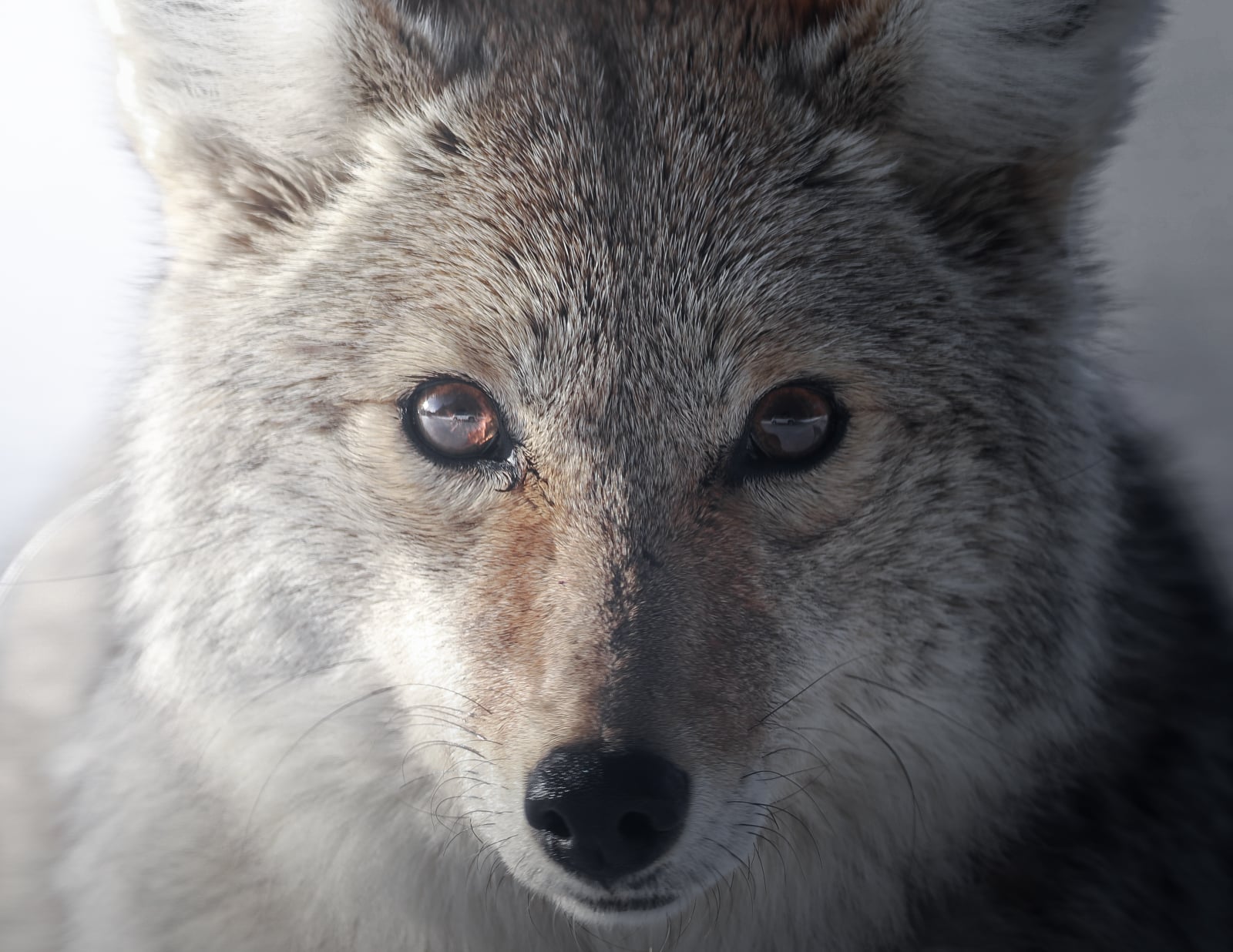 OM-1 • M.Zuiko Digital ED 300mm F4.0 IS PRO • 300mm (601mm equivalent) • 1/400sec • f/4.0 • ISO 100
That kind of experience comes from repeat visits and long hours watching the same animals. Taxis guides other photographers in areas where bears concentrate in large numbers, and the density gives her a front-row seat to interactions most photographers never witness.
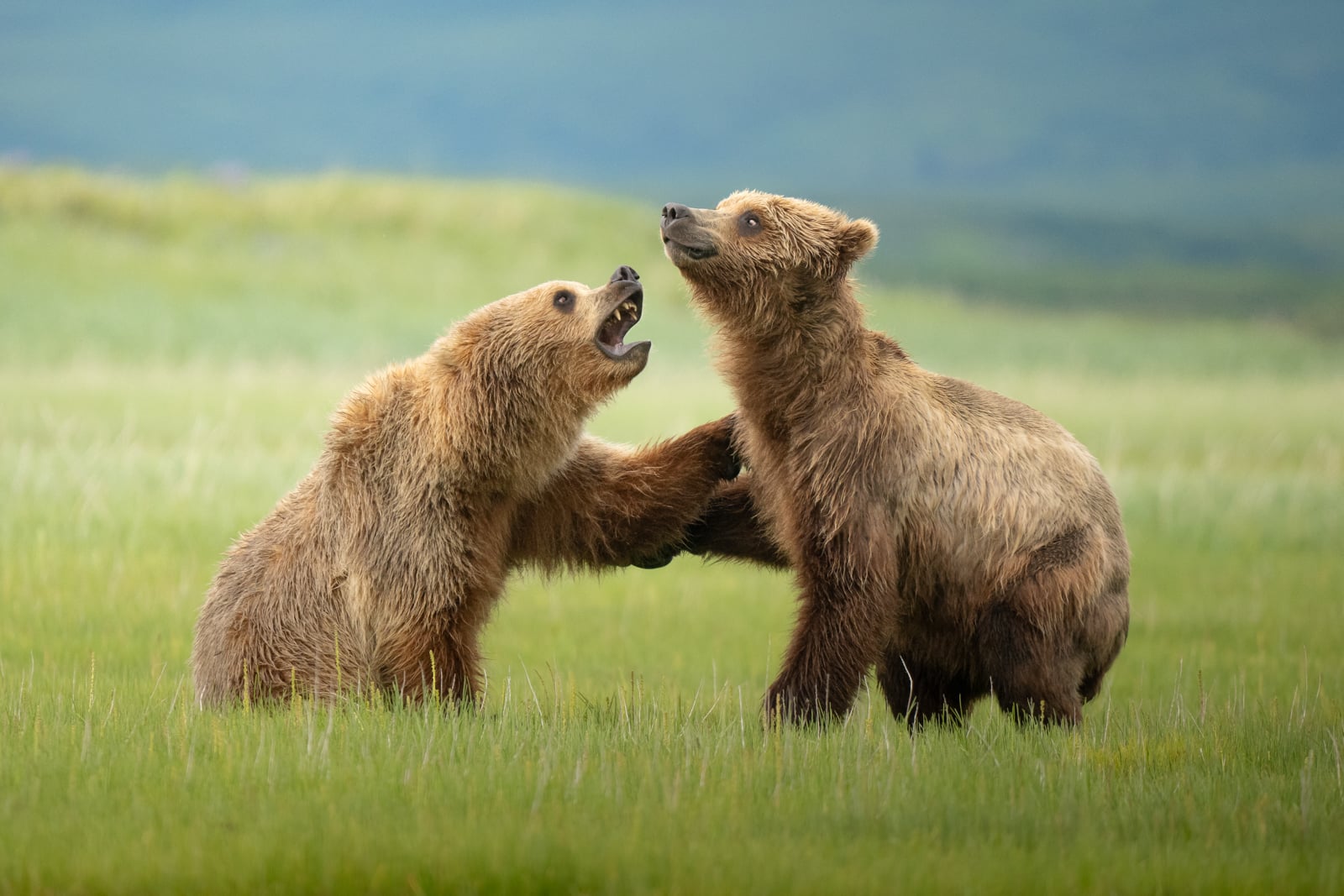 OM-1 Mark II • M.Zuiko Digital ED 150-400mm F4.5 TC1.25X IS PRO • 400mm (801mm equivalent) • 1/2000sec • f/4.5 • ISO 1250
“When I’ve got 30 bears in a close area, I start to learn who’s who, and I can recognize the personality traits of each one,” she details. “I can tell when a sub-adult is testing an older male. I can see a female being courted. And because I know the individuals, I know what’s about to happen before it happens. Those extra few seconds let me get the frame I’m after. I’m already in position while everyone else is still figuring out what’s going on.”
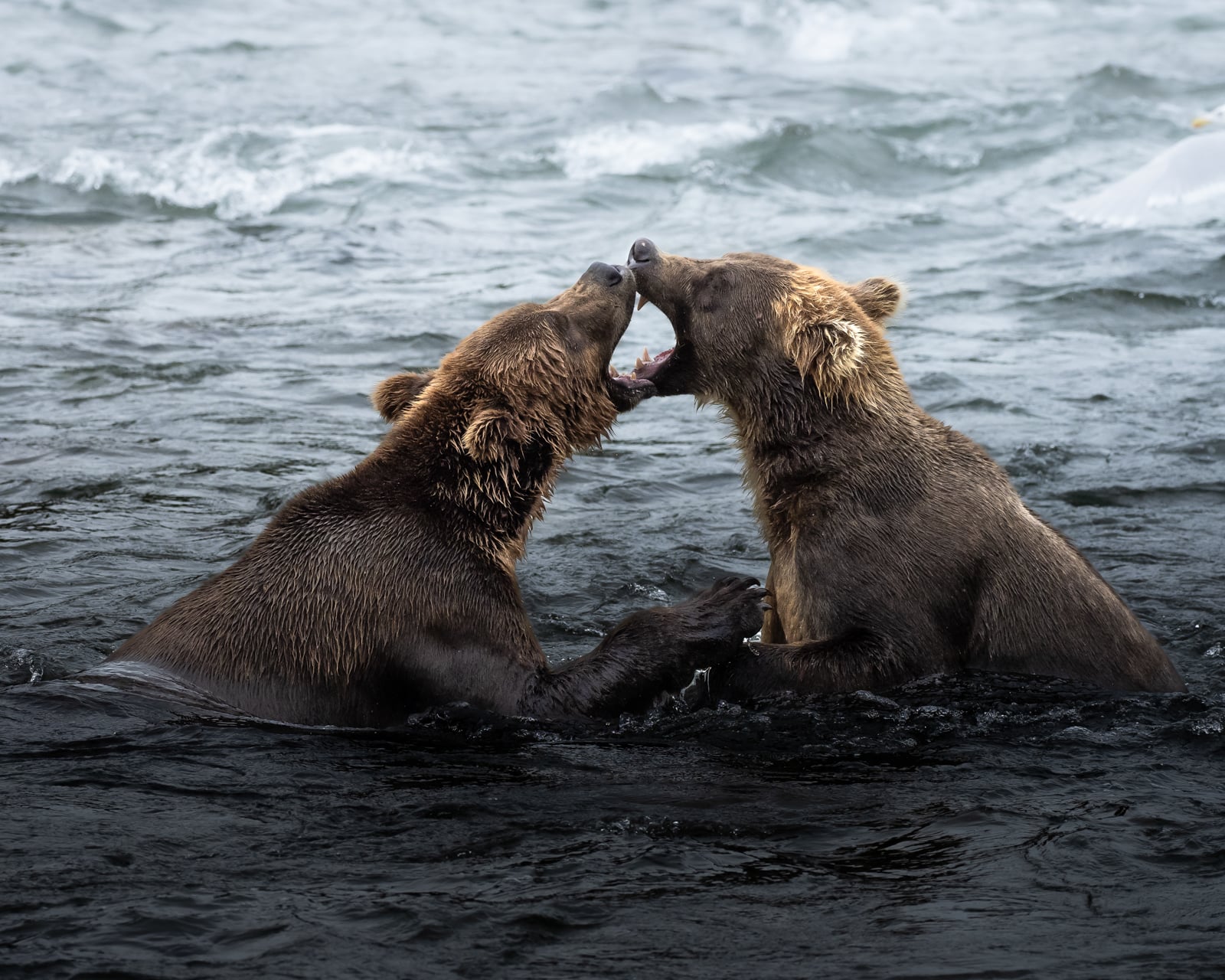 OM-D E-M1 Mark III • M.Zuiko Digital ED 300mm F4.0 IS PRO • 300mm (601mm equivalent) • 1/1600sec • f/4.0 • ISO 640
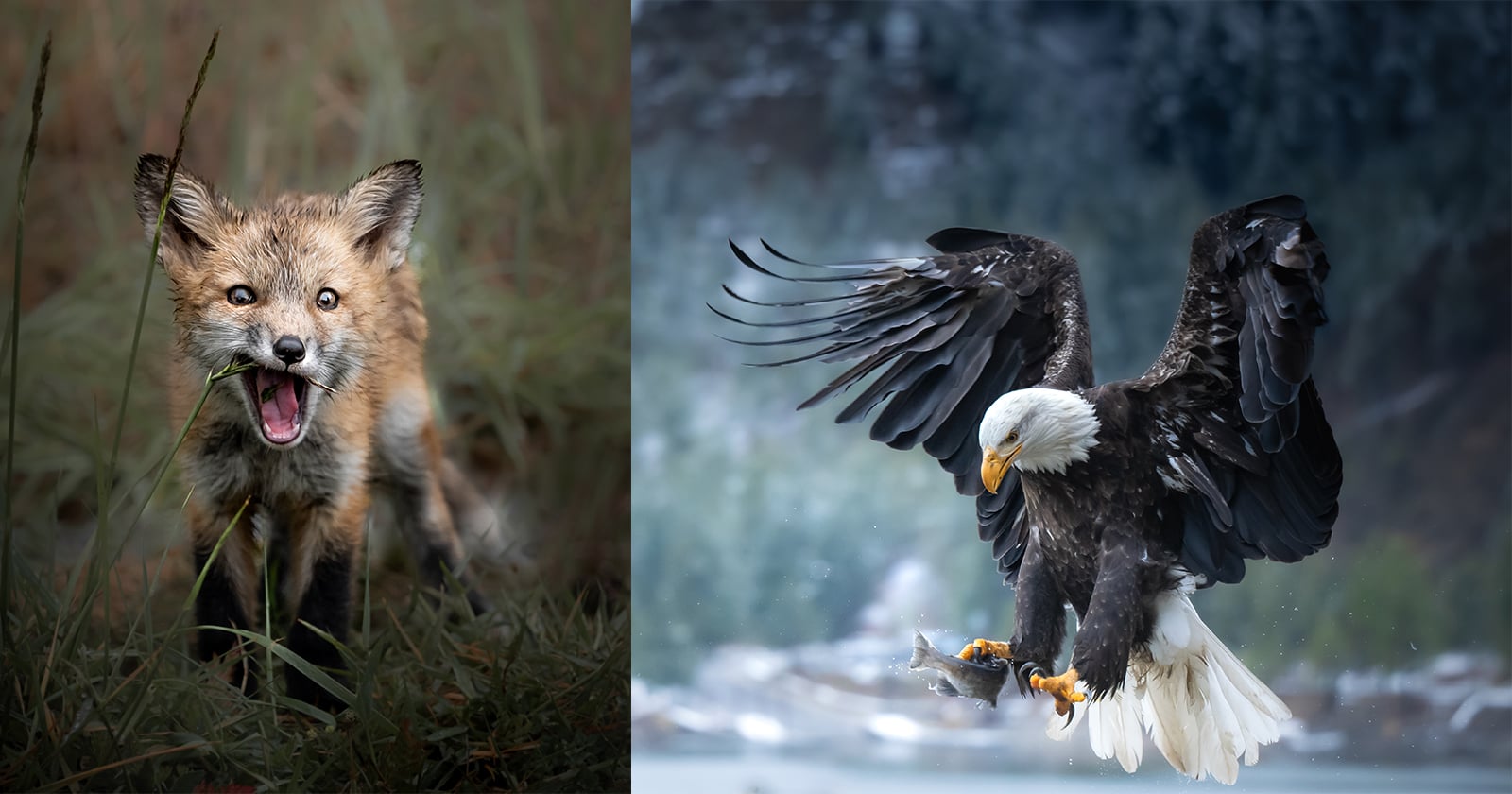
The same applies to any species. A fox only shows its real personality when fully at ease. Knowing those cues turns a photographer from observer to anticipator.
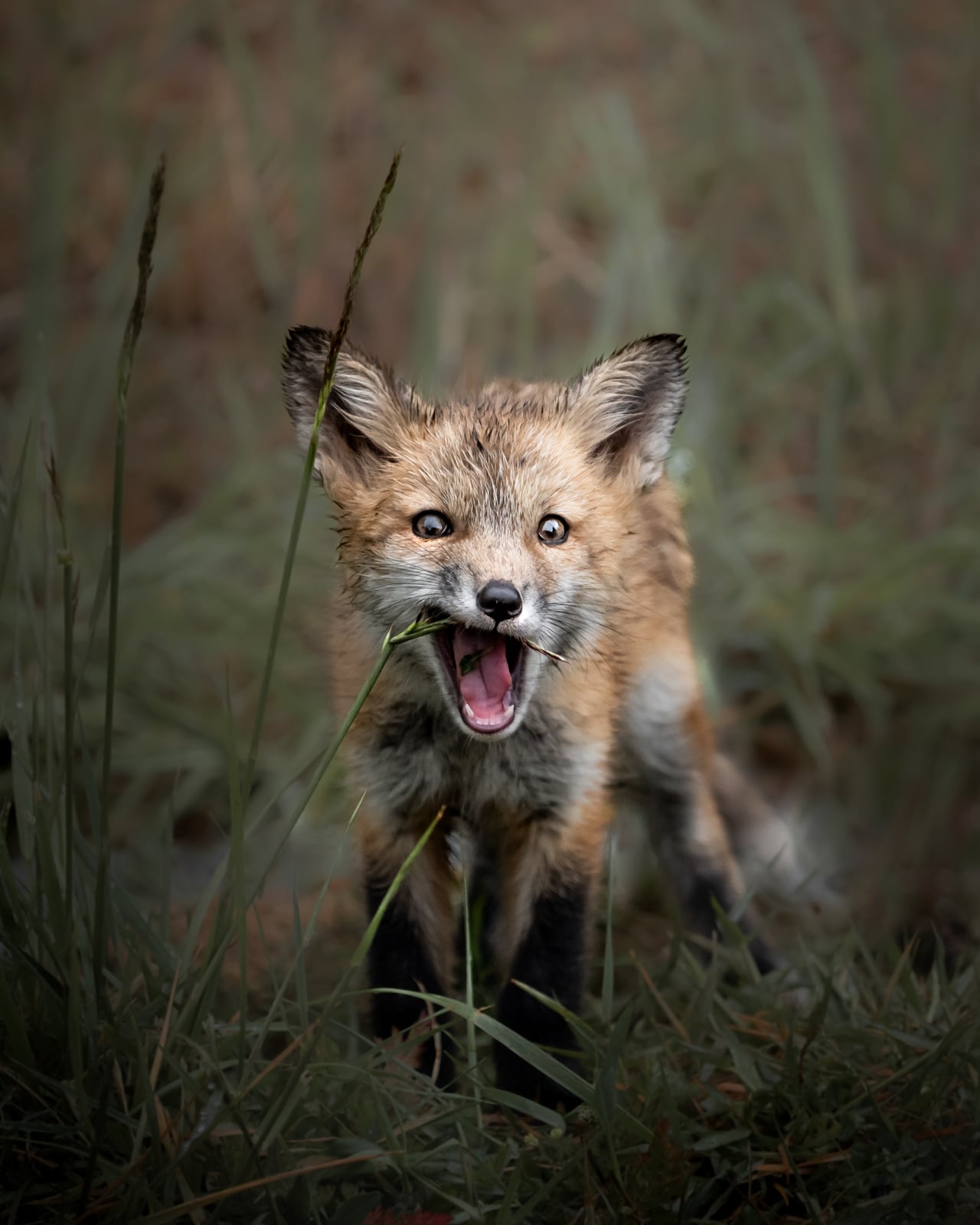 OM-D E-M1 Mark III • M.Zuiko Digital ED 40-150mm F2.8 PRO • 150mm (300mm equivalent) • 1/5000sec • f/2.8 • ISO 500
“You can’t get an animal’s true personality by stressing it out,” Taxis adds. “That fox with the goofy face and the tongue out? That only happens when the animal is completely comfortable. If you’re pushing in too close or moving too fast, you’ll never see that side of them.”
Revisit the Same Subject Across Seasons and Conditions
“Your first time photographing anything, especially wildlife, is never going to be your strongest work,” Taxis reflects. “You have to get to know your subject and love watching it to create images that tell the story properly. You don’t see everything the first time. The light, the behavior, the small details, they reveal themselves over weeks, months, and years.”
Taxis has followed the same moose herd in Grand Teton for six years. Some of the bulls she followed in her first season are gone. Others grew into the biggest animals in the valley and then disappeared.
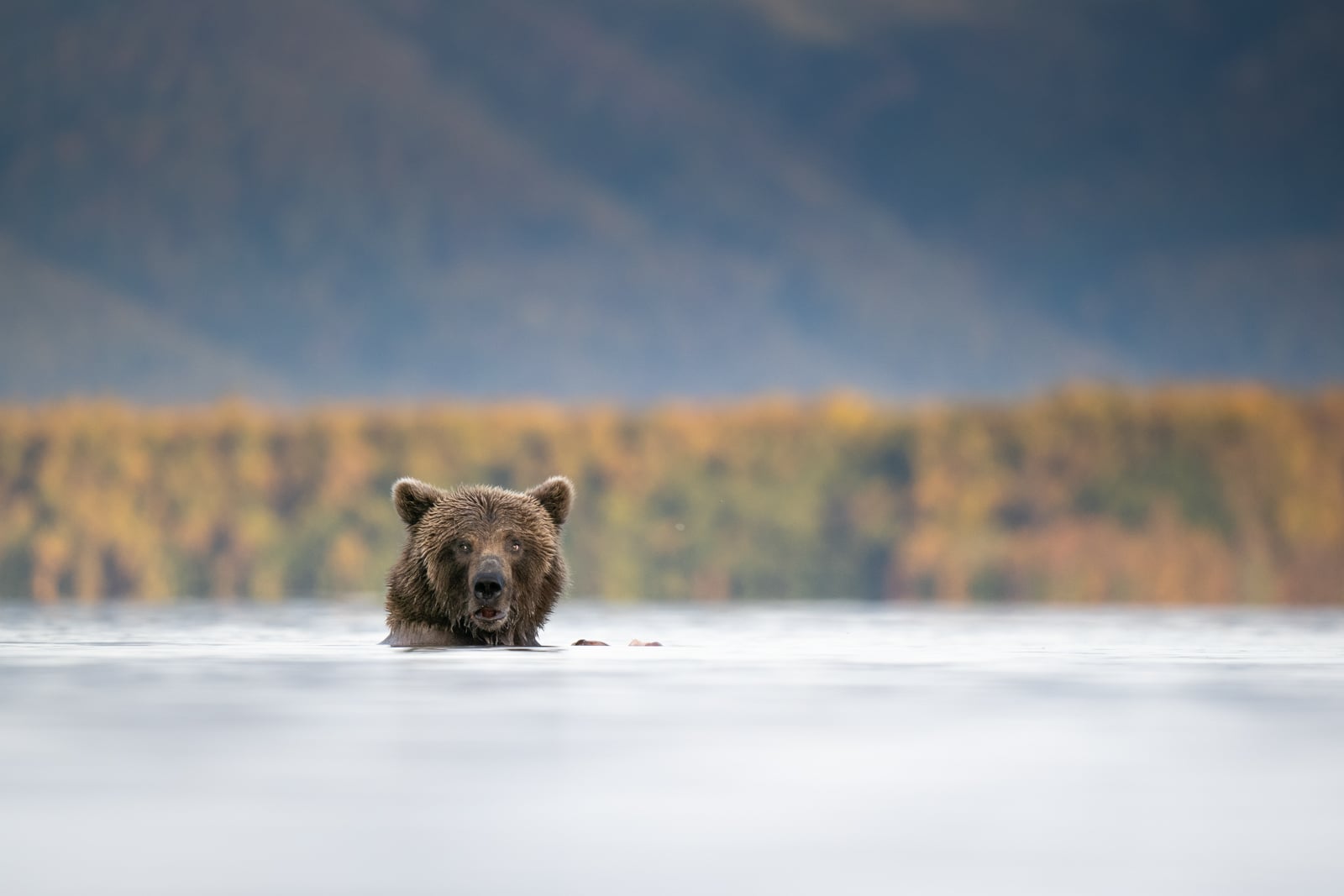 OM-1 • M.Zuiko Digital ED 150-400mm F4.5 TC1.25X IS PRO • 400mm (801mm equivalent) • 1/800sec • f/4.5 • ISO 250
She knows which bull returns to the same spot in the water at a certain hour and which ridgeline catches them in the day’s last light. One bear in particular has earned a name.
“There’s this bear in Alaska named Chunk that I’ve been following for years,” she shares. “He came back this season with a broken jaw, all scarred up, and he’s still out there thriving. The fact that he persists through all of that is the story I want to tell. If I hadn’t been watching him all this time, that photo of him scarred up with a broken jaw is just a photo of another bear. Because I know his story, every photo I take of him means something.”
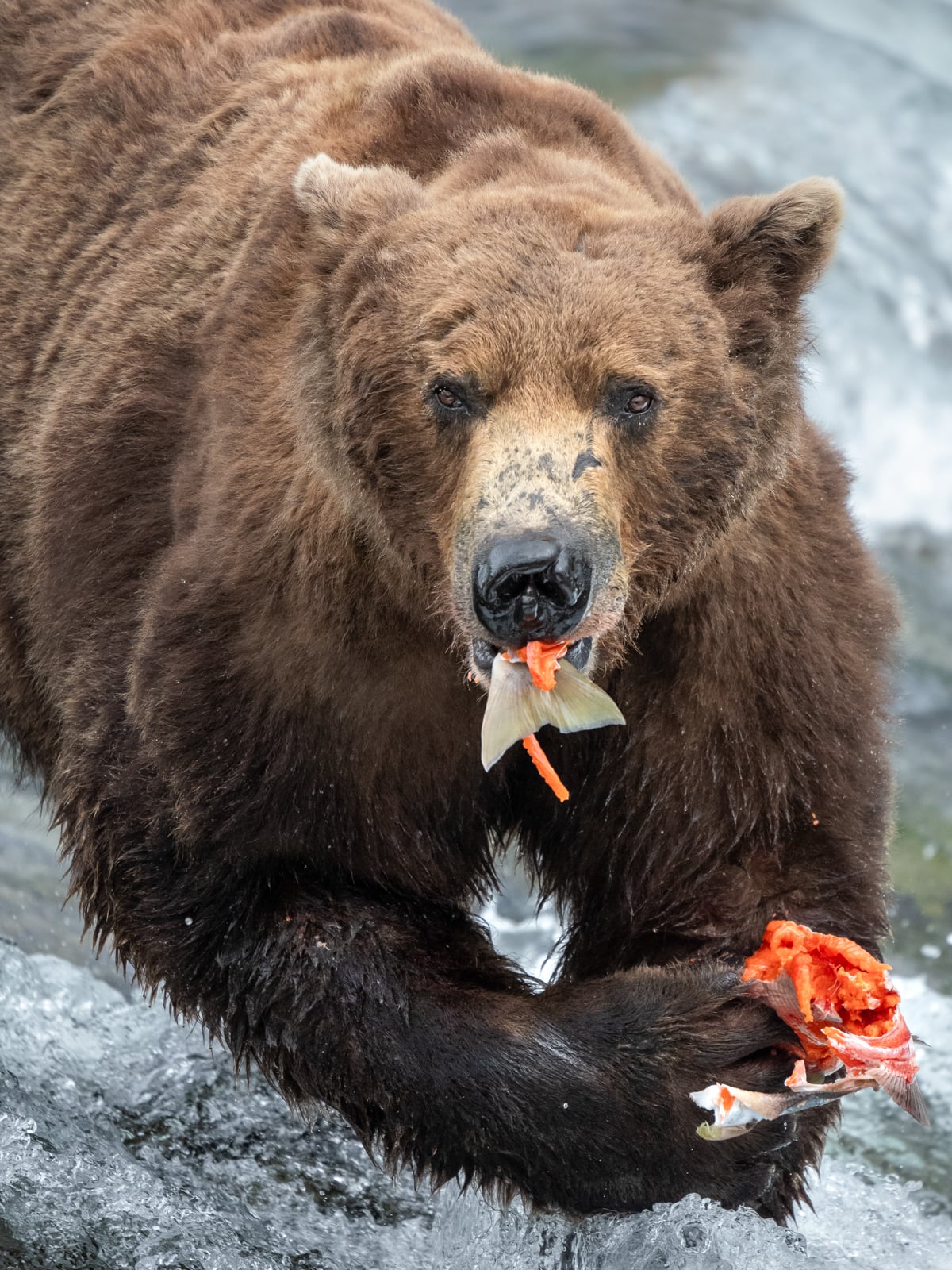 OM-1 Mark II • M.Zuiko Digital ED 150-400mm F4.5 TC1.25X IS PRO • 335mm (671mm equivalent) • 1/2000sec • f/4.5 • ISO 3200
“I think the best way to protect something is to love it, and the only way to love it is to experience it,” she adds. “That’s why I go back year after year. It’s not just about the photos anymore. I love these places and these animals, and I don’t want to do anything else but use my art to tell their stories.”
Let Ethical Distance Drive Creative Problem-Solving
Taxis often photographs from fixed positions. She picks a spot at the edge of a meadow or ridgeline, sets up, and waits, sometimes for an entire day. On guided sessions, she teaches clients to be patient and do the same.
“If you can’t get the photo by respecting the animal, then it’s not your photo to take,” she stresses.
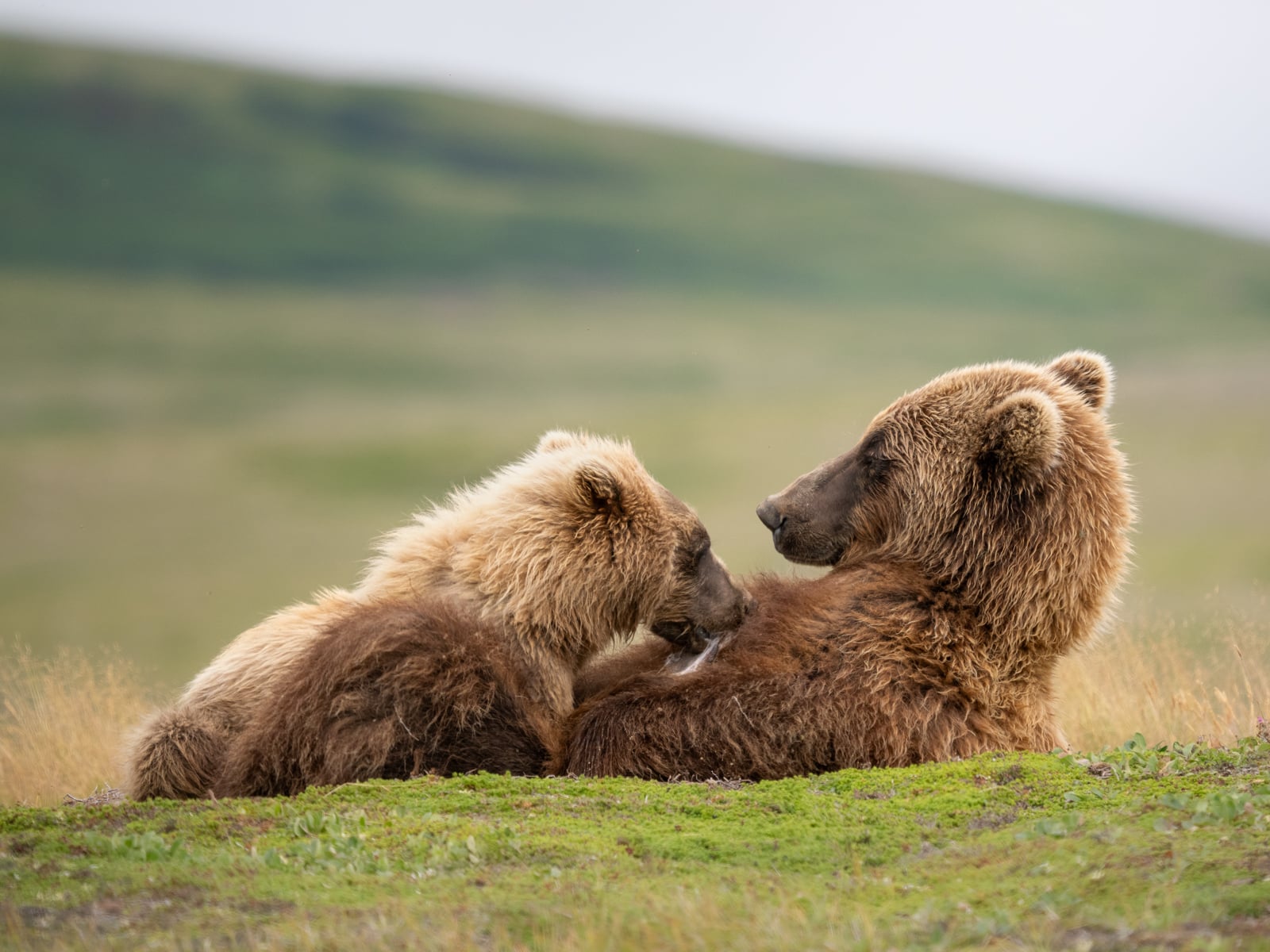 OM-1 • M.Zuiko Digital ED 150-400mm F4.5 TC1.25X IS PRO • 335mm (671mm equivalent) • 1/1250sec • f/4.5 • ISO 500
“The first day this season I saw the great gray owl, it was magical,” she recalls. “I was with two other photographers, and this owl was catching voles right in front of us. We returned the next day and there were 10 people chasing the owl, and someone got within 15 feet while it was trying to hunt. That person was actually putting the owl in danger. That kind of pressure can keep an owl from hunting for days. So we went somewhere else and waited. The group eventually left and right at golden hour, the owl came to our side and put on the most spectacular show. Just from being patient.”
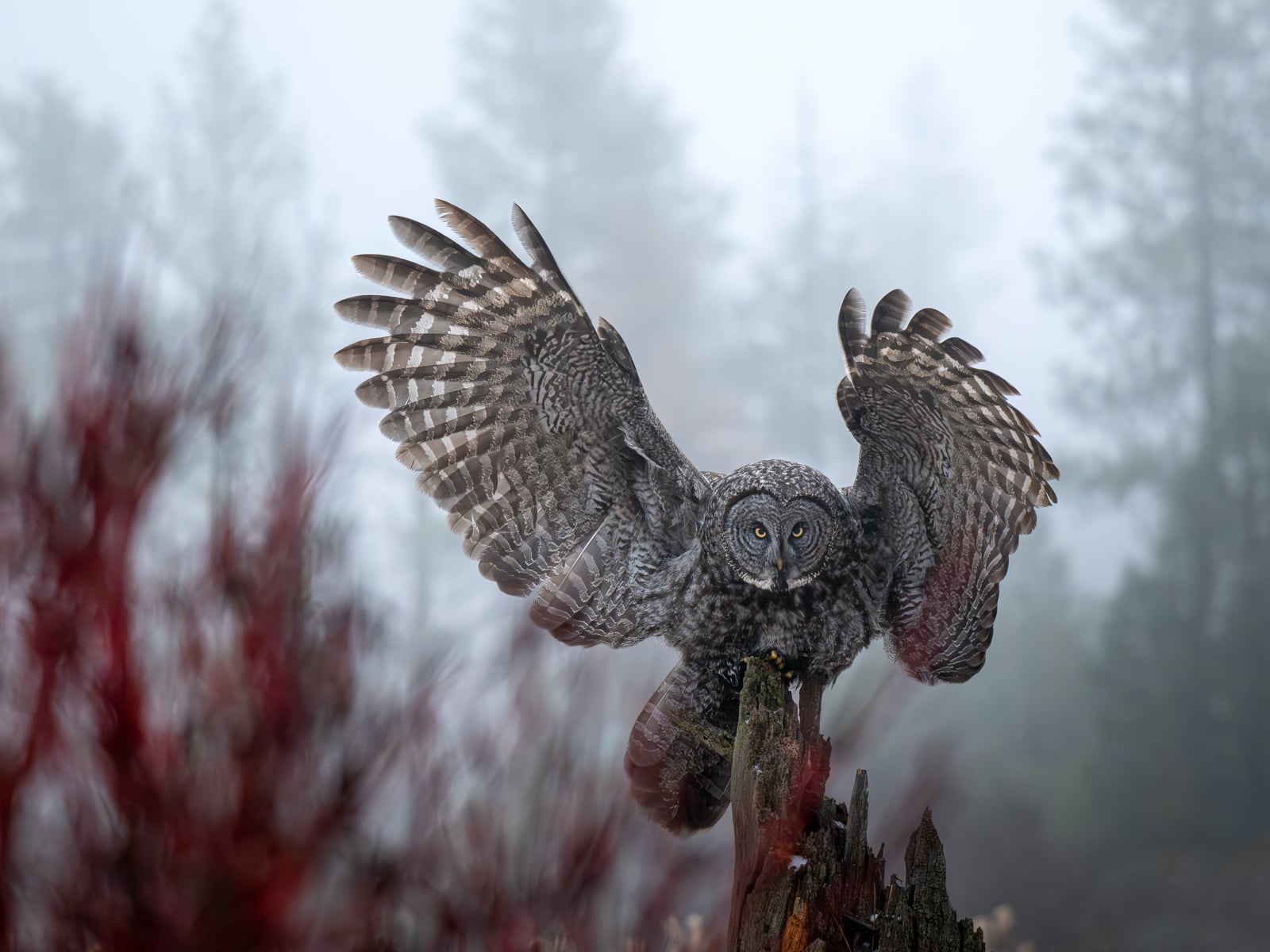 OM-1 Mark II • M.Zuiko Digital ED 150-400mm F4.5 TC1.25X IS PRO • 158mm (316mm equivalent) • 1/1600sec • f/4.5 • ISO 4000
Taxis’ M.Zuiko Digital ED 150-400mm F4.5 TC1.25x IS PRO delivers 300-800mm equivalent reach natively. The built-in 1.25x teleconverter extends the range to 375-1000mm. The extreme reach lets her experiment with artistic compositions from a distance that does not interfere with the animal’s behavior.
“The reach means I don’t have to compromise between getting the shot and giving the animal its space,” she continues. “I can sit on a log 75 yards away and still fill the frame with a wolf’s face, or pull wide and let the landscape tell the story. I’m not choosing between the image and the animal’s comfort.”
Find Your Reason
For Taxis, the camera work has always been secondary to the reason behind it.
“I think the greatest privilege in the world is getting to spend time with these animals and tell their stories through my images,” she reflects. “I’ve watched the same moose herd for six years. I’ve followed Chunk through broken jaws and brutal winters. These aren’t just subjects to me. They’re lives I’ve gotten to know, and every photograph I take is my way of fighting for them.”
 OM-1 • M.Zuiko Digital ED 300mm F4.0 IS PRO • 300mm (601mm equivalent) • 1/2000sec • f/4.0 • ISO 1250
“I hope the story I tell through my images helps people want to protect what’s out there,” she shares. “If someone sees one of my photos and goes home caring about an animal or a place they never thought about before, that makes all the cold and wet mornings worth it.”
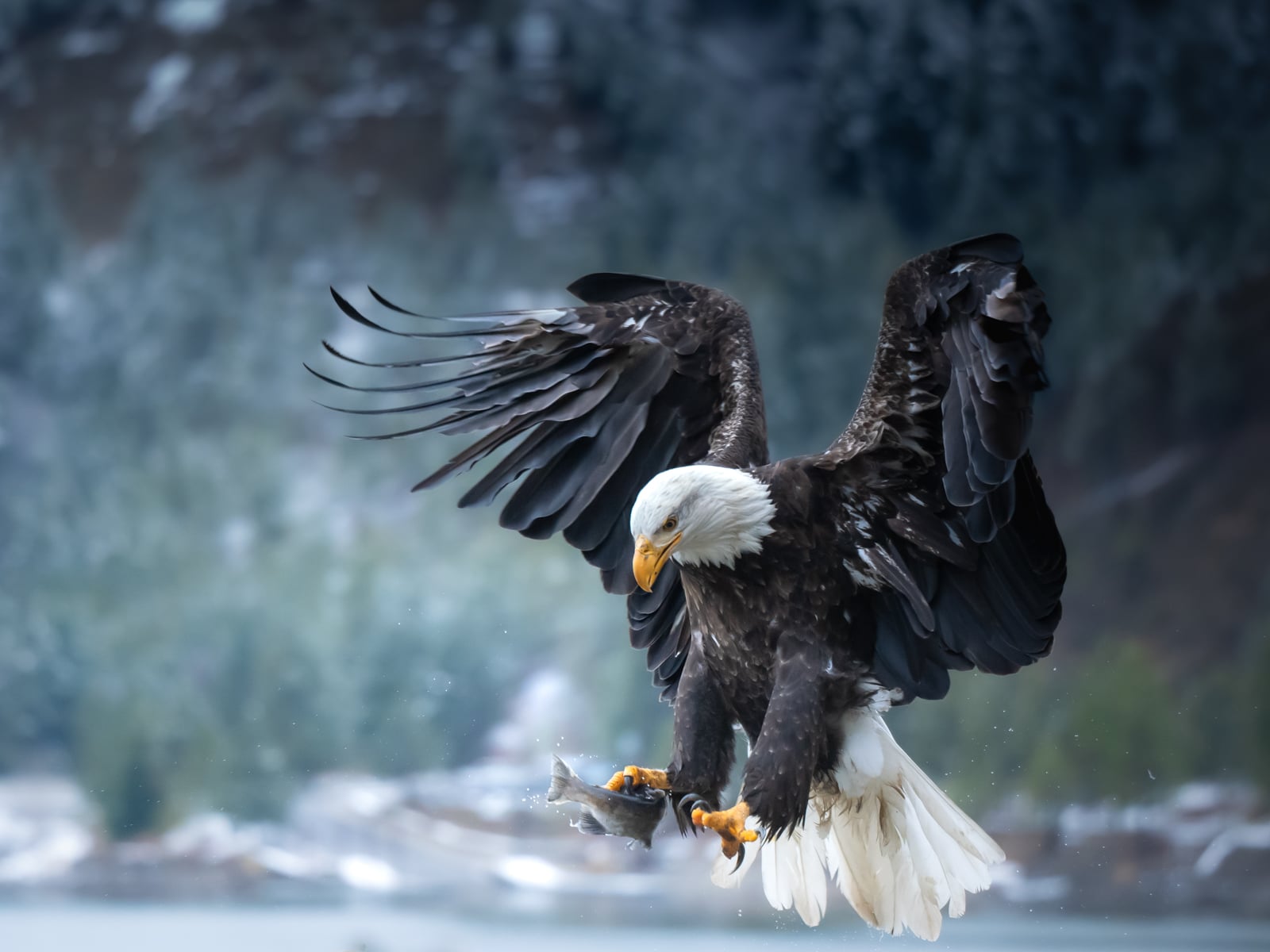 OM-1 Mark II • M.Zuiko Digital ED 150-400mm F4.5 TC1.25X IS PRO • 150mm (300mm equivalent) • 1/1600sec • f/4.5 • ISO 4000
More from Tiffany Taxis can be found on her website and Instagram.
Full disclosure: This article was brought to you by OM SYSTEM.
Tiffany Taxis leads guided wildlife photography tours in Alaska and the Greater Yellowstone Ecosystem. While many of Taxi’s images are captured with the M.Zuiko Digital ED 150-400mm F4.5 TC1.25x IS PRO, the M.Zuiko Digital ED 100-400mm F5.0-6.3 IS provides similar reach at a more accessible price point for photographers building their wildlife kit.






 English (US) ·