
 3 weeks ago
50
3 weeks ago
50
Special commentary on this classic PC Gamer review provided by:
Archive Spelunker

Revolution Software is probably best-known among point-and-click fans for the Broken Sword series, and the infamous goat puzzle. (Part of a trilogy of infuriating animal brainbenders along with The Hitch Hiker's Guide to the Galaxy Babel fish and Gabriel Knight 3' cat-hair mustache.) But before that Revolution gave us Lure of the Temptress and Beneath a Steel Sky, the latter a collaboration with comics artist Dave Gibbons.
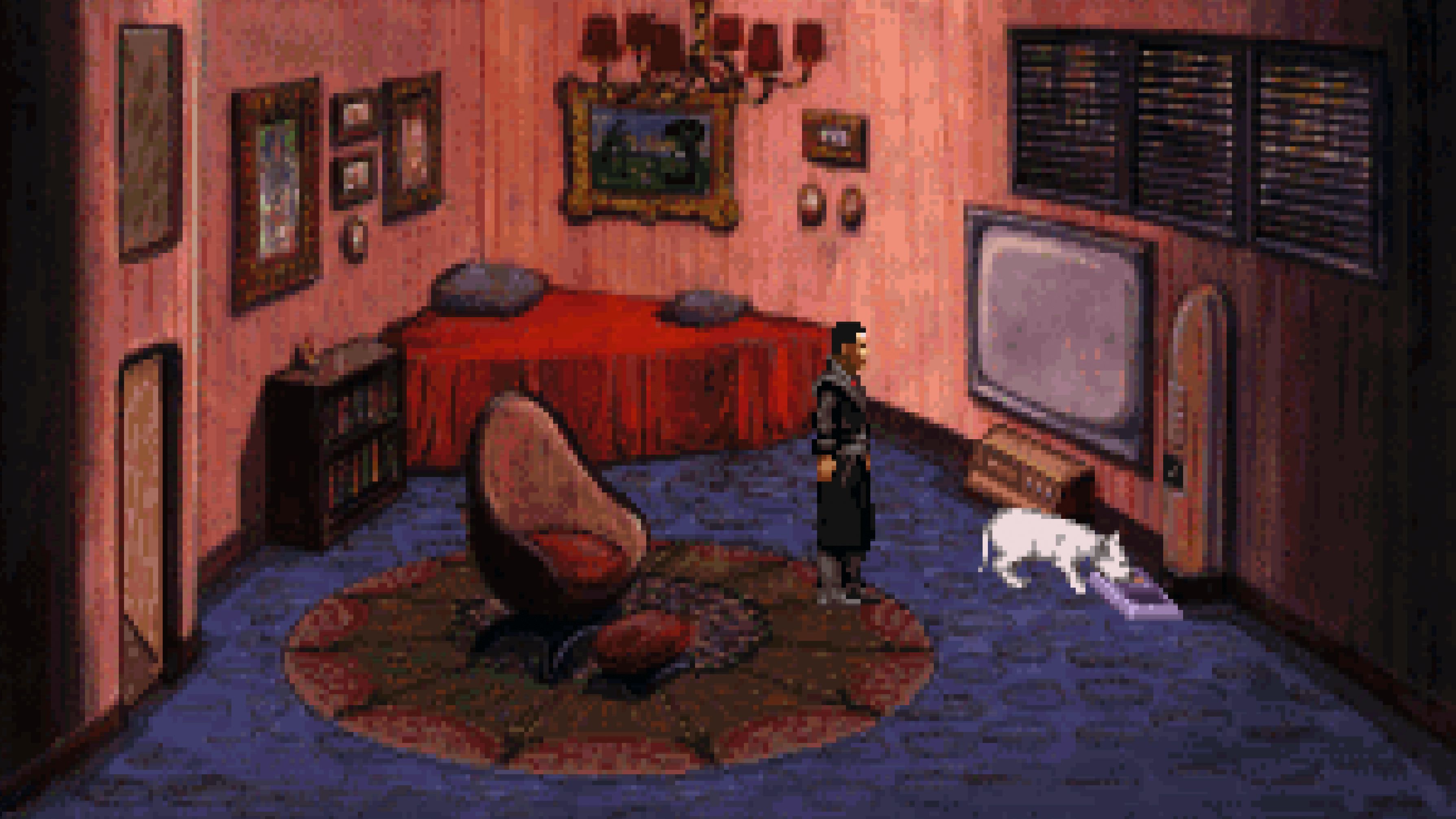
After a planned Watchmen game fell through, Gibbons instead provided the dystopian cityscape, character designs, and part of the story for Beneath a Steel Sky. The art remains the most convincing thing about it, making me wonder why we ever bothered with 3D graphics.
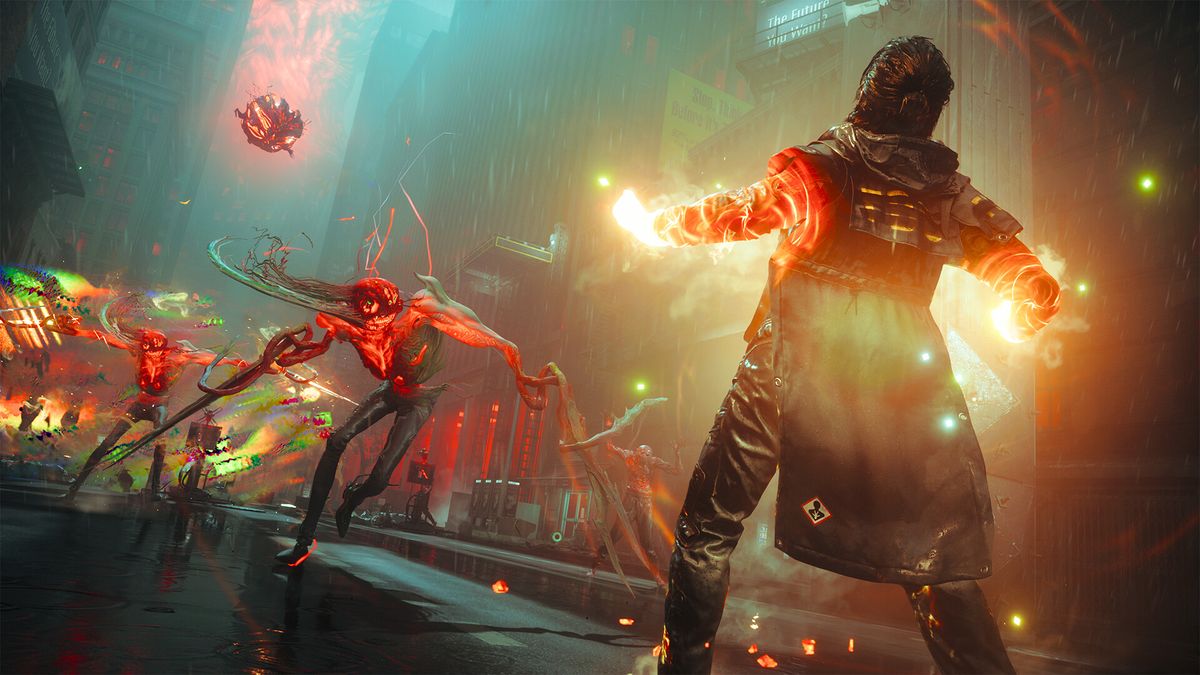
The game itself was full of the kind of puzzles adventure gamers loved and the rest of us slogged through for the sake of the story. Real heads like PC Gamer's reviewer Garry Whitta thrived on distracting guards with unusual uses for inventory items, and to them Beyond a Steel Sky remains a beloved classic. So much so that a sequel was eventually crowdfunded and released in 2020. Beyond a Steel Sky went 3D though, losing the one thing I'd liked about the original. Our reviewer Ian Evenden wasn't put off by that, giving it an 81% almost as enthusiastic as Whitta's take on the original from PC Gamer's debut issue.
From the archives: The review below appears as originally written, with only minor changes in formatting and screenshots. By Garry Whitta
Beneath a Steel Sky review – PC Gamer #1 (UK, December 1993)
Latest Videos FromPC Gamer
It's here at last. After two years in development and more column inches of enthusiastic preview copy than is healthy, Revolution Software and Dave Gibbons' Beneath A Steel Sky, finally, arrives. And it couldn't be further removed from the Hull-based company's 1992 debut.
After the magic and mythology of Lure Of The Temptress comes an oppressive, futuristic techno-thriller that borrows heavily from the pioneering sci-fi works of Philip K Dick and William Gibson. Take one part of Blade Runner, add a generous helping of Gibbons' own Give Me Liberty graphic novel, season to taste with a little Total Recall, and you've got Beneath A Steel Sky in a nutshell.

This review was originally published in PC Gamer #1 (UK, December 1993).
You can still subscribe to PC Gamer to get new issues of the magazine (in print!) every month.
Depending on how cynical you are, Beneath A Steel Sky's concept is either a brilliantly conceived piece of science fiction or just a plagiarised compilation of existing sci-fi ideas. Set in the near future, the world government has collapsed and corrupt corporations are now free to take control of the planet.
As the global ecology is ravaged by pollution, the upper-class nouveau riche retreat underground, while the less well-off are forced to live and work in claustrophobic towers high above the surface. Beyond all this is The Gap, a desert outland populated by those who refuse to live in the city—and also home to our hero, Robert Foster, a raincoat-clad hunk propelled into the story after the sinister police kidnap him from his home without explanation and a subsequent helicopter crash leaves him stranded, totally alone, in the higher reaches of the towering city.
But to give away any more of the story here would be to spoil one of the game's strongest aspects. Apart from a few clues delivered during the intro, Beneath A Steel Sky deliberately gives you hardly any information about why you've been kidnapped, what you have to do, or even where you are at the outset. Half the fun is to be had unravelling the mystery and watching the plot slowly unfold as you go.
To be honest, Beneath A Steel Sky is pretty conventional in its approach—despite what you may have heard. As an adventure game there's nothing radically original on offer. It is big though (around 100 locations), and features countless puzzles and a myriad of genuinely interesting characters. A particularly nice touch is your robotic companion, Joey, a decidedly wise-ass robot who, although starting the game as a lowly circuit board, can be plugged into all manner of cybernetic bodies to help you perform helpful tasks. The well-scripted love-hate relationship between the two characters really helps bring them both to life.
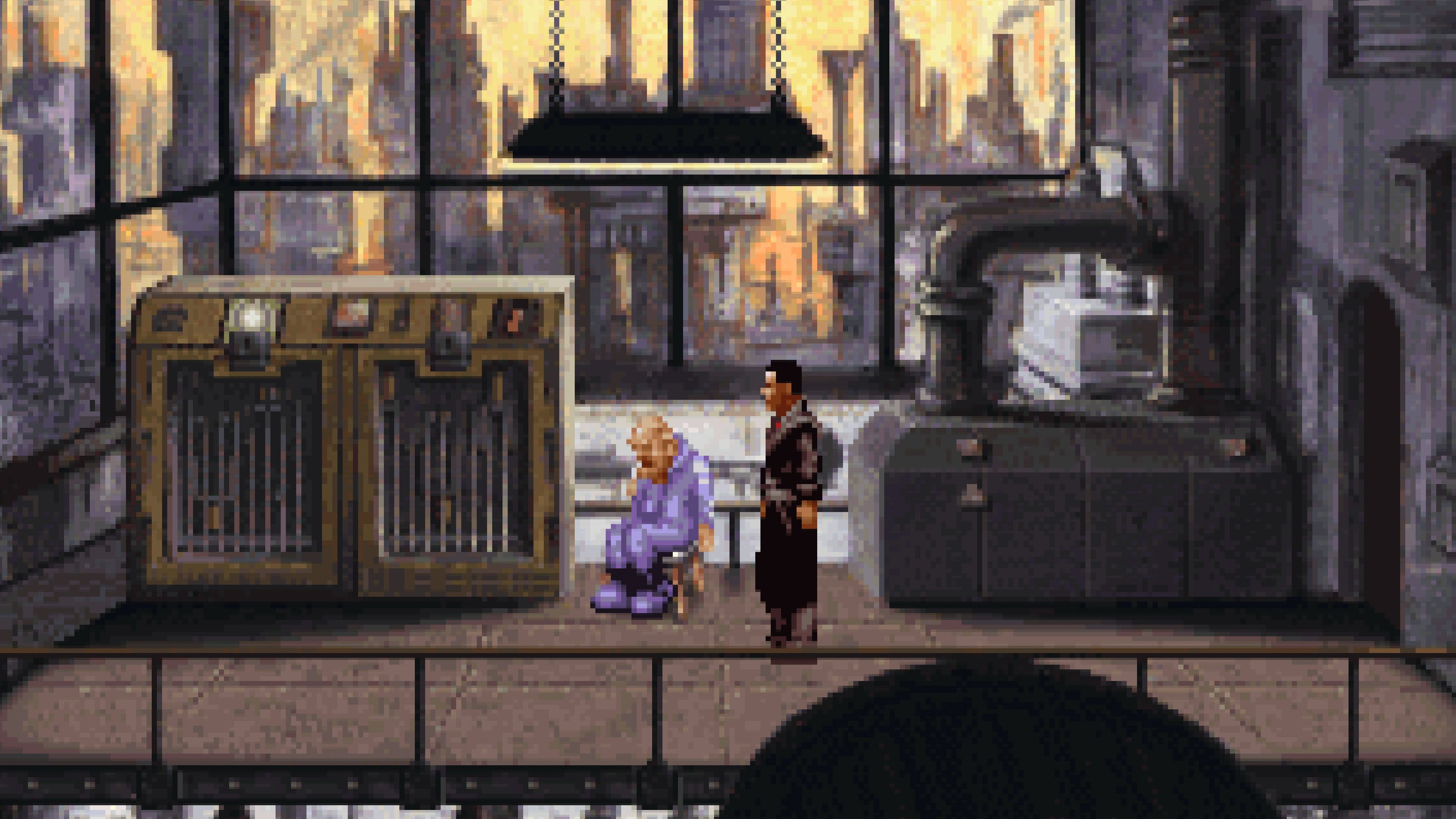
Progress in Beneath A Steel Sky is about getting to the bottom of things in more ways than one—starting near the top of the city, you'll have to get to the surface and ultimately underground in order to solve the mystery and crack the main conspiracy. Along the way, there are security forces to avoid, an all-powerful central computer to contend with and numerous sub-plots and red herrings to divert your attention. The game is still basically about using the right object in the right place at the right time, but it's compelling because it's so richly plotted and well thought out from beginning to end. Serious adventure hacks will be in hog heaven.
Counterpoint
What do you best remember about the Monkey Island games? More than likely, it's not the graphics (ace though they are) or the easy-to-get-to-grips-with interface (icon of user friendliness though it may be). No, it's probably the jokes.
You know, the spitting contest, the bit where his trousers fall down... And that for me, is where Beneath A Steel Sky falls down. It's just not funny. (It's not even trying to be funny most of the time.) Okay, it's not really fair to complain when a game fails to provide something it never set out to do in the first place (this is much more your Indiana Jones & The Fate Of Atlantis than your Sam And Max) but consider—LucasArts haven't done a serious adventure in a long time. And why? Because the funny ones are more popular, that's why.
That's not to say more serious graphic adventures can't work—this one, on the whole, is pretty, involving, well-constructed and, in most areas, just plain good—but simply that a few jokes would have spiced things up a bit.
—Matt Bielby
But the game's not without its faults. The main problem I have is that it doesn't seem to know quite what tone it should set. From what you've heard, and what you're shown during the introduction sequence, you'd have every right to expect a dark, gloomy and atmospheric vision of a sleazy, corrupt future. However, no matter how hard Gibbons' beautifully-realised background artwork and truly excellent accompanying mini-comic try to set the mood, there are too many distracting factors at work here that dilute the effect.
Maybe it's that I just can't take the little on-screen characters seriously enough to care for them or, in the case of the numerous baddies, feel threatened by them. Maybe it's because the music, which should have been as haunting and ominous as the powerful graphics, mostly consists of a series of inappropriate themes which at times sound more like jolly Radio One jingles.
In reality, probably all these things are to blame—the game simply spreads itself too thin, trying to be at once wildly atmospheric, comedic, menacing and tongue-in-cheek.
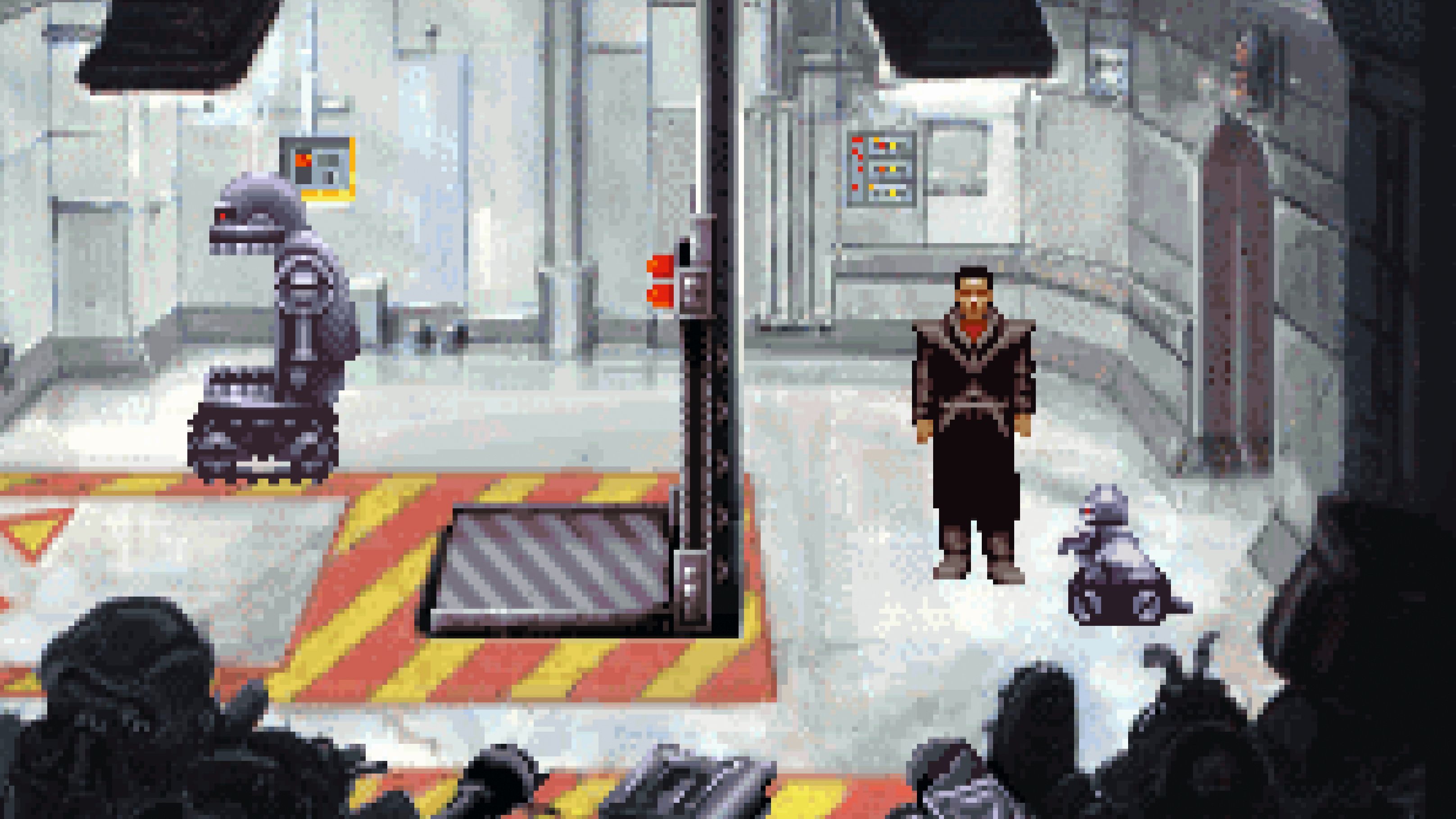
No matter how close it may come at times, Beneath A Steel Sky never quite manages to immerse you in a brooding, sinister world the way the designers obviously intended. But then again I'm probably just being a jaded bastard. The game may be very pretentious, but should we really take it that seriously? This isn't a movie or a high-brow novel, it's a computer game, for God's sake, and although it may have its failings as a piece of interactive fiction, as an adventure game in the classic LucasArts tradition it's difficult to find fault with.
In fact, it's at least as good—although not as funny—as anything that LucasArts has come up with in the last year. But as for the hyped claim that it's "The World's First Computer-Based Animated Comicbook Adventure," well, I'm still far from convinced. Just take Beneath A Steel Sky for what it is and not for what it may otherwise pretend to be and you'll have a whale of a time.






 English (US) ·