
 1 hour ago
8
1 hour ago
8
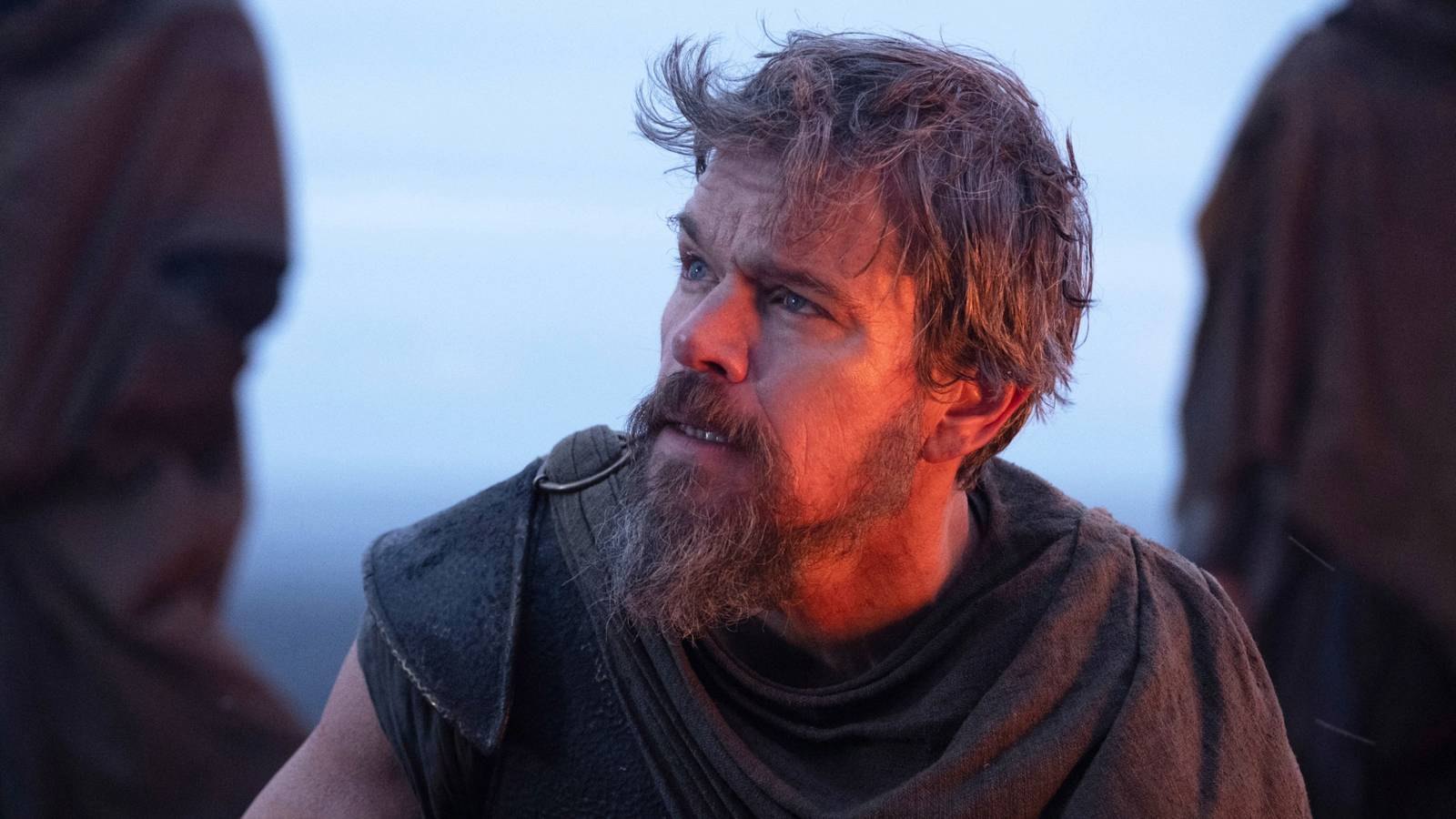
Christopher Nolan has landed another IMAX-sized hit with “The Odyssey,” his new effects-driven twist on the ancient epic, starring Matt Damon, Anne Hathaway, and many of the other highest earners in Hollywood. But the “Oppenheimer” director isn’t the first to attempt to adapt the Homeric poem about Odysseus’ meandering journey home from the Trojan War. From Mario Camerini’s 1954 costume drama “Ulysses” to the Coen brothers’ zany 2000 satire “O Brother, Where Art Thou?,” it seems that just about every decade or two there’s an ambitious adaptation of the classic tale. And that was certainly true in the 1990s, which saw the release of Andrei Konchalovsky’s two-part TV version starring Armand Assante (“American Gangster”), Greta Scacchi (“Presumed Innocent”), and a supporting cast of some of the day’s biggest stars.


The “Runaway Train” and “Tango & Cash” director’s wonderfully weird miniseries, also titled “The Odyssey,” aired on NBC during two back-to-back evenings in 1997. Though the adaptation co-produced by Hallmark Entertainment and American Zoetrope has been somewhat lost to time, its heavily advertised premiere felt like a not-to-be-missed event in an era when people still tuned in for TV specials. And the nearly three-hour adventure epic did not disappoint, transporting viewers armed with Jiffy Pop to a wartorn ancient world populated by heroes, gods, and monsters for two thrilling nights.
In the past three decades, miniseries based on classic literature may have lost the enthusiastic fanbase that existed when “The Odyssey” and fellow Hallmark-produced specials “Gulliver’s Travels,” “Merlin,” and “Jason and the Argonauts” were all the rage. But Konchalovsky’s rendering of the heroic tale — must-watch programming for lovers of Greek mythology, ‘90s aesthetics, and a good cinematic romp — certainly hasn’t lost its appeal. And actually, it’s primed for a renaissance, now that everyone has Homer on the brain.
Beyond serving as the perfect counterpoint to Nolan’s very serious film — in which Damon’s Odysseus is haunted and solemn, unlike Assante’s swaggering hero who can’t seem to stop himself from pissing off Poseidon and seducing divinities — here’s just some of what the TV version has to offer audiences of today.
 ‘The Odyssey’©NBC/Courtesy Everett Collection
A much-needed abundance of star power
These days, no one brings out the stars quite like Nolan, who has counted Damon, Hathaway, Cillian Murphy, and Robert Pattinson among his many muses in recent years. But back when the “Tenet” and “Interstellar” director only had a few shorts under his belt, Konchalovsky, with the help of executive producer Francis Ford Coppola, was the one signing big-name talent. In fact, like Nolan’s new adaptation, the ambitious small-screen version of “The Odyssey,” largely shot in Malta and Turkey, is a veritable who’s-who of its era’s most bookable actors.
Opposite Assante and Scacchi, who plays Odysseus’ wife, Penelope, Hollywood royalty Isabella Rossellini and Geraldine Chaplin deliver scene-stealing performances as Athena and the nursemaid Eurycleia. Bernadette Peters and Roger Ashton-Griffiths land bawdy and biting turns of phrase in the roles of Circe and Odysseus’ right-hand man Polites, while Vanessa Williams, as Calypso, lights up the screen with a heartfelt performance and dazzling good looks. A barely recognizable, bearded Eric Roberts makes the perfect villain as Penelope’s suitor Eurymachus, who takes a shine to the faithless maid Melanthe, played by Paloma Baeza. And Christopher Lee, as the blind prophet Tiresias, and Irene Papas, as Odysseus’ mother, add an air of sophistication to the whole affair.
Even when some roles only take up a few minutes of airtime, in the case of this “Odyssey,” there’s no such thing as too much (or unnecessary) star power. From the opening sequence — which features Odysseus scooping up Penelope, “Gone With the Wind”-style, and taking her home to give birth — those performances are the only thing keeping the adaptation from veering off the rails.
Sure, Assante doesn’t always pull off his character’s many verbose, philosophical monologues, but the actor’s studied gravitas does a lot to distract from the tiny-tunic-wearing extras flailing about in the background. Likewise, whenever a stoically beautiful Scacchi or radiant Rossellini is onscreen delivering nuggets of wisdom, it always makes whatever over-acted chaos is unfolding feel more weighty, if not always quite the stuff of legends. Though, even its top-tier talent can’t completely save “The Odyssey” from itself — as seen in the climax, when Eurymachus and Melanthe fall into each other’s arms, pierced by the same arrow, and let out literal croaks.
 ‘The Odyssey’©Hallmark Entertainment/Courtesy Everett Collection
Creature effects courtesy of Jim Henson and low-tech CGI
Thanks in no small part to Nolan’s influence, big-budget effects and IMAX technology have been the biggest driving forces in Hollywood the past few years. Though the industry’s leading blockbuster directors, including Nolan himself, are moving away from creating cinematic magic primarily in post-production, preferring instead to marry practical effects with some degree of CGI. But going low-tech wasn’t a matter of preference in the late ‘90s; it was something done out of necessity, and without the type of budget attached to the Oscar-winning director’s latest, $250-million feature.
To be fair, Konchalovsky’s two-part series wasn’t exactly light on funds, boasting an impressive budget for the time at an estimated $40 million. (A contemporaneous Variety write-up, which put the budget at $32 million, deemed it the most expensive TV drama ever made on a minute-by-minute basis.) If anything, the creatives behind the project, which came out the same year as “Titanic,” “Men in Black,” and “The Lost World: Jurassic Park,” were limited by the technology of the time. But thanks to an innovative crafts department and the creators at Jim Henson’s Creature Shop — the masterminds behind other rollicking miniseries from the time, including the Ted Danson-led “Gulliver’s Travels” special — there was no lack of fantastical, eye-popping elements in the sincere but often unserious adaptation.
Using a combination of puppetry, animatronics, and CGI, the experts at the Henson-founded studio whipped up a larger-than-life Cyclops, a multi-headed sea monster, a talking tied-up pig, and a chompy sea snake for the made-for-TV epic. With wires, a blue screen, and some kind of glittery computer-generated effect, the crafts department sent Hermes (Frederick Stuart) zipping around the Mediterranean to deliver midair messages to his fellow immortals and Odysseus. And the crew applied a similar logic to bringing to life the miniseries’ mythical backdrops, including a scorching Hades, which was set ablaze through a combination of digital flames, practical effects, and the work of “Chariots of Fire” production designer Roger Hall.
Not all the special effects in “The Odyssey” work as well, or as consistently well, as others. For instance, the deadly seas that torment Odysseus and his crew, which were created in a giant tank in Malta, look much less convincing later in the production, when a waterlogged Assante is tossed around solo on a small raft. But even in those moments, there’s still a certain hokey charm to the highly entertaining series — which is perhaps best summed up by the promotional poster featuring Assante swinging a big sword in the direction of the Cyclops Polyphemus (sumo wrestler Reid Asuto) and the sea monster Scylla, who’s in the process of making a snack of Odysseus’ weary crew.

Three jam-packed hours of Homeric adventure
Like Franco Zeffirelli’s 1968 drama “Romeo and Juliet,” also an imperfect but entertaining watch, 1997’s “The Odyssey” holds a certain appeal because it at least attempts to be faithful to its source text. And that’s not to say that films like Baz Luhrmann’s “Romeo + Juliet” and Nolan’s newest aren’t great in their own right, but they’re not exactly English-class approved.
Konchalovsky’s miniseries certainly can’t be accused of being a scholarly work, but there is something distinctly Homeric about its tone and the fact that, above all, its goal is to entertain. It has its heavier moments, but like the Odyssey, it values storytelling over solemnity. This version packs in the key elements of the story, including the framing device, which is accomplished through Assante’s narration, and pretty much all of the big events — despite a running time that begs the question, “Why wasn’t there a part three?”
A giant wooden horse carrying mischievous Greeks is taken in on wheels by the Trojans — though that’s thanks to the sea snake devouring Laocoön (poet Heathcote Williams), the priest who actually appears in Virgil’s Aeneid. Odysseus blinds and then makes a mockery of Polyphemus, who thinks the warrior’s name is “Nobody.” In addition to Athena, immortals from Hermes to the wind god Aeolus (Michael J. Pollard) attempt to interfere on Odysseus’ behalf, while Circe and Calypso have much less altruistic intentions. And the Ithacan more than lives up to his reputation as the most obstinate hero in history, regularly taunting Poseidon (Miles Anderson) despite knowing the god will delay his return home.
Of course, “The Odyssey” special doesn’t fully adhere to Homer’s plot, given it’s only about three hours long and was designed to be a primetime special. The Sirens, the Lotus-Eaters, and Odysseus’ father, Laertes, are all casualties of the relatively concise but splashy format. The transition to the climax, when Odysseus massacres his wife’s suitors with the help of Athena’s magic and son Telemachus (Alan Stenson), is also fairly rushed. (In general, it’s helpful to know what happens in the poem if you really want to make sense of all the action.) But all in all, at about the same number of minutes as Nolan’s film, the linearly unfolding TV version fits in a stunning amount from Homer’s 24-book epic.
 ‘The Odyssey’©NBC/Courtesy Everett Collection
Ultimately, maybe it’s sheer nostalgia, rather than star power, special effects, or textual accuracy, that makes “The Odyssey” miniseries so watchable almost 30 years after it premiered. After all, it has all the elements you want to see in a late 20th-century adaptation of an ancient tale: indistinguishable accents meant to evoke Greek and Roman dialects, makeup and hair mimicking pre-Christian beauty standards, and as much linen, silk, and gilding as the costume department can swing.
But even at its time, “The Odyssey” was something to behold, enchanting audiences and wooing critics just enough to earn two Golden Globe nominations and take home two of the five Emmys it was nominated for. Surely, that’s proof enough that it’s high time the special got another look — even if not everyone agrees that it’s truly epic.
“The Odyssey” is available on Tubi, the Roku Channel, Prime Video, and other platforms.


 English (US) ·