
The Bambu Lab A2 L is a printer I’ve been expecting for some time. Essentially, it’s a larger A1, just with technology tweaks and, of course, scale. The big feature here is a 330 x 320 x 325 build area, making it one of the largest in its class of large open 3D printers.
While the A1 is a superb printer for beginners, there’s often a feeling that the print bed size can be a little bit restrictive, especially for some enthusiasts as well as businesses looking to model, create costume items or larger-scale prototypes, and this is what the A2 L’s larger print bed essentially facilitates.
What I like here is that Bambu has essentially created a large-frame design that keeps costs down compared with the more expensive, professional-level H2, P2, and X2 designs. This is more of the entry-level, but still it offers all of that technology and refinement that Bambu Lab always offers, and whilst many people will look at the open-frame design as a little bit of a negative point because you won’t be able to use engineering filaments, if the bulk of what you do is basic print farm work or you’re just printing PLA or basic TPU, then this machine is going to be a perfect option.
Latest Videos From

During the test, another point that came up was that the Wi-Fi is limited to 2.4 GHz. Since I was testing other kit at the time and didn’t have that 2.4GHz bandwidth, I couldn’t quite figure out what was happening. Only when I went for the dual 2.4 and 5GHz did it connect okay, but really, this is a minor thing for most businesses, and that would be absolutely fine.
The build area is obviously the major difference between this and the A1: the A1 has a nice square 256 x 256 x 256 build area, whereas this one upgrades to 330 x 320 x 325. I do kind of wish that Bambu Lab had kept an absolute cube build, as it just makes things easy when you’re orienting; however, it’s nice to have such a large space to work with.
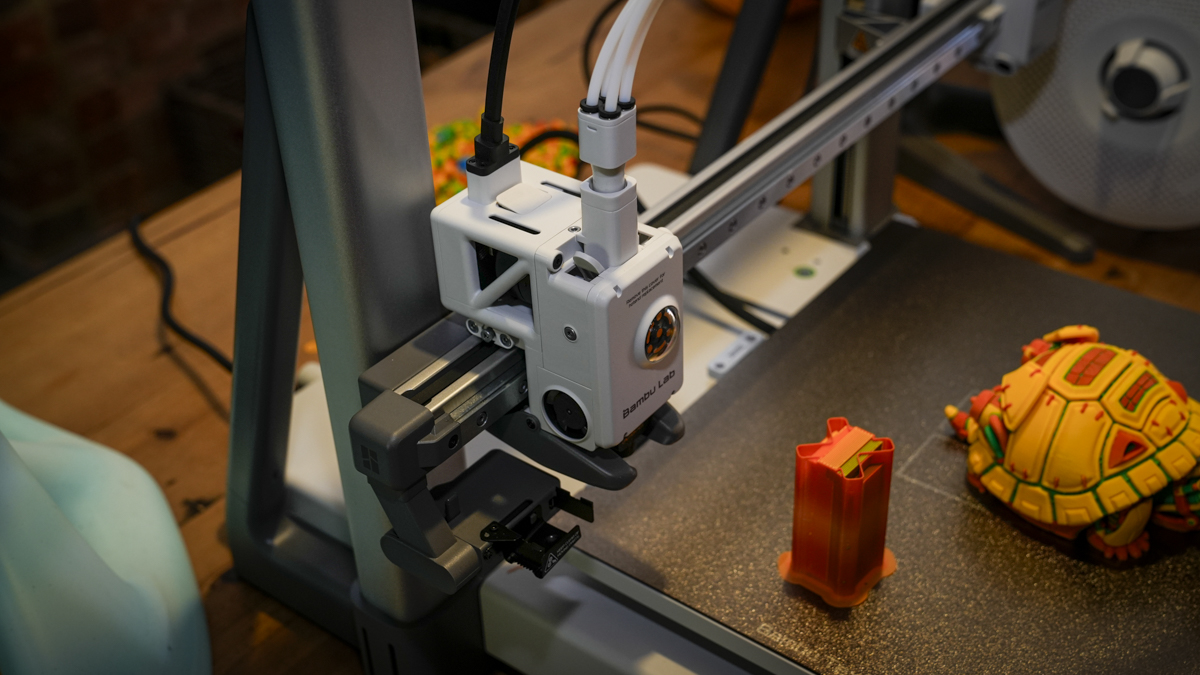
Along with a larger build volume comes a new extrusion system, fully upgraded from the A1 standard direct-drive setup. On the A2, it adds a PMSM closed-loop servo extrusion system, designed to deliver smoother extrusion and monitor for issues during the print process. Another good upgrade is the motion stability system, which is far more advanced, as you’d expect given the couple of years between releases. Part of the reason for this is not just the passing of time, but also the fact that, because this is a much larger machine, it’s more prone to errors, so this part is finely tuned.
Further aiding error-free printing is a new package: physical blob and clogging detection, PMSM extrusion monitoring, and all live alongside all the safeguards the A1 featured when it was released.
One of the other features I have been really keen to see is the creative tool expansion, which essentially means, like the H2D, you can pop on an optional blade-cutting or pen-plotting module, so you can also work with stickers, card, leather, fabrics and a whole range of drawing and plotting projects alongside the 3D printing.
Really, this is a machine designed to sit there and get on with the work out of the box, and for less than £500/$500, you have a machine that can print multi-filament easily. If you do want to print engineering materials, you'll just have to spend a little bit more on one of the enclosed machines, but for most people, given the price, this is actually a fair option.
Bambu Lab A2L: Price and availability
The Bambu Lab A2L is available in the US for $469 direct from Bambu Lab - with a Combo version priced at $569.
It's also available in the UK for £319 at Bambu Lab, with the Combo version costing £429.
Bambu Lab A2L: Design
Bambu Lab A2L specifications
Print Technology: FDM / FFF, single direct-drive servo extruder
Build Area: 330 × 320 × 325mm
Minimum Layer Resolution: 0.08mm
Maximum Layer Resolution: 0.28mm
Dimensions: 544 × 529 × 505mm
Weight: 12.8kg
Bed: Heated bed, max 80°C
Print Surface: Flexible steel build plate with Textured PEI Plate
Software: Bambu Studio; Bambu Handy app; cloud or LAN-only control
Materials: PLA, PETG, TPU, PVA; PLA-CF and PETG-CF with hardened nozzle.
Print Speed: Up to 500mm/s
It’s obvious that the A2L is in the same family as the A1. Essentially, it looks similar, just on a larger desktop-style frame, that measures 544 x 529 x 505mm, quite a substantial footprint, and it’s no lightweight at 12.8kg.
That scale of machine offers the current build area of 330 x 320 x 325mm, which is substantial, and in order to ensure proper rigidity for this large-format printer, the construction is made from aluminium with steel for the chassis, and a plastic outer frame to make it look nice rather than the look of printers past. To be honest, with Bambu Lab's usual design flair, this really does look like a great machine.
One thing to note is that this is an open-frame construction, and there is not, and probably will never be, an enclosure for it. There are higher-level machines like the Super P2S if you do need to utilise more engineering materials, and they don't cost a lot more.
What really appeals to me about this design is the optional cutting-and-drawing module that can be attached. This essentially boosts the machine's usability, and if you’re into crafting or modelling, as well as working in a small design business, having all these optional extras in one machine makes a lot of sense. One point to note here is that, unlike the H2D, which offers both of these modules to expand its functionality, it is slightly stripped down here, and for safety reasons, there’s obviously no laser module.
While it’s pitched to a wide range of users, it's primarily for a home enthusiast, although I’ve already spoken to several people who run print farms and are excited about this machine because of the sheer volume of prints they’d be able to produce on each print platform. Having run successive tests over a one-month period, I can confirm that the reliability for this type of use makes this a really great option, even in the commercial business sector, as long as you don’t want to print with engineering materials that require an enclosure.
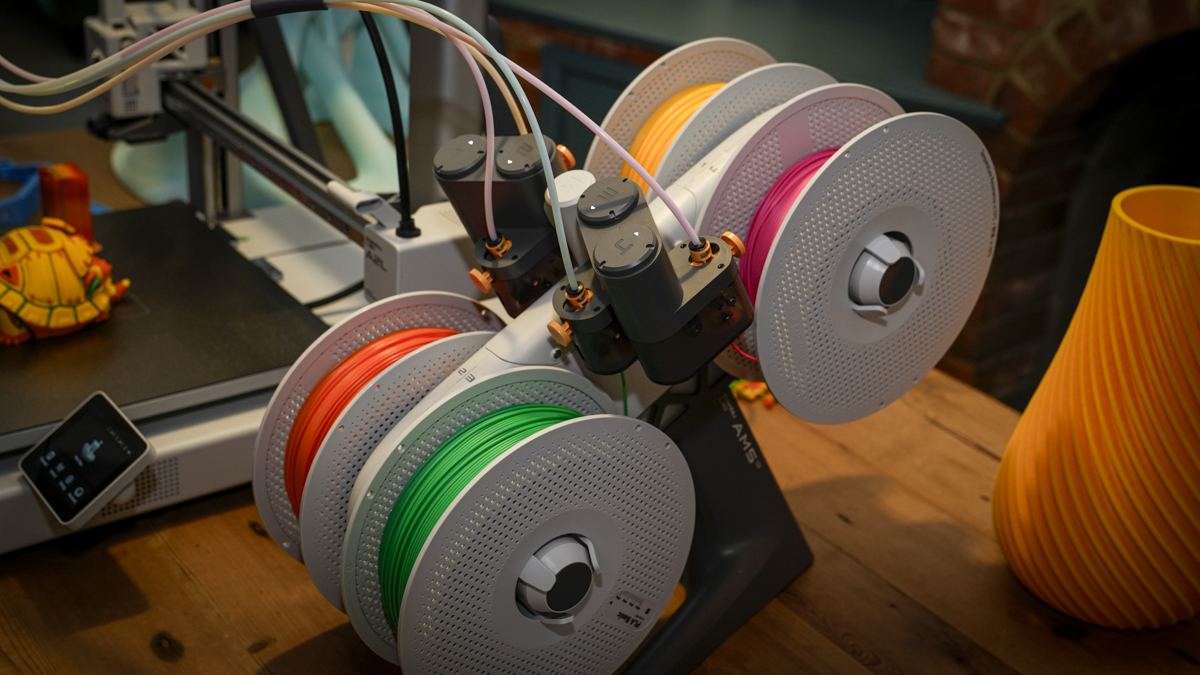
Like all Bambu printers, it's designed for multi-filament printing and is fully compatible with both AMS and AMS Lite units. If you do purchase the combo unit, then you’ll get the AMS Lite, as you did with the A1. With this machine, you can link up four AMS units to get up to 19 colours.
Bambu Lab A2L: Features
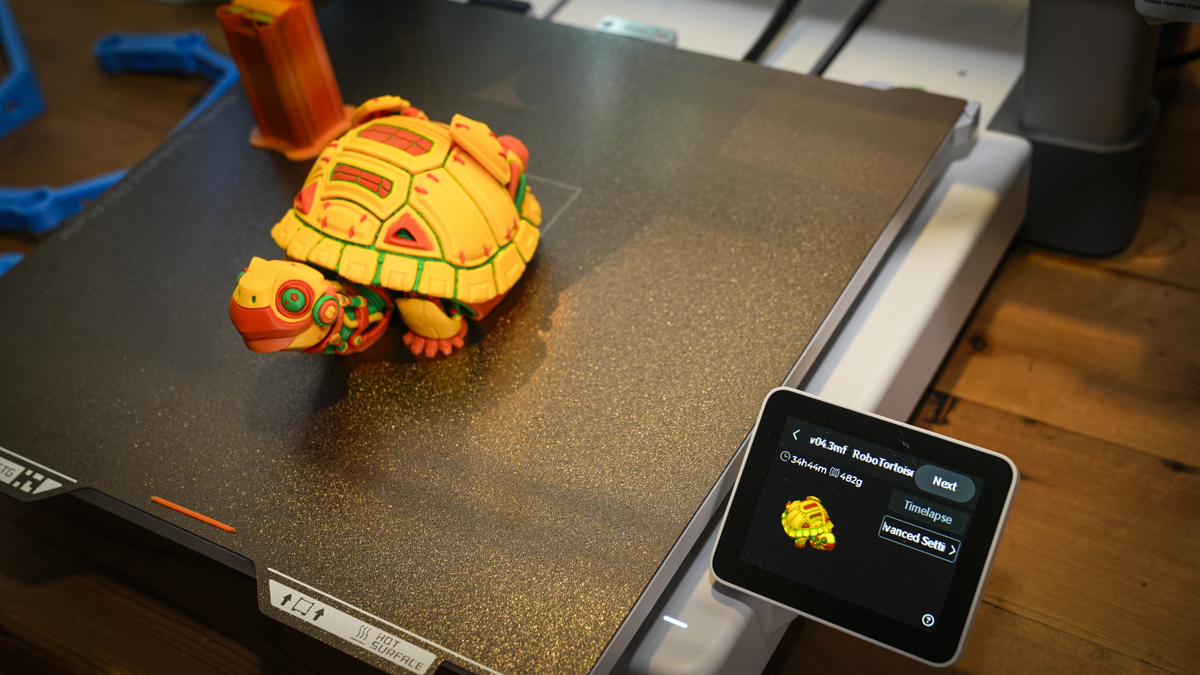
The first thing that should really be said about the A2L is that it’s not a huge leap in technology, although there are improvements across the board, mainly to facilitate its larger build area, more than material support or additional new features. So, firstly, the headline is the scale of this machine, and as stated before, the 330 x 320 x 325mm build volume is ideal for large-format printing. If you’re thinking about cosplay or prototyping larger objects, then, to be honest, for the price, there is really very little at the moment that can match this.
That larger size usually means it’s much more prone to errors, and whilst the larger H2 machines are in line with the print volume this machine offers, the one big difference here is that it is open-frame. That not only makes it much cheaper but also restricts the types of materials you can utilise. Essentially, day-to-day prototyping in PLA or one of the other more common materials is absolutely fine, and you can pop in a hardened nozzle if you do want to print with something like PLA-CF or PETG-CF. However, if you want to print with engineering materials, such as nylon, then you are going to have to look at an enclosed machine.
There are several features that really stand out that will help make the printer as reliable as possible. The first is the aluminium-and-steel construction of the frame and chassis, which results in an ultra-rigid unit. During the test, I was surprised to see that, even when printing flat out, it appeared just how stable it was. It is, of course, always a good idea to have a really good, solid table.
Built into the extruder is one of the major upgrades over the A1: a PMSM closed-loop servo extrusion system that offers smoother filament extrusion than the direct drive we saw on the A1. There’s also adaptive vibration compensation with multiple calibration and load-adaptation options, again helping with filament flow. Another surprising thing is that they’ve added granular dampers to the frame. This is essentially to cope with the high speed that this printer is capable of, and it’s worth noting that, at full pelt, this machine is quite ferocious in the corner of the workshop.
As with the A1, blob detection, run-out detection, clog detection and tangled-spool detection are all pretty much standard features.
Some of the standout features are the optional blade-cutting and pen-plotting modules, which expand the machine's capabilities and are ideal for crafters and enthusiasts, especially at this price point.
Once again, there’s full support for the AMS Lite system, and if you buy four AMS units, then you can print up to 19 colours, which is an impressive amount for a base machine at this price.
Bambu Lab A2L: Performance
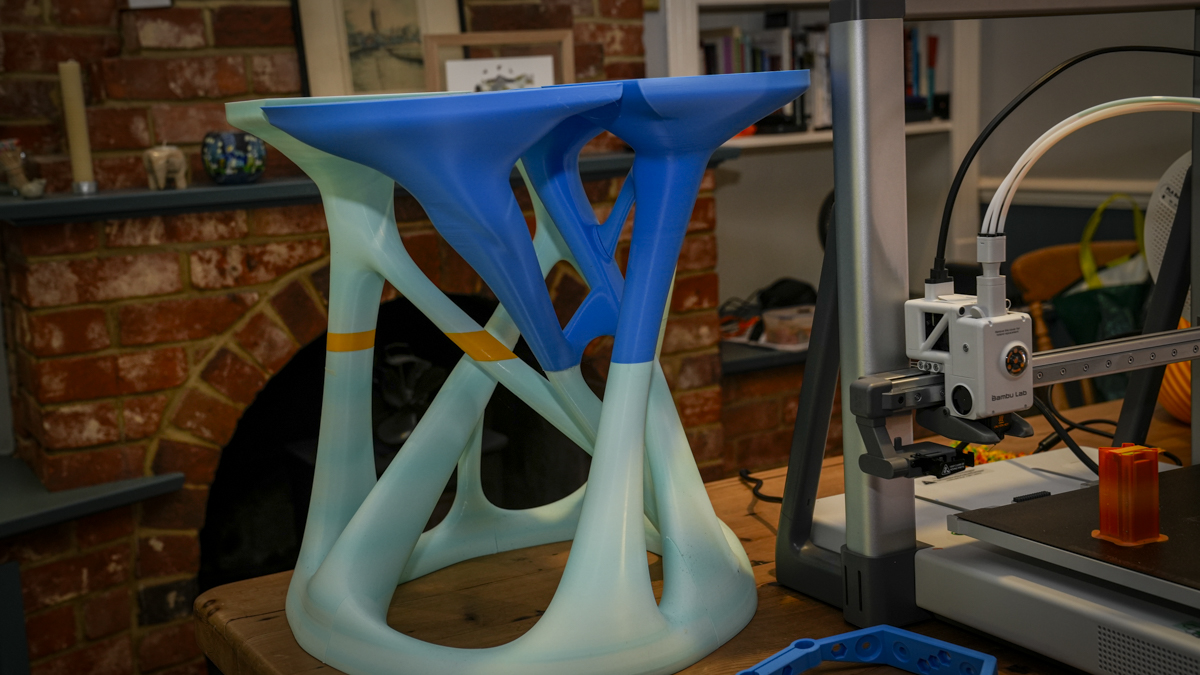
Getting started with the Bambu Lab A2 L is relatively quick and straightforward. Unlike the fully enclosed machines that we’re starting to get used to from the company, this does require a little bit of construction, but ultimately it’s just the vertical frame with the print head pre-installed, and once you’ve bolted it down and connected a couple of cables, you can then run through the initial calibration process.
This used to be the faffy part, and construction took some time. Now, the construction takes only 5 to 10 minutes; however, once you switch the machine on, you need to connect to your Wi-Fi before it can download and install any updates. You then have to run through the calibration process, which is fully automatic, so just let it run its course; it can take almost an hour on the first run. After that, it should be pretty much self-sufficient, with an automatic reminder alerting you as to when it needs recalibration or when the rails need a little oil.
As I ran through the first prints, all stored on the small MicroSD card, I was impressed by the machine's speed and robustness. Whilst it’s just an enlarged A1 with refinement, the rigidity feels just as good as that of the smaller machine, and Bambu Lab has really made quite a lot of adjustments to the base design in order to facilitate ultra-strong joints that don’t create any wobble or movement through the print process, which is definitely needed at maximum speed.
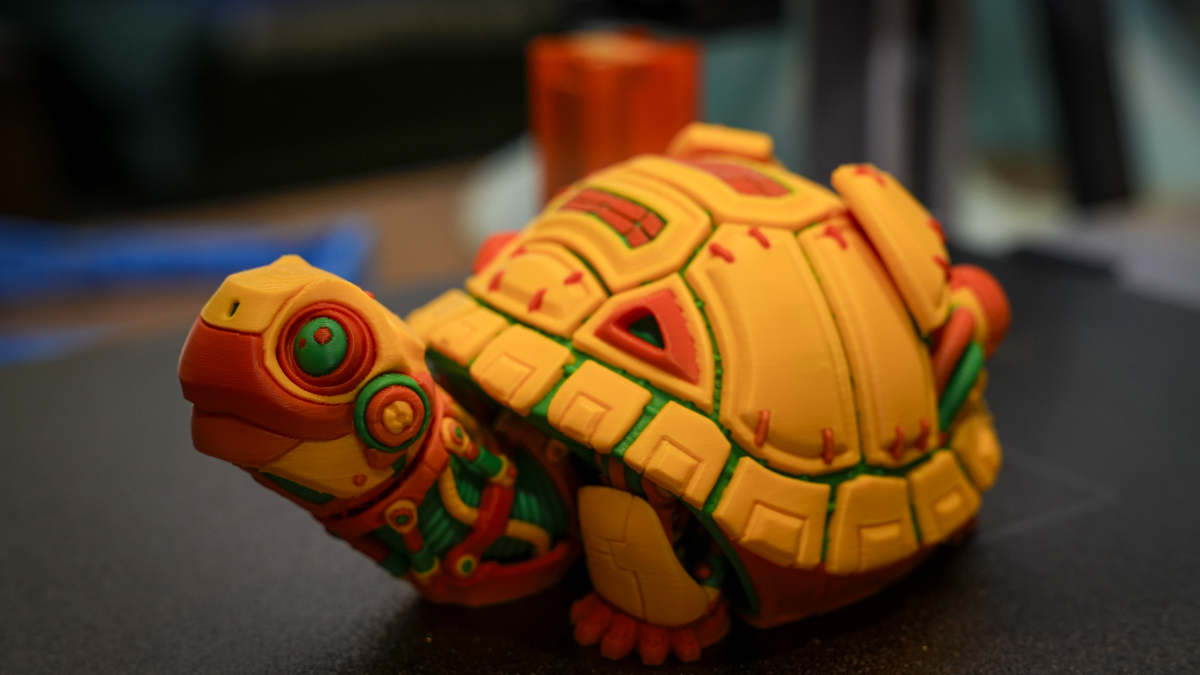
As the first few prints rolled off the print bed, they had that unique Bambu Lab look, with very fine layering and superb overall surface and inner print quality. Single-filament prints were exceptionally quick, and I checked the models as they were produced. I could see that the fine flow control was exceptionally good, with fine detail printed well.
The point I was going to see, especially with the test models, was that the overhangs and bridges seemed well handled, demonstrating that the new head is capable of producing enough cooling air to set the filament quickly throughout the print.
After checking a series of prints, from those just for fun to more functional parts, in both PLA and PETG, I was really impressed with the quality. Realistically, if you put the prints from this machine up against those from the H2D, which is obviously far more expensive, it’s actually extremely difficult to tell the difference. Whilst this machine is cheaper, the print quality on a purely visual side-by-side basis is identical. Realistically, at the base level, you are just paying for that enclosed space, but then it is obviously a lot more than that. However, for most people, that’s really all they need: a good, large machine for printing in these base materials, which, to be honest, is what most of us use.
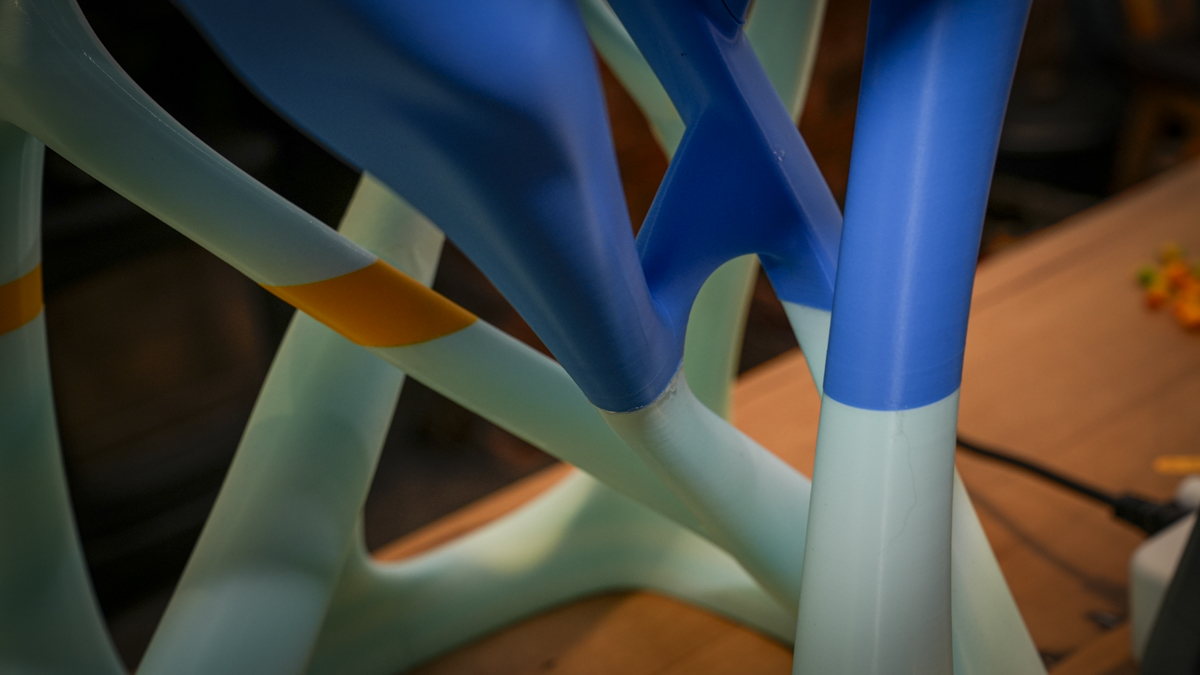
If you’re working in design and you need to print out a large prototype, as I have with an air cooler this summer, then this is a really great option. For the models I was printing, it printed at full height, so I could quickly prototype an entire product without breaking it down into too many parts. If you do need to break it down into parts, there’s enough out there to support plenty of different models at the same time.
During the print process and testing, I printed solely for quality purposes, then looked at printing on sale to see how many models I could reliably print, and moved on to more functional models, including an air-cooling system and the associated parts. I am also using the printers to create many props and costume parts for various projects, and, again, the additional size offered by the Bambu Lab A2 L is extremely useful.
What I like about this printer is that, it’s large, and it printed large reliably. I have three or four large-format printers, all of the open design from various manufacturers. However, most regularly fail, whereas the A2 L was consistent with those larger prints, time after time. It’s also large enough for a fully wearable helmet, which is now my go-to test when testing print volume.
A quick check of the 3D test model, and to be honest, it’s as good as any. This test, which used to challenge so many printers, really now just highlights one or two printers that aren’t quite so good, and we just see a little bit of surface imperfection, which means that you need to have a little bit more oil on one of the rails, or give the machine a good clean or calibration, rather than anything more fundamental. Re-printing a 3D Benchy, it came out absolutely perfect.
Moving on to the more in-depth Kickstarter Autodesk 3D printer check, the model produced again looked good. I was a little surprised that there was only a bit of stringing on one of the overhangs, but otherwise the model itself looked exceptionally good, with fine flow control and dimensional accuracy that really highlighted what it was capable of. Whilst this is the larger of the two relatively entry-level models from Bambu, it’s still very, very capable.
Further, to put this to the test, I ran it for two weeks nonstop, producing multiple parts of the same model to check reliability. What I was interested in seeing was that after a certain number of hours, the interface asked me to maintain the rails. This is just a good reminder that Bambu Lab is really looking after the machines and notifying users when maintenance is required. I was also pleased to see that printing just pure PLA from four reels was consistent. I am not a huge fan of the AMS Lite four-reel design; however, there’s no doubting that it works. Here again in the workshop, it produced prints without issue.
The Bambu Lab A2 L is a natural progression as a 3D printer. It’s not one to get overly excited about; it is what it is and will enable you to print large. It’s relatively inexpensive. Budget-wise, what impressed me was just how reliable it proved to be, and with that large build area, you can not only print more but also print at a higher volume, at one of the lowest prices for this level of reliability and quality on the market.
If you run a print farm or you prototype goods, or you’re just looking for your next larger-format printer for producing cosplay costumes, then I can see the A2L being a popular choice that gives you far greater flexibility than its smaller and now slightly older sibling.
Bambu Lab A2L: Print quality
Dimensional accuracy - score of 4/5
Target 25 = X: 4.88mm / 0.12mm Error | Y: 4.82mm / 0.18mm Error
Target 20 = X: 9.55mm / 0.45mm Error | Y: 9.89mm / 0.11mm Error
Target 15 = X: 14.86mm / 0.14mm Error | Y: 14.83mm / 0.17mm Error
Target 10 = X: 18.84mm / 0.16mm Error | Y: 19.81mm / 0.19mm Error
Target 5 = X: 24.81mm / 0.19mm Error | Y: 24.71mm / 0.29mm Error
X Error Average = 0.212
Y Error Average = 0.188
X&Y Error Average = 0.2
Fine Flow Control - score of 5
Fine Negative Features - score of 5
Overhangs - score of 5
Bridging - score of 4
XY resonance - score of 2.5
Z-axis alignment - score of 2.5
Adding up the totals gives a final score of 28 out of 30
BambuLab A2L: Final verdict
When you are looking at the A2L, you have to think about the build quality, given its size, and what I’m really pleased to see is, firstly, that Bambu Lab has continued with its design principles. This is a large-format printer that looks great. It has all the features from Bambu that many have come to expect.
Set-up and maintenance are exceptionally easy. As long as you follow the prompts, you’re going to have trouble-free printing. The only thing I would say, like with Bambu Lab’s other printers, is that it can be a little overprotective of the print: at any sign of string or debris on the build plate, it will stop, and you will have to check it. It won’t just plough through, which in itself is actually a good thing, but I can’t help but feel it’s just a little bit oversensitive.
This is still an open-frame design, so whilst the size will definitely appeal to professionals and high-end enthusiasts, you do need to consider that it will only print materials such as PLA, PETG and specialist TPU. Anything you would probably choose to make functional parts does require an enclosure, so from that point of view, it’s a little limited. However, that’s not what the A2 series is about, and actually, as a large-format printer for printing PLA prototypes, costumes and all manner of other objects in that fashion, it’s a great choice.
The other point about this 3D printer is that it has printing and cutting ability with the pen and cutter, which lends it to even greater use. Whilst this is a good option and a space-saver for many, I definitely prefer a cutter that draws the material through rather than one that pushes it down, as this machine does. Still, for my stuff, as long as the blade is exceptionally sharp, it works very well for both cutting and plotting.
If you own a company and want to create large-scale models or PLA, it’s a brilliant 3D printer. In my tests, I found it to be good and reliable, except that it stops on almost anything. But a quick check, either physically or through the Bambu Handy app, and get it set going. If you’re a keen model crafter or enthusiast of any type, this is a superb option, as long as you’ve got that slightly larger space to keep it. If you’re working in product design and you just need a large-scale printer for prototyping, this is again a superb choice.
Should I buy the Bambu Lab A2L?
Buy it if...
You need to print big.
There are a few other machines that can print at this size and quality, but with the open-frame design and Bambu Lab’s leading technology, it comes together in a combination that ultimately produces superb prints reliably.
You need mass printing.
Many print farms now utilise enclosed printers due to space and reliability. If you’re regularly printing multiple objects, the large print platform and reliability make this a superb option.
Don't buy it if...
Limited on table space
The A2 L does come in a size, so you will require quite some space in order for it to sit. It’s also a bed-slinger design, so whilst you might put it on your desktop, you do need to make sure that the print platform has enough room to move forward and back.
You need engineering materials.
The downside of the design is that you are limited to standard materials, so if you need engineering-grade materials for functional parts, you’ll have to use an enclosed printer.
For more models, I've tested the best 3D printers you can get right now.




 English (US) ·