
 2 hours ago
9
2 hours ago
9
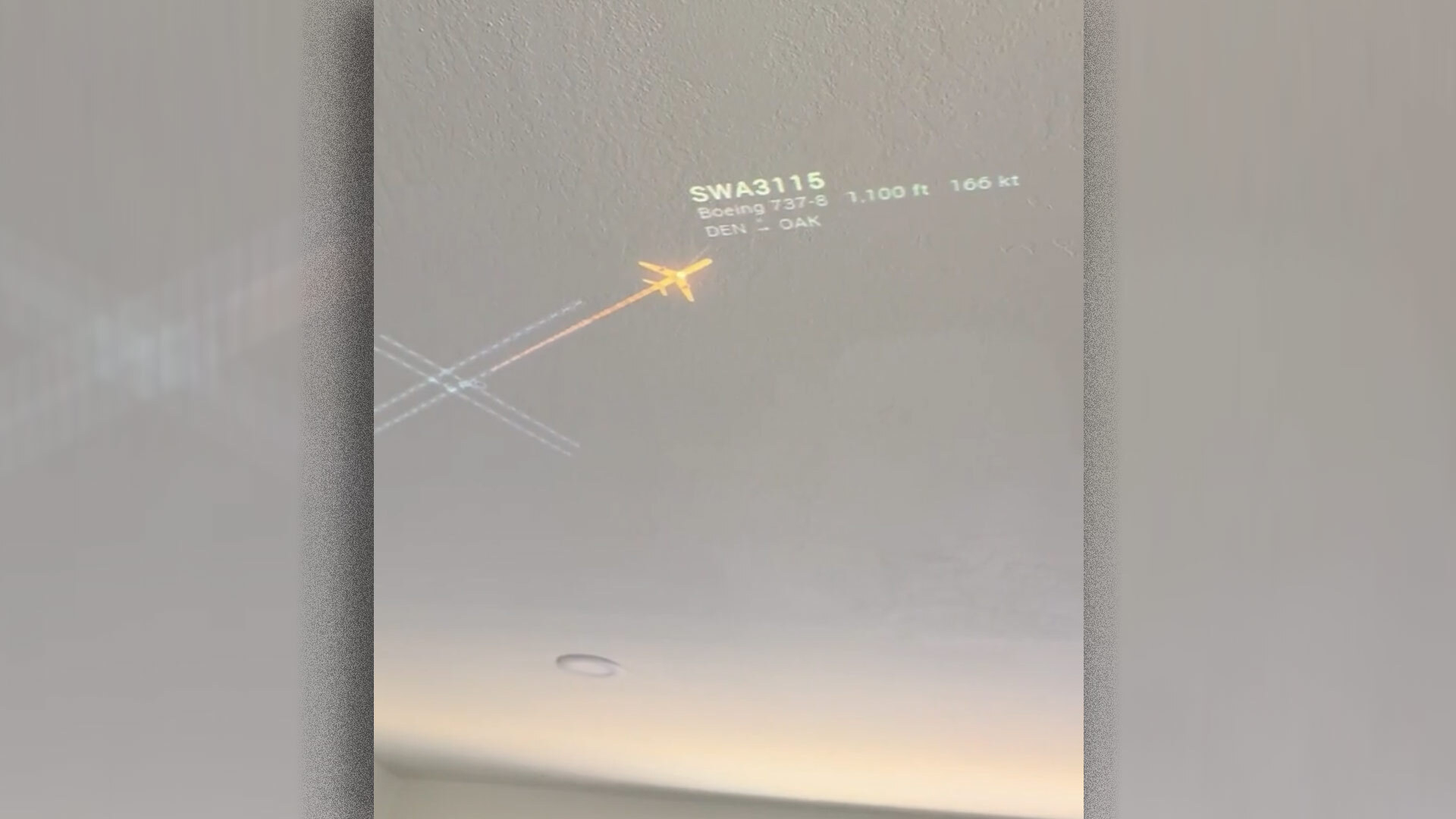
Living near an airport isn’t for everyone. But for some, like software engineer Cameron Paczek, the unique environment offers inspiration for very unique projects. Paczek’s latest creation, Skylight, harnesses the power of a Raspberry Pi 5, a radio antenna, and a projector to listen for aircraft signals as planes pass over your house and then instantly projects their real-time paths across your ceiling exactly as you hear them soaring above.
What makes Skylight extraordinary is that it uses its own data collection method rather than simply pulling data from flight-tracking services like Flightradar24. The project leverages an affordable USB radio antenna, in this case the RTL-SDR Blog V4, to capture ADS-B (Automatic Dependent Surveillance–Broadcast) signals emitted by commercial planes, then uses a Raspberry Pi 5 to decode and render them.
The device then sends this information to a 1080p (1920x1080) projector to make the magic happen. Skylight then creates the illusion of the sky on your ceiling, with the airplane in view and various details, such as the model, destination, altitude, and distance to the destination. The project doesn't just track airliners; it can also detect aircraft and helicopters, since Skylight checks flight data to adjust how each plane appears.
Skylight offers a planetarium experience since it doesn't just track the aircraft; it recreates the real sky behind them. The pure black ceiling background not only shows the illuminated aircraft but also displays the sun, moon, stars, and constellations, all rendered at their precise positions for your location and current time, along with live satellite tracking, including the International Space Station (ISS). Paczek lives near San Francisco International Airport (SFO), so the reference build centers on that location, but Skylight adapts to any location worldwide since all you have to do is enter your coordinates.
Used a raspberry pi and ADS-B radio to build aircraft projection mapping onto my ceiling from r/raspberry_piSkylight is an open-source project; therefore, the instructions and the parts list are available on the project’s official GitHub repository. You’ll need an RTL-SDR Blog V4 with a dipole antenna, a Raspberry Pi 5 (8GB recommended for smooth performance), a native 1080p projector, a micro-HDMI-to-HDMI adapter, and a rotating 1/4-20 stand for the projector.
Paczek showcased Skylight in a couple of Reddit posts using a high-end $1,499 Optoma GT2100HDR projector. However, the creator emphasized that you don't necessarily need a pricey projector unless you plan on projecting Skylight in a brightly lit room. For the majority planning to use Skylight in a dim or dark environment, even affordable native 1080p LED projectors like the Yaber Buffalo Pro U9, which retails for around $99.99, will suffice.
I live in the take off path of SFO and built a ceiling projection mapping of the planes flying over my house using ADS-B radio from r/aviationOne of the most appealing aspects of the Skylight project is the overall investment to get it up and working. Unlike other DIY projects that require expensive or specialized equipment, you can put Skylight together relatively cheaply. If you’re looking to build it as affordably as possible, you can assemble a fully functional setup for under $400. On the other hand, if you want to go all out and get the premium experience, you may have to invest up to $1,800 since the quality of the project is by far the biggest factor influencing the overall budget.
However, not everyone is tech-savvy or wants to build Skylight from scratch. To make the project more accessible to people who want to enjoy the benefits of Skylight, Paczek will soon release a ready-made kit through a crowdfunding platform. Interested buyers must join the waitlist to be the first ones to receive updates on the launch date and pricing details.

Follow Tom's Hardware on Google News, or add us as a preferred source, to get our latest news, analysis, & reviews in your feeds.




 English (US) ·