
 3 weeks ago
35
3 weeks ago
35
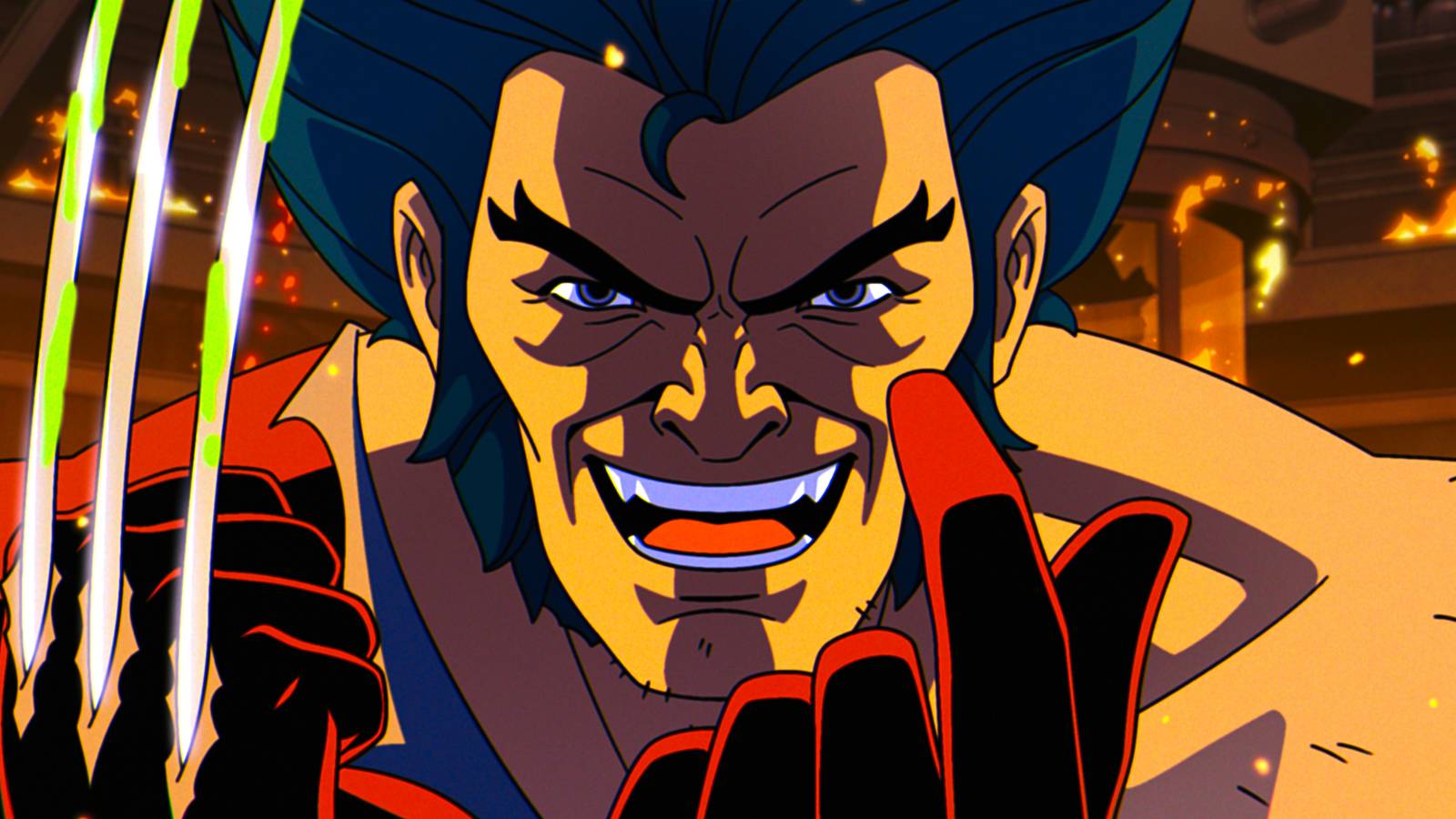
The Avengers: Doomsday trailer is out. While we still don't know the precise details of what's to come in the full movie, aside from that it's the biggest crossover the Marvel Cinematic Universe has yet to offer, we do know that it's going to involve quite a bit of cape-on-cape violence. The new trailer shows Avengers and X-Men squaring off, presumably before they realize who their real enemy is and agree to work together.
Surprisingly, there aren't that many big Avengers vs. X-Men dust-ups in the printed history of Marvel. While every major Marvel hero has fought almost every other hero at one point or another, it's rarer to see full team-on-team brawls.
Further, for much of its formative history, the X-Men as a comics franchise has often felt like it inhabits its own specific bubble. Outside of the occasional crossover or cameo, it's never been strange for the X-Men to go for months at a time without interacting with anyone outside their corner of the Marvel Universe, even when they arguably should've. That's cut down on the opportunities for big stupid superhero fights.
There are a few notable exceptions, however. So in anticipation of whatever's to come in Doomsday, here's a brief look at the comics' fight record between the Avengers and the X-Men.
1 "Enter... the Avengers!" (X-Men v1 #9, 1964)
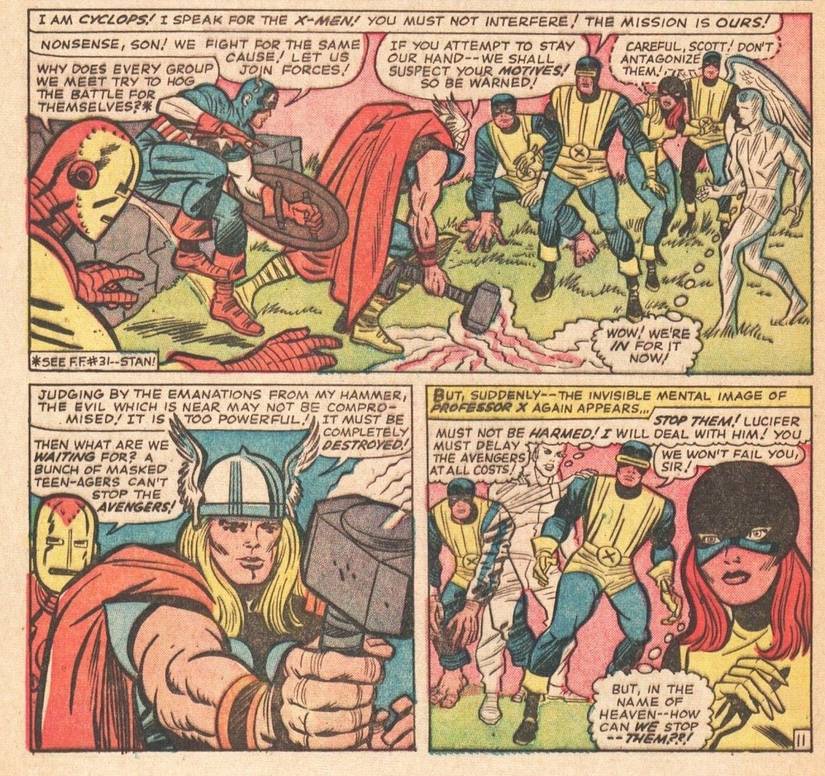 The first meeting between the X-Men and the Avengers, in X-Men v1 #9 (1964)Source: Jack Kirby for Marvel Comics
This early Stan Lee/Jack Kirby story is a good example of the sheer Silver Age goofiness of the first few years of Marvel. It's a done-in-one comic about the original five X-Men and Professor Xavier heading into rural Bavaria in order to confront an old enemy of Xavier's. When the Avengers stumble into the middle of the situation, the X-Men are forced to take them on for, well, comic book reasons. Sometimes you have to remind yourself that these stories are meant for bright 8-year-olds.
If you're thinking there's a fairly vast gulf in firepower between the classic Avengers lineup — Thor, Iron Man, Giant-Man, the Wasp, and Captain America — and the original X-Men, you're right. The X-Men don't stand a chance, but they have to give it a try anyway.
Rereading X-Men #9 in 2026 is funny for several reasons, but one of the biggest is the presence of Silver Age Jean Grey. She was never weaker than she is here, when she's nearly defeated by a small hole in the ground and then gets taken out by the Wasp blindfolding her with her own hair. She's a far cry from the universal force that she'd become 16 years later in the Dark Phoenix Saga, and which she's since returned to in modern comics.
2 "Tempest Without, Crisis Within!" (Marvel Super Heroes Secret Wars #3, 1984)
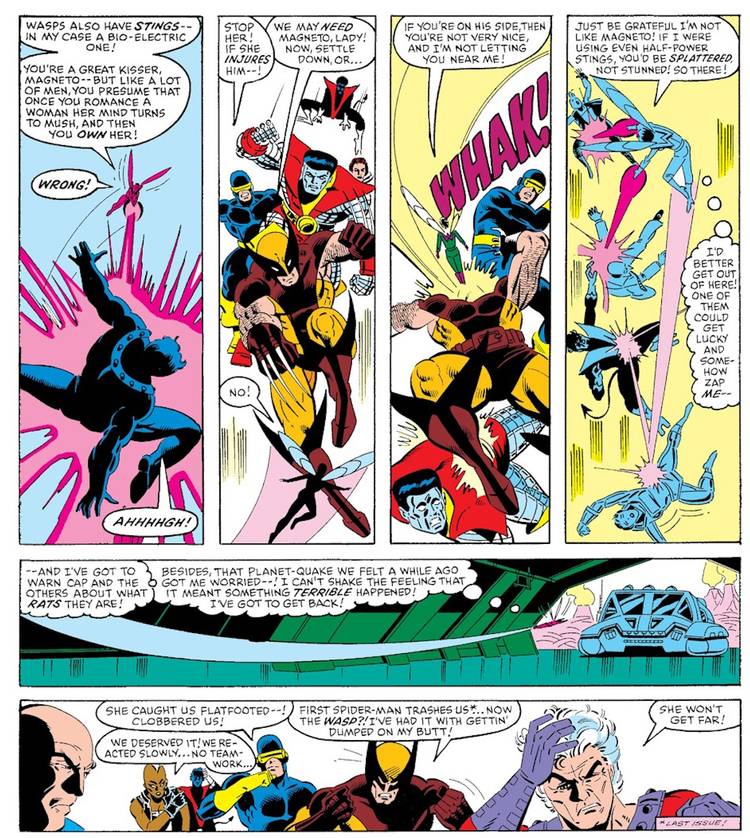 The Wasp trashes the X-Men, in Secret Wars #4 (1984)Source: Mike Zeck for Marvel Comics
The original Secret Wars, by Jim Shooter and Mike Zeck, is the first major crossover in Marvel history, infamously made to promote a line of action figures. It begins with the abduction of an assortment of Marvel's heroes and villains, who are thrown billions of miles from Earth onto a newly-created patchwork planet that gets nicknamed Battleworld. Once there, they're encouraged to fight among themselves by an alien entity, so they do. It's basically a story about a big kid bashing his action figures together.
Secret Wars had a few impacts on the Marvel Universe that linger right up until now, the most famous of which is the introduction of Spider-Man's symbiote suit. What's weird in retrospect is that it feels a lot like Shooter, who was the editor-in-chief of Marvel at the time, was using Secret Wars to work out some frustrations with the X-Men in particular.
Not only did Shooter use Secret Wars to shoot down the burgeoning relationship between Kitty Pryde and Peter Rasputin (which wasn't really revisited for something like 20 real-time years afterward), but for much of the series, the superheroes on the Avengers insist on treating the X-Men like a bad smell. This leads into two of the most weirdly lopsided brawls in Marvel history, where the X-Men get soundly thrashed by first Spider-Man (issue #3) and then the Wasp (issue #4).
The moral of the story: It doesn't matter how powerful a character is, or how badly they're outnumbered, if the writer's on their side.
3 The X-Men vs. the Avengers (1987)
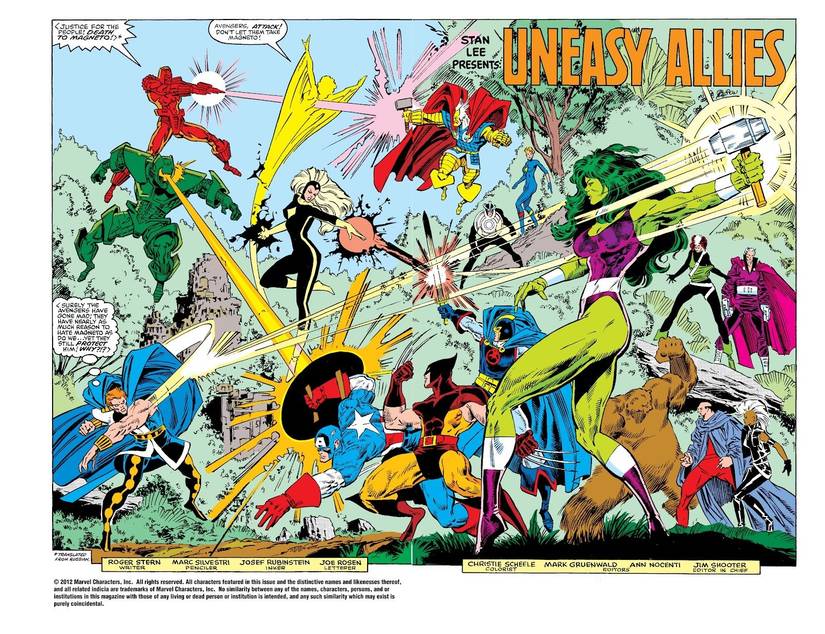 The Avengers vs. the X-Men vs. the Soviet Super-Soldiers (1987)Marc Silvestri and Josef Rubinstein for Marvel Comics (1987)
For the unfamiliar, there's a concept in Marvel's comics called the "sliding timeline," also known as Comic Book Time. Essentially, the comics are always set in a sort of permanent recognizable "now," while the beginning of the modern Marvel era is always about 15 years ago. It's something you just have to roll with as a reader, particularly when a comic happens to deal with some specific moment in world history, like how both Reed Richards and Ben Grimm are technically World War II veterans, or how the Juggernaut got his powers while he was deserting his post during the Korean War.
Roger Stern and Marc Silvestri's The X-Men vs. the Avengers miniseries is a solid example of a comic that’s harmed by the existence of Comic Book Time. It's explicitly set before the fall of the Soviet Union, complete with the presence of the hilariously stereotypical Soviet Super-Soldiers. (“Hey, let’s make a Soviet super-team. I know: some dude armed with a hammer and sickle, a bear, two different armored guys who look like brutalist humidifiers…”)
In 1987, Magneto had recently completed a long-simmering face turn and officially joined the X-Men. However, that didn't wipe out 25 years of stories in which Magneto was used as a cackling supervillain, with crimes on his record that included the destruction of an entire city in Siberia and the sinking of a Soviet submarine with all hands aboard. The X-Men vs. the Avengers is an attempt by some of Marvel's writers to square that circle, with the X-Men and the Avengers on opposite sides of a Soviet plot to have Magneto quietly assassinated.
It's a Cold War story to its bones, as well as a different take on the X-Men from a writer, Stern, who's usually associated with the Avengers and Spider-Man. For whatever reason, however, the entire creative team changes for the last issue of this 4-part miniseries, which brings the story to a bit more of a crash than a stop.
4 Avengers vs. X-Men (2012)
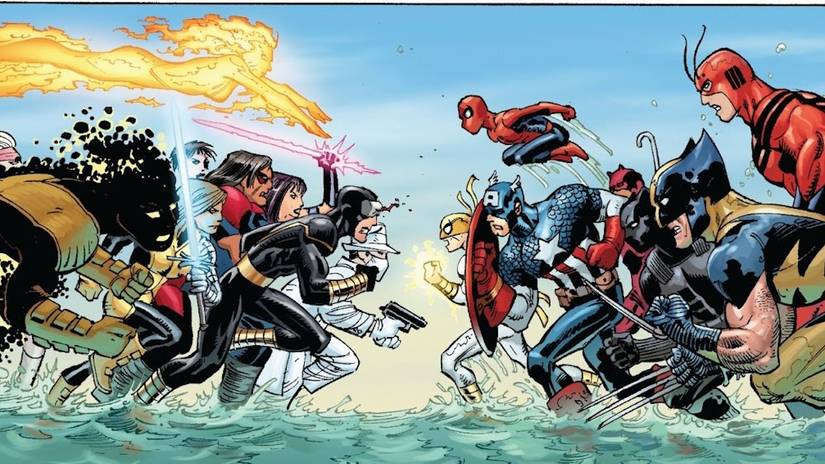 The first fight between the X-Men and Avengers in AVX #2 (2012)Source: John Romita Jr. and Scott Hanna for Marvel Comics
It's difficult to adequately summarize Avengers vs. X-Men without doing a run-down of the seven years of comics history that led to it. There are elements of its backstory that go as far back as 2005's House of M. For a comic that, like Secret Wars, is essentially about playing with toys, AVX had a lot going on.
The short version is that the X-Men are protecting a new mutant, Hope Summers, who's Cyclops's foster granddaughter and a prophesied savior for their perpetually endangered species. Then the Avengers discover that Hope is also a suitable host for the cosmic entity known as the Phoenix Force, which is heading for Hope across most of explored space and destroying whatever gets in its way. When Captain America asks Cyclops to turn Hope over to the Avengers and SHIELD so they can put her in protective custody, Cyclops reacts... poorly. Cue the violence.
The fun of AVX is in how gleefully it accepts its own premise. While the core book quickly gets bogged down in a long story about the Phoenix entity, many of the spin-offs are devoted to some crowd-pleasing hero-on-hero fight scenes, as written and drawn by some of the biggest names Marvel had working for them at the time. It's silly, and it's entirely on purpose, rather than the often-inadvertent silliness of cape comics.
Avengers vs. X-Men: Who wins?
Overall, the X-Men have a terrible win-loss record against the Avengers.
Depending on how and what you count, the X-Men are 1 and 5. If you disallow the Spider-Man fight from Secret Wars since he wasn't yet a member of the team, they're 1 and 4. We also aren't counting moments like the "Teen Avengers" fight from New Mutants Annual #3, on account of that being a Danger Room simulation.
The X-Men's bad matchup here can largely be chalked up to a profound power mismatch. The Avengers only seem to want to pick a fight with the X-Men when they've got some of their biggest guns on deck, such as Thor or Monica Rambeau. The X-Men's sole win comes during AVX, in a fight that encompasses every Avenger vs. every X-Man while 5 of the X-Men are empowered by the Phoenix.
As we wait for Avengers: Doomsday's theatrical premiere, it's possible that the X-Men might pull something out here, but... well, the name of the movie isn't X-Men: Doomsday, is it?
Avengers: Doomsday releases in theaters on Dec. 18.






 English (US) ·