Autonomous strike drone uses Nvidia Jetson Orin Nano to independently pick and bomb targets — Swedish startup's attack drones run small AI model, require no human input and zero external comms
3 hours ago
3
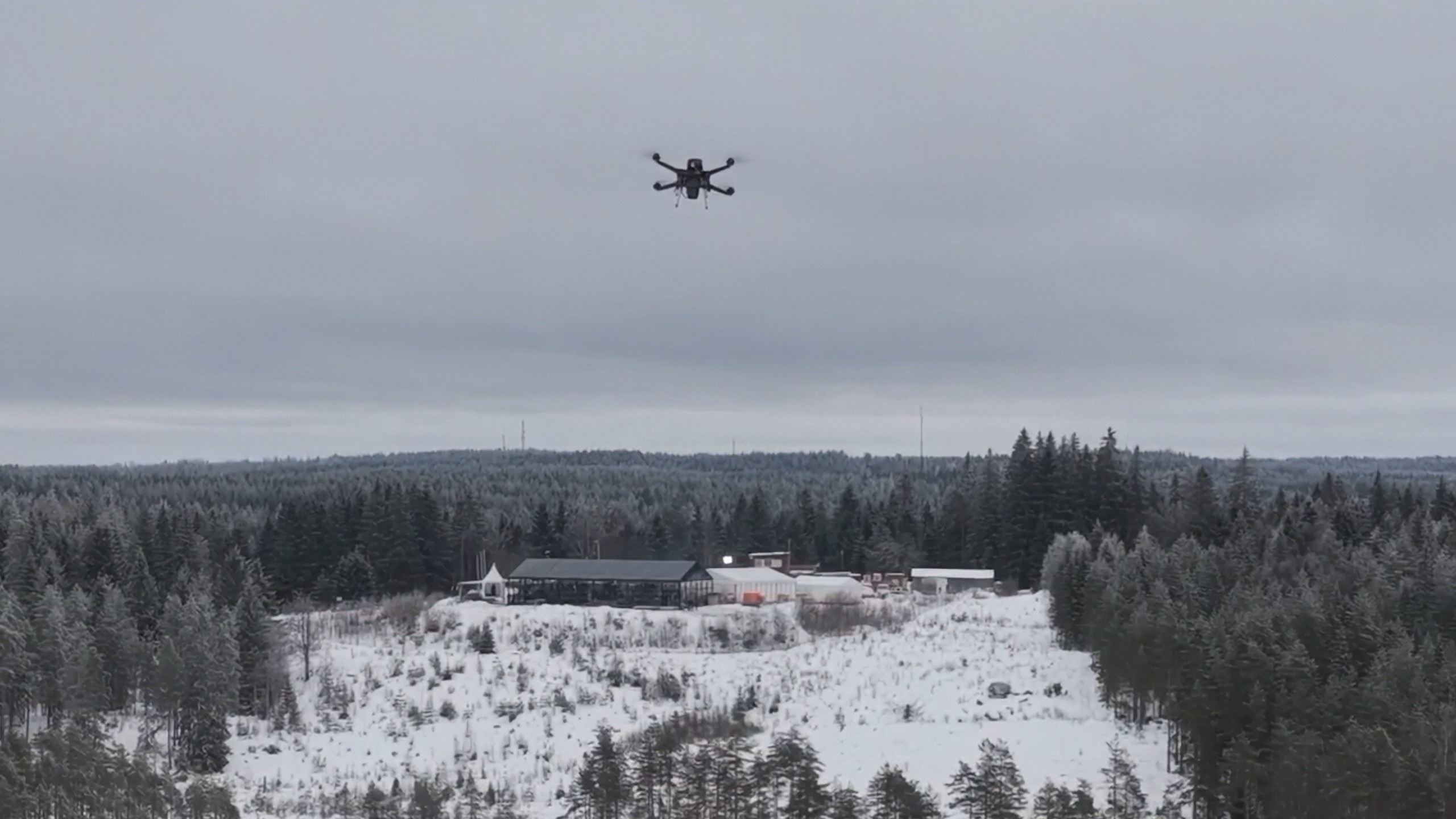
(Image credit: Scaleout Systems)
Drones built with small, non-frontier computer-vision models autonomously identified and attacked targets in a recent demo, Ars Technica reports. Scaleout Systems, a Swedish AI startup, used a low-cost loitering munition from BAE Systems Bofors to strike a target as part of the Affordable Loitering Modular Ammunition (ALMA) program. BAE’s Winter Demo 2026 had the drone detecting and geolocating targets before ranking an armored engineering vehicle highest, autonomously flying to it, and dropping an explosive.
Scaleout’s demo video, “Technical Demo: Onboard Edge Intelligence for Autonomous UAV Missions,” shows the company’s drone spotting potential threats with AI, with all processing handled onboard. Beyond a button press to start the system, manual input is optional; the designated pilot remained a failsafe controller. The mission flew under human-set parameters to engage an armored engineering vehicle and required about 200 seconds of recon, with the full mission completed in under 320 seconds. The mission completed without needing communication, supporting Scaleout’s claim of resilience against electronic warfare.
The report referred to the munition as a “kamikaze drone,” but the program’s own term, “loitering munition,” is more descriptive. Most of the mission is spent searching, ranking targets, and waiting to strike. The company combines Scaleout Edge and “federated learning” in a “Tactical Computer Vision Network (TCVN).” Devices train AI locally and share model updates for rapid adaptation. Scaleout’s project, FEDAIR, is part of NATO’s DIANA accelerator, receiving 100,000 euros of development funding, training, and test access.
In a February post, Scaleout described a separate “arctic strike demonstration” at BTC Karlskoga, Sweden. The mission was flown at -18 degrees Celsius, about 0 degrees Fahrenheit, in the snow. There, an Airolit S1 airframe ran the YOLOv8 Nano object-detection model on Nvidia’s Jetson Orin Nano. Scaleout claimed a framerate of 30 fps at around 20 m/s, with a target latency of 30 ms or less and about 30 ms sustained in the field. Ranging without a depth sensor is possible using a pinhole camera model combined with known object size.
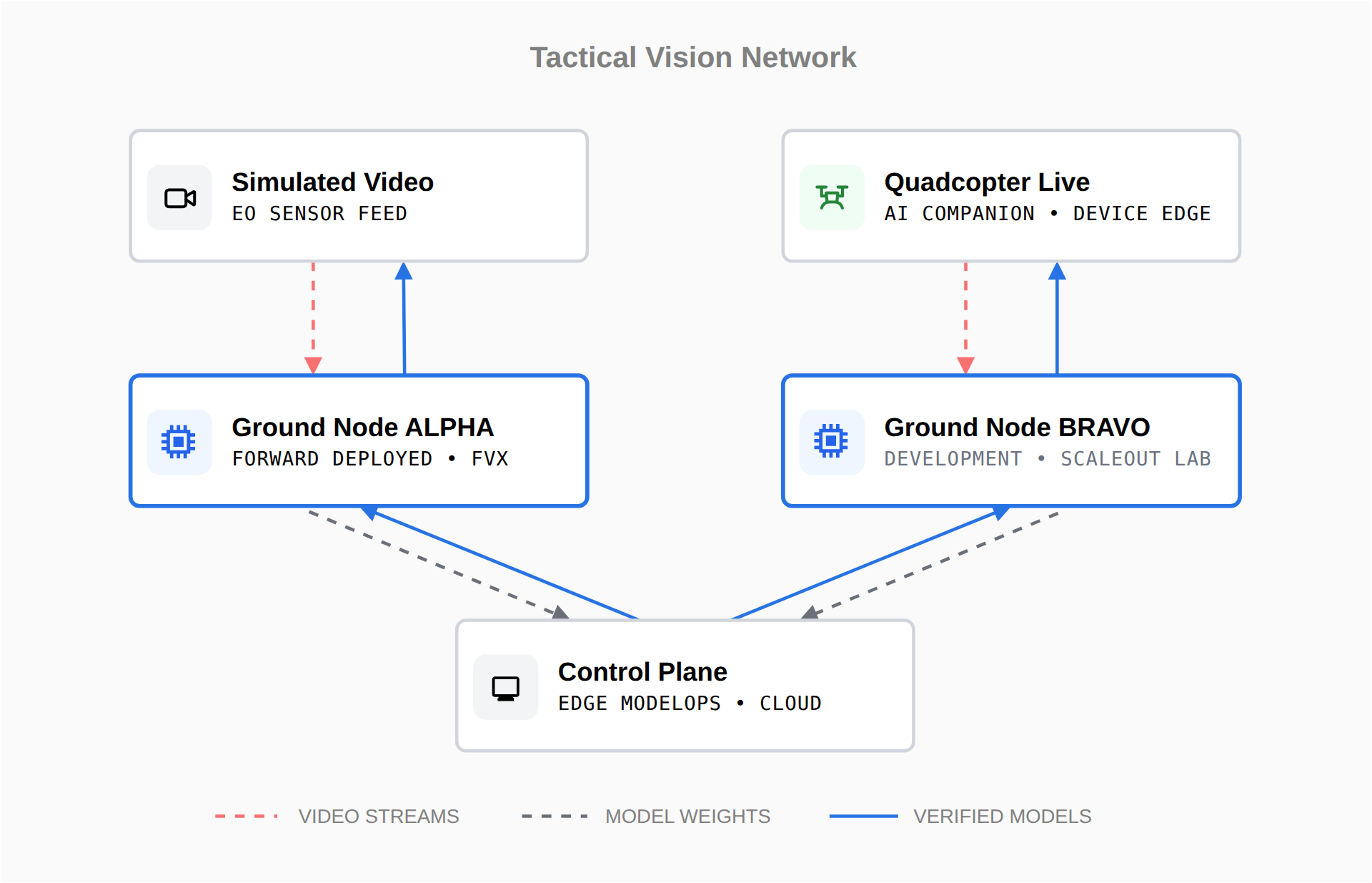
Scaleout’s follow-up June 30 post, “Resilient Edge AI for ISR: Inside Our Swedish Air Force Demonstration,” spoke of another test with Scaleout Edge “already deployed under an active licence.” The network used two ground nodes under a cloud-hosted Scaleout Edge control plane. The first was ALPHA, a forward-deployed node at the air base with a stable link, and the second BRAVO, a lab node in Uppsala whose connection was first degraded, then cut entirely. BRAVO kept inference and active learning at full frame rate while offline, logging detections locally, then backfilled on reconnect in priority order for heartbeat, critical alerts, drift, model updates, and telemetry. This test mimics the impact of external interference.
(Image credit: Scaleout)
The demonstrations, license, and funding come before any official NATO procurement order or actual combat deployment. Concerns about lethal autonomous weapons are being addressed by a UN expert group. Its recent report concluded that human judgment and control are required to comply with the laws of war; its recommendations will be reviewed in Geneva in November. Still, Scaleout’s demonstrations show autonomous target selection running on the airframe, and in the February test it ran on a board hobbyists can buy. Whether BAE Systems Bofors moves ALMA from demonstration to procurement remains to be seen.
Autonomous strike drone uses Nvidia Jetson Orin Nano to independently pick and bomb targets — Swedish startup's attack drones run small AI model, require no human input and zero external comms

 3 hours ago
3
3 hours ago
3








 English (US) ·