
 9 hours ago
8
9 hours ago
8
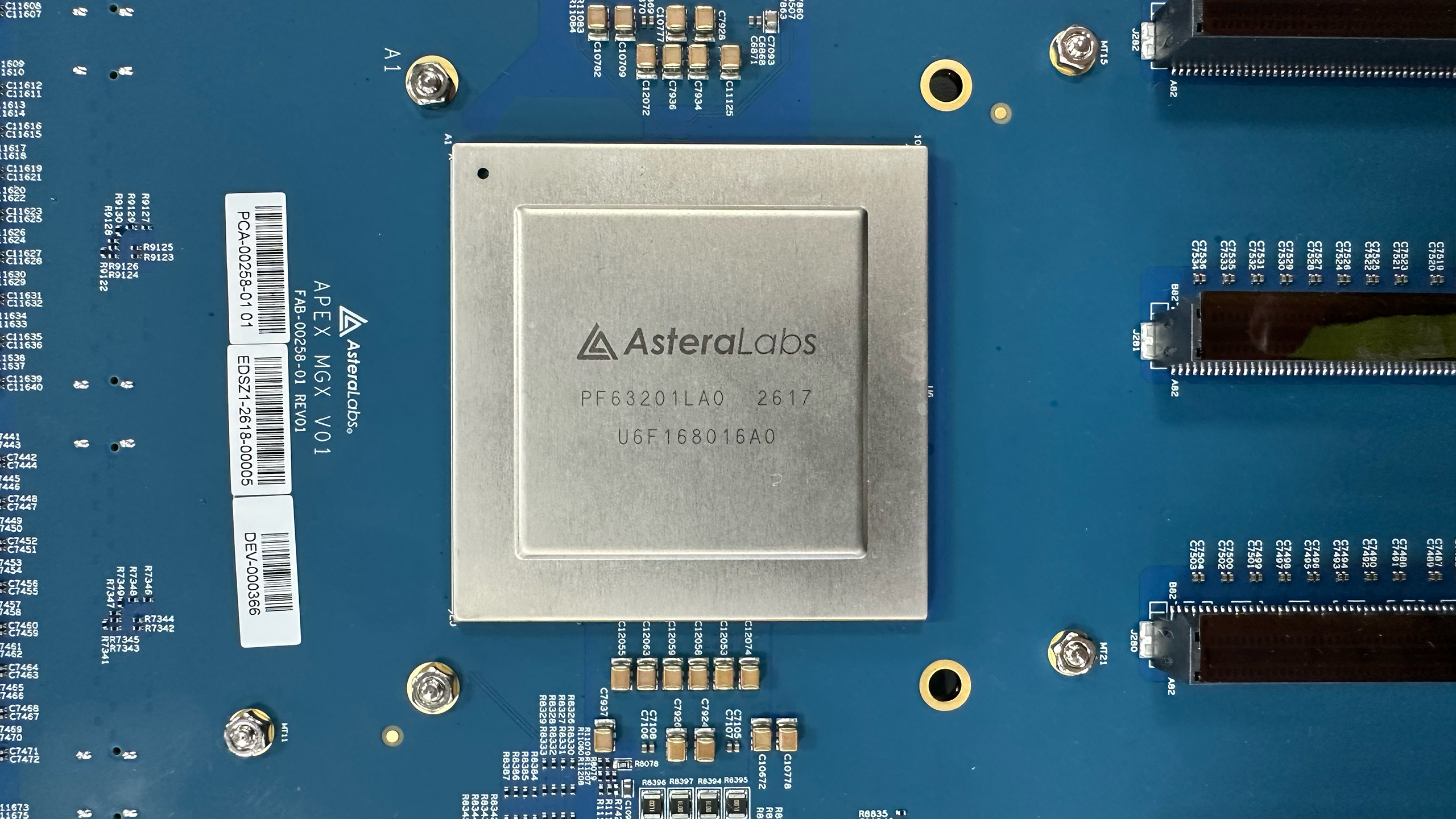
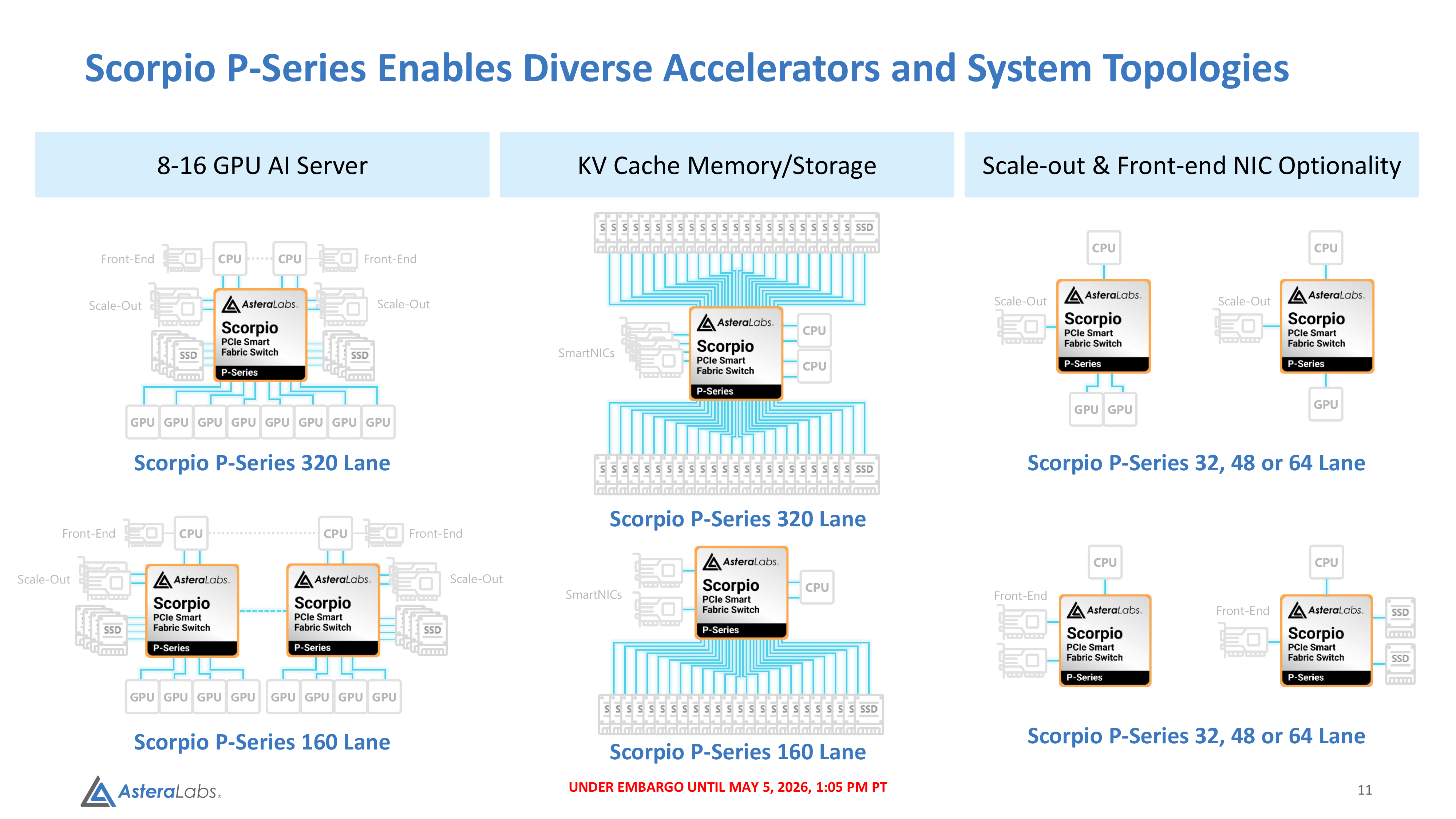
Astera Labs demonstrated its recently introduced Scorpio X-Series 320 Lane Smart Fabric Switch, which appears to be the industry’s largest open memory-semantic fabric switch, at Computex 2026 in Taipei. The PCIe 6.0 switch with 320 lanes can be used to build large multi-GPU scale-up clusters, large shared KV-cache memory pools, and disaggregate data center infrastructure using custom topologies.
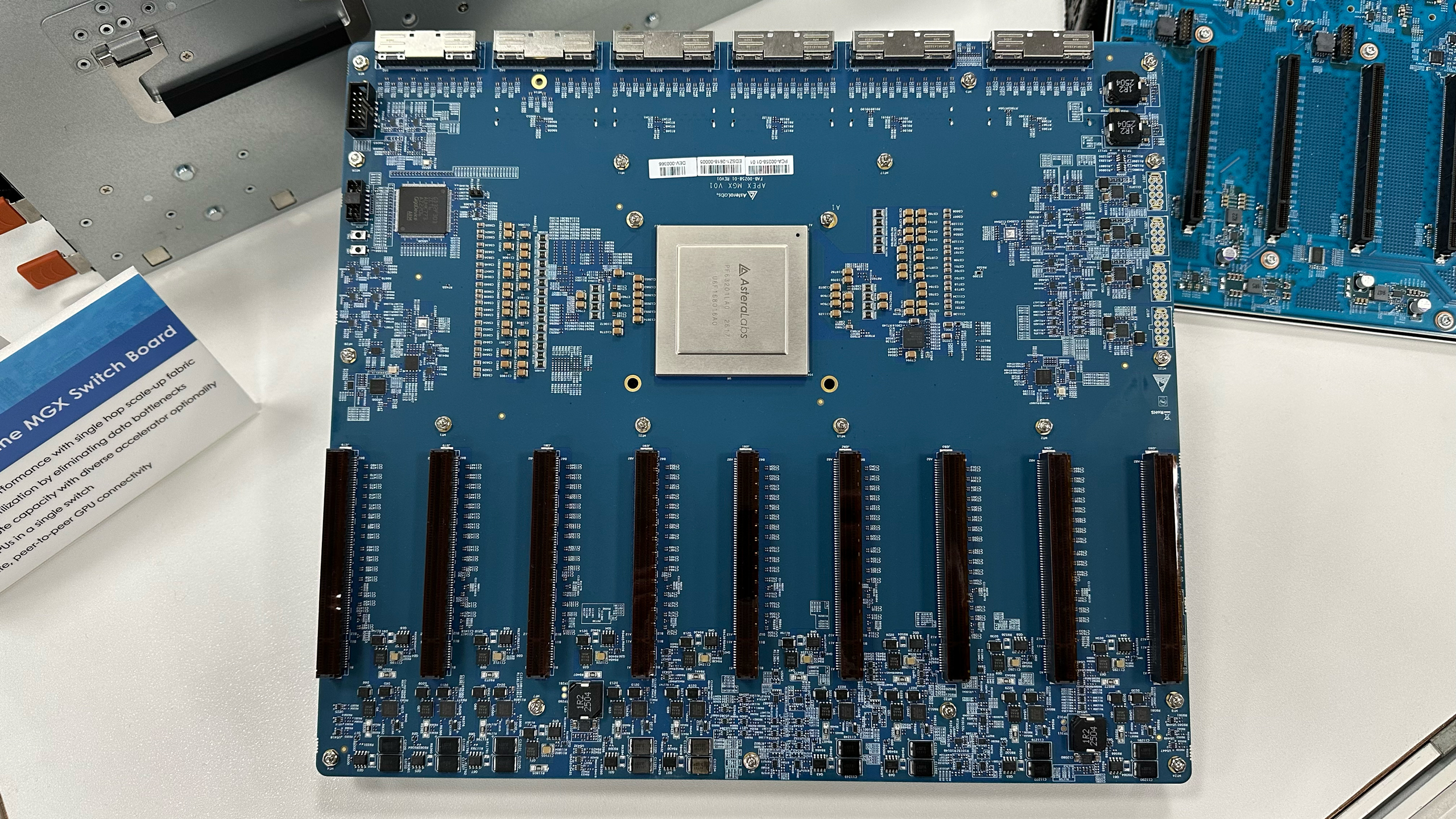
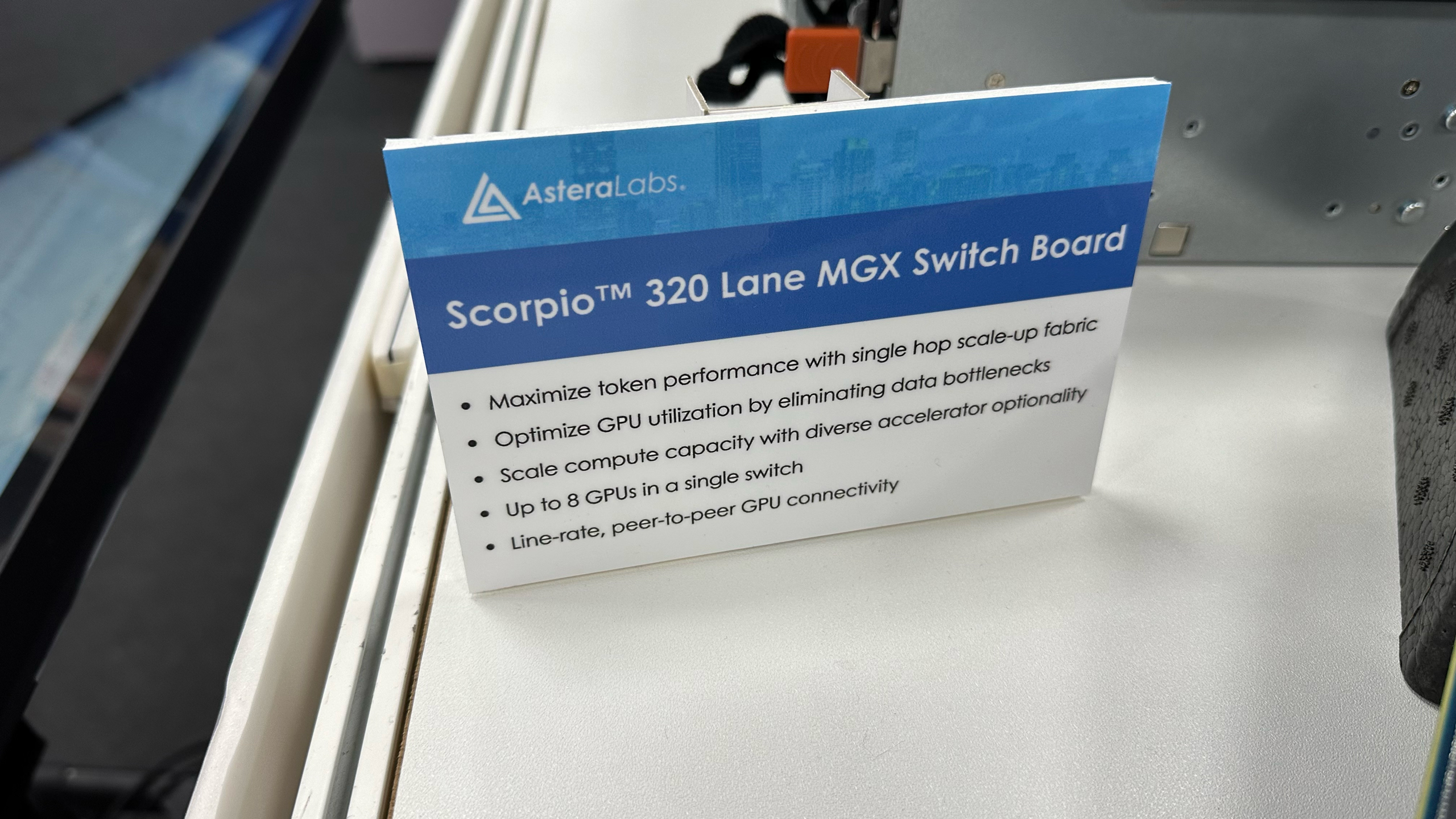
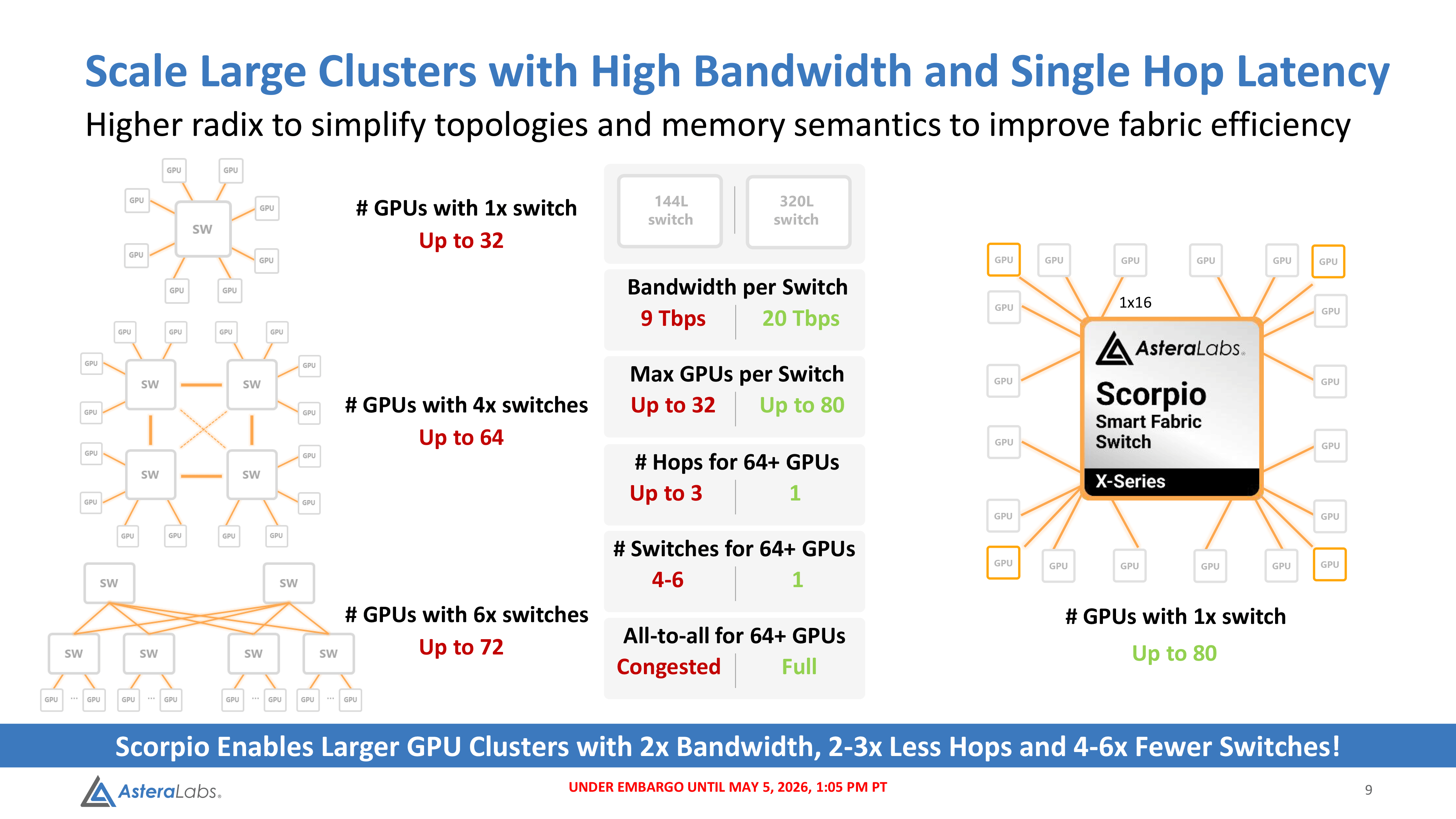
The switch provides 320 PCIe 6.0 lanes and 20 Tbps of switching bandwidth, up from 144 lanes and 9 Tbps for previous-generation devices. Astera Labs says the increased number of lanes enables larger scale-up domains, enabling the connection of up to 80 accelerators using a single switch. By contrast, older 144-lane switches support up to 32 accelerators per switch. For clusters with more than 64 accelerators, the company says the new device reduces switch hops from as many as three to one and cuts switch count by a factor of four to six while still providing all-to-all connectivity akin to that provided by Nvidia’s NVL72 systems (albeit with lower bandwidth and higher latencies). The switch can support both standard and custom accelerators as long as they use standard PCIe connectivity.
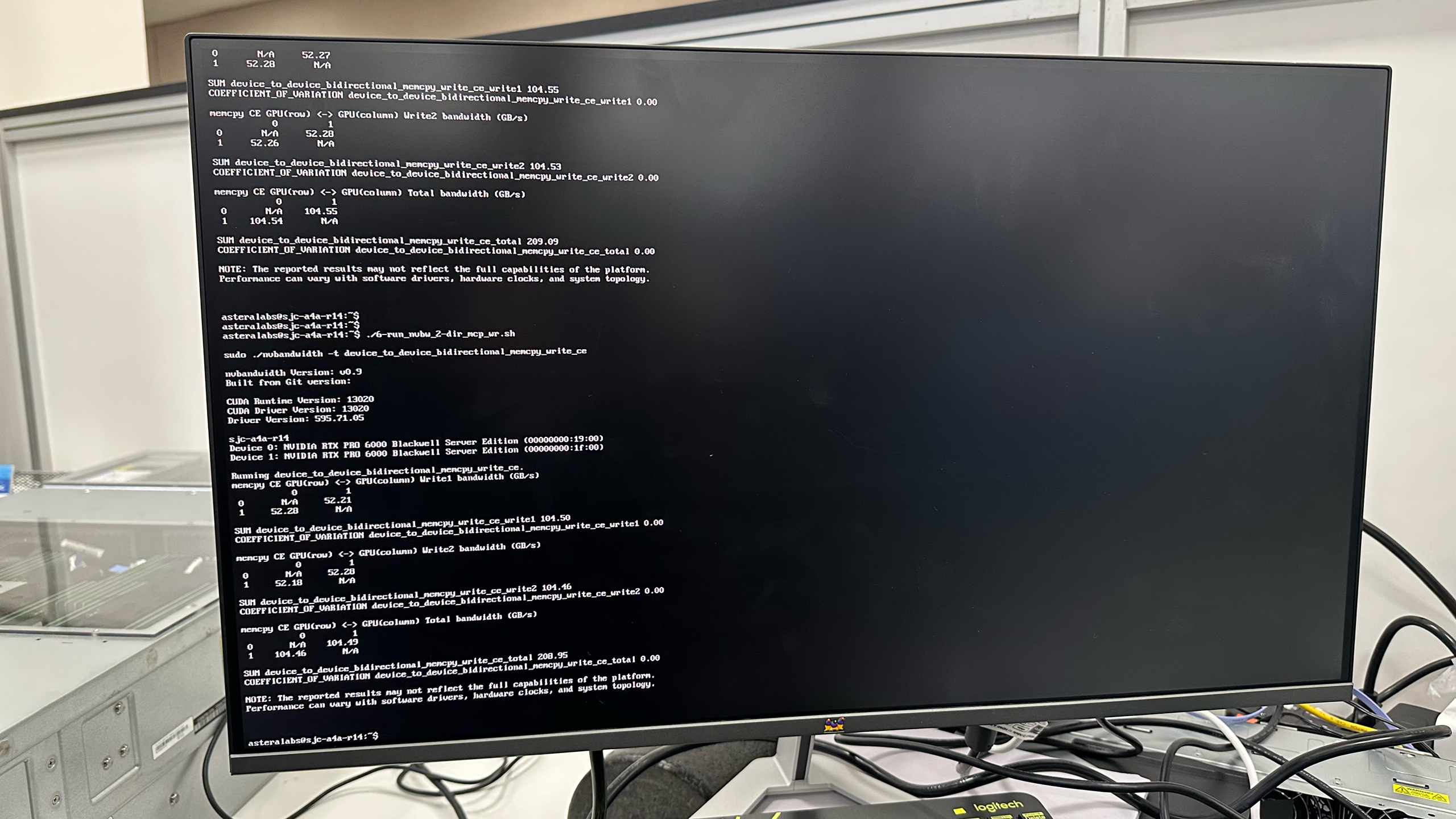
On the trade show floor, Astera Labs is showing off its switching capabilities with Intel’s Arc B70 Pro graphics cards. However, real-world deployments based on the Scorpio X-Series 320-lane PCIe switches will likely use more advanced Intel hardware. In general, the switch can be used to build clusters from all types of accelerators that do not support their own NVLink or UALink-like interconnections, including AMD’s Instinct MI350P and Nvidia’s RTX 6000 Blackwell. Astera has yet to showcase a full working cluster featuring 80 accelerators, as the company only got the Scorpio X-Series 320-lane PCIe switch from the fab eight weeks ago. Also, finding 80 similar accelerators is not easy. Nonetheless, based on the company’s demonstration, the switch appears to be working.
A key feature of the Scorpio X-Series is Hypercast, which is a hardware-based data replication engine intended to accelerate communication-intensive operations common in AI models. According to Astera Labs, MoE networks tend to route tokens across hundreds of experts and create large amounts of multicast traffic between accelerators. In such cases, traditional switching architectures either require repeated data transmissions or slow multicast-group reconfiguration, whereas Hypercast is designed to handle these communication patterns directly in hardware, reduce GPU networking overhead, and improve accelerator efficiency, Astera Labs claims.
The company also added In-Network Compute engines that offload collective operations such as AllReduce, ReduceScatter, AllGather, AllScatter, and all-to-all exchanges. These features can reduce communication latency by more than 50% in certain workloads, according to Astera.
Another important feature of the Scorpio X-Series 320-lane PCIe switch is its memory-semantic connectivity, which enables connected processors to access fabric-attached resources using native load and store operations rather than software-controlled transactions. This greatly simplifies usage of the device and improves real-world performance by reducing overhead and improving fabric efficiency at scale.

Astera says that the production ramp of the Scorpio X-Series 320-lane PCIe switch is set for the second half of 2026. Currently, the company is sampling the switch with leading hyperscalers.




 English (US) ·